How Senior Living Facilities Boost Social Life
Architecture of Community Designing Senior Living Facilities for Everyday Connection
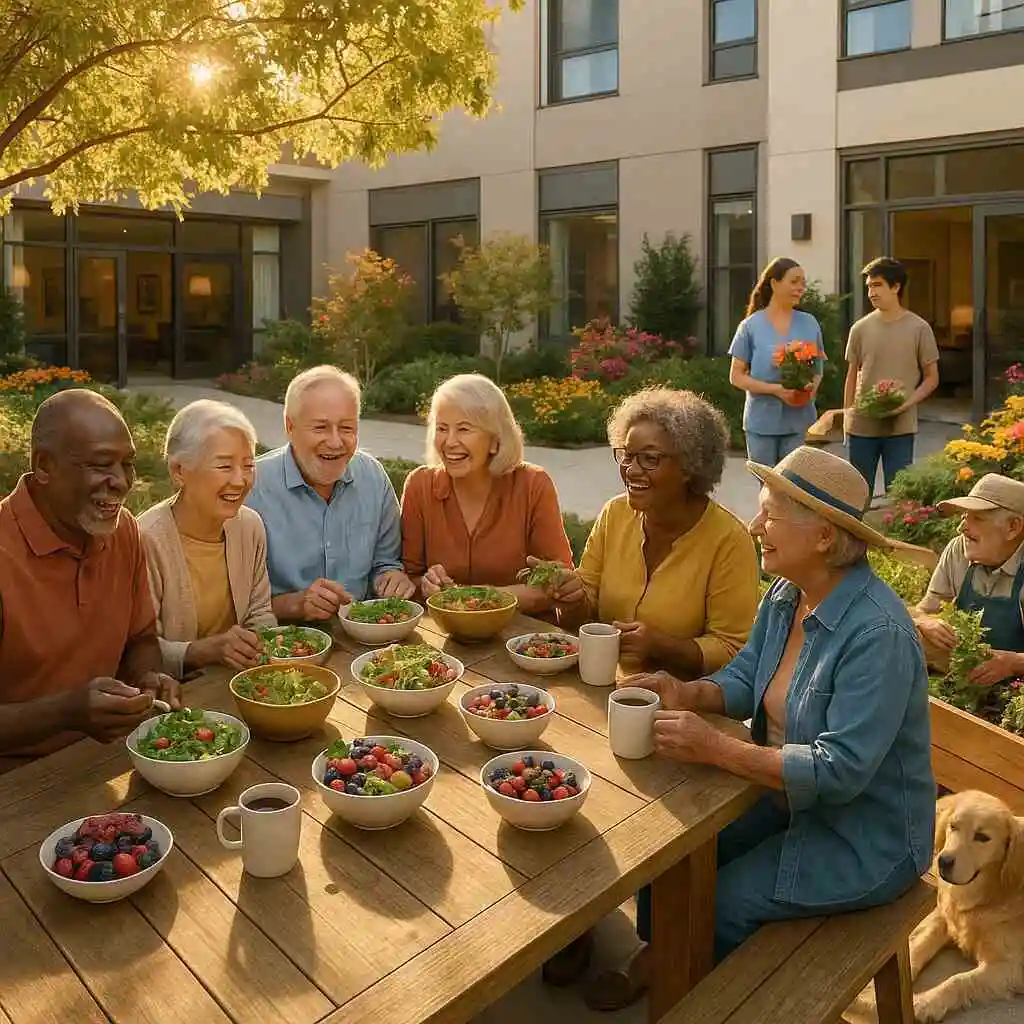
Communal dining experiences for seniors that turn meals into meetups
Purpose-built dining rooms in modern senior living facilities resemble inviting bistros rather than cafeterias. Natural light pours through broad windows, round tables encourage eye contact, and soft acoustics reduce background clatter. Culinary teams stagger seating times, allowing residents to linger without feeling rushed. Because mealtimes repeat daily, friendships form quickly as neighbors trade recipes and stories. This architectural choreography ensures no one faces an empty chair for long.
Designers also add display kitchens where residents smell simmering soups while chatting with chefs. Open layouts place salad bars, hydration stations, and dessert counters along curved pathways that slow foot traffic and spark conversation. Families often join Sunday brunch, further merging generations. Such thoughtful flow illustrates practical ways facilities enhance social connections for older adults. By layering sensory cues with intuitive circulation, each bite becomes a bridge to belonging.
Shared amenity spaces from seniors’ gaming lounges with virtual reality to cozy book nooks
Beyond dining rooms, a senior living facility now features tech-forward lounges where residents battle grandchildren in virtual bowling. Low-glare screens, ergonomic chairs, and adjustable lighting accommodate aging eyes without sacrificing excitement. Headsets rest on sanitized docks, making spontaneous play safe and easy. Friendly tournaments appear on the weekly senior living community events calendar, turning casual gamers into spirited teammates.
Across the corridor, quiet book nooks provide balance. Shelving at wheelchair height, plush armchairs, and community-run lending systems foster literary discovery. Wall niches display resident-written poetry, inviting dialogue. Because both high-energy lounges and hushed libraries sit along the same central spine, individuals pivot smoothly between stimulation and serenity. This proximity nurtures personal choice while sustaining social engagement.
Pet friendly senior apartments fostering spontaneous hallway conversations
Many seniors consider pets essential companions, and forward-thinking senior housing honors that bond. Pet friendly corridors include durable flooring, built-in waste stations, and recessed alcoves stocked with water bowls. Residents heading out for morning walks often pause when neighbors kneel to greet wagging tails. These unscripted moments create instant introductions, especially for newcomers adjusting to retirement home life.
Indoor dog parks expand the connection further. Climate-controlled rooms feature agility ramps and benches, so mobility-limited owners watch comfortably while animals romp. Scheduled “yappy hours” pair canine playdates with human refreshments, transforming routine exercise into a community tradition. Even those without pets attend for the laughter alone, proving animals remain powerful social catalysts within connected senior living today.
The wellness and recreation director’s role as social architect
Physical spaces thrive only when orchestrated by talented leaders. A wellness and recreation director acts like a cruise director on land, translating blueprints into daily excitement. This professional studies each resident’s interests, then curates balanced schedules blending group fitness classes for seniors with quieter crafts. Constant feedback loops keep offerings fresh and personalized.
Collaboration defines the role. Directors collaborate with culinary teams, therapy staff, and local partners so programming dovetails with health goals. They train volunteers, secure grants for new equipment, and publicize achievements community-wide. Because their office often sits beside the main lobby, residents drop in freely to suggest ideas or celebrate victories. Through this open-door policy, the director continuously recalibrates social architecture to residents’ evolving passions.
Gardening clubs in communities for seniors 55 plus blooming year round
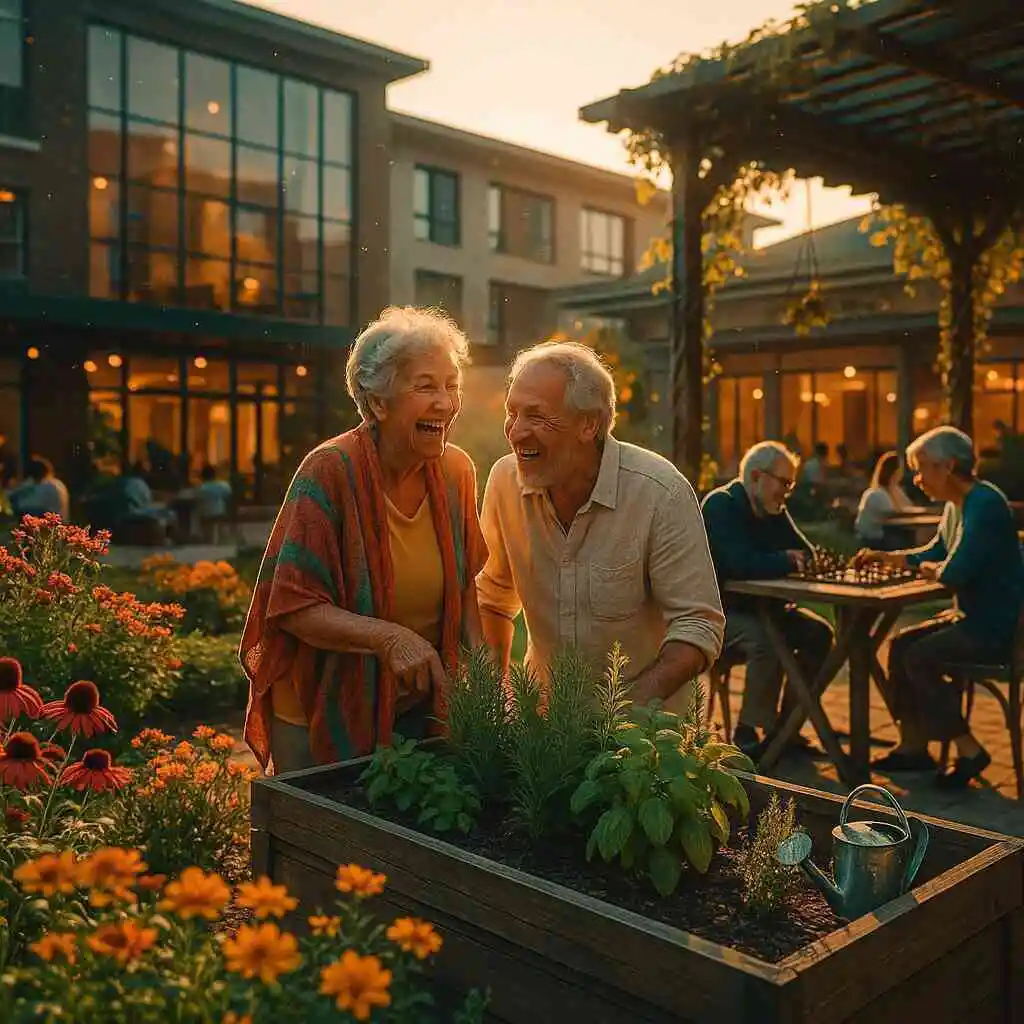
Raised garden beds line sunny courtyards, their heights tailored for seated or standing gardeners alike. Adaptive tools with cushioned grips rest in communal sheds, ensuring every ability level participates comfortably. Seasonal planting calendars guide teams as they swap heirloom tomato seedlings for winter kale, maintaining vibrancy all year. Shared harvest dinners later showcase produce on communal tables, completing a satisfying seed-to-fork cycle.
Indoor hydroponic walls extend growing seasons. Residents gather beneath LED grow lights, exchanging advice while trimming basil that scents the corridor. Weekly “green thumbs” meetings invite novices and experts, reinforcing mentorship. The result transcends fresh herbs; collaboration cultivates purpose, exercise, and pride. Gardening therefore roots emotional wellness as firmly as any structural beam within senior living near you.
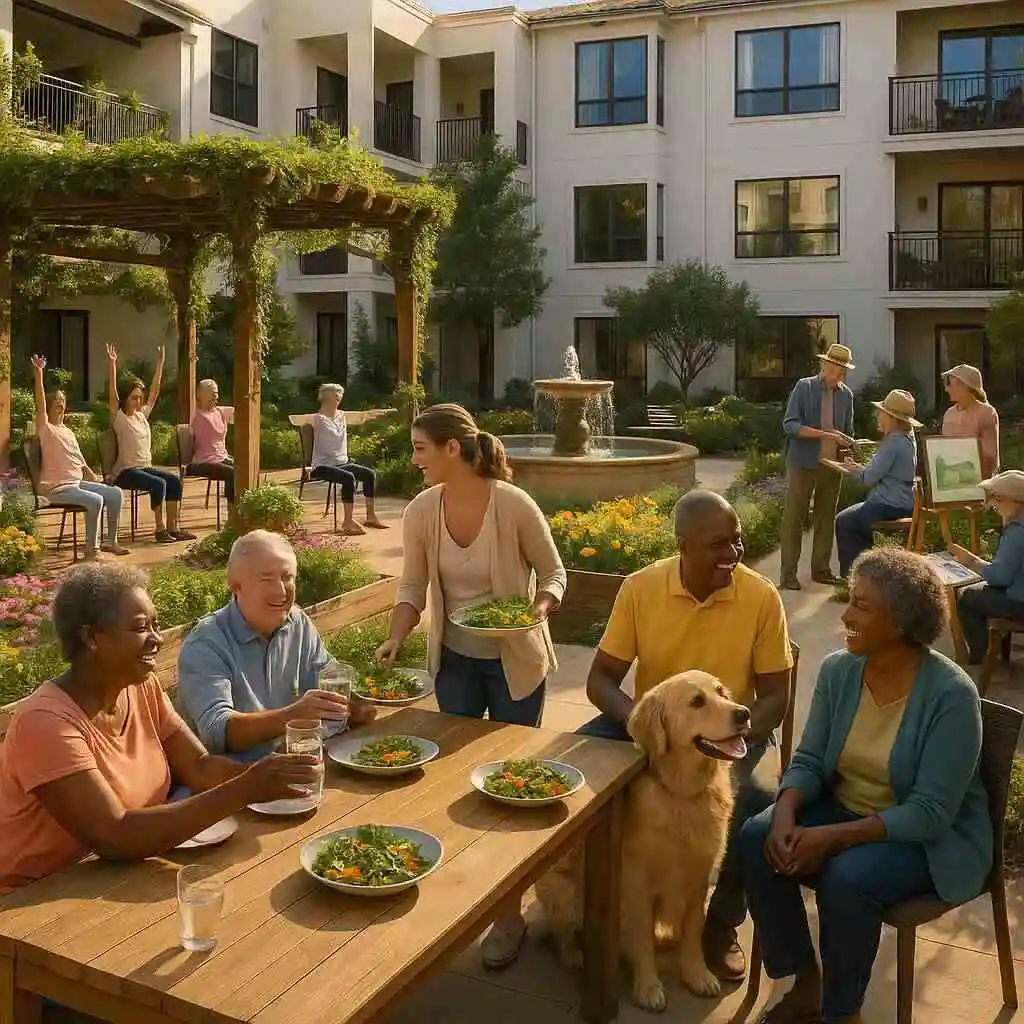
 Programs that Spark Purpose: The Dynamic Events Calendar in a Senior Living Facility
 Programs that Spark Purpose: The Dynamic Events Calendar in a Senior Living Facility
Group fitness classes and pool aerobics energize active seniors
A thriving senior living community’s events calendar always begins with movement. Certified instructors lead engaging group fitness classes for seniors that balance cardio, strength, and flexibility. Because routines are scaled, both marathon veterans and beginners feel successful side by side. Upbeat music, cheerful décor, and peer encouragement transform exercise into a daily celebration rather than a chore. Residents leave each session with brighter moods, stronger bodies, and new workout buddies.
Pool aerobics classes for active seniors add buoyant excitement. Warm water eases joint pressure, allowing participants with arthritis to march, kick, and stretch confidently. Instructors position flotation devices within reach, ensuring every ability level feels supported and safe. Friendly competitions, such as synchronized splash routines, spark laughter while secretly improving balance. After class, poolside smoothies encourage longer conversations that fortify blossoming friendships.
Lifelong learning courses and technology workshops fueling intellectual fire
Curiosity never retires, and lifelong learning courses in senior residences keep minds agile. Partnering with nearby colleges, communities offer language immersion, creative writing, and history seminars. Residents debate, analyze, and present projects, proving scholarship thrives well beyond campus gates. Such courses stimulate neuroplasticity while reigniting forgotten passions for philosophy or astronomy. Classroom discussions effortlessly spill over into lunch, reinforcing social engagement.
Technology workshops for older adults demystify devices that connect families across miles. Patient trainers guide residents through video calls, app downloads, and safe online banking. Small class sizes promote individualized attention, while group troubleshooting promotes solidarity. Graduates often become unofficial tech mentors, using newfound skills to help neighbors stream concerts or share photo albums. These peer-to-peer exchanges deepen community trust and autonomy.
Resident clubs bridge nights music therapy gatherings and arts and crafts sessions
Diverse resident clubs in assisted living facilities transform hobbies into lifelong bonds. Weekly bridge and card game nights attract strategic thinkers who relish friendly rivalry. Tables buzz with quick math, witty banter, and gentle coaching for newcomers. Leaders rotate duties, empowering every member to host and innovate rule variations. This shared ownership nurtures confidence alongside camaraderie.
Music therapy gatherings in nursing homes harness rhythm for healing. Licensed therapists use drums, chimes, and songs from residents’ youth to trigger memory recall and reduce anxiety. Group sing-alongs create safe spaces for self-expression, especially for individuals with limited speech. Harmonizing together releases endorphins that elevate mood long after the final chord. Participants regularly describe sessions as both therapy and a joyful reunion.
Arts and crafts sessions in retirement homes paint the corridors with creativity. Quilting circles, pottery wheels, and watercolor easels invite hands of every steadiness. Volunteers display finished pieces in lobby galleries, inviting compliments and conversation starters. Exhibits often inspire inter-club collaborations, such as crafting backdrops for drama society productions. Each brushstroke therefore stitches purpose directly into daily life.
Intergenerational programs and volunteer opportunities for retirees strengthening community bonds
Intergenerational programs for older adults bridge decades through purposeful play. Preschool partners visit for story time, while teens host coding tutorials, reversing traditional mentorship roles. Mutual learning erases age stereotypes, replacing them with authentic respect and shared humor. Grandparent-style relationships blossom organically, supplying emotional enrichment unattainable in single-age settings. Residents later recount these encounters as weekly highlights.
Volunteer opportunities for retirees extend giving spirits beyond campus borders. Some knit blankets for shelters; others tutor elementary readers via video chat. Coordinators match talents to nonprofit needs, removing logistical barriers such as transportation or materials. By contributing expertise, seniors reclaim professional identities and build new networks of gratitude. Service hours also demonstrate the measurable impact of community living on senior health and longevity, a point emphasized in the impact of community living on senior health and longevity.
Holiday celebrations cultural outings and outdoor excursions orchestrated by assisted living locations
Festive spirit flourishes when the wellness and recreation director curates holiday celebrations in assisted living. Themed décor appears gradually, inviting residents to share childhood traditions. Culinary teams collaborate, transforming dining halls into regional tasting tours that honor diverse backgrounds. Choir rehearsals, ornament workshops, and charitable toy drives weave multiple generations together. Each event layers collective memory onto the calendar’s heartbeat.
Cultural outings extend excitement beyond the gates. Excursion buses equipped with wheelchair lifts whisk groups to theater premieres, botanical gardens, and museum nights. Staff handle tickets, seating, and dietary accommodations so residents focus solely on the experience. Post-trip debriefs gather feedback, influencing future destinations and reinforcing resident agency. Outdoor excursions from senior living facilities, including bird-watching walks and accessible hiking trails, complement city adventures by reconnecting participants with nature’s tranquility. In every season, these orchestrated journeys illuminate the world as an ever-expanding classroom.
Empowerment and Personal Growth: Building Friendships and Influence within the Community
Resident council meetings empower seniors with a collective voice
Resident council meetings transform neighbors into policymakers inside a senior living facility. They gather monthly in the bright clubhouse, agendas posted one week earlier. Every resident, regardless of mobility, can submit proposals by phone, tablet, or written note. Staff sit as advisors, yet the microphone belongs entirely to the community. Decisions span menu adjustments, garden upgrades, and additions to the senior living community events calendar. This democratic rhythm nurtures confidence because voices once ignored now guide daily operations. Participants practice negotiation, active listening, and public speaking in a supportive environment. As a result, social engagement feels purposeful, not passive entertainment. Residents leave meetings energized, knowing their opinions shape the place they call home.
Formal structure alone does not guarantee impact; transparent follow-up converts votes into visible change. After each council session, leadership posts action timelines on hallway bulletin boards and digital portals. Tracking progress reinforces accountability while inspiring newcomers to speak out next month. Many members review research about ways facilities enhance social connections for older adults. This evidence strengthens proposals, giving each idea empirical weight and emotional resonance. Consequently, senior living facilities’ social engagement becomes data informed yet deeply human. Elders witness tangible outcomes, which fuel continued attendance and friendship across ideological lines.
Senior buddy programs enhancing belonging for new arrivals
Moving into senior housing can feel daunting despite cheerful décor and helpful staff. Buddy programs pair established residents with newcomers during the crucial first ten days. Introductions happen over coffee, campus tours, and casual attendance at group fitness classes for seniors. This low-pressure guidance answers questions that brochures overlook, like where to find quiet sunrise benches. Because matches are interest-based, shared hobbies foster immediate rapport and laughter. Building friendships in senior housing then becomes an organic byproduct of genuine curiosity. Confidence grows quickly, replacing relocation anxiety with anticipation of tomorrow’s adventures.
Mentor buddies also attend orientation workshops on active listening and cultural sensitivity. These trainings ensure advice remains supportive rather than prescriptive. Program coordinators rotate matches every season to broaden social networks beyond initial pairings. Graduates often volunteer as future mentors, perpetuating a virtuous cycle of inclusion. The approach exemplifies how assisted living plans can nurture peer leadership, not dependence. As bonds spread, the senior living facilities’ social engagement matrix grows ever more resilient.
Support groups for widowed seniors and memory care social stimulation activities
Loss reshapes identity, yet supportive dialogue helps heal invisible fractures. Weekly support circles, guided by licensed counselors, welcome widowed seniors into confidential conversation. Chairs form a gentle semicircle, eliminating hierarchical energy. Facilitators prompt storytelling, emotional labeling, and mindfulness breathing exercises. Peers validate experiences, proving no grief journey is isolated within campus boundaries. Participants often schedule lunch together afterwards, extending compassion beyond the meeting room.
Memory care neighborhoods adopt parallel strategies tailored for cognitive fluctuations. Small group activities incorporate texture, music, and reminiscence stations to evoke familiarity. Staff align sessions with the role of activities of daily living in assisted living. That bridge between therapy and routine sustains dignity and comfort. Multisensory games encourage eye contact, hand coordination, and spontaneous singing. Family members join open houses, witnessing breakthroughs that standard visits rarely reveal. Collectively, these memory care social stimulation activities nurture emotional safety and renewed agency.
Transportation to local community centers expands social circles beyond campus
A vibrant campus thrives, yet outside exploration keeps perspective fresh. Senior living facility shuttles operate daily loops to libraries, volunteer hubs, and nearby parks. Drivers receive specialized training in mobility support, making boarding seamless for wheelchairs and walkers. Passengers exchange restaurant tips en route, transforming the vehicle into a rolling conversation lounge. These outings broaden social circles beyond familiar hallways, combating geographic monotony.
Scheduling integrates with the senior living community’s events calendar, preventing activity conflicts. Residents can request new destinations through council suggestion boxes, reinforcing collaborative governance. Partnerships with community centers unlock discounted art classes, dance nights, and intergenerational programs for older adults. Shared experiences during travel create stories that echo across dinner tables back home. Freedom of movement therefore multiplies opportunities for organic, place-based friendship.
Wellness centered social life metrics tracking happiness in senior living near me
Feelings are powerful, yet data translates intuition into actionable strategy. Modern communities deploy confidential surveys, wearable devices, and participation logs to gauge engagement. Metrics track class attendance, dining companions, and subjective mood ratings. Aggregated dashboards reveal patterns, such as declining weekend energy or rising interest in gardening. Staff then adjust programming proactively, preserving wellness-centered social life momentum.
Residents view simplified charts during town-hall displays, fostering transparency and shared accountability. They celebrate positive trends collectively, treating each percentage point as a communal victory lap. Comparative benchmarks from senior living near me networks encourage friendly rivalry and knowledge exchange. Crucially, no metric stands alone; qualitative stories add color behind every number. Together, empirical insight and lived experience guide perpetual refinement of flourishing community culture.
From Neighbor to Friend: Why Social Engagement Defines Senior Living Near You
In every conversation, residents confirm that senior living facilities’ social engagement turns neighbors into trusted friends within weeks. Purposeful floor plans, lively resident clubs, and a clear senior living community events calendar keep momentum high all day. This constant rhythm dismantles isolation, replacing it with building friendships in senior housing that feel effortless and genuine. Many experts call this shift the meaning of connected senior living today, where architecture and programming form one supportive ecosystem. When curiosity meets proximity, everyday errands become shared adventures that enrich retirement.
Finding a community that embraces this philosophy is easier than ever. Browse the nationwide senior living directory for social engagement to review communities side by side. The tool lets families compare purposeful design, intergenerational programs, and personalized assisted living plans within minutes. Its assisted living locator also highlights housing options for seniors that align with hobbies, faith, and evolving wellness goals. Schedule a visit, feel the atmosphere firsthand, and move toward senior living near me where every door opens to friendship.
Frequently Asked Questions
 Frequently Asked Questions
Question: How does the blog post How Senior Living Facilities Boost Social Life reflect the real-world experience residents will have in a Senior Living Facilities partner community?
Answer: The article highlights intentional architecture, communal dining experiences for seniors, and robust resident clubs in assisted living-all core features we vet before adding a property to our nationwide senior living directory for social engagement. When you use our assisted living locator, we connect you with campuses that already offer pet-friendly senior apartments fostering connections, group fitness classes for seniors, and a constantly updated senior living community events calendar. Because we only list communities that demonstrate measurable wellness-centered social life metrics, families can trust that the vibrant environment described in the blog is exactly what their loved ones will enjoy day to day.
Question: What role does the wellness and recreation director play, and how do Senior Living Facilities make sure every listed community has one?
Answer: A wellness and recreation director is the social architect who transforms great floor plans into unforgettable experiences-from pool aerobics classes for active seniors to seniors’ gaming lounges with virtual reality. During our onboarding process, every long-term care facility or independent living community must show evidence of a full-time certified director, an annual events budget, and resident feedback loops. Our team reviews monthly activity calendars, verifies intergenerational programs for older adults, and checks staffing ratios to ensure each director has the bandwidth to personalize programming. This vetting means families browsing senior living near me through our site can feel confident their chosen community delivers the dynamic social life residents deserve.
Question: My parents love volunteering and lifelong learning. How do your communities support these passions while still providing needed care?
Answer: Volunteer opportunities for retirees and lifelong learning courses in senior residences are two pillars of our quality-check framework. We partner with local colleges, libraries, and nonprofits so residents can tutor children online, knit for hospitals, or attend language classes without leaving campus. Transportation to local community centers is included for off-site projects, and on-site technology workshops for older adults ensure everyone can join virtual volunteering. Meanwhile, nursing staff coordinate with instructors to align class times with medication schedules, giving each resident the perfect blend of intellectual growth and attentive care.
Question: Can Senior Living Facilities help us find communities that offer specialized social support, such as buddy programs for newcomers or support groups for widowed seniors?
Answer: Absolutely. Our database tags every senior living facility by specialty programming, including senior buddy programs enhancing belonging, resident council meetings empowering seniors, and weekly support groups for widowed seniors. During your free consultation, we filter options based on these tags, your location, and budget. Because we serve all 50 US states, we can quickly surface multiple housing options for seniors that combine medical oversight with the emotional scaffolding needed to thrive socially after a major life transition.
Question: How do you ensure that the communal dining experiences for seniors cited in your content remain consistently high quality across different assisted living locations?
Answer: We evaluate culinary operations during our annual site audits. Criteria include chef credentials, resident menu councils, staggered seating for relaxed meals, and integration of holiday celebrations in assisted living. We also look for interactive touches-such as open kitchens for culinary demonstrations in independent living-because these encourage conversation and reinforce social engagement. Resident satisfaction surveys and unannounced meal tastings allow us to track quality over time. Only communities scoring above our benchmark remain listed, guaranteeing families that every referral-from senior apartment rentals to full nursing homes for the elderly-delivers dining that builds friendships in senior housing as promised.
Admin
Expert contributor specializing in senior living care. Dedicated to providing families with clear, actionable advice.