
Compare Rural versus Urban Senior Living Facilities Life

From Countryside Calm to City Spark
Why lifestyle geography matters to senior living choices
Geography defines more than scenery; it shapes routines for every age. For older adults, specific surroundings influence comfort, engagement, and safety each day. Comparing rural versus urban senior living highlights how location directly molds lifestyle possibilities. A countryside senior housing option often promises tranquility, while city center senior housing brims with energy. Recognizing these environmental contrasts helps families choose a senior living community that truly matches expectations.
Decision makers frequently start exploring through a nationwide senior living directory to grasp diverse regional offerings. This broad view reveals the spread of rural senior living facilities across valleys, lakes, and mountain towns. It also showcases sleek urban senior living facilities located near theaters, hospitals, and transit hubs. Seeing both extremes, families visualize whether peaceful trails or metropolitan conveniences better fit beloved elders. Early clarity on lifestyle geography streamlines every following step in the selection journey.
Understanding rural senior living near me and urban senior living near you
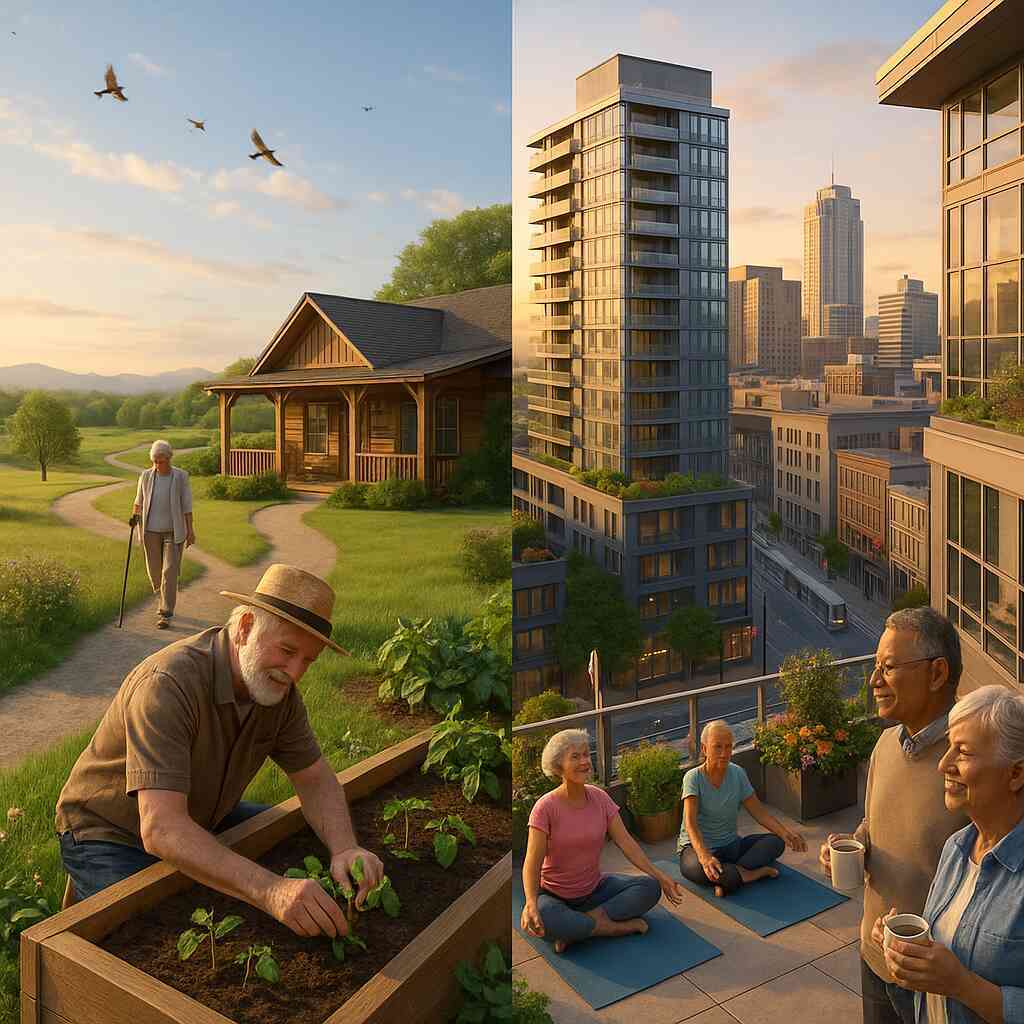
Rural seniors living near me often mean waking to birdsong and open skies instead of sirens and skyscrapers. Residents enjoy wide porches, garden plots, and walking paths that foster gentle exercise without crowd stress. Such natural settings encourage spontaneous neighbor chats, strengthening rural senior living social connections organically. However, fewer nearby stores or specialists can demand advance planning for errands and appointments. Understanding these rhythms prepares seniors who cherish serenity to embrace slower, deliberate days.
In contrast, urban seniors living near you are situated residents minutes from galleries, cafes, and major hospitals. Elevators and concierge desks replace farm fences, while scheduled classes fill calendars with stimulating choices. Cultural engagement thrives through city libraries, music halls, and volunteer programs for communities for seniors 55+. Yet, bustling sidewalks and traffic may overwhelm individuals who prefer quieter routines. Balancing excitement with personal tolerance for noise becomes crucial when evaluating city offerings.
Mapping personal priorities before the search begins
Before touring any senior living facility, families list concrete priorities covering health, hobbies, budget, and transportation. This exercise clarifies whether rural assisted living plans or urban assisted living locations feel more practical. For example, dialysis dependence might outweigh love for pine forests, nudging the choice toward city proximity. Conversely, an avid gardener could prioritize acreage over immediate museum access, steering them into the countryside. Clear ranking of needs prevents later regret and confusion.
Once priorities stand firm, the practical search grows easier because filters align with meaningful goals. Using Senior Living Facilities’ intuitive tools, seekers can compare senior living choices online comfortably from home. Inputting a location then reveals a curated list of rural senior apartment rentals or metropolitan senior apartment rentals. Side-by-side data on amenities, staff ratios, and price quickly confirms which communities deserve onsite visits. Thoughtful preparation turns an overwhelming market into a manageable, hopeful journey for every aging adult and caregiver.
Comparative Lens: Everyday Experience in Rural and Urban Communities for Seniors 55+
Serene environment of a rural senior living community
Rural senior living facilities often greet residents with misty fields, soft sunrise hues, and distant barn silhouettes rather than traffic lights. Wide porches and community gardens create natural meeting points where conversations spring up effortlessly among neighbors who cherish unhurried schedules. Many communities for seniors 55+ in rural areas weave walking trails through woodlands, encouraging daily movement without gym intimidation. Because smaller populations foster familiarity, staff members quickly learn each individual’s preferences, reinforcing a comforting sense of belonging. Prospective residents comparing options frequently explore senior housing in the Montana countryside to picture this peaceful routine firsthand.
Rural senior apartment rentals also provide expansive outdoor spaces that support hobbies like bird-watching, quilting circles on picnic tables, or evening stargazing away from city glare. That physical openness often inspires emotional openness, strengthening rural senior living social connection through shared maintenance of vegetable patches or community beehives. Daily programming leans toward farm-to-table cooking classes, local history talks, and volunteer days at nearby food pantries. Even indoor common rooms often feature large windows framing rolling hills, offering visual calm during board-game afternoons. Such design elements align closely with the serene environment of a rural senior living community many older adults desire.
Vibrant lifestyle within an urban seniors living community
Urban senior living facilities deliver a pulse of activity that echoes the surrounding skyline, drawing residents into theater outings, street festivals, and rooftop yoga sessions. Elevators whisk older adults from modern apartments to glass-walled lounges where concierge teams announce art gallery openings. Residents seeking constant stimulation appreciate how city center senior housing keeps diverse experiences within a quick rideshare. Fitness studios, language classes, and chef-led tastings fill calendars, encouraging exploration long after traditional retirement. This vibrant lifestyle of an urban seniors living community especially attracts lifelong learners who thrive on novelty and social energy.
Metropolitan senior apartment rentals also position residents near world-class hospitals, universities, and multicultural restaurants, reinforcing convenience and safety within one walkable district. A single block might offer pharmacies, independent bookstores, and community theaters, ensuring leisure and necessity coexist seamlessly. Urban assisted living locations frequently coordinate group attendance at symphonies or museum previews, eliminating logistical headaches for mobility-limited participants. Families comparing regional choices sometimes study senior housing in New York City and upstate to gauge how access to Broadway contrasts with quieter Hudson Valley towns. The result is a daily rhythm rich in cultural engagement, culinary discovery, and spontaneous connection.
Social connection versus cultural engagement across settings
Building friendships can feel more organic in rural senior living facilities where smaller populations reduce social cliques and competition for resources. Residents often know every staff member by name, and communal chores-from feeding chickens to decorating seasonal wreaths-spark shared purpose. Potluck suppers, faith gatherings, and local school partnerships reinforce multigenerational ties that counter loneliness statistics. Yet cultural offerings may be limited, requiring scheduled trips to regional theaters or virtual museum tours.
Urban senior living cultural engagement flourishes amid nearby universities, libraries, and performance spaces, allowing spontaneous participation in lectures, poetry slams, or gallery walks. Diversity of backgrounds within larger resident populations introduces broad viewpoints, enriching dinner-table debates about art, politics, and travel. Facilities often partner with nonprofits for mentoring programs, giving older adults meaningful roles within the broader city fabric. A recent study measuring social connection quality found that structured cultural excursions can elevate mood scores as effectively as intimate gatherings. Ultimately, seniors must weigh the depth of close-knit relationships against the breadth of cultural experiences when choosing a location.
Transportation challenges for rural senior living and public transit benefits for urban seniors
Transportation challenges for rural senior living usually begin with longer distances to pharmacies, specialists, or even grocery stores. Many rural assisted living plans therefore include scheduled shuttle routes, volunteer driver programs, or partnerships with telehealth providers. When winter weather or medical appointments disrupt plans, families may need to coordinate additional support, increasing caregiver stress. Limited ride-share availability can also restrict spontaneous outings, requiring meticulous weekly scheduling. These realities underline why some elders prioritize proximity to essential services over scenery.
Conversely, public transit benefits for urban seniors extend beyond buses and subways; light rail, accessible taxis, and paratransit vans broaden independence. Urban assisted living locations often sit within half a block of multiple transit lines, enabling residents to maintain doctor appointments or visit grandchildren across town. Facilities provide travel training workshops that demystify route apps and payment cards, preserving confidence. Prospective movers can use the platform to search nearby senior living options and filter by walkability scores or transit stops. Reliable transportation infrastructure ultimately safeguards autonomy and enriches social calendars.
Affordability of rural senior living in the state and the cost of senior living in metropolitan areas
Affordability of rural seniors living in the state of choice often surprises families, because land prices and staffing costs generally remain lower than in metro zones. Monthly fees may include expansive suites, garden plots, and bundled utilities at rates comparable to modest suburban apartments. Some rural long-term care facility access programs leverage local tax incentives or nonprofit sponsorships, further reducing expenses for qualified residents. However, savings can be offset by higher transportation or specialist visit costs, so a holistic budget remains essential. Transparency around fee structures helps retirees calculate true affordability.
The cost of senior living in metropolitan areas reflects dense real-estate markets, extensive amenity suites, and premium healthcare partnerships. Entrance deposits, parking fees, and concierge surcharges can elevate total expenditures above national averages, though scholarship funds or tiered pricing sometimes soften the blow. Families researching big-city figures might consult the detailed Ohio senior living cost models comparison to understand how urban premiums vary regionally. Yet higher costs often translate into immediate access to specialists, theaters, and robust social calendars, which some retirees deem invaluable. Ultimately, balancing personal priorities with exact numbers ensures the chosen senior living facility supports both lifestyle dreams and financial health.
 Care Continuum and Infrastructure Critical Factors
 Care Continuum and Infrastructure Critical Factors
Healthcare access in a rural senior living facility
Residents of rural senior living facilities often rely on local clinics that operate limited hours. Although staff coordinate transport, emergency specialists may still require lengthy ambulance rides. Consequently, healthcare access in a rural senior living facility demands proactive care planning, routine telehealth check-ins, and detailed medication reviews. Families should ask about on-call nurse practitioners, mobile lab partnerships, and backup power for medical devices. Clarifying these logistics early prevents stressful surprises when minor ailments suddenly escalate.
Beyond clinical coordination, many communities for seniors 55+ in rural areas cultivate wellness through preventive programs. On-site fitness instructors teach gentle strength routines, while visiting dietitians adapt menus to chronic conditions. Regular vaccination drives compensate for distant pharmacies, ensuring herd immunity without travel. Such initiatives demonstrate how countryside senior housing options can blend personal attention with grassroots public health. However, success hinges on staff training and community engagement rather than expansive infrastructure alone.
Specialized medical care in urban senior living facilities
Urban senior living facilities typically border major hospital networks, giving residents rapid access to cardiologists, oncologists, and neurologists. Specialized medical care in urban senior living facilities often includes scheduled in-house consultations, so elders avoid exhausting commutes. Facilities negotiate priority appointment slots, reducing wait times for imaging or surgical follow-ups. This streamlined pathway supports residents managing complex regimens like dialysis or chemotherapy within familiar surroundings. In turn, peace of mind rises for both seniors and distant family members.
Cutting-edge rehabilitation gyms, staffed by licensed therapists, complement hospital alliances. Smart sensors track gait speed, alerting physicians to fall risks before accidents occur. Integrated electronic records allow seamless information flow between primary doctors and the senior living facility nursing team. Moreover, urban long-term care facility amenities may feature specialty memory care wings that incorporate multisensory rooms and virtual reality reminiscence. Such technology-driven ecosystems illustrate why city center senior housing excels at advanced clinical support.
Rural assisted living plans and rural long term care facility access
Developing effective rural assisted living plans starts with mapping the closest hospital beds and airlift routes. Communities collaborate with county health departments to secure agreements for rapid transfers when conditions deteriorate. Some regions maintain cooperative networks, sharing geriatric physicians who rotate weekly among several small-town nursing homes for the elderly. This shared-resource approach stretches budgets while sustaining acceptable response times. Consequently, rural long-term care facility access improves without requiring seniors to leave beloved hometowns.
Financial strategy also shapes care continuity outside city limits. Grants earmarked for underserved areas often subsidize diagnostic equipment or visiting specialists. Residents benefit from on-site X-ray machines, reducing travel stress during winter. Additionally, rural senior apartment rentals frequently bundle telehealth subscriptions into monthly fees, removing separate billing headaches. Families evaluating the affordability of rural senior living in the state of preference should add these hidden value points to total cost calculations.
Urban assisted living locations and big city nursing homes for the elderly
Urban assisted living locations leverage dense infrastructure to maintain multidisciplinary teams under one roof. Skilled nurses, respiratory therapists, and wound care experts collaborate daily, limiting avoidable hospital readmissions. Big city nursing homes for the elderly further enhance outcomes through affiliations with teaching hospitals that provide resident physicians on rounds. Residents gain exposure to clinical trials and new therapies unavailable in less populated counties. This medical depth often offsets the noise or congestion some seniors initially dread.
Transport within metropolitan grids is equally advantageous. Paratransit vans, accessible subways, and even rooftop helipads offer layers of redundancy for urgent transfers. Staff can accompany residents to specialist appointments using digital checklists that synchronize with facility care plans. Moreover, urban senior living cultural engagement programs integrate health education seminars led by university researchers. These sessions empower residents to adopt preventive habits, reinforcing holistic wellbeing in tandem with sophisticated treatments.
Using an assisted living locator for rural communities and metropolitan hubs
The sheer diversity of senior housing can overwhelm even tech-savvy families, which is why an assisted living locator proves invaluable. Interactive tools allow users to filter by clinical services, staff ratios, and proximity to trauma centers. Savvy seekers often begin by comparing senior living choices online to visualize how features shift across geography. Side-by-side dashboards reveal whether extra travel distance in rural areas is offset by lower monthly costs and serene views. They likewise display urban premiums alongside immediate access to specialists, aiding transparent decision-making.
Regional research deepens insight further. Exploring datasets on senior housing in Texas urban and rural neighborhoods helps families anticipate regional insurance networks and climate-related risks. Reviews highlight whether specific assisted living plans include hurricane preparedness, wildfire protocols, or tornado shelters. Ultimately, combining locator technology with firsthand tours yields a balanced perspective. Seniors can then select a horizon-countryside calm or city spark-that nurtures both health and happiness.
Choosing Your Ideal Horizon
Balancing personal values with practical realities
The first step toward a satisfying retirement is an honest inventory of what matters most. Some older adults crave endless starlit skies and the rural senior living social connection that comes from knowing every neighbor by name. Others feel energized by the urban senior living cultural engagement found in museums, lectures, and bustling cafés. When comparing rural versus urban senior living, list concrete desires such as gardening space, theater access, or proximity to grandchildren. Identifying these lifestyle priorities early prevents shiny-brochure distractions and centers the search on genuine fulfillment.
Financial and health considerations quickly follow heartfelt reflection. Countryside senior housing options usually cost less, yet travel to specialists can add hidden expenses. Meanwhile, city center senior housing may command premium rents, but emergency care and public transit benefits for urban seniors sit right outside the lobby. Evaluate whether predictable monthly fees outweigh occasional long drives for appointments. Weigh rural long-term care facility access against the cost of senior living in metropolitan areas to see which trade-offs feel manageable.
Leveraging Senior Living Facilities to compare senior housing options nationwide
Once goals feel clear, technology becomes an ally. The Senior Living Facilities platform allows users to sort thousands of housing options for seniors by location, care level, and amenity profile. Interactive maps reveal rural senior apartment rentals overlooking lakes alongside metropolitan senior apartment rentals high above city lights. Filters for assisted living plans, staff ratios, and wellness programs transform a massive database into a personalized short list within minutes. Moreover, the integrated assisted living locator flags communities with specialized memory care or on-site dialysis, removing guesswork.
Deep dives into each candidate community save families time and stress. For an objective walkthrough of best practices, consult the evaluate senior living communities 2026 guide right from the platform’s resource center. The guide outlines inspection tips, interview questions, and red-flag warnings that apply equally to small-town nursing homes for the elderly and skyscraper-level residences. Following these standards ensures every tour produces apples-to-apples data, empowering confident comparisons across state lines.
Next steps to connect with the right senior living facility
Armed with filtered results and evaluation notes, schedule virtual or in-person tours of top contenders. During each visit, observe resident interactions, sample dining options, and test accessibility features such as handrails or lighting. Ask staff about emergency protocols and how they nurture ongoing rural or urban social engagement. These details reveal day-to-day realities better than any brochure.
Finally, trust both facts and intuition. If a community’s atmosphere aligns with core values and practical needs, move forward by reserving a unit or joining a waitlist. Senior Living Facilities can facilitate introductions, clarify contract language, and confirm availability in senior living near you or across the country. By balancing dreams with data, retirees secure a horizon-be it countryside calm or city spark-that promises safety, purpose, and joy.
Frequently Asked Questions
 Frequently Asked Questions
Question: How can Senior Living Facilities help me compare rural senior living facilities and urban senior living facilities near me?
Answer: Our platform lets you search thousands of senior housing listings in all 50 states, then stack rural senior living facilities and urban senior living facilities side-by-side. Simply enter a ZIP code and filter by setting type-countryside senior housing options, city center senior housing, rural senior apartment rentals, or metropolitan senior apartment rentals. We display staff ratios, care levels, pricing, and resident reviews on one intuitive dashboard, so you can instantly see whether a serene environment of a rural senior living community or the vibrant lifestyle of an urban seniors living community better matches your priorities.
Question: What factors should I consider when deciding between countryside senior housing options and city center senior housing for my parents, and how does Senior Living Facilities guide that choice?
Answer: Key factors include healthcare access, social connection, cultural engagement, transportation, and overall cost. Our assisted living locator walks you through each item: we highlight healthcare access in a rural senior living facility versus specialized medical care in urban senior living facilities, flag transportation challenges for rural senior living and public transit benefits for urban seniors, and break down the affordability of rural senior living in the state of choice compared with the cost of senior living in metropolitan areas. Interactive checklists and live advisors help you match those variables to your parents’ health status, hobbies, and budget so the final decision feels balanced and informed.
Question: In your blog Compare Rural versus Urban Senior Living Facilities Life, you mention transportation challenges for rural seniors; how do Senior Living Facilities address these challenges when recommending rural assisted living plans?
Answer: When you filter for rural assisted living plans, our system automatically tags communities that provide on-site shuttles, volunteer driver programs, or telehealth partnerships to offset longer travel distances. We also note proximity to pharmacies, grocery stores, and specialty clinics, ensuring rural long-term care facility access meets your loved one’s medical schedule. During one-on-one consultations, we review winter weather contingencies and ride-share availability so transportation is never an afterthought.
Question: Is there a cost difference between rural assisted living plans and urban assisted living locations, and can Senior Living Facilities assist me in estimating the total expenses?
Answer: Yes-land values and staffing costs usually make rural senior living options less expensive, while urban assisted living locations carry premiums for real estate, amenities, and proximity to specialists. Our comparison tool calculates base rent, care level surcharges, entrance fees, and even estimated transportation or specialist visit costs. You receive a clear side-by-side projection of monthly and annual expenses, helping you judge whether savings on a rural senior living facility outweigh the convenience of urban long-term care facility amenities.
Question: How does the assisted living locator on Senior Living Facilities ensure quality of care in small-town nursing homes for the elderly versus big-city nursing homes for the elderly?
Answer: Every listing-rural or urban-undergoes a multi-point vetting process that examines state inspection scores, staff credentials, resident-to-nurse ratios, and emergency response protocols. We integrate user reviews and third-party quality ratings so you can compare senior living facility data transparently. For small-town nursing homes for the elderly, we verify agreements with regional hospitals and the availability of telemedicine. For big-city nursing homes for the elderly, we confirm affiliations with teaching hospitals and specialty clinics. This standardized approach lets you evaluate senior living facility quality comparison rural urban with confidence.
Admin
Expert contributor specializing in senior living care. Dedicated to providing families with clear, actionable advice.