
Compare Telehealth Quality in Senior Living Facilities
Beyond Brick and Mortar: Introducing Telehealth in Senior Living Facilities
How virtual physician visits for older adults reshape care expectations
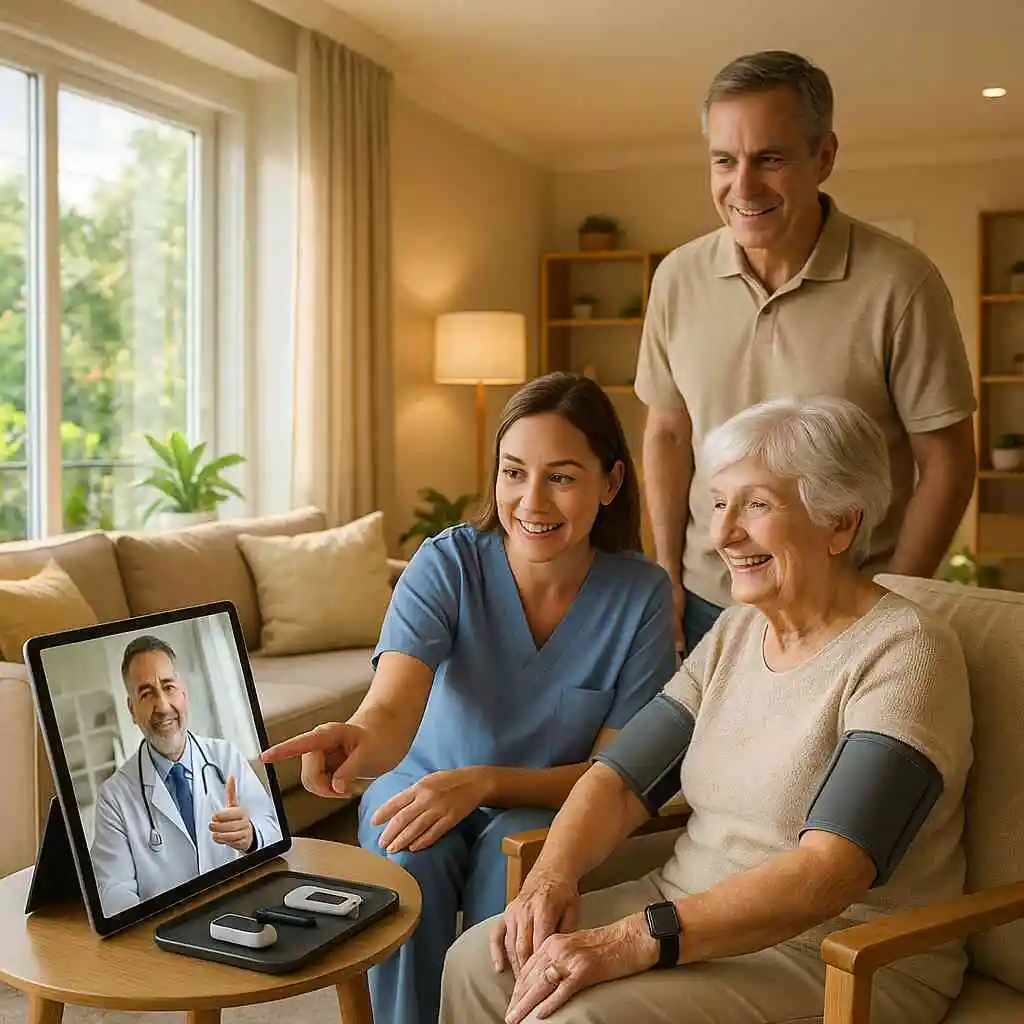
Telehealth once felt futuristic; now it defines proactive aging. Seniors tap tablets for cardiology consults without leaving apartments. Such virtual physician visits for older adults eliminate ambulance rides and waiting rooms. Care teams review labs instantly and adjust medications in real time. Families witness appointments through secure portals, reinforcing trust.
Across the country, telehealth services in nationwide senior living communities now rival traditional office encounters. High-definition cameras magnify skin lesions, and digital stethoscopes stream heart sounds to off-site specialists. Real-time analytics flag arrhythmias sooner, preventing emergency transfers. Documentation flows automatically into integrated EHRs, reducing clerical burdens for nurses. As expectations rise, quality benchmarks become indispensable for every senior living facility.
From assisted living locations to rural communities for seniors 55 plus the connectivity imperative
Connectivity forms the backbone of remote patient monitoring in assisted living. Urban fiber networks support continuous vital-sign streaming from wearable health monitors. However, spotty broadband still challenges rural senior living telehealth connectivity. Video calls may freeze, jeopardizing accurate cognitive assessments during dementia check-ins. Facility leaders must audit bandwidth and invest in resilient routers before launching virtual services.
Grants from FCC broadband programs supporting rural senior telecare spur infrastructure upgrades. Assisted living locations near major hospitals often negotiate private fiber rings for redundant connectivity. Meanwhile, communities for seniors 55+ in deserts deploy satellite backhauls as interim solutions. The connectivity imperative remains universal: without bandwidth, virtual care quality collapses.
Senior perceptions of telemedicine platforms in nursing homes for the elderly
Technology succeeds only when residents embrace it emotionally and cognitively. Early studies show elders prize convenience but fear impersonality during telepsychiatry sessions. Staff can ease worries by facilitating eye contact and moderating session flow. Warm lighting, minimal background noise, and familiar caregivers present during calls boost comfort levels. In many nursing homes for the elderly, satisfaction surveys reveal rising confidence after only three repeat visits.
Privacy concerns also influence acceptance of telemedicine platforms. Residents worry about who else hears sensitive discussions about medications or finances. By adopting HIPAA compliant telehealth solutions for seniors, facilities reassure both residents and regulators. Clear consent forms, on-screen privacy indicators, and locked scheduling portals reinforce security. When respect, transparency, and control align, older Americans report stronger social connections through virtual care encounters.
Metrics That Matter: Comparing Telehealth Quality Benchmarks Across Senior Housing Options
Clinical outcome indicators for chronic disease management via telehealth
Telehealth services in senior living facilities prove their value when blood-pressure graphs flatten and A1C scores decline consistently. Evidence emerges through structured dashboards that track hospital readmission rates, wound-healing speed, and inhaler adherence for every resident. Care teams use these indicators to fine-tune treatment in real time, avoiding the lag of monthly office visits. Families appreciate the clarity because each metric translates directly into daily quality of life improvements. Facility executives rely on independent audits, including benchmarking telehealth quality in senior housing today, to validate results and attract discerning consumers.
Remote patient monitoring in assisted living strengthens these outcomes by streaming vital data every minute, not every appointment. Algorithms flag heart-rate anomalies early, prompting virtual physician visits for older adults before symptoms escalate. Chronic obstructive pulmonary disease programs illustrate the impact; oxygen saturation dips trigger immediate respiratory therapy interventions. Over time, documented emergency transfers drop, reinforcing investor confidence in technology-driven care. Transparent outcome reports also satisfy state regulators evaluating long-term care facility performance.
HIPAA compliant telehealth solutions and privacy safeguards for elders
Privacy concerns can stall innovation faster than any bandwidth glitch, especially inside nursing homes for the elderly. Elders share sensitive stories about medications, finances, and personal fears; they need assurance that nobody is eavesdropping. HIPAA compliant telehealth solutions for seniors therefore encrypt every audio packet and lock session access behind multifactor authentication. Staff receive annual training that covers camera placement, on-screen privacy indicators, and proper use of headsets to prevent overheard conversations. When residents see these safeguards, their willingness to engage rises markedly.
Regulatory compliance extends beyond encryption into rigorous audit trails that document who viewed each file and for how long. Facilities integrate consent workflows so residents approve data sharing with family or external specialists case by case. Some communities use biometric logins, replacing passwords that older Americans often forget. Others install sound-absorbing panels, ensuring confidential speech remains inside the consultation space. Combined, these measures turn abstract security promises into tangible resident trust.
Integrated EHR systems and medication management through senior telehealth portals
Disconnected records once forced nurses to retype notes, risking transcription errors and medication conflicts. Integrated EHR systems now merge telehealth visit summaries, pharmacy orders, and lab results within a single dashboard. Providers adjust dosages instantly while residents watch, fostering transparency that traditional paper charts never offered. Automatic allergy checks and renal-dose calculators fire in the background, preventing adverse drug events before the first pill arrives. Quality benchmarks for senior telehealth care therefore include a reduction in polypharmacy complications.
Senior telehealth portals also empower residents to review schedules, request refills, and message their clinicians. Voice-activated interfaces help those with arthritis navigate menus effortlessly. Families, granted read-only access, verify medication lists from home, closing communication gaps that once sparked confusion. Analytics engines inside these portals highlight missing refills or late doses, prompting telehealth nurse triage calls the same evening. The result: tighter adherence, fewer emergency refills, and improved overall clinical stability.
Cost comparison of telehealth versus in person visits for residents in senior apartment rentals
Balanced budgets keep rental housing for seniors affordable, making cost metrics crucial. Virtual follow-ups typically require fewer staff hours, no transportation, and limited protective gear, lowering direct expenses per encounter. One multistate study showed cardiology teleconsults costing half as much as hospital-based visits while producing similar clinical outcomes. Savings often channel into upgraded broadband access in retirement communities, amplifying the value loop. Residents notice the difference through stable monthly fees rather than unpredictable surcharge spikes.
Indirect savings surface when early intervention prevents hospital admissions. Each avoided ambulance ride saves thousands while protecting residents from disorienting environments. Administrators compare aggregate cost per member per month, adjusting assisted living plans accordingly. Transparent reporting convinces insurers to expand coverage, aligning reimbursement with demonstrated value. Over time, telehealth shifts from a novel perk to an indispensable economic pillar supporting long-term sustainability.
Telepsychiatry and cognitive assessment reliability in dementia care
Dementia care demands nuanced observation that skeptics once believed impossible through a screen. Advances in high-definition cameras and eye-tracking software now capture micro-expressions and subtle gaze shifts critical for accurate cognitive scoring. Telepsychiatry in long-term care facilities therefore, matches and sometimes surpasses traditional in-person evaluations. Clinicians administer standardized tests while caregivers remain nearby, reducing resident anxiety and providing contextual insight. Sessions record automatically, permitting multidisciplinary teams to review and refine treatment.
Comparing telemedicine platforms in nursing homes for the elderly reveals additional benefits: faster appointment scheduling and broader specialist access. Geriatric psychiatrists join care meetings from across the country, erasing geographic shortages that once plagued rural senior living telehealth connectivity. Continuous monitoring tools feed mood and sleep data into dashboards, enabling proactive adjustments in medication or activity schedules. Family engagement tools display progress graphs, deepening trust through visible evidence of improvement. Together, these elements transform virtual mental health support from experimental to essential.
 Tools, Tactics and Touchpoints: Implementing High Performance Telehealth in a Senior Living Facility
 Tools, Tactics and Touchpoints: Implementing High Performance Telehealth in a Senior Living Facility
Selecting the best telehealth devices and wearable health monitors for fall detection integration
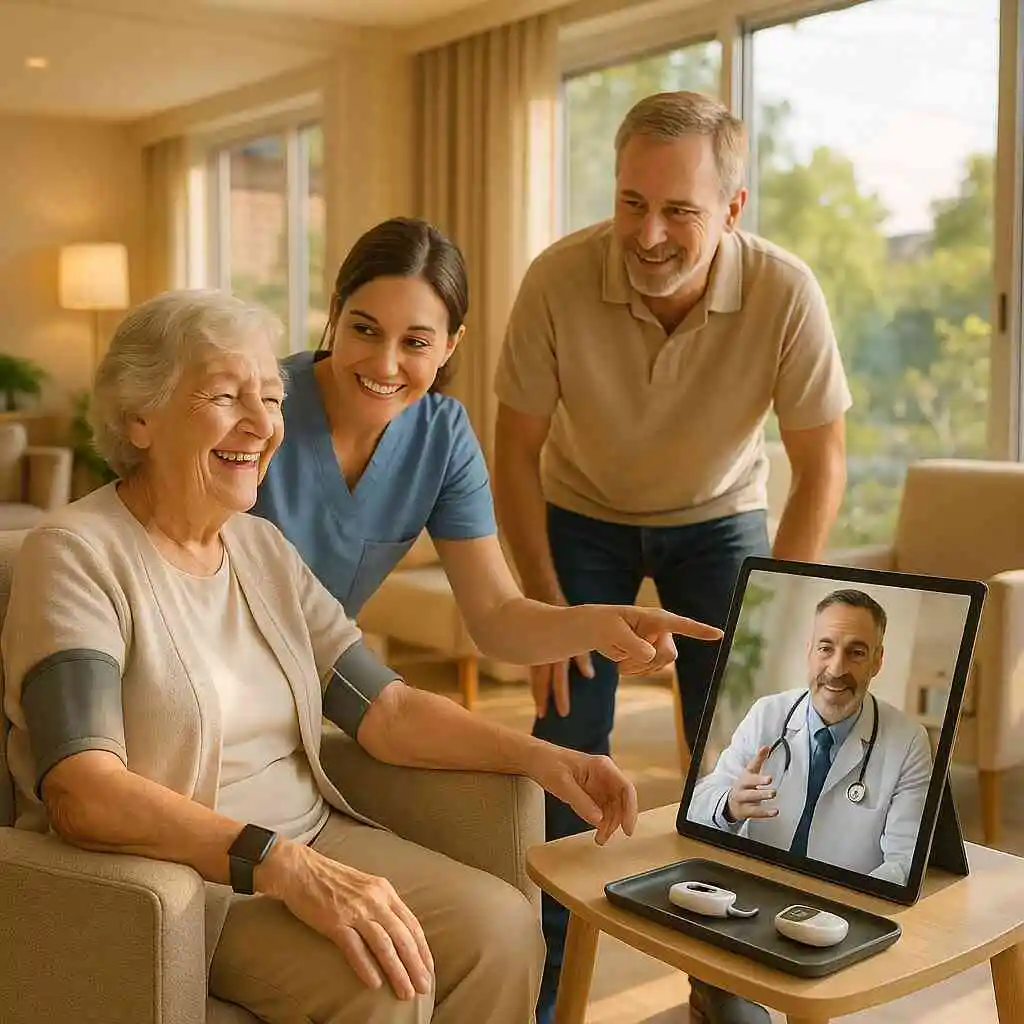
Choosing the best telehealth devices for senior apartment rentals begins with purpose, not price. Administrators first map clinical priorities-blood pressure, glucose, gait stability-then match sensors that capture those metrics reliably. Wearable health monitors paired with telehealth in senior apartments stream continuous data, allowing remote patient monitoring in assisted living to flag anomalies quickly. Fall detection integration with virtual care platforms adds an extra layer of safety because accelerometers send alerts the moment impact occurs. By bundling devices under one HIPAA compliant telehealth solution for seniors, teams avoid software silos that frustrate nurses.
Hardware alone cannot guarantee success; configuration and training close the loop. Staff calibrate every device to fit older physiology, adjusting heart-rate thresholds that differ from adult baselines. Residents practice using smartwatches or pendant buttons during low-pressure drills, reducing anxiety when real incidents arise. Integration with integrated EHR systems for telecare in senior housing ensures that alerts auto-populate charts, eliminating duplicate documentation. Finally, leadership sets quality benchmarks for senior telehealth care, measuring reduced response times to falls and medication conflicts averted through automatic vitals review.
Remote rehabilitation services and virtual wellness programs in independent living communities
Remote rehabilitation services in independent living communities empower residents recovering from surgery or managing chronic disease. Physical therapists stream sessions through large tablets, demonstrating safe movements and correcting posture in real time. Resistance bands with embedded sensors record reps, feeding progress data into chronic disease management via telehealth for residents 55 plus. Because travel barriers disappear, attendance rates soar, amplifying functional gains and trimming dependence on walkers.
Virtual wellness programs in retirement residences elevate daily routines from passive to proactive. Guided yoga, cognitive games, and nutrition coaching broadcast live, keeping social connection intact even when the weather discourages outdoor activity. Administrators study cost comparison of telehealth versus in-person visits for seniors, discovering that group virtual classes deliver robust outcomes at a fraction of transportation expenses. As satisfaction climbs, telehealth services in senior living facilities become a selling point for new tenants seeking holistic health.
Family engagement tools and telehealth nurse triage in assisted living plans
Family engagement tools in assisted living telehealth transform relatives from occasional visitors into active care partners. Secure portals display medication management through senior telehealth portals, recent vitals, and upcoming therapy goals. Loved ones leave encouraging notes that caregivers read aloud, boosting motivation among residents. When dashboards indicate deviations-like skipped meals-telehealth nurse triage in communities for seniors 55+ initiates outreach within minutes, often resolving issues before they escalate.
The same infrastructure supports immediate escalation paths. If a blood pressure spike accompanies dizziness, nurses launch emergency teleconsultations, connecting virtual physician visits for older adults without delay. This rapid loop meets regulatory compliance for telehealth in senior living near me by documenting every step, from initial alert to physician directive. Comparing telemedicine platforms in nursing homes for the elderly shows similar features, but assisted living plans shine when family communication stays front and center.
Broadband access challenges and rural senior living telehealth connectivity
Broadband access in retirement communities underpins every sensor and video stream, yet many properties still rely on dated DSL lines. Packet loss can distort heart sounds during auscultation, jeopardizing accuracy. Facility executives therefore assess latency thresholds and prioritize symmetrical upload speeds that match high-definition demands. Partnering with local carriers for fiber pathways may take months, so interim cellular boosters keep care consistent during rollout.
Rural geographies pose deeper hurdles, but creative partnerships close gaps. For example, rural senior living options in Alaska, which enhance telehealth connectivity use satellite backhauls combined with shoreline microwave relays. Redundant power systems mitigate weather disruptions, ensuring telepsychiatry in long-term care facilities continues uninterrupted. Administrators also track CMS reimbursement guidelines for telehealth in long-term care, aligning investments with sustainable funding streams and telehealth reimbursement policies for nursing homes nationwide.
Outcome reporting and telehealth satisfaction surveys in senior housing
Outcome reporting for telehealth in senior living communities converts raw metrics into actionable insight. Dashboards plot hospitalization trends, showing how remote patient monitoring stabilizes heart failure residents over quarters. Key safety indicators mirror those outlined in industry frameworks, illustrating adherence to standards more clearly than narrative notes ever could. Quality committees benchmark these figures against key safety metrics for remote healthcare in assisted living, keeping performance transparent.
Numbers matter, yet perceptions complete the picture. Telehealth satisfaction surveys in senior housing ask elders about ease of logins, sense of privacy, and perceived empathy from on-screen clinicians. Data often reveal subtle adoption barriers among older Americans, such as fear of accidental button presses or skepticism about video reliability. By addressing concerns directly-adding larger icons, offering practice sessions-teams boost engagement and safeguard continued use. Sustained monitoring then closes the loop, validating that changes not only please residents but also improve health outcomes.
Future Ready Conclusions Connecting Seniors to Quality Virtual Care
Telehealth adoption barriers and breakthrough strategies among older Americans
Older adults often hesitate when technology replaces handshake appointments. Common telehealth adoption barriers among older Americans include low digital literacy, fear of making errors, and limited sensory dexterity. Some residents worry that virtual screens erode personal rapport, while others distrust remote diagnoses. Furthermore, inconsistent broadband access in retirement communities amplifies frustration and reinforces skepticism. Recognizing these emotional hurdles is the first step toward meaningful engagement.
Breakthrough strategies start with empathy-driven education sessions led by familiar caregivers. Residents practice logging in, adjusting audio, and positioning cameras until each movement feels automatic. Voice-activated hubs and enlarged icons accommodate arthritis and visual impairments, weaving usability into daily routines. Facilities that embed telehealth best practices in a senior living facility-such as friendly rehearsal calls before clinical visits-report rapid confidence gains. Over time, successful health care delivery via telehealth becomes less about devices and more about trust built through patient-centered coaching.
Policy paths for telehealth reimbursement in long term care facilities
Financial sustainability determines whether virtual programs expand or stall. Federal waivers have broadened coverage, yet parity laws still vary by state, creating administrative complexity. Leadership teams track evolving CMS reimbursement guidelines for telehealth in long-term care, then translate them into facility-level billing workflows. Clear documentation of clinical necessity, patient consent, and outcome improvement strengthens every claim submission. Consistency across payers ensures that virtual physician visits for older adults remain affordable for residents and providers alike.
Beyond paperwork, robust internal audits confirm coding accuracy and safeguard against penalties. Administrators collaborate with compliance officers to align telecare workflows with regulatory standards in nursing homes for telemedicine, as well as assisted living statutes. Transparent data dashboards linking remote patient monitoring alerts to intervention notes further validate value. When reimbursement dovetails with measurable quality, investors, clinicians, and families all gain confidence in the expanded model of care.
Assisted living locator insights for residents seeking high quality telehealth
Choosing the right community goes beyond décor and dining menus. Families now compare telehealth services in senior living facilities with the same rigor they once applied to staffing ratios. An experienced assisted living locator reviews broadband capacity, device interoperability, and integrated EHR portals before recommending options. Prospective residents should ask whether fall detection integration with virtual care platforms is standard or an optional upgrade. Such targeted questions quickly reveal the facility’s commitment to modern, proactive medicine.
Senior Living Facilities streamlines this investigative journey by mapping telehealth readiness across thousands of properties. Our database highlights assisted living providers in Texas offering telemedicine, urban senior apartments in New York integrating virtual doctor visits, and rural communities for seniors 55+ using satellite connectivity. When additional clarity is needed, families can conveniently contact experts on senior telehealth quality questions for unbiased guidance. This personalized support turns complex technology assessments into confident, well-informed decisions.
Frequently Asked Questions
 Frequently Asked Questions
Question: How does Senior Living Facilities evaluate telehealth services in senior living facilities to ensure quality care for my loved one?
Answer: Our assisted living locator team follows a multi-point checklist that mirrors the quality benchmarks for senior telehealth care described in our research. We examine whether each senior living facility offers HIPAA compliant telehealth solutions for seniors, integrated EHR systems for telecare in senior housing, and remote patient monitoring in assisted living. We also request outcome reporting for telehealth in senior living communities-tracking hospital readmission rates, fall detection integration with virtual care platforms, and telehealth satisfaction surveys in senior housing. By comparing these metrics across hundreds of communities for seniors 55+, we can quickly highlight the safest, most connected options that match your family’s needs.
Question: What broadband access in retirement communities metrics do you review when comparing telemedicine platforms in nursing homes for the elderly?
Answer: Reliable bandwidth is the backbone of telepsychiatry in long-term care facilities and emergency teleconsultations in senior living near you. We verify symmetrical upload/download speeds, latency under 50 ms, and redundant pathways (fiber, cellular, or satellite) to safeguard virtual physician visits for older adults. We also confirm that video traffic is prioritized on the network and that power back-ups exist to keep telehealth nurse triage in communities for seniors 55+ online during outages. Facilities that cannot meet these thresholds are flagged so families can make informed choices.
Question: Can you explain how virtual physician visits for older adults and remote patient monitoring in assisted living lower costs versus in-person care?
Answer: Absolutely. A cost comparison of telehealth versus in-person visits for seniors shows savings on transportation, staffing, and personal protective equipment. When wearable health monitors paired with telehealth in senior apartments detect early changes-such as blood-pressure spikes-clinicians intervene before an expensive ER transfer is needed. These avoided admissions drive down the overall cost per resident while keeping the monthly rental housing for seniors stable. Our database highlights communities that reinvest those savings into better broadband or additional wellness services, amplifying value for residents and families alike.
Question: In the blog Compare Telehealth Quality in Senior Living Facilities, integrated EHR systems and medication management were highlighted-how do you identify communities that excel in these areas?
Answer: We look for senior living facilities where telehealth visit notes, pharmacy orders, and lab results automatically sync within the same platform. During our vetting process, we ask to see live demonstrations of medication management through senior telehealth portals, including allergy checks and refill workflows. Facilities that show reduced polypharmacy incidents and clear family engagement tools in assisted living telehealth receive our highest rating. You’ll see these distinctions when you compare listings side by side on SeniorLivingFacilities.com.
Question: My parents live in a rural area; how do Senior Living Facilities address rural senior living telehealth connectivity and regulatory compliance?
Answer: Rural senior living telehealth connectivity is a special focus for us. We identify long-term care facility options that leverage satellite or microwave backhauls, install cellular boosters, and participate in FCC broadband programs supporting rural senior telecare. We also verify that each property follows regulatory compliance for telehealth in seniors living near me-including state-specific licensure for clinicians and telehealth reimbursement policies for nursing homes. By blending connectivity data with compliance audits, we help families find seniors living near them who deliver seamless, lawful, and high-quality virtual care-even in remote ZIP codes.
Admin
Expert contributor specializing in senior living care. Dedicated to providing families with clear, actionable advice.