Deep Cleaning Standards Inside Senior Living Facilities
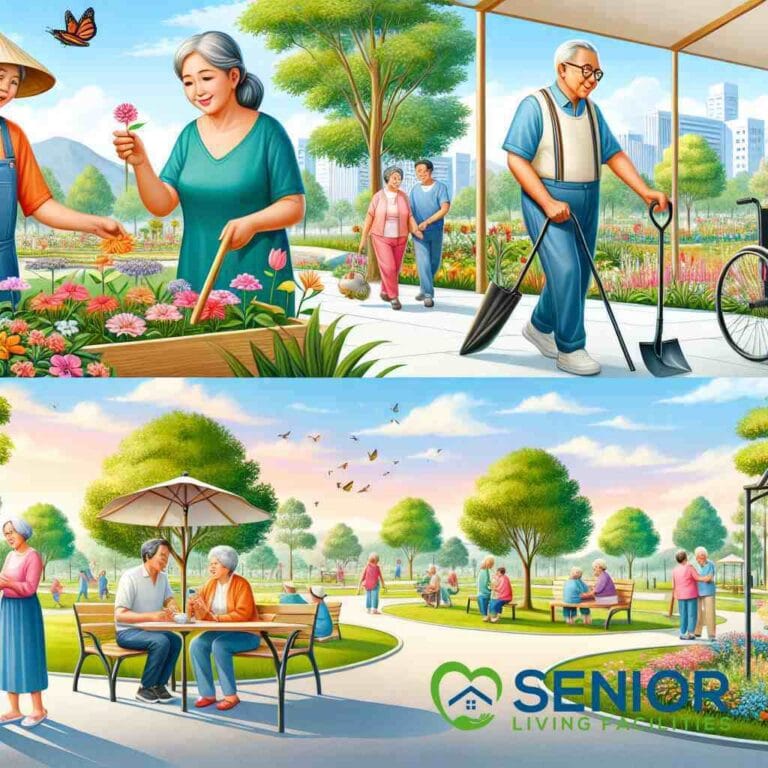
Beyond Spotless First Impressions
Why deep cleaning fuels resident health and peace of mind
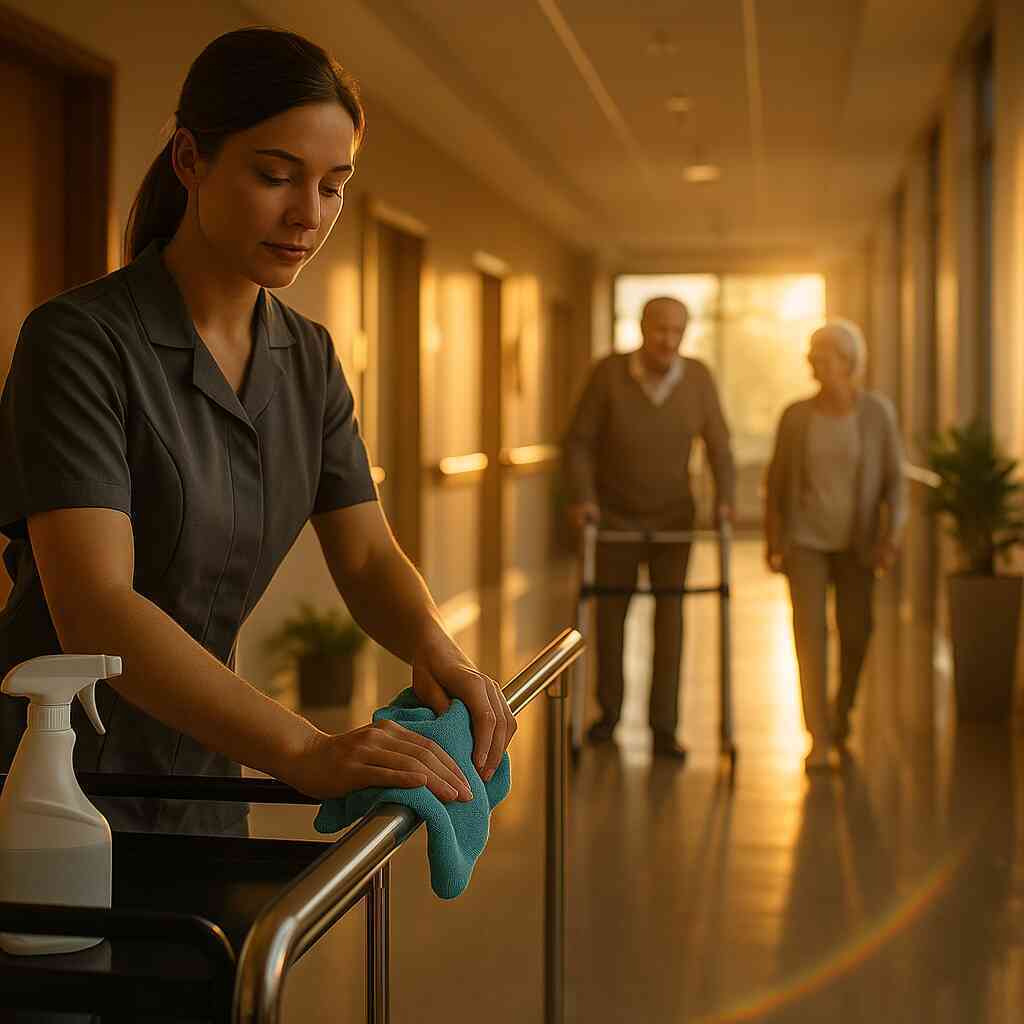
Deep cleaning protocols in senior living facilities go far beyond cosmetics; they actively shield frail immune systems. Thorough routines remove germs that compromise infection control for senior housing, especially during seasonal outbreaks. Environmental teams target high-touch surface sanitation standards on door handles, elevator buttons, and handrails where pathogens lurk. Moreover, every wipe with EPA-approved disinfectants reassures families who monitor the key safety metrics for senior communities post-COVID. Because residents see staff cleaning continuously, their anxiety lowers and their trust in the community’s care philosophy rises.
A predictable deep-clean cadence offers emotional comfort equal to medical support. Seniors notice the sparkle in common areas and feel confident inviting relatives to visit. That visible effort signals respect for residents’ dignity and validates their choice among many housing options for seniors. Communities for seniors 55+ that track and publish sanitation data show transparency, strengthening peace of mind. Consistent cleanliness also safeguards shared amenities, protecting senior apartment rentals from odor or mold issues that can trigger respiratory flare-ups.
Connecting infection control with compassionate senior care
Compassionate caregiving begins with pristine environments that honor personal space while preventing illness. Housekeepers trained in health care protocols for older adults understand how quickly minor infections escalate. They therefore coordinate schedules with nursing staff, ensuring room sanitation never disrupts medication times or daily living activities support standards. By merging clinical insight with hospitality, teams keep residents healthy without sacrificing comfort. This holistic approach distinguishes an empathetic seniors living community from an ordinary rental building.
Interdisciplinary collaboration drives stronger outcomes. Environmental services share microbe testing results with infection preventionists, who adjust cleaning frequencies based on outbreak trends. Meanwhile, recreation directors stagger group events to accommodate disinfectant dwell times, reinforcing infection control for senior housing at every turn. Because communication remains open, residents see consistency rather than chaos, feeling cared for on multiple levels. Ultimately, a spotless floor becomes a symbol of coordinated, person-centered senior care.
Setting the bar for hygiene when families search for senior living near me
When families type “senior living near me” into a browser, cleanliness indicators quickly separate contenders. Virtual tours showcasing gleaming grab bars and sanitized fitness rooms create strong first impressions. Yet discerning relatives also request written high-touch surface sanitation standards, seeking evidence that protocols match marketing claims. Communities leveraging real-time dashboards demonstrate measurable accountability, easing the decision process. Those practices set a benchmark rivals must meet or exceed.
Senior Living Facilities curates listings where hygiene excellence consistently shines. Our platform highlights inspection scores, ventilation upgrades, and green cleaning innovations, guiding families toward strategies for choosing a spotless senior residence. By comparing infection metrics across assisted living locations, users swiftly pinpoint environments that align with their loved ones’ wellness goals. As a result, the phrase “senior living near you” evolves from a simple search query into an informed, confident choice.
Mapping the Microbe Battlefield Inside a Senior Living Facility
High-touch surface hotspots and pathogen load testing essentials
Invisible microbes colonize handrails faster than many people imagine. Environmental teams map these hotspots before drafting deep cleaning protocols in senior living facilities. Door levers, elevator call panels, and recreation room tabletops all demand heightened attention because seniors touch them dozens of times daily. Infection control for senior housing begins by swabbing those areas, then sending samples to independent laboratories for rapid pathogen load testing. The resulting data guides high-touch surface sanitation standards, ensuring staff disinfects with precision rather than guesswork.
Test results rarely stay static, so regular audits remain essential. Facilities schedule weekly spot checks that validate EPA-approved disinfectants for assisted living still meet kill-time requirements. When microbial counts spike, housekeeping supervisors immediately broaden spray dwell times or swap to alternate solutions. That agile response safeguards residents with compromised immunity while simultaneously demonstrating transparency to families evaluating a senior living facility. Data posted on community dashboards reassures everyone that numbers, not assumptions, steer cleaning priorities.
Cross-contamination chokepoints in kitchens and laundry hubs
Kitchens bustle from sunrise onward, making cross-contamination prevention in senior housing kitchens a perpetual challenge. Separate color-coded cutting boards prevent raw protein juices from reaching salad greens. Equally important, floor drains receive enzymatic treatments, stopping biofilm that can aerosolize bacteria during mopping. Staff sanitizes knife handles and refrigerator gaskets between meal periods, applying high-heat dish machines that exceed regulatory compliance for CMS cleaning standards. Each measure keeps pathogens from hitchhiking onto plates or utensils used by frail residents.
Laundry hubs present distinct risks because soiled linens arrive carrying bodily fluids. Teams follow laundry sanitization guidelines in assisted living, which dictate negative-pressure intake rooms and sealed transport carts. The wash cycle reaches thermal disinfection temperatures, while peroxide-based detergents neutralize resistant spores. Finished loads move along a unidirectional pathway toward folding tables sanitized every hour. This conveyor-style layout blocks clean linens from ever contacting dirty ones, shrinking outbreak potential in even the busiest long-term care facility.
Air quality monitoring and mold prevention for senior apartment rentals
Air purity influences respiratory health as much as surface hygiene. Continuous sensors gauge humidity, carbon dioxide, and particulate counts, underpinning proactive air quality monitoring in rental housing for seniors. When readings drift outside safe ranges, maintenance triggers dehumidifiers or fresh-air exchanges before residents notice musty odors. The same alert system flags hidden leaks behind walls, allowing early mold prevention in senior apartments through prompt drywall replacement.
Sustainability can reinforce sanitation. Some communities invest in eco-friendly energy systems supporting hygiene that integrate UV-C air scrubbing within high-efficiency ventilators. These units slash pathogen circulation while lowering utility costs, proving that green technology and elder safety complement each other. Quarterly HVAC inspections accompany filter swaps rated MERV-13 or higher, capturing viral aerosols before they disperse into shared corridors. Families touring senior living near you often cite crisp, odor-free air as the moment they realize a building prioritizes wellness.
Dementia wing sensory sensitivities and advanced odor management
Residents living with cognitive decline perceive environments differently. Bright scents or loud extraction machines can trigger agitation, so dementia wing specialized cleaning techniques rely on unscented solutions and whisper-quiet vacuums. Staff schedule tasks after music therapy sessions, preserving routine and minimizing confusion. Furthermore, antimicrobial floor coatings in nursing homes for the elderly shorten drying times, preventing slips among residents who wander unpredictably.
Advanced odor management in long-term care facilities pairs enzymatic cleaners with negative-ion generators that neutralize airborne compounds rather than masking them. Regular carpet extraction standards in a seniors living community lift embedded allergens that amplify discomfort. Waste segregation rules in senior living near you isolate incontinence products within sealed bins emptied frequently, removing ammonia smells at the source. Through these layered strategies, the environment remains calm, dignified, and clinically confident-exactly what families expect from modern senior housing.
 Protocols Residents Trust The Gold Standard Deep Clean Framework
 Protocols Residents Trust The Gold Standard Deep Clean Framework
Daily EPA-approved disinfectant rotations with green cleaning solutions
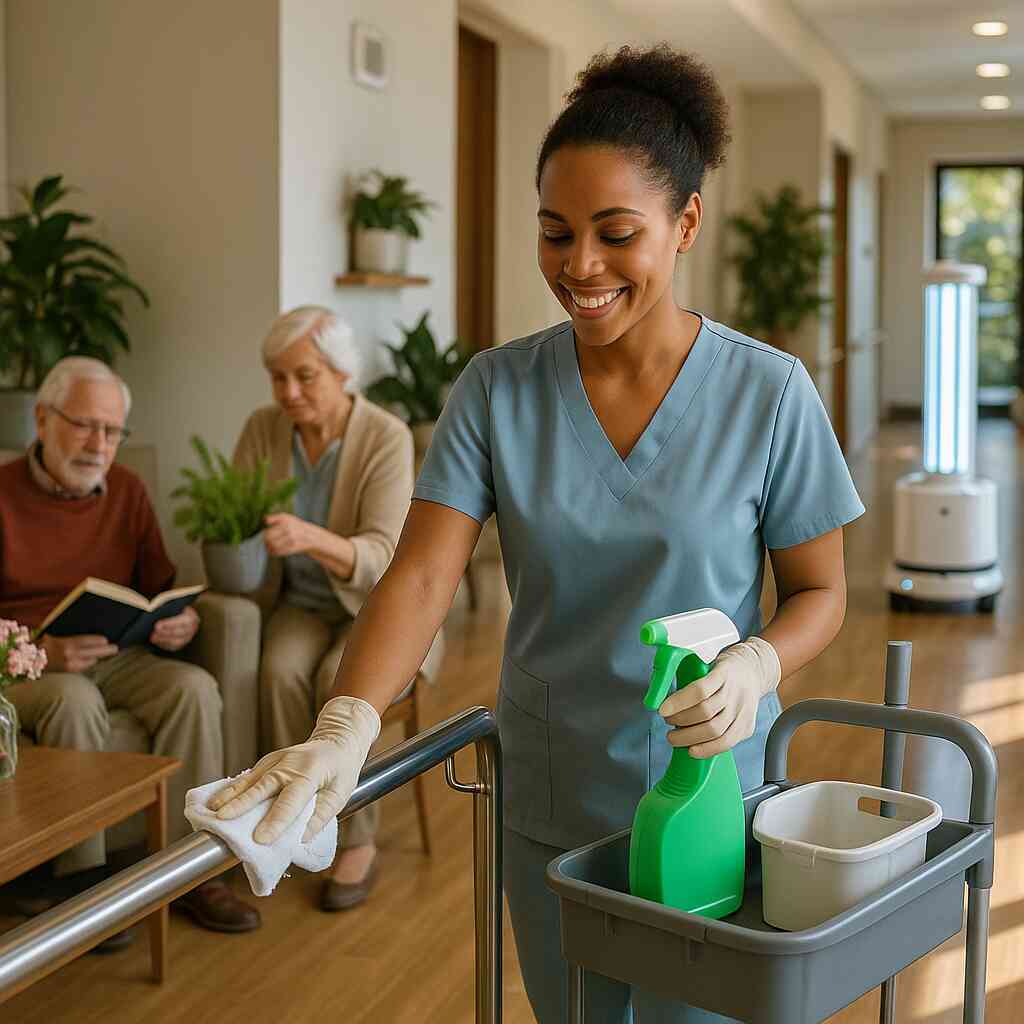
Housekeepers follow daily chemical rotation schedules to stop microbial adaptation. Each morning starts with a citrus-based hydrogen peroxide solution. Afternoon rounds deploy quaternary ammonium blends certified for health care. Evening wipes use botanical thymol formulas appealing to eco-conscious families. This rotation supports deep cleaning protocols in senior living facilities that prioritize resident immunity. Staff logs every application, making data visible on digital dashboards.
All products remain EPA-approved disinfectants for assisted living, ensuring kill claims against emerging variants. Teams pair them with microfiber cloths that trap particulates instead of spreading them. Because formulas are plant-derived, they double as green cleaning solutions for senior living near me searches that highlight sustainability. Combined steps fit COVID-safe cleaning routines for seniors, mitigating viral spread during social gatherings. Supervisors verify dwell times with color-change indicators, guaranteeing surfaces stay wet long enough.
Quarterly deep clean checklist aligned with every senior living in the state of mandate
Every quarter, the leadership team performs a wall-to-wall audit using a 400-point checklist. Items align with each senior living in the state of regulation and CMS expectations. High-touch surface sanitation standards receive timed ATP swabs that confirm microbial counts stay below thresholds. Results feed into the community’s guide to maintaining a long-term care quality log, providing families with transparent evidence. The rigorous process embodies the senior living quality audits that housekeeping departments embrace.
Tasks extend beyond visible spaces. Ceiling vents, bed casters, and privacy curtain hooks undergo dismantling and steam treatment. The quarterly deep clean checklist for senior living in the state of directives also triggers waterline flushing, preventing biofilm in sink faucets. Regulatory compliance for CMS cleaning standards demands signed verification from both the environmental manager and the infection preventionist. Their dual signatures institutionalize accountability, closing the audit loop with measurable proof.
UV-C disinfection and antimicrobial floor coatings for nursing homes for the elderly
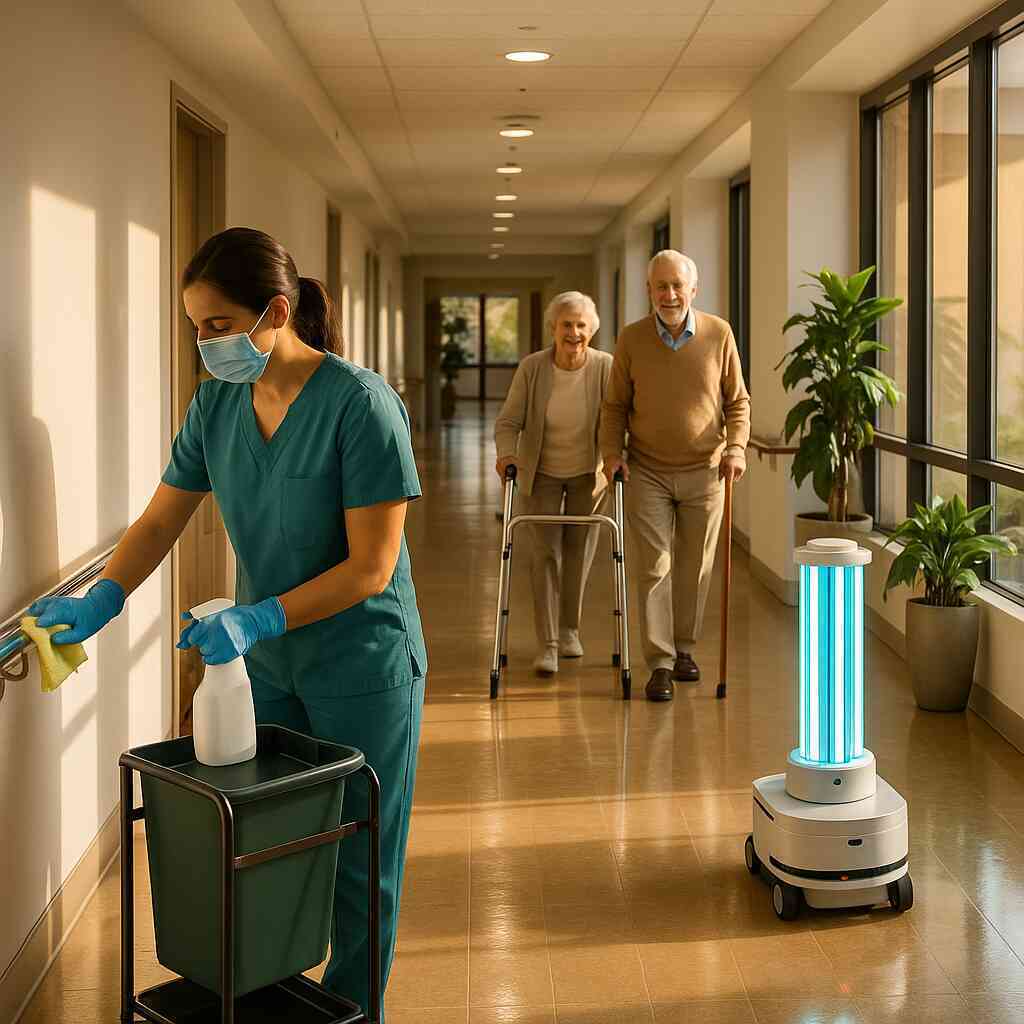
After manual cleaning ends, portable UV-C robots patrol corridors. The devices emit calibrated wavelengths that fracture viral RNA within minutes. Adoption of UV-C disinfection in assisted living locations reduces chemical footprint while boosting infection control for senior housing. Sensors confirm dosage before unlocking doors, keeping residents safe yet unexposed. Pathogen load testing in senior living facilities shows dramatic declines in colony counts after each pass.
Floors receive multilayer antimicrobial coatings engineered for heavy wheelchair traffic. These polymer films incorporate silver ions that disrupt bacterial respiration on contact. Antimicrobial floor coatings in nursing homes for the elderly shorten routine mop times because soils release quickly. Their glossy finish brightens halls, enhancing morale inside the seniors’ living community. Eco-friendly disinfecting technologies in senior living therefore blend aesthetic gains with measurable clinical benefits.
Biohazard remediation playbook and strict waste segregation rules
Occasionally, accidents occur that require immediate containment. The biohazard remediation in nursing homes protocol activates a color-coded response chart. Trained technicians don Tyvek suits and isolate the zone within sixty seconds. Negative air machines create directional airflow that shields adjacent rooms. Afterwards, ATP meters verify surfaces have returned to baseline safety levels.
Every day trash handling matters just as much. Waste segregation rules in senior living near you separate infectious, pharmaceutical, and recyclable streams at the source. Sharps containers lock automatically when full, preventing overfill injuries. Compostable food scraps are diverted to off-site digesters, reinforcing green goals while reducing odors. Clear signage helps residents participate, turning compliance into community pride.
Resident room turnover and move-in readiness procedure
When a resident relocates, a specialized crew initiates the resident room turnover deep clean protocol. Mattresses undergo ultraviolet scanning to detect hidden fluids. Walls receive low-VOC paint touch-ups that dry within hours, eliminating relocation fumes. Carpet extraction standards in the seniors living community restore fibers to a like-new appearance. Final air sampling validates particulate counts before maintenance releases keys.
Prospective families guided by assisted living locator tips for cleanliness often inspect during this turnover window. They appreciate spotless vents, polished grab bars, and fresh bedding scents. Such detail reinforces senior living facility housekeeping best practices and differentiates the property in competitive markets. The protocol also supports senior apartment rentals maintenance schedules, lowering long-term refurbishment costs. Clean readiness therefore becomes both a marketing advantage and a fiscal safeguard.
Laundry sanitization guidelines and allergen reduction strategies
Linens cycle through negative-pressure intake rooms that protect hallways from aerosolized spores. Machines hit thermal thresholds exceeding regulatory benchmarks. Laundry sanitization guidelines in assisted living mandate peroxide boosters that annihilate Clostridioides spores resistant to bleach. Barcode tracking tags prevent mix-ups that could breach dignity. Completed loads travel on covered carts into the clean zone only.
Beyond pathogen control, facilities pursue allergen reduction strategies in communities for seniors 55+. Hypoallergenic detergents remove pollen, pet dander, and detergent residues that irritate skin. Ductless drying systems capture microfibers rather than vent them into outdoor courtyards. Staff training for deep cleaning in long-term care facility operations includes recognizing fabrics that shed lint, thus refining future purchases. Residents with asthma notice calmer breathing, validating the holistic hygiene approach.
Training Technology and Accountability Triad
Staff onboarding for CMS compliance and infection preventionist insights
New team members begin their journey with a structured boot camp covering regulatory compliance for CMS cleaning standards in detail. Veteran trainers explain deep cleaning protocols in senior living facilities through hands-on demonstrations, ensuring muscle memory rather than rote memorization. An infection preventionist then shares senior living infection preventionist tips, translating complex microbiology into practical daily habits. Because staff training for deep cleaning in long-term care facility settings includes scenario drills, employees learn to adjust when outbreaks threaten. Throughout orientation, supervisors emphasize that meticulous work protects residents and solidifies the community’s reputation as a leading senior living facility directory online resource.
Ongoing education never stops once the onboarding badge is earned. Monthly micro-learning videos refresh EPA-approved disinfectant contact times and reinforce high-touch surface sanitation standards. Peer mentors shadow newcomers during real rounds, offering immediate feedback that sharpens technique. Interactive quizzes deliver instant scoring, motivating continual improvement without punitive pressure. This blended approach nurtures confident professionals who uphold senior living facility housekeeping best practices every shift.
Real-time hygiene transparency reporting and quality audits for housekeeping
Families trust data they can see, so communities deploy cloud dashboards that broadcast hygiene transparency reporting in senior living corridors. ATP meters upload readings directly, turning pathogen load testing in senior living facilities into easy-to-read scorecards posted outside dining rooms. Color-coded graphics allow residents to track cleanliness almost like a weather forecast, reducing anxiety during flu season. When numbers slip, supervisors launch corrective action within minutes, proving accountability rather than excuses. Such openness also fuels senior living quality audits that housekeeping departments conduct each week.
Audit teams follow a quarterly deep clean checklist for senior living in the state of statutes but review results daily on tablets. Each failed item triggers an automatic work order, closing gaps before regulators arrive. Because reports integrate with facility-wide analytics, leadership can see trends by wing or shift, then reallocate resources intelligently. Prospective families using the search senior housing options near you tool appreciate this rigor, often citing dashboard visibility as a deciding factor.
Assisted living locator cleanliness expectations across assisted living locations
Digital researchers rely on assisted living locator tips for cleanliness long before touring in person. They compare pathogen scores, UV-C adoption rates, and laundry sanitization guidelines in assisted living communities across multiple states. To meet those expectations, managers standardize documentation templates so reports from distant assisted living locations read identically. This uniformity allows regional directors to benchmark infection control for senior housing, rewarding high performers with recognition and mentorship roles. Residents benefit because best practices migrate quickly instead of remaining siloed.
Families who used to focus solely on price now prioritize clean permanence. Transparent metrics make it easy to compare senior care settings in Illinois against sister properties elsewhere, encouraging healthy competition. Marketing teams showcase glowing audit results in brochures, but they never oversell; objective numbers speak louder than adjectives. Seniors notice the difference when grout lines sparkle and the air smells crisp, validating their decision to choose a brand committed to excellence.
Eco-friendly disinfecting technologies and senior living facility housekeeping best practices
Chemical safety matters as much as germ kill, so managers pilot eco-friendly disinfecting technologies in senior living wings first. Stabilized aqueous ozone sprayers, electrostatic misters, and botanical green cleaning solutions for senior living near me searches now replace harsher options. Equipment sensors track usage, ensuring dosing remains effective yet gentle on lungs. Residents with asthma report fewer irritations, demonstrating how environmental stewardship dovetails with wellness. These victories keep the community ahead of evolving sustainability mandates.
Innovation never excuses complacency. Housekeepers still rotate formulations to thwart resistant microbes and follow UV-C disinfection adoption in assisted living locations after hours. Maintenance logs feed into an enterprise platform that drives predictive ordering, preventing stockouts of microfiber pads. When curious prospects explore clean-focused senior living options in Texas, sales teams highlight these eco-initiatives alongside traditional amenities. The result is a resilient, future-ready ecosystem where safety and environmental ethics reinforce one another.
From Clean to Clinically Confident: Sustaining Safe Communities for Seniors 55 Plus
 From Clean to Clinically Confident: Sustaining Safe Communities for Seniors 55 Plus
Linking deep cleaning to a flourishing seniors’ living community life
A vibrant seniors living community thrives when every hallway, lounge, and suite gleams with purpose. Robust deep cleaning protocols in senior living facilities remove hidden pathogens, allowing residents to socialize without worry. With safer surfaces and fresher air, art classes fill up faster and game nights last longer. Families notice the energy shift; they see that hygiene drives engagement as powerfully as any recreation calendar. Ultimately, consistent cleanliness becomes the invisible stage on which daily joy performs.
Communities for seniors 55+ also benefit financially because pristine spaces cut emergency medical costs and lengthen asset life cycles. Leaders who follow the latest infection control for senior housing standards boost occupancy by showcasing healthy outcomes. Prospects often research online first, comparing communities through hygiene metrics rather than décor alone. A quick read of strategies for choosing a spotless senior residence equips families to ask sharper questions during tours. By meeting those questions with data-backed confidence, management transforms cleaning into a competitive advantage.
Continuous improvement loops driven by resident and family feedback
Cleanliness excellence never rests; it evolves through open dialogue and measurable goals. Residents complete monthly surveys that rate odor control, carpet freshness, and linen softness. Environmental services merge these insights with hygiene transparency reporting in senior living dashboards, surfacing trends before they become complaints. When indicators dip, supervisors adjust chemical rotations or retrain staff during focused huddles. Rapid response builds trust because stakeholders witness problems solved in real time.
Family councils add another layer of accountability by reviewing senior living quality audits that housekeeping teams submit each quarter. Their outside perspective often uncovers small details, like scuffed baseboards near hobby rooms, that professionals might overlook. The resident room turnover deep clean protocol then incorporates those findings, ensuring the next occupant enjoys improved conditions. This iterative loop converts feedback into action, reinforcing that every voice influences community health.
Taking the next step to find senior living facilities that excel in cleanliness
When loved ones search “senior living near me,” they deserve results that highlight proven sanitation records, not vague promises. Senior Living Facilities simplifies that journey by listing housing options for seniors with documented EPA-approved disinfectant schedules and mold prevention in senior apartments. Our platform filters results by audit scores, so families immediately see which providers prioritize safety.
After narrowing choices, users tap our assisted living locator tips for cleanliness to prepare informed tour questions. They ask about cross-contamination prevention in senior housing kitchens, UV-C disinfection adoption in assisted living locations, and allergen reduction strategies in communities for seniors 55+. Transparency fosters peace of mind, turning an overwhelming process into a confident decision. Start exploring today, and discover how the right deep cleaning culture can elevate life for the elders you love.
Frequently Asked Questions
Question: How do Senior Living Facilities verify that high-touch surface sanitation standards are followed before listing a senior living facility on the platform?
Answer: Before a community appears in our nationwide database, our audit team requests recent ATP readings, high-touch surface maps, and copies of each property’s deep cleaning protocols in senior living facilities. We cross-check those documents against regulatory compliance for CMS cleaning standards and our own senior living facility housekeeping best practices checklist. Only locations that demonstrate consistent infection control for senior housing-door handles wiped with EPA-approved disinfectants for assisted living, elevator buttons logged by dwell time, and weekly pathogen load testing-move forward to publication. This vetting gives families confidence that every grab bar, handrail, and tabletop has been sanitized to measurable benchmarks.
Question: The blog Deep Cleaning Standards Inside Senior Living Facilities highlights EPA-approved disinfectants for assisted living. How can families confirm these products are truly in use when they tour a community?
Answer: We encourage visitors to request the chemical rotation sheet during their tour. Communities featured on Senior Living Facilities agree to maintain a visible log that lists the exact EPA registration numbers of all solutions-hydrogen peroxide in the morning, quaternary ammonium in the afternoon, and botanical green cleaning solutions for senior living near me searches in the evening. If the log shows gaps, that’s a red flag. Our assisted living locator tips for cleanliness also recommend asking to see color-change dwell-time indicators on recent wipe tests; these small stickers prove surfaces stayed wet long enough to kill microbes.
Question: What role does pathogen load testing in senior living facilities play in the ratings that appear on your assisted living locator?
Answer: Every listed property submits monthly lab results from its pathogen load testing program. We translate those colony counts into an easy A-F hygiene transparency reporting in senior living scores visible on each profile. Facilities scoring below a B trigger a re-inspection and cannot advertise premium placement until corrective action is documented-such as UV-C disinfection adoption in assisted living locations or antimicrobial floor coatings in nursing homes for the elderly. This data-driven approach lets families compare housing options for seniors by real science, not marketing spin.
Question: How do mold prevention in senior apartments and air quality monitoring in rental housing for seniors influence your quarterly deep clean checklist for senior living in the state of directories?
Answer: Our 400-point quarterly deep clean checklist for senior living in the state mandates HVAC filter swaps to MERV-13 or higher, humidity sensors in resident rooms, and visual inspections of window seals. Communities must upload readings from continuous air quality monitoring systems and photographs of any drywall repairs made for mold prevention in senior apartments. Those records feed into the senior apartment rentals maintenance schedules we publish, assuring prospective residents that fresh air and respiratory health remain top priorities.
Question: How does hygiene transparency reporting in senior living keep residents calm during COVID-safe cleaning routines for seniors?
Answer: Many seniors feel anxious when headlines mention new variants. Communities that partner with Senior Living Facilities display real-time dashboards-updated by staff training for deep cleaning in long-term care facility teams-that show yesterday’s ATP scores, laundry sanitization guidelines in assisted living compliance, and waste segregation rules in senior living near you performance. Seeing those green check marks reassures residents that COVID-safe cleaning routines for seniors are not occasional events but daily habits. It turns invisible germs into visible accountability, fostering trust and peace of mind across the entire seniors living community.
Admin
Expert contributor specializing in senior living care. Dedicated to providing families with clear, actionable advice.