Eco Friendly Energy Systems in Senior Living Facilities
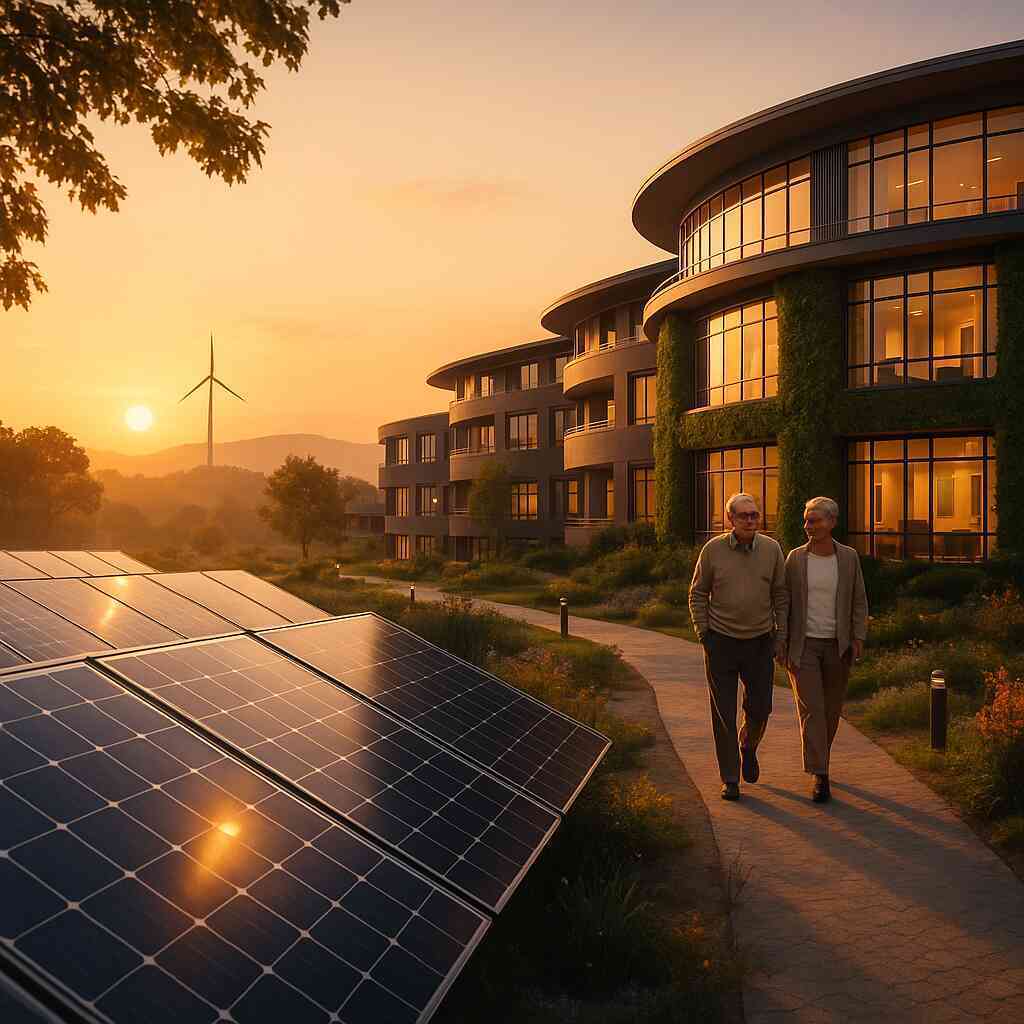
Awakening to Green Horizons in Senior Living Facilities
Why sustainable power matters for every senior living facility
Energy costs rank among the largest controllable expenses for any senior living facility, often surpassing staffing in long-term projections. Sustainable power for retirement communities therefore becomes a strategic investment, delivering lower utility bills while strengthening operational resilience. When leadership embraces eco-friendly energy systems for senior living facilities, they also reduce exposure to fuel price volatility and grid disruptions. Residents quickly notice the steadier indoor temperatures, quieter equipment, and cleaner air produced by energy efficient upgrades. Families, in turn, equate these improvements with better care quality and a forward-thinking culture.
Environmental stewardship aligns closely with the caregiving mission because older adults experience heightened sensitivity to air quality and extreme temperatures. Cleaner onsite generation, such as photovoltaic arrays paired with battery storage, slashes particulate pollution that can aggravate respiratory issues common in a long-term care facility. Lower greenhouse gas output contributes to healthier regional climates, reducing heatwave intensity that disproportionately harms frail seniors. Furthermore, green infrastructure demonstrates social responsibility, appealing to civic partners who may offer grants or favorable financing. Ultimately, efficient energy design creates a win-win where fiscal prudence meets compassionate service.
The rising expectations of eco-conscious residents in communities for seniors 55+
Today’s incoming residents spent decades recycling, driving hybrids, and advocating for clean water, so they naturally expect greener housing options for seniors. Market studies show boomers ranking sustainability alongside healthcare access when selecting a senior living community. They ask pointed questions about LED lighting retrofits, ENERGY STAR appliances, and net zero senior living facility design before signing leases. Transparency around carbon footprints and renewable electricity percentages becomes a differentiator in competitive markets saturated with similar amenities. Providers that publish clear sustainability metrics earn trust early and secure longer occupancy commitments.
Word travels quickly across social networks dedicated to communities for seniors 55+, amplifying success stories and revealing greenwashing. For example, news of sustainable senior communities in Colorado inspires prospects nationwide to demand comparable features at home. Prospective residents tour model suites equipped with smart thermostats, induction cooktops, and low-flow fixtures, expecting those features to be standard rather than upgrades. Staff engagement programs, such as resident-led energy committees, further reinforce the shared mission and foster social connection. Meeting these expectations not only boosts occupancy but also elevates overall resident satisfaction scores.
Regulatory winds and incentive programs shaping renewable energy solutions in assisted living
Federal and state agencies now tie many licensing approvals to demonstrated sustainability planning, accelerating the adoption of renewable energy solutions in assisted living. Energy codes grow stricter each cycle, requiring higher insulation values, advanced HVAC controls, and rooftop solar readiness. Meanwhile, utilities award rebates for battery storage, demand response enrollment, and efficient boilers, shrinking payback periods for capital projects. Skilled administrators leverage these incentives to modernize older campuses without burdening operating budgets.
Navigating the patchwork of grants, tax credits, and low-interest loans can overwhelm smaller operators, yet expert guidance exists. The nationwide senior living facility directory maintained by Senior Living Facilities connects decision-makers with vetted consultants who specialize in complex funding stacks. By bundling utility rebates with federal incentive programs, communities unlock comprehensive retrofits that include weatherization, solar panels, and geothermal borefields. Regulatory compliance thus transforms from a perceived hurdle into a catalyst for innovation, generating momentum toward energy independence and climate resilience.
 Integrating Renewable Power and Smart Efficiency Throughout Senior Housing
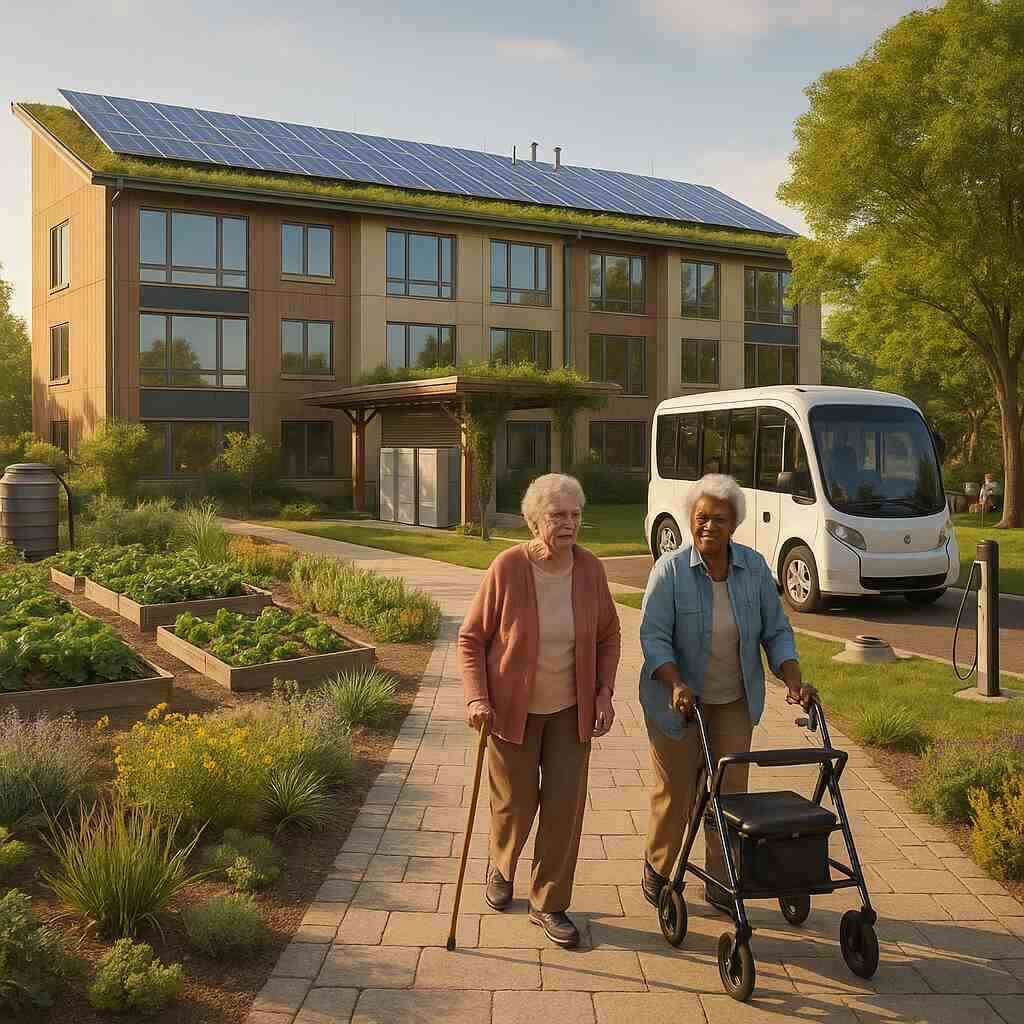 Integrating Renewable Power and Smart Efficiency Throughout Senior Housing
Solar panels and battery storage are transforming nursing homes for the elderly
Forward-thinking administrators now view rooftops as revenue generators. Installing solar panels for nursing homes converts unused space into clean power plants that slash daytime grid purchases. When paired with battery storage for senior care campuses, excess midday electricity shifts to evening peaks, trimming expensive demand charges. These eco-friendly energy systems for senior living facilities also protect medical refrigerators and oxygen concentrators during outages. Ultimately, facilities gain predictable energy costs while showcasing visible sustainability commitments to residents and regulators.
The business case strengthened as panel prices dropped and federal incentives expanded. Skilled project partners design arrays that dovetail with roofing warranties, ensuring long-term performance. Batteries qualify for additional rebates when they participate in utility demand response, delivering revenue instead of simple cost avoidance. Residents enjoy quieter campuses because the systems run silently, unlike diesel generators. One desert property even markets itself as solar powered senior living in Arizona to attract environmentally conscious retirees nationwide.
Geothermal heating and cooling in independent living communities for low carbon comfort
Geothermal systems move heat rather than create it, tapping stable underground temperatures through vertical boreholes. In independent living communities, this technology replaces fossil-fuel boilers and rooftop chillers with efficient ground-source heat pumps. Seasonal coefficients of performance exceed traditional HVAC by three or four times, meaning less electricity for the same comfort. Residents notice gentler airflow and steadier room temperatures that support wellbeing. Facilities appreciate lower maintenance because compressors operate in protected mechanical rooms, not harsh outdoor climates.
Low carbon footprint senior housing options gain a competitive edge when geothermal combines with radiant floor distribution. Warm floors soothe joints and improve circulation for aging adults. Utilities often grant rebates that shorten payback periods to seven years or less, while lifecycle savings span decades. Engineers size loops carefully to meet current demand and potential future expansions such as therapy pools. Continuous monitoring platforms detect anomalies early, preserving efficiency and protecting investment.
LED lighting retrofits and ENERGY STAR appliances are cutting utility costs in senior apartment rentals
Lighting and appliances account for a surprising share of electricity use in senior apartment rentals. Swapping incandescent bulbs with LED alternatives immediately trims wattage by 75 percent without sacrificing brightness or color quality. Residents embrace the cooler lamps because they reduce summer heat gain, supporting comfort and decreasing cooling loads. Maintenance teams celebrate longer bulb lifespans, eliminating ladder climbs that pose injury risks. Together, these benefits reinforce sustainable power for retirement communities seeking rapid wins.
Next, ENERGY STAR appliances in senior apartment rentals amplify savings. Refrigerators, laundry units, and dishwashers consume dramatically less energy and water while offering accessibility features like front controls and audible alerts. Procurement specialists negotiate volume discounts, ensuring capital budgets stay on track. Marketing teams highlight these upgrades in brochures, reassuring prospects that the community cares about climate impacts and monthly utility bills. Over time, lower operating costs stabilize rents and preserve affordability for fixed-income residents.
On site microgrids and smart energy management are boosting resilience for senior living near me
Extreme weather now threatens electrical reliability across many regions. Communities install on site microgrids for retirement villages to maintain critical operations when the larger grid fails. A microgrid blends solar, batteries, and sometimes cogeneration engines under an intelligent controller that prioritizes healthcare equipment and security systems. During blue-sky days, the same controller arbitrages energy markets, buying power when prices dip and selling when they spike. The strategy adds revenue while sharpening campus resilience planning for senior living near me.
Smart energy management also leverages internet-connected thermostats, motor drives, and sub-meters across buildings. Data analytics pinpoint waste, such as simultaneous heating and cooling or continuous fan operation at night. Facilities managers receive alerts on mobile dashboards and can dispatch technicians before costs escalate. Over months, the platform builds a benchmarking library that informs future capital projects and supports green certification for senior living facilities applications like LEED or WELL.
Water conservation strategies and sustainable landscaping around rental housing for seniors
Water efficiency dovetails with energy savings because pumping, heating, and treating water require electricity. Low-flow fixtures, pressure-regulated valves, and leak detection software cut consumption without compromising hygiene. Retrofitting showers with thermostatic controls prevents scalding, enhancing safety while preventing wasted warm water. Greywater recovery systems route lightly used sink and laundry water to irrigation, easing stress on municipal supplies. These steps support circular waste management goals embraced by many seniors’ living community councils.
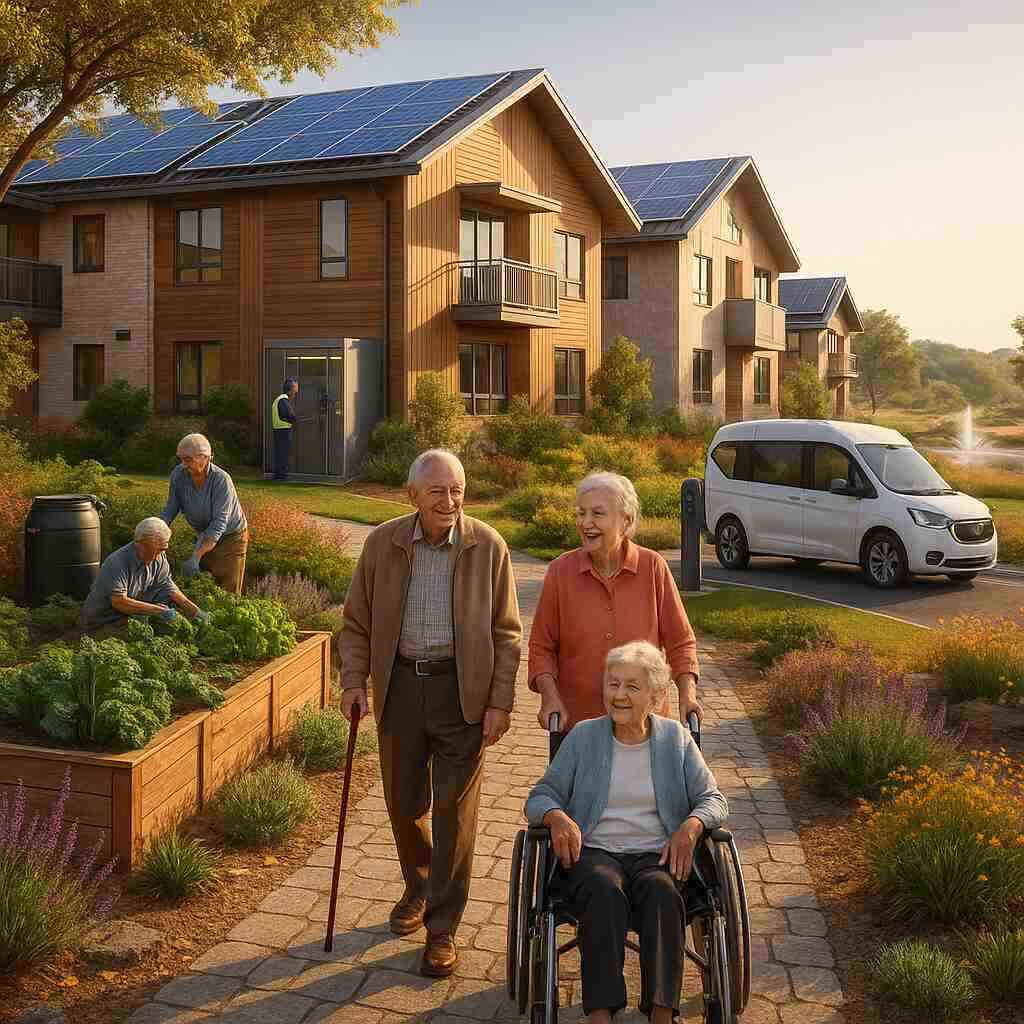
Outdoors, sustainable landscaping around rental housing for seniors relies on native, drought-tolerant species that thrive with minimal irrigation. Permeable walkways reduce runoff, protecting local watersheds and preventing slip hazards. Shade trees lower ambient temperatures, decreasing HVAC demand during heat waves. Community gardens irrigated by rainwater barrels provide fresh produce, social engagement, and nutritional education. Altogether, these strategies promote eco-conscious senior care in Washington or any other state, proving that beauty and resource stewardship can coexist.
High efficiency HVAC with advanced filtration elevating air quality in long term care facilities
Indoor air quality determines health outcomes for frail residents who spend most hours indoors. Energy efficient HVAC in senior apartments now integrates variable speed compressors, dedicated outdoor air systems, and energy recovery ventilators. The configuration supplies fresh, conditioned air without the penalty of reheating or recooling. Advanced controls modulate ventilation rates based on occupancy and carbon dioxide sensors, preventing both stuffiness and wasted energy.
Filtration technology has advanced in tandem. High MERV filters capture fine particulates, pollen, and pathogens that exacerbate respiratory conditions. Ultraviolet germicidal irradiation adds another layer of protection, disinfecting coils and airstreams without chemicals. By pairing these health measures with eco-friendly energy systems for senior living facilities, operators achieve dual objectives: resident wellness and operational savings. Staff report fewer sick days, and families note cleaner smells, reinforcing trust in the caregiving environment.
Charting the Carbon Neutral Roadmap for Senior Living Near You
Financing options and renewable energy incentives for senior housing administrators
Forward-looking administrators rarely pay full price for eco-friendly energy systems in senior living facilities because layered financing keeps projects cash-flow positive from day one. Federal Investment Tax Credits, utility rebates, and production-based grants can cover a third or more of capital costs, translating into rapid utility cost savings for senior housing administrators. Green banks and C-PACE programs then supply low-interest loans that are repaid through the property tax bill, leaving working capital untouched. Energy-service contractors may even guarantee performance, assuming risk if solar arrays or heat pumps underdeliver. Providers exploring eco-friendly senior living options in California routinely stack these incentives, proving that sustainability and fiscal prudence align neatly.
Some long-term care operators prefer power-purchase agreements, which shift upfront expenses to third-party investors in exchange for predictable kilowatt prices. Others leverage Fannie Mae’s Green Rewards mortgage, unlocking lower interest rates after documenting renewable energy incentives for long term care facility upgrades. Regardless of the path chosen, transparent cash-flow modeling builds board confidence and speeds approval. Experienced consultants detail depreciation benefits, demand-response revenue, and avoided maintenance costs to strengthen the pro-forma. With funding secured, communities transition smoothly from concept to construction, positioning themselves ahead of forthcoming carbon regulations.
LEED and other green certifications as competitive advantages in assisted living locations
Certification validates performance claims and attracts families who prioritize health and environmental stewardship. Pursuing LEED, WELL, or ENERGY STAR labels signals that the campus meets rigorous benchmarks for energy, water, and indoor air quality. These third-party seals become tangible proof of green certification for senior living facilities, differentiating an assisted living location in crowded markets. Auditors examine everything from refrigerant management to daylight levels, ensuring holistic sustainability rather than isolated upgrades. Residents, in turn, experience measurable comfort improvements that strengthen satisfaction scores.
Marketing teams weave certification achievements into brochures, tours, and social media posts, turning technical milestones into human stories. Prospects quickly grasp that a GOLD plaque equates to lower utility surcharges and cleaner air for their loved ones. Facility directors often consult the guide on understanding green design standards at senior housing to select the most strategic rating system for their region. Investors appreciate the risk mitigation that certified buildings offer through higher asset value and future-proof compliance. Consequently, certification is not just a badge; it is a multifaceted business tool.
Conducting energy audits and continuous monitoring in senior living communities
A carbon neutral roadmap begins with data. Comprehensive energy audits in nursing homes for the elderly uncover hidden losses such as simultaneous heating and cooling or failing steam traps. Certified auditors benchmark each building against regional peers, generating prioritized action lists ranked by payback period. Infrared imagery, blower-door tests, and sub-meter analysis create a fact-based foundation for capital planning. Administrators then allocate funds efficiently, tackling quick wins before deep retrofits.
Once improvements are installed, continuous monitoring platforms sustain momentum. Smart energy management for seniors living community portfolios visualizes real-time consumption, instantly flagging anomalies that would otherwise inflate bills. Monthly dashboards translate raw numbers into actionable insights for operators and resident-led green committees. Over time, the software builds a historical library that informs future rate negotiations and verifies incentive compliance. The loop of audit, action, and analytics guarantees that savings endure rather than fade.
Engaging residents and staff in circular waste management and community gardens
Technology alone cannot achieve low carbon footprint senior housing options; people must participate. Many campuses create green ambassador programs where residents track recycling rates and celebrate milestones at town-hall meetings. These initiatives nurture social connections while advancing circular waste management in seniors’ living community settings. Staff training complements resident engagement, teaching kitchen teams to separate organics for compost that later nourishes ornamental beds.
Community gardens powered by rainwater harvesting turn sustainability into a sensory experience. Raised beds invite wheelchair access, and master gardeners lead workshops on seasonal planting. Produce often supplements dining-room salads, exemplifying sustainable dining operations in senior care rather than abstract rhetoric. Children visiting grandparents witness intergenerational stewardship, strengthening community pride. The result is a virtuous cycle where environmental responsibility, nutrition, and mental well-being reinforce each other.
Preparing for the future with EV charging stations and net zero senior living facility design
Electric vehicles now deliver meals, transport residents to appointments, and provide security patrols, so charging infrastructure has become essential. Installing Level-2 stations today ensures resilience planning for senior living near me as transportation decarbonizes nationwide. Smart chargers can even participate in demand-response programs, paying campuses to curtail load during peak events. Paired with rooftop solar and battery storage, vehicle-to-building technology may soon power critical systems during outages.
Forward thinkers extend beyond electrified fleets toward net zero senior living facility design that balances annual onsite generation with consumption. Strategies include passive solar orientation, super-insulated envelopes, and heat-recovery ventilation. Inspiration comes from trailblazing net zero retirement communities in Oregon that prove carbon neutral pathways for senior living near you are achievable today. Integrating green roofs, biophilic interiors, and all-electric kitchens ensures that future phases meet ever-tightening carbon caps. By planning holistically, administrators secure regulatory compliance and protect resident well-being for decades.
Frequently Asked Questions
 Frequently Asked Questions
Question: How can Senior Living Facilities help our community finance and implement solar panels and battery storage for nursing homes so we see real utility cost savings for senior housing administrators?
Answer: Through our nationwide senior living facility directory, Senior Living Facilities connects you with vetted solar developers, green-bank lenders, and incentive experts in all 50 states. We start by mapping your current energy profile, then layer federal Investment Tax Credits, utility rebates, and demand-response revenue to keep your solar panels for nursing homes and battery storage for senior care campuses cash-flow positive from day one. Our partners handle design, permitting, and long-term maintenance, while we provide side-by-side comparisons so administrators can choose the proposal that maximizes utility cost savings for senior housing administrators without tapping operating budgets.
Question: What eco-friendly energy systems for senior living facilities offer the best resilience planning for senior living near me during extreme weather events?
Answer: We typically recommend a layered approach that combines an on site microgrid for retirement villages-featuring rooftop solar, lithium-ion batteries, and high-efficiency natural-gas generators-with smart energy management for seniors living community campuses. This configuration keeps critical equipment such as oxygen concentrators and medication refrigerators running when the grid goes down, while also participating in peak-shaving programs on normal days. Senior Living Facilities maintains a roster of engineering firms that specialize in resilience planning for senior living near you, ensuring that every system is right-sized for local climate risks and regulatory requirements.
Question: In your blog Eco Friendly Energy Systems in Senior Living Facilities you highlighted geothermal heating in independent living communities. How do we know if geothermal is the right low carbon footprint option for our property?
Answer: Geothermal suitability depends on subsurface conditions, available land, and existing HVAC infrastructure. Through our assisted living locator tools, we arrange for certified auditors to perform thermal-conductivity tests and lifecycle cost modeling. They compare geothermal heating in independent living communities against alternatives like high-efficiency HVAC in senior apartments or passive solar design in housing options for seniors. You receive a transparent report showing capital costs, payback timelines, and potential renewable energy incentives for long term care facility upgrades, helping boards make evidence-based decisions.
Question: How does smart energy management for a senior living community improve air quality and resident comfort while cutting emissions?
Answer: Smart energy management platforms integrate IoT thermostats, variable-speed drives, and sub-metering to optimize energy efficient HVAC in senior apartments. They automatically adjust ventilation based on occupancy and CO₂ levels, ensuring fresh air without over-conditioning. Combined with high-MERV filters and ultraviolet germicidal lamps, these systems reduce allergens and pathogens, directly enhancing resident well-being. Senior Living Facilities links you with technology providers that offer real-time dashboards, so facility teams can track both air-quality metrics and carbon reductions-a win for health and sustainability.
Question: Can Senior Living Facilities guide us through earning green certification for senior living facilities like LEED or ENERGY STAR while tapping renewable energy solutions in assisted living?
Answer: Absolutely. Our platform pairs communities with credentialed sustainability consultants who map out the entire green certification for senior living facilities pathway-from initial energy audits in nursing homes for the elderly to final third-party verification. They bundle climate friendly assisted living plans such as LED lighting retrofits in long term care facilities, ENERGY STAR appliances in senior apartment rentals, water conservation strategies in assisted living locations, and net zero senior living facility design elements. At each step they document points toward LEED, WELL, or ENERGY STAR scores and ensure you capture every available renewable energy incentive, lowering both project costs and future regulatory risk.
Admin
Expert contributor specializing in senior living care. Dedicated to providing families with clear, actionable advice.