
Evaluate Senior Living Facilities Dining Program Quality

Opening the Menu of Possibilities: Introduction to Evaluating Dining in Senior Living Communities
More Than Three Squares: Why Dining Defines Quality of Life in a Senior Living Facility
A thoughtfully crafted dining program separates an average senior living facility from a truly vibrant home. Mealtimes punctuate the day, offering structure, pleasure, and a sense of anticipation for residents. When menus showcase color, aroma, and nostalgic favorites, older adults regain agency over daily choices. That agency nourishes emotional wellness just as protein nourishes muscles. Dining therefore becomes a cornerstone of overall life quality, not an afterthought.
Beyond taste, each bite can reinforce independence. Safe texture-modified entrées allow residents with swallowing issues to dine beside friends without embarrassment. Clear labeling of sodium and carbohydrate levels empowers people managing hypertension or diabetes. Staff who know a resident’s coffee order create powerful moments of dignity. These seemingly small gestures accumulate, transforming routine meals into meaningful rituals that anchor community life.
Connecting Nutrition Wellness and Social Connection in Communities for Seniors 55 Plus
Nutrition science confirms that older bodies absorb fewer nutrients and often battle chronic inflammation. High-protein options, fortified soups, and omega-rich spreads can close that gap and support muscle preservation. In communities for seniors 55+, registered dietitians fine-tune macro and micronutrient targets for each resident profile. Robust hydration stations positioned near dining rooms reinforce fluid intake, protecting cognitive function and kidney health.
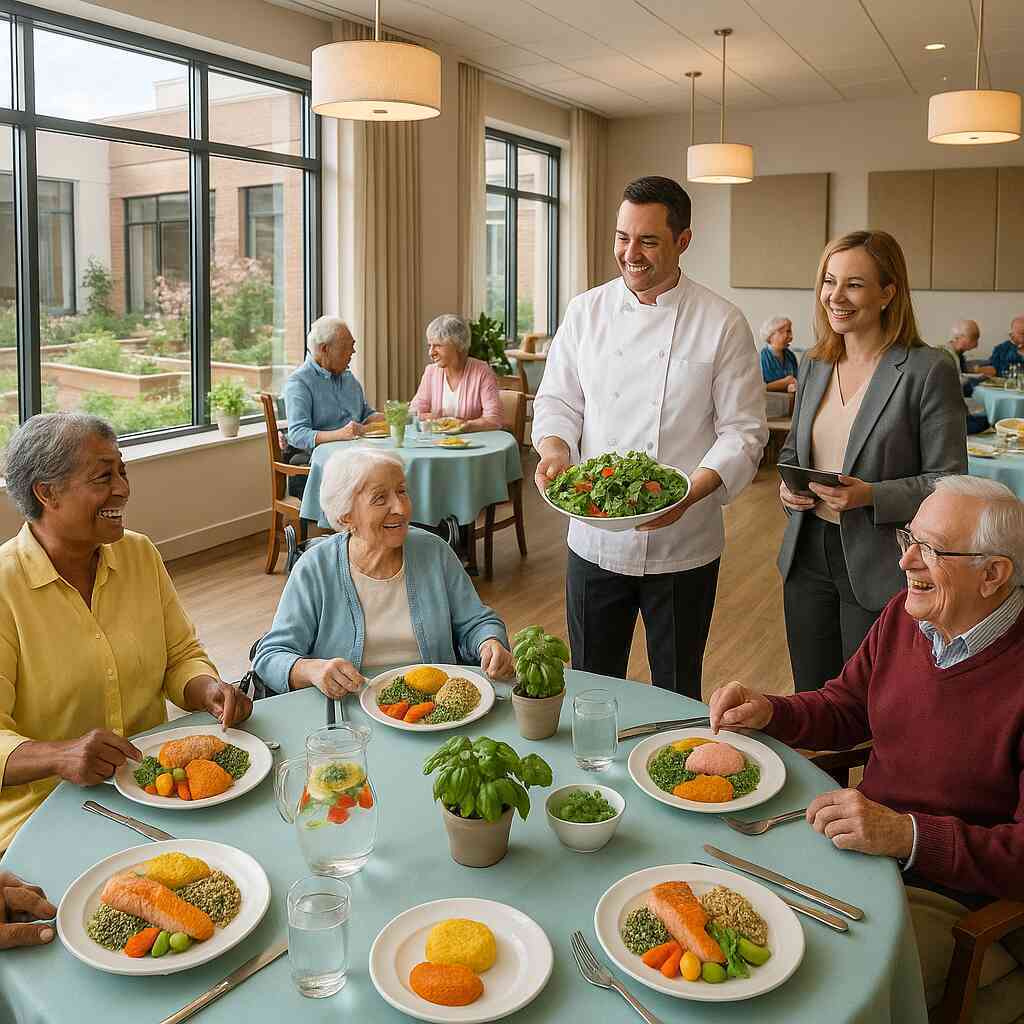
Good food also sparks good conversation. Round tables, soft lighting, and music from residents’ youth prompt storytelling that strengthens friendships. Scheduled chef demonstrations pull neighbors from apartments, encouraging movement and intellectual curiosity. Such social engagement during meals reduces depression risk and enhances appetite, creating a virtuous cycle between camaraderie and calorie intake. When families observe these lively scenes, confidence in the community’s holistic care model grows.
Using Senior Living Facilities Platform to Compare Dining Programs When Searching for Senior Living Near You
Families researching housing options for seniors often start with generic searches like “senior living near me.” Yet glossy brochures rarely reveal protein counts, cultural menu variety, or allergy protocols. The Senior Living Facilities search tool bridges that information gap by letting users filter communities according to dietary services, chef credentials, and meal plan flexibility. Side-by-side views display whether an independent living wing shares kitchens with assisted living residents or maintains separate culinary teams.
Within seconds, caregivers can bookmark properties offering farm-to-table sourcing, gluten-free bakeries, or kosher kitchens. Interactive resident reviews highlight mealtime atmosphere, while photo galleries show portion sizes and plating creativity. One glance at the senior living facilities dining comparison platform verifies whether stated nutrition standards translate into appetizing plates. By transforming subjective impressions into measurable data, the platform equips families to choose communities that honor both palate and health goals.
 The Seven Course Assessment Blueprint: Measuring and Elevating Dining Program Quality
 The Seven Course Assessment Blueprint: Measuring and Elevating Dining Program Quality
Nutrition Standards and Registered Dietitian Oversight in Assisted Living Locations
Registered dietitians translate federal guidelines into plate-ready menus that respect taste, texture, and cultural traditions. In assisted living locations, they review macronutrient targets, validate vitamin fortification, and guard against unintentional sodium creep. Their credentialed oversight ensures nutrition standards in assisted living match or exceed nursing home nutrition regulations without compromising flavor. They also monitor hydration patterns and coordinate malnutrition prevention strategies in retirement communities, catching problems before they escalate into hospital stays. A visible RD presence signals that science, not guesswork, shapes every entrée.
Families should confirm that an RD conducts quarterly chart reviews and trains cooks on portion accuracy. Ask whether therapeutic meal plans align with individual assisted living plans or depend solely on verbal orders. Examine if texture-modified diets are prepared in a dedicated station to eliminate cross-contact. Finally, request the facility’s most recent evaluating of the senior facilities dining checklist to verify compliance scores. These concrete documents transform marketing claims into verifiable evidence of quality.
Personalized Dining Experiences, Specialized Diet Accommodations and Texture Modified Options
Personalization converts routine meals into dignified experiences that honor residents’ life stories. A senior living community should capture favorite childhood dishes, spice preferences, and holiday memories during admission interviews. That data becomes a living culinary profile, updated whenever medical or cultural needs evolve. Such profiles influence seating charts, snack carts, and even birthday menus, reinforcing the feeling of home rather than institution.
Specialized diet accommodations go beyond sugar-free pudding. Residents managing dysphagia rely on smooth purées shaped into recognizable forms, allowing them to dine beside friends without embarrassment. Texture-modified options must meet IDDSI standards and be prepared with separate utensils to protect safety. Gluten-free, renal, and heart-healthy menus should post ingredient lists so that residents can exercise informed choice. When staff consistently remember a resident’s tea strength, social connection deepens and appetite rises.
Food Safety Audits and Allergy Management Protocols in Long Term Care Facilities
Food safety remains the non-negotiable foundation of every long-term care facility’s menu. Monthly internal audits should mirror state inspections, checking holding temperatures, sanitization logs, and vendor certificates. Surprise drills that simulate power outages ensure contingency plans protect refrigerated inventory. These actions build a culture where compliance lives beyond the clipboard.
Allergy management starts with highlighting the eight major allergens on printed menus in at least sixteen-point font. Electronic point-of-sale systems should flash alerts when a resident with peanut anaphylaxis orders dessert. Cross-training every server, not just kitchen managers, guarantees an immediate response if symptoms occur in the dining room. Such rigorous protocols reassure families searching “senior living near me” that their loved one’s safety is locked in.
Menu Diversity, Seasonal Planning and Culturally Inclusive Culinary Excellence
Menu diversity keeps palates interested and sparks mealtime conversation. Seasonal planning allows chefs to swap winter root vegetables for crisp spring greens, showcasing freshness and controlling costs. Rotating themes-Latin fusion one week, Southern comfort the next-celebrate cultural heritage and invite storytelling among tablemates. Including vegetarian and plant-forward dishes supports residents managing cholesterol while honoring evolving food trends.
Culturally inclusive culinary excellence respects religious observances, from kosher preparation zones to halal butchering standards. Facilities should invite resident councils to suggest family recipes for the monthly spotlight. When elders see their traditions valued, they feel ownership within the community. This approach also attracts diverse staff talent, infusing kitchens with adventurous techniques that elevate flavor across the board.
Farm to Table and Sustainable Sourcing Practices Boosting Freshness and Resident Engagement
Farm-to-table programs shorten the distance between soil and supper, maximizing nutrient density and taste. Partnering with local growers lets kitchens accept just-picked heirloom tomatoes that would never survive cross-country shipping. Residents taste the difference instantly and often request kitchen garden tours as an afternoon activity of daily living.
Sustainable sourcing practices include purchasing seafood certified by national councils and replacing disposable trays with compostable bamboo. Many senior apartment rentals install herb planters on patios, empowering elders to snip basil for the chef. These green initiatives align with environmental values that modern seniors hold dear, transforming dining into a shared mission rather than a passive service.
Cost per Resident Meal Analysis: Balancing Budget with High Protein and Fortified Foods
Balancing budget constraints with premier dining standards for seniors requires granular cost analysis. Administrators should calculate the cost per resident meal, separating raw food, labor, and overhead. High-protein options like Greek yogurt or legume-based entrées may appear pricey, yet strategic bulk contracts can neutralize expenditure. Fortified foods deliver extra calories without enlarging portions, supporting frail residents while controlling waste.
Transparent financial dashboards presented at continuous improvement dining committees build trust among stakeholders. When residents see that sustainable salmon costs twenty cents more per plate but boosts omega-3 intake, they appreciate the trade-off. Effective cost management frees funds for special events such as chef’s table nights that keep independent living community diners excited.
Dining Environment Ambiance and Mealtime Socialization Benefits for Seniors
Ambiance converts calories into joyous experiences. Soft lighting, linens in warm hues, and background music from residents’ young adulthood all encourage longer table stays. Longer stays translate into better nutrient absorption and social engagement during meals in senior communities. Noise-dampening panels reduce clatter, aiding residents with hearing aids who might otherwise withdraw.
Strategic seating assignments mix new residents with veteran neighbors, accelerating friendship development. Portable induction carts enable on-the-spot omelet stations, releasing appetizing aromas that stimulate appetite. Thoughtful layout considers wheelchair turning radii, reducing anxiety for mobility-impaired diners. In this way, mealtime transforms into a social anchor that combats loneliness better than any pill.
Resident Meal Satisfaction Surveys, Family Taste Test Events and Independent Living Community Dining Reviews
Resident feedback turns anecdotal praise into actionable metrics. Quarterly surveys should measure presentation, temperature, flavor variety, and service speed, using a simple five-point scale. Offering comment cards in multiple languages invites candid observations from diverse populations. Survey results feed scorecards displayed on community bulletin boards, promoting transparency.
Family taste-test events showcase new recipes before they reach the general menu, generating buzz and constructive critique. Independent living community dining reviews posted online empower prospects to compare kitchens as easily as they compare floor plans. Combining qualitative comments with numeric scores presents a holistic picture of resident meal satisfaction surveys, guiding continuous tweaks.
Outcome Based Nutrition Metrics and Continuous Improvement Dining Committees
Data closes the loop between intention and impact. Key outcome-based nutrition metrics include unintentional weight loss rates, hydration status, and prealbumin lab levels. Continuous improvement dining committees meet monthly, analyzing trends and setting targeted interventions. If weight loss spikes among residents with dementia, committees might introduce finger-food buffets to encourage self-feeding.
These multidisciplinary groups include caregivers, chefs, dietitians, and at least one resident representative. Together they track benchmarks, assign accountability, and celebrate victories. By comparing internal metrics with national benchmarks, a senior living facility can market measurable excellence to families searching for “senior living near you.” Sustained success becomes easier when every stakeholder owns the mission of delicious, therapeutic, and safe meals.
From Feedback to Five Stars: Conclusion Sustaining Culinary Excellence in Senior Living Facilities
Translating Evaluation Results into Actionable Improvement Plans
Every senior living facility’s dining program collects data, yet transformation begins only when numbers tell a clear story. Administrators should convene continuous improvement dining committees within forty-eight hours of compiling resident meal satisfaction surveys. Committee members translate feedback on portion size, spice levels, and ambiance into prioritized action items. They also pair outcome-based nutrition metrics with resident comments to reveal root causes behind weight fluctuations or dwindling appetites. Because each recommendation receives a deadline and an accountable owner, evaluating senior dining quality shifts from a theoretical exercise to a daily practice.
Timely communication keeps momentum alive. Chefs post progress charts near entrance podiums so residents witness change, reinforcing trust and boosting mealtime socialization benefits for seniors. When residents see their suggestion for softer lighting implemented within a week, engagement skyrockets. Likewise, caregivers update family dashboards that track a reduction in texture modified diet plate waste. This transparent loop honors a personalized dining experience for seniors while reinforcing the value of honest critique.
Empowering Culinary Teams Through Ongoing Training and Credential Development
Culinary excellence in senior living hinges on motivated professionals who understand geriatric nutrition. Facilities should subsidize certifications in food allergy management in senior care settings and safe puree artistry to elevate assisted living culinary team credentials. Monthly workshops led by registered dietitians oversight of senior housing partners keep cooks fluent in the latest malnutrition prevention strategies in retirement communities. Cross-training servers on hydration monitoring programs for seniors prevents siloed knowledge and strengthens resident safety.
Moreover, peer-to-peer tasting labs foster innovation without inflating budgets. Line cooks rotate through farm-to-table menus for older adults, learning seasonal menu planning for assisted living facilities by preparing spring asparagus or autumn squash. Successes gain visibility on internal social channels, rewarding initiative. By investing in talent, leadership reduces turnover while cultivating teams eager to exceed premier dining standards for seniors. Staff pride then radiates through every plate that leaves the pass, creating an environment where excellence feels inevitable.
Tracking Progress with Senior Living Facility Dining Ratings and Benchmarking Tools
Objective scorecards translate daily hustle into measurable victories. Facilities can benchmark protein density, cost per resident meal analysis, and menu variety benchmarks in senior living communities against regional leaders. Dashboards display running averages of fortified foods for elderly nutrition, enabling swift responses when values dip. Including independent living community dining reviews gathered online widens the data set, ensuring administrators consider external perception as well as internal numbers.
To motivate teams, convert metrics into friendly competition among neighborhoods or floors. Post colorful leaderboards that celebrate the wing with the highest resident satisfaction increase or the lowest food waste ratio. In quarterly town halls, highlight how upgraded equipment improved the dining environment and ambiance assessment scores. One strategic resource for understanding industry benchmarks is the premier dining standards for seniors guide, which offers peers a north star for improvement. When transparent metrics meet inspirational targets, performance gaps close quickly.
Looking Ahead: Emerging Trends in Smart Kitchens, Hydration Monitoring and Transparent Menu Portals
The next wave of innovation will reshape nutrition standards in assisted living without sacrificing humanity. Smart ovens that log temperature compliance support food safety audits in long-term care facilities by uploading data directly to cloud dashboards. Wearable sensors will soon sync with hydration stations, alerting nurses when residents lag behind fluid goals. Transparent menu portals, accessible on tablets, will list allergen icons, carbon footprints, and high-protein menu development for seniors in real time.
Culturally diverse menus for senior residents will benefit from artificial intelligence predicting flavor preferences based on survey sentiment and purchasing trends. Meanwhile, blockchain-verified supply chains promise verifiable sustainable sourcing in senior living kitchens. As technology advances, the human touch remains vital. Chefs will still greet diners by name, servers will still recall favorite soups, and families will still gather for family taste-test events at senior facilities. By blending digital precision with heartfelt hospitality, communities ensure their dining rooms earn and keep five shining stars.
Frequently Asked Questions
 Frequently Asked Questions
Question: How do Senior Living Facilities verify nutrition standards in assisted living locations before featuring them on your site?
Answer: Every community we list must submit its most recent dining program audit, including registered dietitian oversight reports, cost-per-resident meal analysis, and food safety audits in long-term care facilities. Our quality team cross-checks these documents against state regulations and the senior dining program quality checklist we developed with geriatric nutrition experts. Only properties that meet or exceed national nutrition standards in assisted living and demonstrate continuous improvement dining committees earn a place on our platform. This vetting process ensures families comparing housing options for seniors get reliable, up-to-date data instead of marketing promises.
Question: Can Senior Living Facilities help me find communities that excel at specialized diet accommodations in senior living, such as texture modified diets or gluten-free menus?
Answer: Absolutely. When you search for seniors living near you on our site, you can filter results by keywords like personalized dining experience for seniors, texture modified diets in nursing homes, and food allergy management in senior care settings. Each profile shows whether the culinary team holds assisted living culinary team credentials in puree artistry or allergen-free preparation. Resident reviews and independent living community dining ratings also note real-world satisfaction with specialized diet accommodations, giving you a 360-degree view before you schedule a tour.
Question: The blog title Evaluate Senior Living Facilities Dining Program Quality talks about resident meal satisfaction surveys-do you share those scores when I compare senior living near me?
Answer: Yes. We post the latest resident meal satisfaction surveys right on each community’s page, alongside menu variety benchmarks in senior living communities. You can see scores for flavor, service speed, dining environment and ambiance assessment, and mealtime socialization benefits for seniors. If a facility hosts family taste-test events at senior facilities, we flag that too, because it shows a culture of transparency and collaboration. These metrics make evaluating senior dining quality as simple as checking a restaurant review.
Question: How do you spotlight farm-to-table menus for older adults and sustainable sourcing in senior living kitchens so we can choose a greener community?
Answer: Our search filters include sustainable sourcing in senior living kitchens and farm-to-table menus for older adults. Communities that partner with local growers, use certified-sustainable seafood, or run on-site herb gardens earn a green leaf icon in their profile. We also display outcome-based nutrition metrics like omega-3 intake improvements tied to those initiatives. By marrying environmental stewardship with high-protein menu development for seniors, these facilities often score higher on overall senior living facilities dining program ratings-and we make that easy for you to spot at a glance.
Admin
Expert contributor specializing in senior living care. Dedicated to providing families with clear, actionable advice.