
Senior Living Facilities Post Surgery Rehab Planning
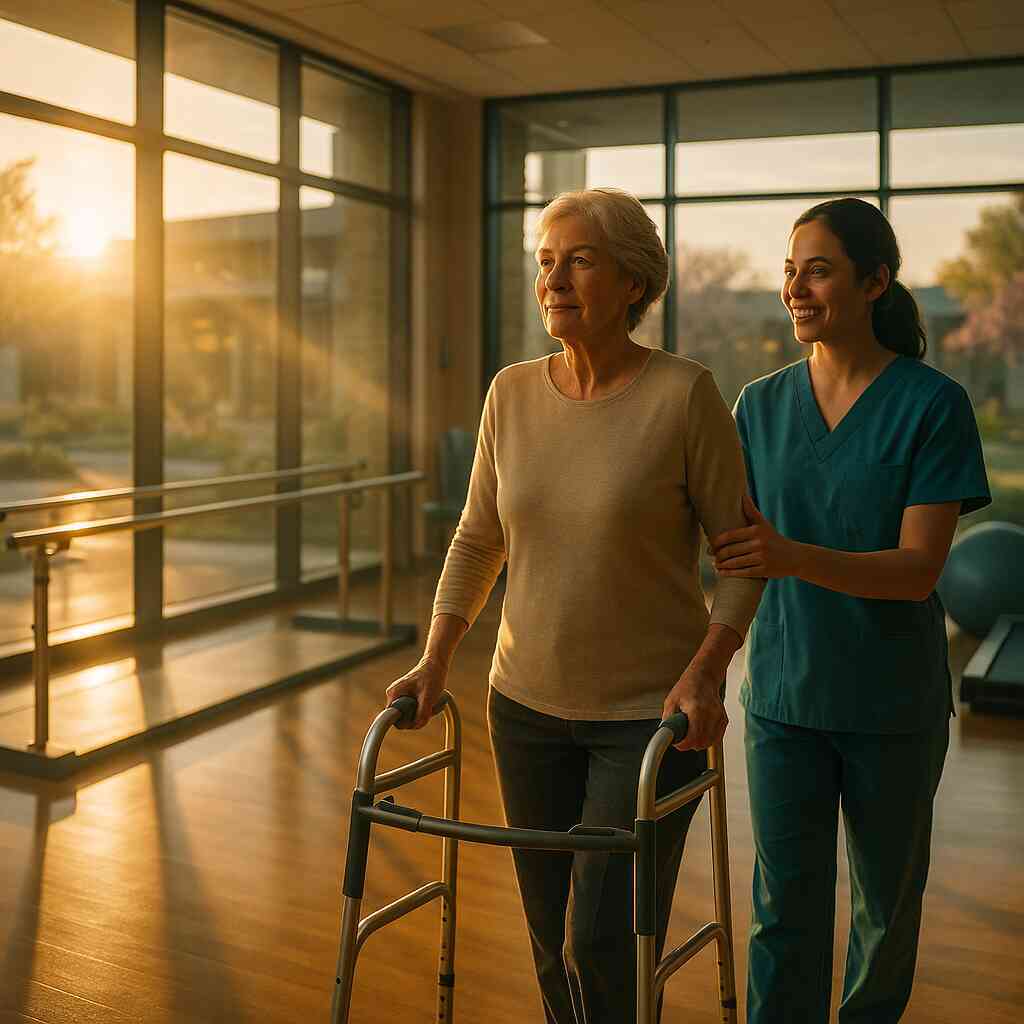
Mapping the Road Back to Independence
Why post surgery rehabilitation for seniors start before discharge
Older adults heal best when a plan is in place before the first hospital bandage comes off. Surgeons, nurses, and social workers must identify mobility limits, medication changes, and home hazards early. Discussing available senior living facilities gives families options that fit their lifestyle and budget. This proactive mindset lowers readmission risk and eases anxiety for the entire support circle. Every minute spent planning before discharge shortens the road back to independence.
The hospital environment moves quickly, yet thoughtful conversations protect long-term outcomes. Including communities for seniors 55+ in team rounds helps caregivers picture the resident’s next setting. Clear expectations about physical therapy frequency, wound checks, and transportation prevent missteps once the patient leaves. Families also learn which housing options for seniors offer on-site rehab gyms versus visiting therapists. Early education transforms confusing medical jargon into actionable goals seniors can embrace. That shared clarity launches recovery with confidence.
Leveraging senior living facilities search tools for seamless transitions
Finding the right post-acute setting no longer involves dozens of phone calls and outdated brochures. The Senior Living Facilities platform lets families enter a zip code and instantly compare rehabilitation amenities. Filters reveal which senior living near you offers short-term suites, adaptive equipment, or bilingual therapists. Photos, floor plans, and resident reviews create a vivid picture of daily life after surgery. Digital transparency allows loved ones to make evidence-based selections, not hurried guesses.
Search results go beyond glossy images by listing therapy credentials, nurse staffing, and specialty programs. A caregiver can quickly click “find assisted rehab communities near me” to see pricing, availability, and virtual-tour links. This unified hub eliminates repetitive data entry on many websites. It also highlights rental housing for seniors that accepts Medicare rehab benefit stays. When information lives in one trusted location, transitions feel organized rather than overwhelming.
Aligning hospital goals with assisted living plans for continuity
True continuity happens when discharge paperwork speaks the same language as the assisted living plans waiting on the other side of the door. Using standardized therapy goals keeps physical therapists, nurses, and caregivers moving toward identical milestones. Before release, hospital clinicians share strength measurements, incision protocols, and pain thresholds with the receiving senior living facility. That handoff prevents gaps that could stall progress or cause complications. Collaboration preserves clinical momentum from day one.
Families can preview this coordinated roadmap through resources on post-operative rehab planning in senior living. They see how medication management, meal textures, and fall prevention strategies flow seamlessly between settings. Regular video conferences let physicians review chart notes without residents traveling back to busy clinics. Moreover, shared electronic records reduce duplicate tests and out-of-pocket costs. When everyone rows in the same direction, seniors regain independence faster and with fewer setbacks.
From Hospital Gown to Senior Living Town
Discharge coordination using an assisted living locator
A seamless discharge starts with clear transition care planning after hospital discharge, not hurried paperwork at the exit door. Hospital case managers and social workers gather therapy goals, equipment needs, and dietary restrictions. They then upload this data into an online assisted living locator connected with Senior Living Facilities. Families instantly compare senior living near you that provides on-site short-term rehab in a calming setting. Because the locator stores preferences, each click refines choices, saving precious energy for healing.
A second coordination meeting often occurs while the surgeon finalizes orders. During this session, families explore transportation assistance to follow-up appointments and in-house therapy schedules. The locator highlights staffing ratios, therapy certifications, and apartment layouts that support walker clearance. By aligning expectations early, older adults leave the hospital confident rather than confused. That emotional stability alone accelerates post surgery rehabilitation for seniors.
Personalized care plans for post acute seniors in a senior living facility
Individualized goals keep recovery on track even when multiple clinicians rotate through. Upon admission, interdisciplinary teams review hospital notes, pain scores, and previous activity levels. They craft personalized care plans for post-acute seniors that combine physical, occupational, and speech sessions. Nutritional assessments ensure protein intake supports wound healing while respecting cultural preferences. This whole-person planning turns a generic senior living facility into a tailored wellness hub.
Care conferences happen weekly, and progress is measured in steps restored, not pages of paperwork filed. Families receive digital snapshots that compare strength benchmarks with projected milestones. If swelling slows mobility, therapy intensity adjusts without delaying the discharge timeline. Senior living facilities use this flexible model to balance safety with autonomy. When each service aligns with resident values, motivation stays high throughout the rehabilitation journey.
Understanding insurance coverage and the Medicare rehab benefit
Finances can derail recovery when families misunderstand coverage windows. Staff specialists explain how Medicare rehab benefit days apply in a senior living community offering skilled nursing. They outline copays, qualifying hospital stays, and the difference between observation and inpatient status. Knowledgeable guidance prevents surprise bills that may force premature departures from supportive settings. Clarity equals empowerment for budget-minded retirees.
Private insurance often supplements Medicare but carries unique prior authorization rules. Counselors review policy language line by line, translating jargon into actionable steps. They also discuss veterans’ programs and state waivers that offset therapy charges. By demystifying insurance early, seniors focus on exercises instead of invoices. Transparent explanations build trust between residents and their chosen senior housing provider.
Medication management and skilled nursing post op care for older adults
Post-operative regimens can involve ten or more prescriptions with complicated timing. Licensed nurses in each long-term care facility create color-coded charts that prevent omissions and interactions. Electronic dispensing cabinets alert staff when doses approach, adding another safety layer. Accurate medication management in assisted living plans reduces readmissions tied to errors.
Skilled nursing post op care for older adults extends beyond pills to include wound checks, drain maintenance, and pain injections. Teams follow surgeon protocols while documenting every intervention for seamless physician review. Telehealth support for rehab residents further enhances oversight without forcing exhausting travel. With medical tasks handled, residents devote energy to mastering new mobility skills.
Family involvement in rehab goal setting within communities for seniors 55+
Family voices provide context that clinical charts miss. During intake, loved ones describe hobbies, previous sports, and home layouts that influence recovery targets. Therapists then set achievable, meaningful goals like returning to gardening rather than abstract strength numbers. This collaborative method cements trust and keeps everyone accountable.
Monthly meetings ensure goals evolve with progress. Relatives can tour therapy gyms or observe sessions virtually, fostering transparency. One daughter might research therapy-focused senior residences in Texas to compare innovations and share ideas with the current care team. Such engagement turns families into active partners, not anxious bystanders. A united support system propels seniors toward full independence inside vibrant communities for seniors 55+.
 Therapy Triad: Mobilizing Body, Mind and Home
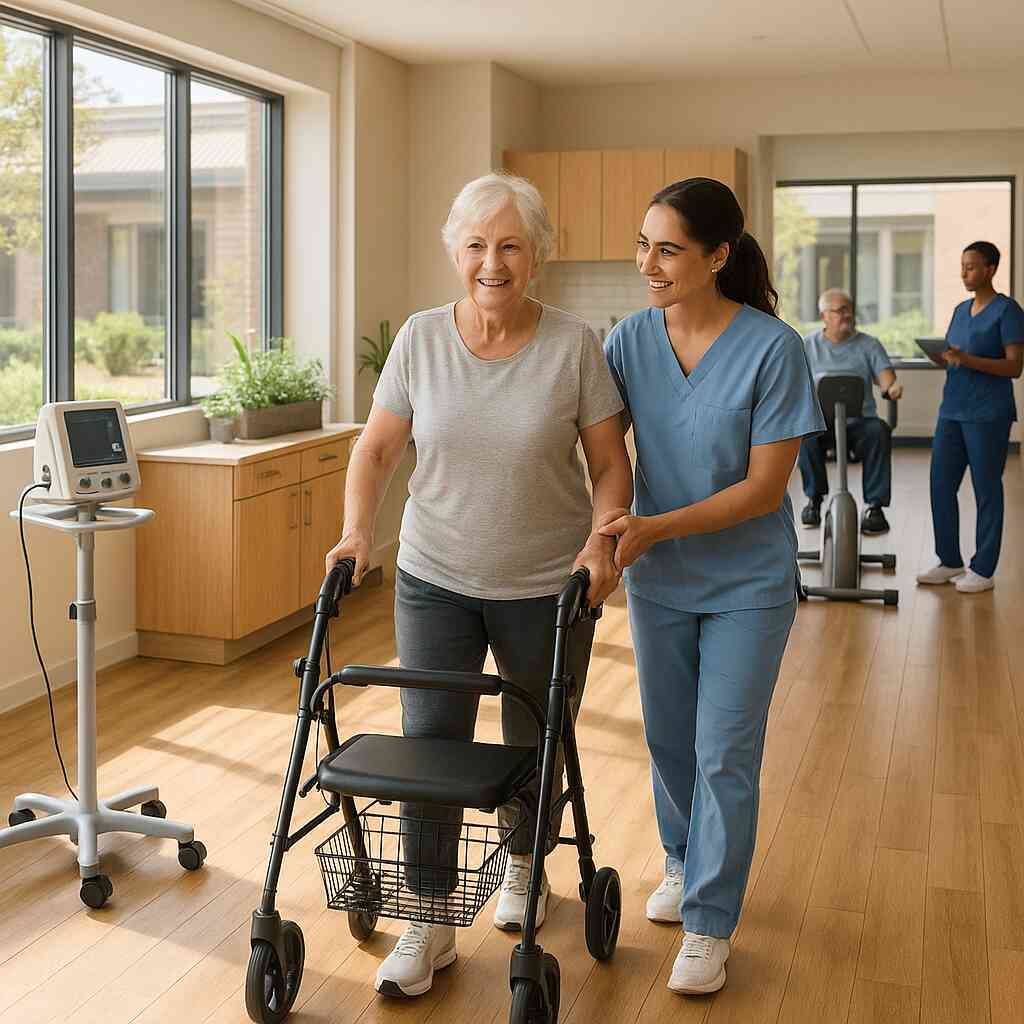 Therapy Triad: Mobilizing Body, Mind and Home
Physical therapy services in senior living near you are boosting mobility
Physical therapy fuels post surgery rehabilitation for seniors by translating hospital goals into daily movement victories. Licensed therapists in senior living facilities’ rehab programs assess range of motion, pain levels, and gait on day one. They create personalized sessions that fit each resident’s assisted living plans and energy patterns. Routine data tracking lets geriatric care managers coordinate post-surgery support and adjust intensity without risking setbacks. Families see measurable strides toward return-to-independence programs in senior living near me.
Modern programs also integrate mobility technology aiding post-surgical seniors to transform ordinary hallways into smart training zones. Pressure-sensing floors, wearable motion sensors, and virtual balance games provide real-time feedback that keeps motivation high. Communities for seniors 55+ share progress dashboards with physicians, preventing communication gaps. These tools shorten healing timelines compared with traditional nursing homes for the elderly. When science and compassion align, confidence rises with every well-guided step.
Occupational therapy within housing options for seniors supporting self care
Occupational therapists turn apartments into adaptive learning labs that nurture autonomy. In housing options for seniors, clinicians evaluate how residents bathe, cook, and manage mail after surgery. Simple adjustments-lever handles, contrasting stair tape, or reacher tools-reduce fatigue while protecting joints. Short-term rehab in a seniors living community therefore feels like practice for real life instead of clinical confinement. Success gets measured by joyful independence, not stopwatch numbers.
Sessions include daily living activities retraining that respects personal routines and cultural preferences. Therapists might simulate gardening tasks for orthopedic recovery in assisted living or organize closet shelves for shoulder precautions. By weaving therapy into meaningful contexts, motivation stays strong long after discharge dates approach. Continuous goal reviews ensure adaptive strategies evolve with healing tissues. This holistic care echoes the continuum of care across assisted living locations nationwide.
Speech therapy support in rental housing for seniors enhancing communication
Surgery and anesthesia sometimes leave subtle cognitive or swallowing challenges. Speech-language pathologists in rental housing for seniors screen for vocal weakness, memory lapses, and aspiration risks. Early detection protects nutrition counseling for surgical recovery plans from silent setbacks. Customized drills strengthen vocal cords, while memory notebooks reinforce medication management in assisted living plans. Loved ones gain scripts that simplify complex conversations during vulnerable moments.
Technology further personalizes sessions. Tablet apps help residents rehearse word-finding tasks between formal appointments. Telehealth support for rehab residents expands access when weather or fatigue limits travel. This blended model keeps learning continuous, empowering seniors to advocate for their needs clearly. Robust communication skills accelerate every other therapy domain, creating synergy throughout the seniors’ living community.
Pain management and wound care expertise at a long term care facility
Effective pain control underpins all progress. Skilled nursing post-op care for older adults blends scheduled analgesics, relaxation breathing, and cold-laser treatments to keep discomfort below functional thresholds. Nurses chart responses hourly, informing interdisciplinary tweaks that safeguard engagement in therapy sessions. Residents therefore avoid the downward spiral of guarding movements and losing strength.
Wound care expertise at a long-term care facility pairs evidence-based dressings with infection surveillance technology. Color-changing sensors alert clinicians to pH shifts before fever emerges. This vigilance protects cardiac rehab in senior living facility clients who take blood thinners, as well as orthopedic patients with hardware. Consistent documentation also satisfies Medicare rehab benefit guidance, preventing claim denials tied to incomplete notes. Healing skin, like healing muscles, thrives on meticulous attention.
Adaptive equipment training in senior apartment rentals promotes safety
Therapists introduce walkers, sock aids, and voice-activated lights during adaptive equipment training in senior apartment rentals. Residents practice transfers from adjustable beds to kitchen stools until movements feel fluid. The repetition embeds muscle memory that guards against nighttime falls. Education extends to caregivers, who learn maintenance schedules and safe-lifting body mechanics.
Vendors collaborate with occupational teams to fine-tune device selection. Ultra-light rollators suit southern rehab support in Georgia senior living, while larger wheels perform better on Midwest rehab options in Illinois assisted living sidewalks. Seamless ordering through an assisted living locator eliminates frustrating delays. Prompt delivery means confidence grows before discharge, not weeks later. Equipment becomes an ally, not a reminder of limitation.
Fall prevention strategies after surgery across assisted living locations
Fall prevention strategies after surgery begin with meticulous risk scoring and floorplan reviews. Motion-activated nightlights, non-slip socks, and scheduled toileting reduce surprise movements. Community exercise classes reinforce core strength, complementing physical therapy services in communities for seniors 55+. Residents learn to recognize fatigue cues and request transportation assistance to follow-up appointments rather than rushing alone.
Data analytics aggregate incident patterns across senior living in the state of each facility, revealing hotspots like dining-room thresholds or garden paths. Leadership responds with targeted environmental tweaks, from handrails to contrasting paint. Comparing home health vs nursing homes for the elderly shows that communal vigilance often outperforms solitary monitoring. Ultimately, prevention culture thrives when everyone-staff, residents, and families-shares responsibility for safety and continued independence.
Continuum of Care Across the Senior Living Galaxy
Comparing home health versus nursing homes for the elderly
Home health delivers therapy and nursing in a private residence, yet daily supervision can be limited. Seniors who need complex wound care or round-the-clock monitoring may find a long-term care facility more secure. Comparing home health vs nursing homes for the elderly therefore starts with evaluating medical complexity, caregiver availability, and infection risk. Senior living facilities advisors encourage frank discussions about prognosis and household safety before choosing. Transparent comparisons reduce rushed moves later and support a smoother healing path.
Financial structure also differs between the two models. Home services bill per visit, while nursing homes bundle lodging, meals, and skilled care into one rate. Insurance coverage varies, so families must examine Medicare rehab benefit rules and private policy limits carefully. When budgets, health needs, and social goals align, older adults gain peace of mind. A well-matched setting preserves dignity and speeds post surgery rehabilitation for seniors.
Short term rehab and respite stay options for surgical recovery
Hospitals discharge patients earlier than ever, making short-term rehab in a senior living community a valuable bridge. These dedicated suites supply hospital-grade equipment alongside social engagement that home bedrooms lack. Physical, occupational, and speech therapists coordinate schedules to maximize energy peaks, while nurses manage antibiotics and pain regimens. Residents enjoy restaurant-style dining and group activities between treatments, safeguarding mental health during recovery.
Respite stay options for surgical recovery also benefit family caregivers. Loved ones can recharge at home, confident that professionals handle medication management in assisted living plans. Even a two-week respite can prevent caregiver burnout and reduce readmission risk. Senior living facility teams document every milestone, so the transition back home feels organized rather than chaotic. Temporary stays thus serve both medical and emotional wellness.
Cardiac and orthopedic recovery in assisted living settings
Assisted living settings now host powerful cardiac rehab programs in a senior living facility program that rivals outpatient clinics. Clinicians monitor vitals during treadmill sessions and adjust intensity using evidence-based protocols. Dietitians coordinate low-sodium menus, while social workers run stress-management workshops. This holistic approach addresses arteries and emotions simultaneously, accelerating safe stamina gains.
Orthopedic recovery in assisted living shines through specialized gyms, hydrotherapy pools, and adaptive apartments. Some residents choose regional programs for personal goals, such as the Midwest rehab options in Illinois assisted living that feature heated indoor tracks. On-site therapists align weight-bearing precautions with everyday tasks like dressing or gardening. Consistent coaching prevents device misuse and supports long-term joint protection. Integrating cardiac and orthopedic services under one roof simplifies follow-up scheduling and keeps momentum strong.
Transportation assistance to follow up appointments and therapies
Reliable transportation often dictates whether seniors maintain therapy momentum. Senior living near you typically offers wheelchair-accessible vans driven by trained aides who understand post-operative precautions. Scheduled shuttles reduce missed cardiology or orthopedic check-ups, which can trigger complications. For evening imaging studies, ride-share partnerships add flexibility without sacrificing safety oversight.
Transportation assistance to follow-up appointments also covers community outings that nurture emotional health. Grocery runs, worship services, and grandchild recitals remind residents why healing matters. Coordinators sync travel times with medication schedules to avoid fatigue crashes. By removing logistical stress, seniors focus their energy on exercises and nutritional goals rather than traffic.
Return to independence programs in senior living near me
Return-to-independence programs in senior living near me weave therapy goals into real-world scenarios. Residents practice meal prep in demonstration kitchens, navigate mock grocery aisles, and rehearse staircase safety. Each accomplishment boosts confidence and documents tangible progress toward discharge criteria. Progress boards in common areas celebrate milestones, fostering friendly competition that sparks extra effort.
These programs leverage senior living near resources such as technology-enabled fall alerts and virtual reality balance games. Geriatric care managers adjust goals weekly, ensuring challenges remain appropriate as strength returns. Families receive video updates that showcase achievements, replacing worry with pride. Focused independence training shortens overall recovery time and supports a stable homecoming.
Nutrition counseling for surgical recovery fueling healing
Healing tissues demand specific nutrients, yet appetite can plummet after anesthesia. Nutrition counseling for surgical recovery pairs registered dietitians with chefs who craft protein-rich, flavorful menus. Smoothie stations and herb gardens entice residents to meet calorie goals without monotony. Staff track intake daily and coordinate supplements when targets lag.
Dietitians also teach label reading and grocery planning for life after discharge. Classes highlight anti-inflammatory foods that ease joint pain and support cardiovascular health. Personalized snack packs help diabetics manage glucose during intense therapy sessions. This proactive approach embeds healthy habits that last beyond the seniors’ living community stay, reinforcing the entire continuum of care.
Rehabilitation Reimagined: Empowered Aging in Motion
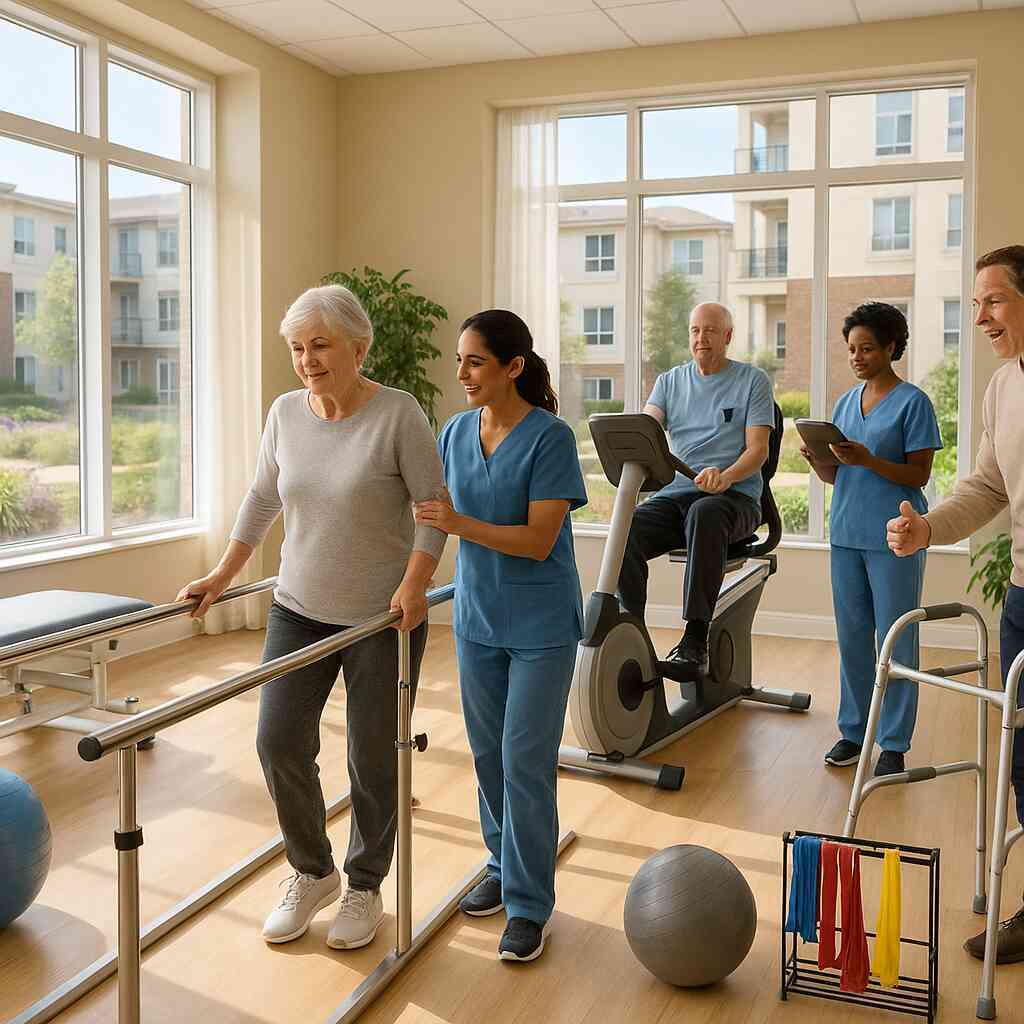 Rehabilitation Reimagined: Empowered Aging in Motion
Synergy between the seniors living community resources and the clinical teams
Senior living facilities’ rehab programs excel when every professional works from the same playbook. Physical therapists, dietitians, and nurses share real-time notes, so assisted living plans stay current and cohesive. This synergy eliminates duplicated assessments and speeds post surgery rehabilitation for seniors who crave quick wins. Families witness a unified front that boosts trust and maintains high motivation. Consequently, communities for seniors 55+ transform into dynamic recovery hubs rather than passive housing options for seniors.
Technology tightens this collaboration even further. Wearable sensors and smart floors track gait changes, then upload metrics to interdisciplinary dashboards. Clinicians use the data to adjust exercises before problems erupt, preserving momentum. Residents also receive engaging feedback on balance games that reinforce therapy goals. Learn how these innovations work by exploring mobility technology aiding post-surgical seniors, an in-depth review that highlights measurable gains across multiple assisted living locations.
Exploring the Senior Living Facilities platform to find senior living near
Choosing the perfect senior living near you once demanded endless phone calls. The Senior Living Facilities assisted living locator now completes that task in minutes. Users enter a ZIP code, set therapy filters, and instantly view senior living in the state of interest. Search results display senior apartment rentals with on-site gyms, rental housing for seniors offering aquatic therapy, and long-term care facility suites equipped for complex wounds. Transparent comparisons prevent costly missteps and keep recovery plans on schedule.
The platform’s interactive maps reveal distance to specialists, grocery stores, and green spaces, which support whole-person healing. Detailed profiles break down nurse credentials, therapy intensity, and resident satisfaction scores. Users can even bookmark seniors living near me who accept Medicare’s rehab benefit for short-term stays. A built-in chat connects families with licensed advisors who explain nuanced terms such as nursing homes for the elderly versus skilled rehabilitation wings. Every feature removes uncertainty and places control back in the hands of older adults.
Commitment to lifelong wellness through robust post surgery support
Healing does not end when the walker slides into a closet. Senior living facilities weave lifelong wellness into everyday culture by offering exercise classes, nutrition counseling, and mental health check-ins. Continuous monitoring ensures problems are addressed before they escalate into hospital visits. Thus, seniors graduate from short-term rehab in a senior living community into vibrant, self-directed lifestyles. The continuum of care proves that recovery is a journey, not a pit stop.
Education empowers residents to sustain these gains. Monthly workshops explain medication updates, adaptive equipment maintenance, and fall prevention refreshers. Families stay informed through newsletters and webinars, fostering a united support network. Dive deeper into these learning opportunities through ongoing education through the Senior Living Facilities blog, where experts unpack emerging research and practical tips. By nurturing curiosity and resilience, every senior living facility upholds its promise of empowered aging in motion.
Frequently Asked Questions
Question: How early should our family start transition care planning after hospital discharge, and how can the Senior Living Facilities’ assisted living locator make that process easier?
Answer: The most successful post surgery rehabilitation for seniors begins while your loved one is still wearing a hospital wristband. By discussing mobility limits, medication management in assisted living plans, and equipment needs with the care team before discharge, you dramatically lower readmission risk. The Senior Living Facilities assisted living locator streamlines those early conversations. Simply enter a ZIP code to compare senior living near you that provides short-term rehab in a seniors’ living community, skilled nursing post-op care for older adults, and even respite stay options for surgical recovery. Because the platform stores your preferences-such as therapy intensity, nurse-to-resident ratios, and Medicare rehab benefit acceptance-you can refine choices with every click instead of starting from scratch. The result is an organized roadmap that frees the family to focus on healing rather than paperwork.
Question: What kinds of short-term rehab settings appear in Senior Living Facilities, and how do they differ from home health or traditional nursing homes for the elderly?
Answer: Our database showcases a full spectrum of senior housing, from hotel-style suites for orthopedic recovery in assisted living to long-term care facility wings equipped for complex wound care. Short-term rehab in a seniors living community offers 24/7 nursing, on-site physical therapy services in communities for seniors 55+, and social engagement that home health cannot match. Unlike many nursing homes for the elderly, these programs focus on rapid return-to-independence milestones, blending occupational therapy within housing options for seniors, adaptive equipment training in senior apartment rentals, and speech therapy support in rental housing for seniors. Home health delivers great care in a private residence but lacks round-the-clock supervision. Our detailed comparison tools let you weigh those differences-clinical complexity, cost structure, and social perks-so you choose the perfect fit.
Question: In the blog Senior Living Facilities Post Surgery Rehab Planning, you mention fall prevention strategies and adaptive equipment. How do communities for seniors 55+ on your platform put these safety measures into practice?
Answer: Communities listed on Senior Living Facilities embed safety into every square foot. Occupational therapists evaluate floor plans, recommending grab bars, motion-activated lighting, and contrasting stair tape to prevent trips. During adaptive equipment training in senior apartment rentals, residents rehearse transfers with ultra-light rollators, sock aids, and voice-activated smart-home devices until the moves feel second nature. Facilities also deploy data analytics to spot incident hotspots, triggering handrail installation or exercise class tweaks. Because families can view photos, floor plans, and resident reviews on our site, they see exactly how each senior’s living community tackles fall prevention before scheduling a tour.
Question: How does Medicare rehab benefit coverage work inside a senior living facility, and can Senior Living Facilities help us decode private insurance rules for skilled nursing post-op care?
Answer: Yes. Medicare typically covers up to 100 days of skilled rehabilitation if your loved one has a qualifying inpatient hospital stay of at least three nights. Day 1-20 are paid in full; days 21-100 carry a daily copay. Our licensed advisors explain these details, clarify observation-versus-inpatient status, and outline documentation needed to satisfy Medicare rehab benefit guidance. We also review private insurance and Medicare Advantage plans that may require prior authorization for services like pain management during surgical recovery in senior housing or wound care expertise at a long-term care facility. By translating policy jargon into plain English, we prevent surprise bills and keep attention focused on recovery.
Question: My mom needs both cardiac rehab in a senior living facility and ongoing orthopedic therapy. Can Senior Living Facilities help us locate senior living near me that offers integrated programs and reliable transportation assistance to follow-up appointments?
Answer: Absolutely. Use our filters for cardiac and orthopedic recovery in assisted living settings to generate a tailored list of senior living near you with dual-discipline rehab gyms, telemetry-equipped treadmills, and hydrotherapy pools. Profiles highlight licensed physical therapists, dietitians for nutrition counseling for surgical recovery, and on-site nurses trained in medication adjustments. Many of these communities also provide wheelchair-accessible vans and ride-share partnerships, ensuring seamless transportation assistance to follow-up appointments and therapies. By centralizing clinical services, travel logistics, and family involvement in rehab goal setting under one roof, these return-to-independence programs in senior living near me give your mom the cohesive care she deserves.
Admin
Expert contributor specializing in senior living care. Dedicated to providing families with clear, actionable advice.