
Top 10 Questions Senior Living Facilities Answer
Bridging Generations: The New Age Guide to Senior Living Questions
Shifting from uncertainty to confident selection of senior living facilities
First, it helps to recognize why uncertainty arises. Marketing brochures highlight amenities but rarely reveal staffing ratios or emergency protocols in each senior living facility. Additionally, cost structures differ widely among rental housing for seniors, life-plan contracts, and long-term care facility models. When information feels incomplete, loved ones hesitate, worrying whether independence or dignity might be compromised. Clear, targeted questions convert that hesitation into an empowered choice.
Next, identify decision priorities before touring any communities for seniors 55+. Write down medical needs, budget limits, and preferred social experiences. Then compare each location against those personal benchmarks, asking staff to quantify services rather than offer vague assurances. The process becomes simpler when you rely on evidence-based criteria rather than glossy promises. Our checklist of critical factors when selecting a facility can streamline that evaluation.
Why asking the right questions safeguards dignity and independence
Every senior deserves autonomy, whether choosing assisted living plans or staying in independent living. Thoughtful questions about activities of daily living support, privacy policies, and resident rights uncover how a community upholds that autonomy. By probing beyond surface perks, families confirm that values align with promised care practices. In turn, residents experience respect, purpose, and control each day.
Moreover, detailed inquiries illuminate quality benchmarks often buried in contracts. Ask how teams measure fall-prevention success, monitor medication compliance, and handle infectious outbreaks. Transparent data helps you measure quality of care standards objectively across senior living near you. With facts in hand, families can advocate confidently and collaborate proactively with care partners.
Navigating a sea of housing options for seniors with clarity
The senior living marketplace spans independent living versus assisted living hybrids, memory care wings, and continuum campuses. Each model offers distinct service tiers, cost formulas, and lifestyle rhythms. Without a map, comparisons blur and essential differences fade. Purposeful questioning turns that sea of choices into a navigable chart.
Start by outlining care needs today and projected needs three to five years ahead. Then request side-by-side fee schedules, apartment layouts, and transition policies from each provider. A structured worksheet, such as our tool that helps families compare senior living plans side-by-side, reveals hidden fees and service gaps quickly. Ultimately, clarity emerges not from luck but from methodical inquiry, strategic resources, and meaningful conversations.
1) What level of medical support defines a high quality senior living facility
Assessing on site nurses versus partnered healthcare providers
Families evaluating medical support start by defining baseline clinical expectations. A high quality senior living facility posts licensed nurses onsite around the clock, not only during business hours. Communities without full staffing rely on visiting agencies, which can delay urgent interventions. Before selecting, families can search communities near their loved ones and request written staffing schedules. Comparing those schedules reveals whether promises match reality.
Ask how many residents each nurse or aide supports during peak times. Lower ratios in senior living facilities allow proactive monitoring and faster response. Confirm credentials, continuing education, and background checks for every clinical employee. Quality oversight also includes the medical director’s involvement who reviews protocols weekly. Together, these factors create a safer environment than some nursing homes for the elderly that operate with minimal oversight.
Understanding medication management protocols in assisted living locations
Medication errors undermine resident health and confidence, so protocols deserve close scrutiny. A leading senior living facility tracks prescriptions through electronic administration records that flag late or missed doses. Nurses double check pharmacy deliveries and reconcile changes after physician visits. Observe whether staff explain medications to residents, supporting independence while reducing confusion. Transparent processes separate reliable assisted living locations from less organized competitors.
Families should demand to see policy manuals detailing storage temperatures, narcotic security, and audit frequency. Ask how the team coordinates with external physicians when medications change suddenly. Effective systems issue alerts before supply runs low, preventing gaps that could trigger hospitalization. Inquire about fall rates related to sedative use, a crucial quality marker. Documentation showing declines over time signals a culture committed to continuous improvement within senior living facilities.
Evaluating rehabilitation and therapy services within senior living in your area
Recovery after illness often hinges on accessible therapy services. High caliber senior housing contracts or hires physical, occupational, and speech therapists who work onsite daily. Residents avoid disruptive travel and maintain motivation through familiar surroundings. Verify that treatment plans align with hospital discharge recommendations and update regularly. This continuum supports aging in place more effectively than repeatedly transferring to external clinics.
Examine equipment, from parallel bars to adaptive kitchens, that empowers activities of daily living support for every resident. Progressive communities integrate wearable sensors that measure gait speed and flag imbalance early. Such objective data informs personalized exercise regimens, delaying decline and reducing future costs. Ask whether Medicare or supplemental insurance covers sessions, and how billing transparency is maintained. An evidence-based rehab program rounds out medical support, transforming senior living near you into a lifelong wellness partner.
2) How transparent are the costs and financial assistance options in senior housing
Decoding monthly fees for senior apartment rentals and long term care facility charges
Cost discussions usually begin with base rent, yet hidden line items often shape the final bill inside senior living facilities. Ask communities for seniors 55+ to separate monthly accommodation from required service packages, such as dining credits or housekeeping bundles. Transparent spreadsheets let families calculate realistic totals rather than relying on marketing averages or national medians. Request line-item disclosure of care points, medication administration, and technology subscriptions, since these extras inflate yearly expenses quickly. Compare regional pricing by using resources that let you compare senior living centers in Ohio for example. Seeing median rent beside service fees empowers families to negotiate before signing any senior living facility agreement.
Long-term care facility pricing often bundles nursing hours into tiered levels that escalate as medical complexity rises. Clarify whether the quoted rate includes rehabilitation, wound management, or specialized dementia programming. Some contracts reset annual fees every January, while others freeze rates for multiple years but impose larger entrance deposits. Ask how inflation adjustments are calculated and capped to prevent unpleasant budget shocks. Additionally, verify refund policies if your loved one moves unexpectedly or graduates to skilled nursing sooner than anticipated. The clearest communities provide pro-forma statements projecting five years of expenses, fostering long-term financial confidence for residents and families alike.
Exploring veterans’ benefits and state programs for assisted living
Federal and state assistance can dramatically reduce out-of-pocket costs for eligible veterans choosing assisted living plans. The well-known Aid and Attendance pension supplement offsets daily care but requires meticulous documentation of medical need and income limits. Ask community finance directors whether they help families assemble application packets or coordinate with accredited veteran service officers. In addition, many states offer Medicaid Home and Community-Based Services waivers that extend support into licensed assisted living locations. For example, researching assisted living options in Florida reveals special waiver slots prioritizing residents with dementia or limited income.
Each program carries waiting lists, so early planning safeguards future placement and helps lock in preferred senior housing. Create a timeline showing estimated approval dates, interim private-pay requirements, and renewal milestones. Communities that track these details internally reduce paperwork stress and prevent lapses that could interrupt vital services. Request monthly statements reflecting both billed charges and incoming benefit offsets, ensuring your loved one receives every entitled dollar. When staff welcome transparent oversight, families gain trust and focus energy on emotional connection rather than administrative battles.
Comparing rental housing for seniors versus life plan contracts
Rental housing for seniors operates much like traditional apartments, offering month-to-month flexibility without large entry fees. Residents pay for services a la carte, adjusting support as health conditions evolve. However, frequent fee adjustments can complicate long-term budgeting if care hours increase quickly. By contrast, life plan or continuing care contracts require a sizable entrance deposit that partially prepays future higher-acuity care. Monthly fees remain stable across independent living versus assisted living shifts, shielding residents from cost spikes later.
Choosing between models depends on liquidity, risk tolerance, and anticipated health trajectory. Families who value asset preservation may prefer refundable contracts, while those prioritizing predictability lean toward traditional entrance-fee structures. Always review actuarial assumptions embedded in contract disclosures, asking independent accountants to validate projected care costs. Moreover, confirm what happens if two spouses require different care levels; some communities charge only the incremental service fee. Ongoing clarity about contract mechanics preserves autonomy and lets older adults embrace community life without financial anxiety.
3) Which daily care plans elevate assisted living beyond basic support
Personalized ADL assistance and emerging tech powered monitoring
Individualized routines form the backbone of superior daily care plans for seniors. Experienced caregivers begin by assessing each resident’s preferred schedule, mobility level, and cultural background. That profile guides tailored activities of daily living support, ensuring bathing, dressing, and meals feel respectful rather than rushed. Families notice higher morale when loved ones help design care steps instead of receiving one-size-fits-all assistance. Because dignity thrives on choice, leading senior living facilities regularly revisit these personalized blueprints as health evolves.
Technology now turbocharges that personalization. Discreet wearable devices flag early dehydration or nighttime wandering without interrupting sleep. Smart pill dispensers alert both residents and nurses if a dose was missed, reducing hospital readmissions tied to medication errors. Interactive dashboards invite relatives to evaluate daily life in communities near you from anywhere, building trust through real-time transparency. Paired with secure video check-ins, these tools let older adults enjoy autonomy while clinicians intervene quickly when trends shift.
Staffing ratios that ensure compassionate care at senior living near
Numbers matter when measuring compassion. A favorable staffing ratio means caregivers spend minutes, not seconds, listening to resident concerns. Industry benchmarks recommend one direct-care employee for every five to eight residents in assisted living plans, depending on acuity. Communities that maintain those ratios report fewer falls, stronger medication compliance, and higher satisfaction scores than understaffed counterparts. Robust scheduling software further prevents gaps caused by sick leave or vacations, preserving continuity of care.
Yet ratios alone cannot guarantee warmth. Ongoing training in dementia communication, trauma-informed touch, and chronic disease coaching equips teams to deliver truly holistic daily care plans for seniors. Supervisors conduct shadow rounds, modeling empathetic dialogue that respects generational preferences. Cross-disciplinary huddles integrate medical services in assisted living with social programming, ensuring physical and emotional needs receive equal weight. When residents see the same smiling faces each morning, seniors living near you feel more like family than a facility.
From independent living communities to higher acuity transitions
Aging rarely follows a straight line, so adaptable housing options for seniors remain critical. Many older adults begin in independent living communities, drawn by vibrant social calendars and minimal household chores. Over time, arthritis flares or cognitive changes may demand greater support, prompting a shift toward assisted living locations on the same campus. Seamless transitions prevent disruptive moves and preserve cherished friendships, promoting continuity of identity as health needs intensify.
Effective operators design tiered environments under one umbrella, spanning fitness-center apartments to long-term care facility suites. Common electronic health records travel with the resident, eliminating redundant paperwork and medication lapses. Care coordinators explain independent living versus assisted living differences early, so families understand future cost implications well before a crisis strikes. Because the pathway is clear, residents view progression not as loss but as a natural evolution, trusting that compassionate expertise will accompany them at every stage.
 4) What safety standards and emergency response systems protect older adults
 4) What safety standards and emergency response systems protect older adults
Fire prevention upgrades and fall mitigation design in senior housing
Modern senior housing integrates commercial-grade sprinklers that activate quickly without soaking unaffected rooms. Heat and smoke detectors link directly to municipal responders, reducing response times significantly. Self-closing fire doors keep corridors smoke free, buying precious evacuation minutes for older adults with limited mobility. Generators power elevators and alarms during outages, ensuring escapes remain possible regardless of weather. A diligent senior living facility routinely exceeds the minimum code rather than simply meeting it.
Flooring choices matter as much as alarms when preventing injuries inside communities for seniors 55+. Non-slip vinyl, contrast striping, and motion-activated nightlights guide residents safely during late-night bathroom visits. Strategically placed grab bars appear in every shower, not just accessible units, normalizing safety for all residents. Sidewalk gradients remain gentle enough for wheelchairs, yet drainage channels keep surfaces dry after storms. Families touring trusted elder care communities in Pennsylvania often cite these subtle design cues as deciding factors.
Benchmarking emergency call systems across senior living facilities
A reliable emergency call system forms the technological backbone of senior living facilities today. Wireless pendants let residents summon help anywhere, from garden plots to fitness studios. Wall-mounted buttons in bathrooms offer redundancy in case wearables are misplaced. Dashboards in nursing stations display real-time alerts, color-coded by urgency and location. Average response times, posted publicly, create accountability and motivate continuous improvement.
When comparing senior living near you, ask whether alerts integrate with electronic health records. This integration saves minutes by showing medications, allergies, and mobility notes immediately. Some assisted living locations route calls to on-site nurses first, avoiding unnecessary ambulance bills. Others contract external monitoring centers, which may add delay, particularly in rural regions. Transparent metrics let families choose between independent living versus assisted living setups with confidence.
Staff training for disaster readiness and infection control
The best rental housing for seniors invests heavily in scenario-based drills every quarter. Employees practice evacuation with weighted mannequins that simulate real resident body mechanics. Cross-training ensures culinary staff can guide evacuations if clinical teams are occupied. Leadership reviews after-action reports, updating protocols and supply inventories immediately. Such repetition embeds muscle memory, critical when seconds matter.
Infection control has moved beyond hand sanitizer stations in long-term care facility corridors. Negative pressure rooms stand ready for respiratory outbreaks, creating isolation without relocation trauma. Staff receive annual competency tests on donning personal protective equipment and disinfecting high-touch surfaces. Data dashboards track vaccination status, absenteeism, and emerging trends across senior living in multiple regions. This proactive culture distinguishes high-quality nursing homes for the elderly from reactive competitors.
5) How do dining experiences in senior communities nourish body and soul
Farm to table menus and therapeutic diets in senior living facilities
Nothing signals genuine hospitality like ingredients pulled from local soil and turned into colorful plates minutes later. Leading senior living facilities partner with regional farms, fisheries, and orchards, guaranteeing produce that retains peak nutrients. Seasonal menus rotate frequently, so residents see asparagus in spring, heirloom tomatoes in summer, and root vegetables during cooler months. Chefs also highlight regional specialties, transforming mealtime into a tasty geography lesson without leaving the dining room. These choices reinforce the benefits of senior living by fusing wellness, sustainability, and joyful anticipation around every meal.
Beyond freshness, clinical nutritionists craft therapeutic diets that address diabetes, hypertension, and swallowing disorders without sacrificing flavor. Meals arrive in tailored textures, sodium limits, and carbohydrate exchanges, yet still look appetizing enough to post on social media. Residents preview weekly offerings online, requesting adjustments through tablets or with a quick comment to their favorite server. Communities blending independence and support, like those under independent and assisted living in Illinois, show nutrition adapts with needs. This flexibility keeps residents engaged and limits hospital visits caused by restricted or monotonous food choices.
Resident choice dining times supporting autonomy
Autonomy does not pause at the dining-room door. Older adults thrive when they decide whether breakfast begins at dawn or waits until a midmorning stretch class ends. Modern senior housing adopts all-day dining windows, eliminating the regimented bells that once echoed through nursing homes for the elderly. Residents enter bright cafés, scan digital kiosks, and order omelets or oatmeal on their preferred schedule. This schedule flexibility reduces agitation, especially for memory-care residents who experience hunger at unpredictable intervals.
Flexible timing also helps families share meals during visits, promoting social connection without juggling restrictive timetables. Staff use handheld devices to record personalized preferences, ensuring gluten-free or low-lactose options appear whenever the resident sits down. Real-time data then informs purchasing, so kitchens order precisely and reduce waste, keeping costs stable for everyone. By blending hospitality and technology, resident-choice dining shows why independent living versus assisted living distinctions fade within responsive communities. The result is healthier appetites, stronger relationships, and a daily routine shaped by personal rhythm rather than institutional convenience.
Community kitchens and cultural cuisine celebrations
Great food tastes even better when shared in a lively cooking class or heritage festival. Many senior living facilities include demonstration kitchens where residents trade family recipes and swap stories while chopping vegetables. Culinary teams capitalize on these gatherings, gathering feedback and discovering hidden community talents. In turn, holiday menus feature beloved comfort dishes that anchor memories and spark new friendships across cultures. Such inclusive events showcase the social benefits of senior living and combat isolation better than any formal wellness lecture.
Monthly food festivals might highlight Caribbean spices one week and Midwestern harvest stews the next. Resident councils vote on themes, ensuring programming reflects the diverse backgrounds present within communities for seniors 55+ nationwide. Live music, decorative tabletops, and storytelling circles transform dining halls into cultural theaters. Even prospective residents touring the space feel the warmth, often choosing that senior living near because of the shared meals they witnessed. Food thus becomes a bridge that unites generations, honors identity, and reaffirms community pride every single day.
6) In what ways do social activities foster thriving communities for seniors 55+
From lifelong learning to volunteer opportunities enhancing purpose
Intellectual curiosity never retires, so high-caliber senior living facilities schedule college-style seminars and language workshops each week. Residents explore history, master new software, or practice watercolor techniques under credentialed instructors who respect adult learning styles. Because classes happen steps from each senior apartment, participation rates soar and friendships bloom naturally. Continuous learning strengthens memory pathways, helping older adults maintain sharper cognition while also sparking dinner-table conversations. Consequently, the community feels vibrant, forward-looking, and deeply engaged with the wider world.
Volunteerism amplifies that sense of purpose by turning personal passions into community impact. Many senior living facility teams coordinate reading mentors for neighborhood schools, blanket-making circles for hospitals, and park clean-up projects. Residents choose assignments that match their abilities, ensuring contributions remain meaningful without becoming burdensome. Structured transportation and staff liaisons remove logistical barriers, letting generosity flow freely. Participants gain renewed identity as helpers rather than receivers, which lifts morale and supports healthy aging.
Leveraging intergenerational programs to boost social connection
When toddlers giggle in shared gardens or teens teach smartphones during tech labs, age barriers disappear. Communities for seniors 55+ intentionally design intergenerational programs that pair residents with younger volunteers in mutually beneficial roles. Story-time sessions invite elders to share life lessons, while students offer fresh perspectives on music, art, and trending culture. These exchanges reduce loneliness, combat ageism, and create a living tapestry of collective wisdom. Research even shows lower depression scores in residents who regularly engage with multiple generations.
Family engagement also thrives inside these blended events, because grandchildren feel welcomed rather than shushed in hallways. Seasonal fairs, science fairs, and joint theater productions showcase talents from every age group. Staff document outcomes such as attendance, satisfaction, and wellness indicators to refine offerings year after year. Transparent metrics reinforce trust and demonstrate how social programming complements medical services in assisted living locations. Ultimately, a multigenerational mindset transforms a standard building into a genuine community hub.
Evaluating activity calendars when searching for senior living near me
Savvy families scrutinize monthly calendars before signing any contract, noting whether options span fitness, arts, culture, and faith traditions. A rich schedule proves the operator invests in holistic wellness rather than using bingo alone as entertainment. Compare offerings across regions; you might discover tai chi on the lawn at active adult communities in Arizona while pottery studios flourish elsewhere. Variety ensures residents at different mobility levels still find energizing pursuits, which supports emotional resilience.
Digital platforms now display real-time updates, allowing loved ones to see attendance numbers or RSVP for joint outings. Residents receive push notifications about last-minute excursions, empowering spontaneous adventure without administrative hassles. Analytics help recreation directors identify underserved interests and adjust budgets quickly. This data-driven approach keeps social calendars fresh, relevant, and inclusive, setting top senior housing options apart from ordinary nursing homes for the elderly. Continuous feedback loops guarantee that every resident’s voice shapes tomorrow’s fun.
7) How is memory care integrated for residents with cognitive needs
Evidence based environments reducing anxiety and wandering
Designers now apply neuroscience to every hallway, turning senior living facilities into cognitive sanctuaries rather than sterile corridors. Clearly marked sightlines reduce confusion, while contrasting colors help residents distinguish doorways from walls. Circular floor plans prevent dead ends, subtly guiding safe exploration and lowering frustration. Large windows allow natural light to regulate circadian rhythms, which stabilizes mood and sleep. These evidence-based elements work together to preserve dignity even as cognition shifts.
Secure gardens extend that philosophy outdoors, giving older adults freedom to move without leaving monitored boundaries. Aromatic plants such as lavender soothe agitation, and textured walking paths stimulate sensory recall. Motion sensors alert caregivers if a resident lingers too long in one zone, enabling gentle redirection rather than abrupt alarms. Families exploring specialized neighborhoods often begin by reviewing senior housing choices in California to see how innovative layouts translate into daily peace. Seeing these features firsthand reassures relatives that beauty and safety can coexist.
Specialized staff credentials for dementia support in assisted living plans
Architecture alone cannot deliver holistic memory care, so staffing models evolve alongside physical spaces. Top communities require every direct-care employee to complete dementia-specific certification within months of hire. Courses cover brain physiology, redirection techniques, and nonverbal communication strategies suited for varying cognitive stages. Continuous education sessions reinforce skills and introduce emerging therapies, from music reminiscence to multisensory storytelling. By investing in people, senior living facilities ensure consistency and compassion throughout each shift.
Interdisciplinary teams further elevate assisted living plans beyond basic supervision. Licensed nurses monitor comorbidities such as diabetes or heart disease, conditions that often complicate memory loss. Occupational therapists customize routines that maintain fine motor abilities, while speech-language pathologists address swallowing or language challenges early. Weekly case conferences align goals, adjust care levels, and prevent unnecessary moves to a long-term care facility. When residents see familiar, well-trained faces daily, trust grows, behaviors stabilize, and families breathe easier.
Family education and support groups within the community
Memory loss affects entire families, not only the individual, so high-quality communities offer robust education programs. Monthly workshops explain disease progression, medication side effects, and stress-reduction techniques for caregivers. Facilitators translate clinical jargon into everyday language, empowering relatives to participate confidently in care decisions. These gatherings also spotlight local legal and financial resources, easing the administrative load that often accompanies dementia journeys.
Equally important are peer-led support circles that meet regularly on campus and online. Participants share victories, vent frustrations, and exchange practical tips for maintaining emotional resilience. Digital portals let distant relatives review care notes, message nurses, and join virtual town halls, ensuring transparent communication regardless of geography. Such openness strengthens the partnership between families and staff, transforming a memory care wing into a collaborative community. Over time, shared knowledge becomes an invisible safety net, catching challenges before they escalate.
8) What pet friendly policies transform a senior apartment into a home
Species size and number guidelines across senior living facility FAQs
Many senior living facilities recognize that a beloved animal can ease relocation stress and encourage daily movement. For harmony, communities usually publish detailed species, size, and number limits inside their senior living facility FAQs. Small to mid-sized dogs, cats, and caged companions such as birds or rabbits are most commonly approved. Weight caps often range between fifteen and thirty pounds, reducing the risk of accidental falls for neighboring residents. Prospective residents should request written exceptions because therapy animals or long-lived parrots sometimes qualify under different housing options for seniors.
Clear guidelines help staff balance safety and freedom, protecting residents who may fear animals while honoring devoted pet owners. Communities for seniors 55+ typically require proof of vaccinations, spay or neuter status, and a temperament assessment before move-in day. Some assisted living locations use refundable pet deposits, while rental housing for seniors may charge small monthly pet rents instead. Transparent fee structures avoid surprises and keep budgeting simple for families comparing senior apartment rentals. When rules feel fair and consistent, every neighbor benefits from a peaceful, well-managed environment.
Pet therapy programs are improving mental health outcomes
Beyond private pets, structured pet therapy programs lift mood, lower blood pressure, and spark conversation among even the quietest residents. Certified handlers visit with calm dogs or miniature horses, offering affectionate interaction for those who cannot manage full-time ownership. Sessions often coincide with memory-care activities, where stroking soft fur can recall comforting childhood memories. Occupational therapists frequently note improved grip strength and vocalization following regular animal visits. These outcomes reinforce the wider benefits of senior living beyond medical monitoring alone.
Elite communities, including several premium senior apartments in New York, schedule weekly “yappy hours” or feline cuddle corners to maintain resident enthusiasm. Participation remains voluntary, preserving autonomy for individuals with allergies or cultural reservations. Staff document engagement metrics to refine group sizes, session length, and handler selection, ensuring each resident’s emotional needs are met. Family members can monitor progress through digital portals, deepening trust in the senior living near you. As loneliness declines, residents rediscover purpose and confidence.
Designing outdoor spaces for safe walks and enrichment
Thoughtful landscaping turns a basic patio into a vibrant play zone that benefits pets and people alike. Fenced dog parks with double-gate entries let small breeds exercise without interfering with community footpaths. Shaded benches, water stations, and waste-bag dispensers show respect for both canine comfort and campus cleanliness. Smooth, slip-resistant walkways reduce fall risk, aligning with universal design best practices inside senior housing. Planned routes encourage daily cardio for owners, supporting overall wellness goals.
Senior living in suburban or rural areas often weaves nature trails through pollinator gardens, allowing leashed pets to sniff stimulating scents while residents enjoy seasonal blooms. Lighting positioned at ground level keeps night walks safe without harsh glare. Design teams collaborate with veterinarians to select non-toxic plants, safeguarding curious pets who may nibble leaves. Such foresight differentiates progressive senior living near me from older nursing homes for the elderly that lack outdoor amenities. When surroundings invite exploration, the apartment feels less like a unit and more like a genuine home.
9) How does transportation access expand independence in senior living near you
 9) How does transportation access expand independence in senior living near you
Scheduled shuttles to medical appointments and social outings
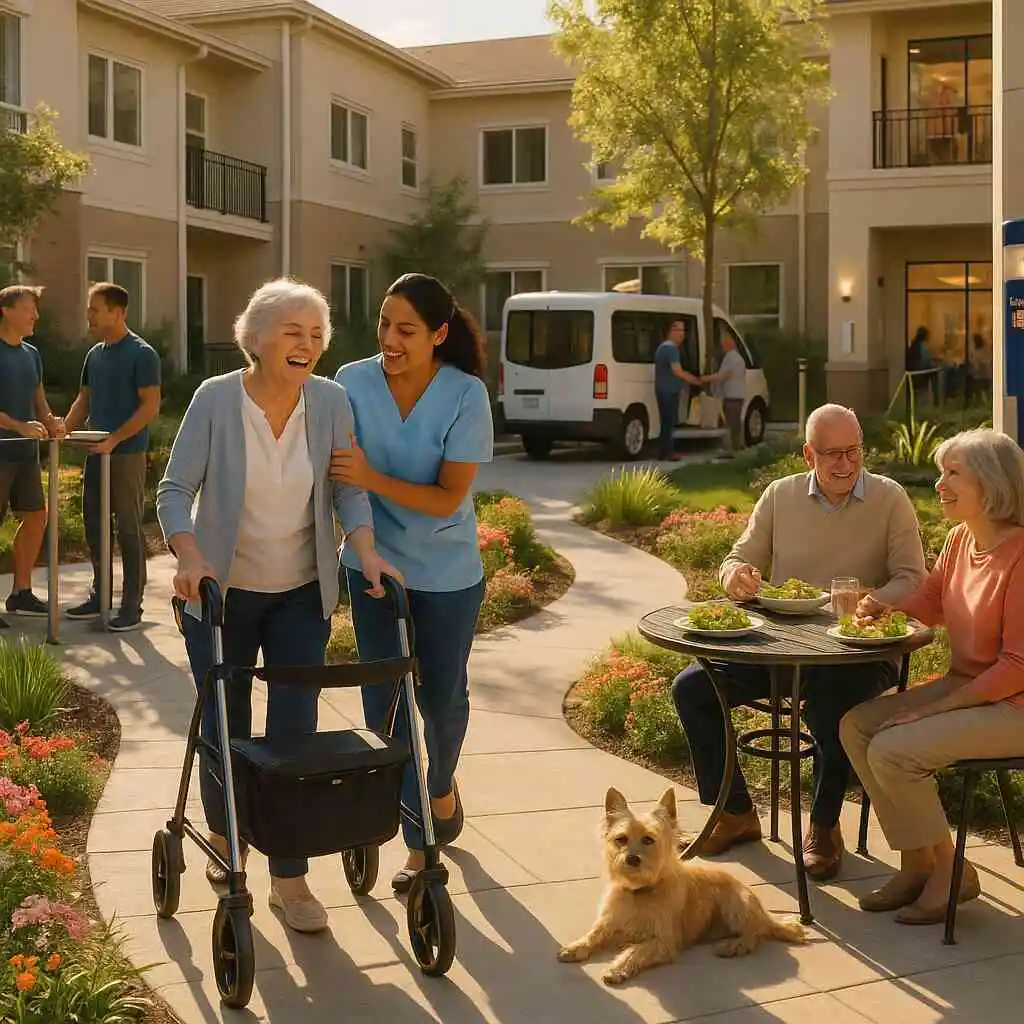
Reliable shuttles are the hidden arteries of many senior living facilities, pumping freedom through every weekly calendar. Residents book recurring seats for primary‐care checkups, lab visits, and specialist follow-ups, eliminating the anxiety of missed rides. Drivers receive sensitivity training, so cane storage, wheelchair lifts, and gentle conversation feel routine rather than exceptional. Because routes run on published timetables, families track departures and returns, strengthening trust in each senior living community. Ultimately, predictable transportation safeguards health while preserving the dignity that comes from punctual self-management.
Many communities for seniors 55+ expand those loops beyond clinics, ferrying residents to farmers’ markets, libraries, and beloved faith centers. Staff gather feedback during council meetings and adjust itineraries seasonally, ensuring no passenger feels stranded during holiday celebrations. In sprawling regions such as the best retirement residences in Texas, mileage can be vast, yet coordinated shuttle hubs keep daily life connected and economical. Clear policies about reservation cut-offs, service boundaries, and guest privileges allow relatives to plan joint outings smoothly. Because travel barriers fall away, residents savor community concerts, volunteering, and lunch dates that nourish social health together with medical well-being.
On demand ride partnerships bridging the last mile
Scheduled loops work well, yet spontaneity often demands a quicker solution. Forward-thinking senior living near you partner with vetted rideshare platforms, embedding concierge kiosks in lobby areas. Residents tap a large-print screen, choose destination presets, and receive driver details within minutes. Geofencing technology limits travel radii, creating a safety net without crushing independence. Payment integrates with monthly billing, so no one fumbles for cards or tips at curbside.
Transparency remains critical when outsourcing rides. Management teams audit response times, driver background checks, and accessible vehicle availability every quarter. They also publish escalation protocols if a pickup fails, reassuring families who value dependable senior housing. Importantly, staff host smartphone clinics, teaching residents how to monitor routes and share live locations with caregivers. These digital skills empower older adults to arrange haircuts or museum days spontaneously, blurring the line between independent living versus assisted living experiences. When freedom feels only a click away, campus walls widen into an entire cityscape of opportunity.
Walkability scores and proximity to public transit in senior living in the state of your choice
Not every journey requires an engine; sometimes a sidewalk and confidence suffice. During tours, families should note crosswalk signals, curb cuts, and the distance to grocery stores surrounding their chosen senior living facility. High walkability scores correlate with stronger cardiovascular health, lower transportation costs, and vibrant street interactions that fight isolation. Communities often publish neighborhood maps, highlighting pharmacy routes under half a mile, making daily steps an easy habit.
Proximity to bus stops and light-rail stations further expands horizons for residents who still relish public transit. Senior passes offer discounted fares, and many campuses run escort programs that pair new riders with seasoned neighbors until comfort grows. Planners prioritize covered benches, real-time schedule screens, and well-lit pathways from lobbies to platforms. These thoughtful details transform rental housing for seniors into launch pads rather than endpoints. Whether you seek senior living in the state of your choice for urban adventures or quiet suburban strolls, evaluating transit access ensures independence remains an everyday reality.
10) Where does family involvement fit within resident rights and care planning
Collaborative care conferences and digital communication portals
Care conferences bring relatives, clinicians, and administrators together to shape truly personalized assisted living plans. During these sessions, nurses outline recent medical updates, while families contribute cherished routines that preserve dignity. Clear agendas keep discussions focused on goals, risk mitigation, and measurable outcomes. Families leave with written action steps, knowing exactly who to contact for follow-up questions. This partnership mindset transforms routine check-ins into strategic guardianship of resident rights in senior living.
Technology now extends that collaboration beyond scheduled meetings, shrinking geographic distance for adult children. Secure portals share daily vitals, meal choices, and therapy notes in real time, supporting proactive family involvement in senior care decisions. Relatives can review medication adjustments, sign digital consents, and even access an independent vs assisted living explained guide to clarify evolving support levels. Instant messaging reduces wait times, so concerns never simmer into crises. Consistent transparency strengthens trust and showcases the benefits of senior living far better than glossy brochures.
Policies on visitation and overnight stays in long term care facilities
Visitation guidelines protect both resident wellness and community security. Quality senior living facilities publish clear hours, screening procedures, and compassionate exceptions for end-of-life moments. Families appreciate knowing exactly when quiet rooms or outdoor patios are available for private celebrations. Staff members guide newcomers through protocols, ensuring all guests respect infection-control standards without feeling unwelcome. Such openness prevents misunderstandings that often plague nursing homes for the elderly reviews.
Overnight stays can deepen emotional bonds, especially after surgery or during acclimation to new surroundings. Progressive long-term care facility teams offer rentable guest suites or reclining chairs within private apartments. Policies outline supervision requirements, emergency exits, and quiet-hour expectations so sleep remains undisturbed. By balancing safety standards in senior communities with flexible hospitality, operators honor the healing power of family presence. Clear documentation also simplifies insurance compliance, avoiding surprise charges that inflate the cost of senior housing options.
Advocacy avenues ensuring transparency and accountability
Family councils, resident committees, and state ombudsman programs create multiple layers of oversight inside communities for seniors 55+. Regular town halls invite tough questions to management, from staffing ratios in senior living to menu changes. Meeting minutes circulate digitally, allowing relatives who live afar to stay engaged. This multi-channel feedback loop uncovers small issues before they snowball into regulatory complaints. Continuous dialogue underscores that accountability is a shared, not adversarial, responsibility.
Data transparency further empowers advocates. Facilities post monthly metrics covering falls, response times, and satisfaction scores, supporting evidence-based long-term care facility evaluation. External audits examine emergency response systems for seniors and verify compliance with federal resident rights. Should concerns arise, families can escalate through grievance hotlines or independent mediation, knowing retaliation is forbidden by law. Such structured advocacy mechanisms reassure prospective residents searching “senior living near me” that their voices will never be sidelined after move-in.
From Inquiry to Community: Empowering Your Senior Living Journey
Turning answers into action with the Senior Living Facilities platform
Every question you ask now has a purpose: mapping the right senior living facility to your loved one’s goals. The Senior Living Facilities platform transforms those answers into an interactive checklist, guiding you from curiosity to commitment. When you enter preferences, our assisted living locator instantly filters communities for seniors 55+ by care level, budget, and amenities. For a concise overview of modern senior living, our learning hub links research with real-time availability, keeping decisions evidence-based. By combining expert articles, resident reviews, and live support, we turn data into decisive next steps.
Confident action also requires transparency. Each listing displays staffing ratios, dining plans, and safety protocols exactly as discussed earlier. Side-by-side views reveal which housing options for seniors include on-site nurses or pet-friendly trails. Because information updates daily, you avoid outdated brochures and focus on facts. Finally, built-in reminder tools nudge you to schedule tours, request financial worksheets, and share findings with family, ensuring momentum never stalls.
Next steps to compare assisted living locations confidently
Begin by narrowing geographic preferences, whether you search for senior living near me or explore quieter suburbs. Then review each assisted living plan against your personalized care matrix, rating medication services, social calendars, and emergency readiness. Color-coded dashboards highlight trade-offs, making it easy to weigh vibrant social scenes against private garden space. After ranking priorities, schedule virtual or in-person walkthroughs to sense culture beyond statistics. Bring your checklist, ask staff to verify claims, and note resident interactions; these impressions often confirm gut feelings.
Next, evaluate financing with clarity. Upload pension details or veterans benefits into the calculator, and watch projected five-year costs adjust for possible health changes. Transparent estimates reduce anxiety and spotlight communities offering refundable deposits or rental housing for seniors with month-to-month freedom. When numbers align, secure a provisional hold, review the agreement with legal counsel, and negotiate minor adjustments like storage fees or transportation credits. Because preparation meets opportunity, your family signs only when every question feels resolved.
Building a future of comfort connection and care
Moving day marks the start of a richer story, not an ending. Residents enter their new senior apartment rentals greeted by welcome ambassadors who personalize first-week schedules around hobbies and dietary preferences. Ongoing orientation sessions introduce neighbors, explain emergency call systems, and demonstrate fitness equipment, ensuring confidence grows quickly. Within days, new friendships blossom during garden walks or poetry circles, validating the immense benefits of senior living.
Family engagement remains central. Digital portals share daily highlights, so relatives celebrate victories like mastering tai chi or leading book club discussions. Scheduled care conferences update assisted living plans as mobility or cognition shifts, preventing emergency relocations to nursing homes for the elderly. Meanwhile, resident councils propose fresh events, turning community life into a collaborative canvas rather than a prewritten script. Together, these elements weave comfort, connection, and expert care into a sustainable future everyone can trust.
Frequently Asked Questions
Question: How do Senior Living Facilities simplify comparing the cost of senior housing options so my family can budget with confidence?
Answer: Our assisted living locator pulls transparent fee sheets directly from senior living facilities nationwide, then converts them into a side-by-side dashboard that shows base rent, care package tiers, and à-la-carte services. You can sort by entrance deposits, monthly costs, or projected five-year spending, making it easy to weigh rental housing for seniors against life-plan contracts. Because the data updates daily, you never rely on outdated brochures when estimating the true cost of senior housing options.
Question: What safety standards and emergency response systems do the communities listed on Senior Living Facilities follow, and how can I verify them?
Answer: Every senior living facility in our network must meet or exceed state licensing requirements for fire prevention, fall-mitigation design, and emergency call technology. During your search you’ll see published metrics such as average staff response time, sprinkler coverage, and generator capacity. Our team also links recent inspection reports and nursing homes for the elderly reviews, so you can validate each community’s safety record before scheduling a tour.
Question: How can I use your platform to evaluate daily care plans for seniors before choosing an assisted living location?
Answer: Simply filter by level of care to view staffing ratios, credentialed medical services in assisted living, and sample activities of daily living support. Each listing shows how many residents one caregiver assists on a typical shift, what electronic medication systems are in place, and whether therapists are on site. You can even download a checklist of questions to ask before choosing assisted living to ensure the care plan aligns with your loved one’s preferences.
Question: In the blog Top 10 Questions Senior Living Facilities Answer you compare independent living versus assisted living. How does your site help me decide which path is best?
Answer: After entering basic health information, our comparison tool displays independent living communities and assisted living plans on the same map, highlighting differences in dining options, social activities for older adults, and medical oversight. Interactive sliders let you model future care needs; if mobility declines, you’ll see how monthly fees and available services change. This evidence-based view turns a complex independent living versus assisted living debate into a clear, personalized recommendation.
Question: Do the senior apartment rentals and assisted living plans you list support pet-friendly living and reliable transportation services for seniors?
Answer: Yes. Use the Pet Friendly filter to locate communities for seniors 55+ that accept cats, small to mid-sized dogs, and even therapy animals. Listings outline weight limits, deposits, and vaccination requirements up front. For mobility, you can filter by transportation services to seniors to find campuses offering scheduled shuttles, on-demand ride partnerships, or proximity to public transit. These details help transform a senior apartment into a true home while keeping residents connected to medical appointments and social outings.
Admin
Expert contributor specializing in senior living care. Dedicated to providing families with clear, actionable advice.