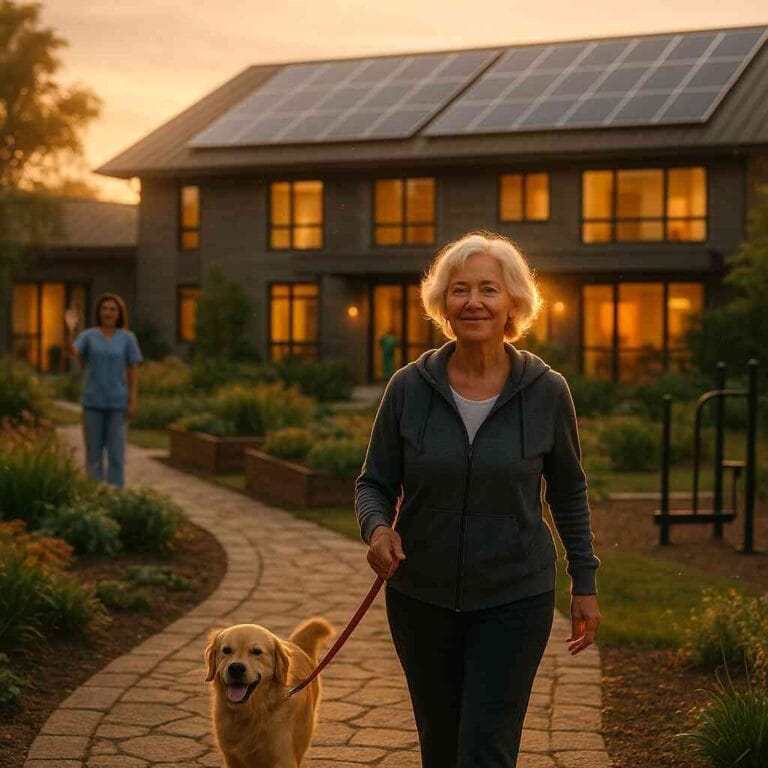
Compare Memory Care Models in Senior Living Facilities
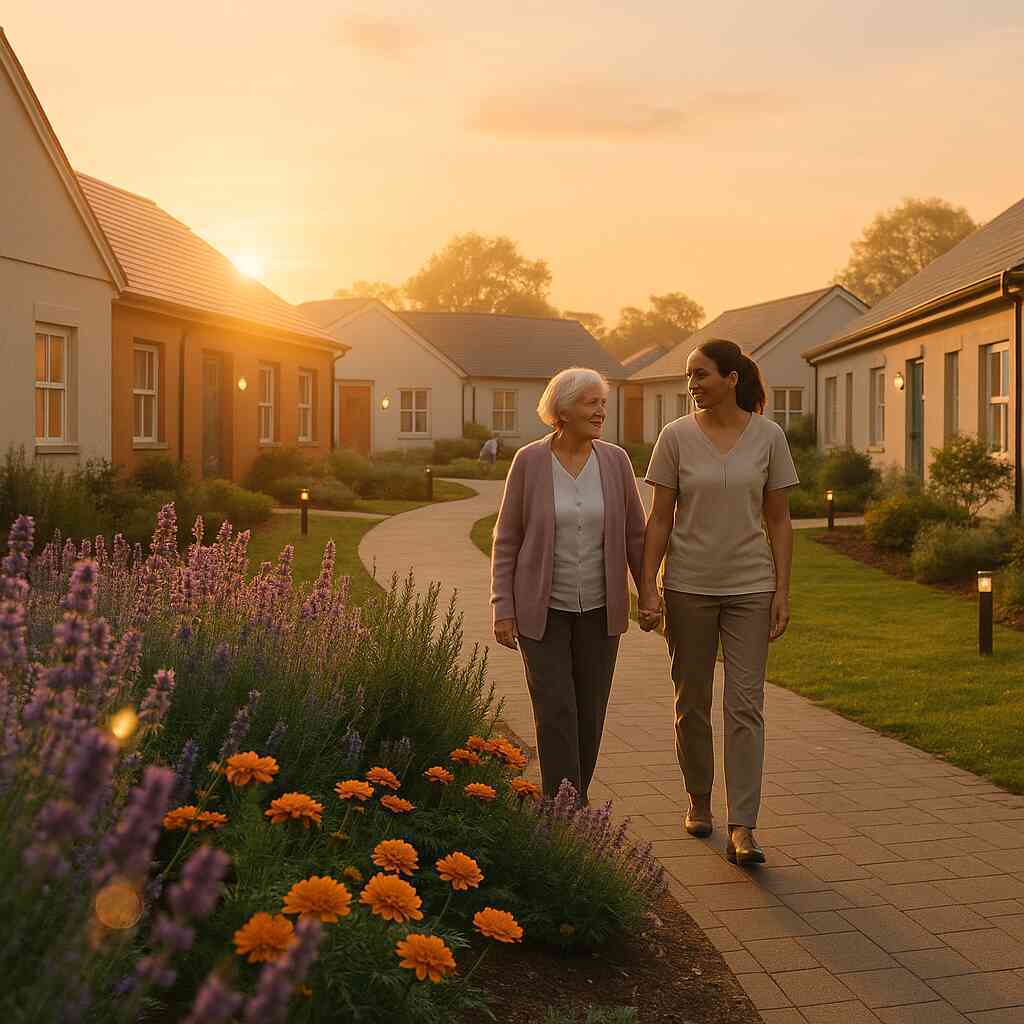
Navigating the Maze of Memory Care Options in Senior Living Facilities
Why memory care versus traditional assisted living remains a pivotal question
Families often start their search unsure whether a loved one needs specialized memory support or a classic assisted living plan. Traditional assisted living emphasizes help with daily living activities, social events, and basic health monitoring. In contrast, dedicated memory care models add secure environments, cognitive therapies, and staff trained in dementia communication. Choosing between them matters because the wrong setting can speed decline or trigger avoidable hospitalizations. To clarify those stakes, caregivers increasingly rely on the memory care facilities search tool to compare clinical features side-by-side.
Understanding these settings also influences financial planning, another stress point for many households. Memory care programs generally cost more than conventional assisted living due to higher staffing ratios and adaptive technology. Yet paying early for the right environment may prevent crisis placements in nursing homes for the elderly, which are even more expensive. Reviewing state regulations, accreditation, and outcome studies helps families gauge value beyond sticker price. An informed choice delivers both safety and dignity, two goals every reputable senior living facility must meet.
How the Senior Living Facilities memory care locator simplifies the first search
The first hours after a diagnosis often feel overwhelming, and information overload can paralyze even organized families. Senior Living Facilities counters that chaos through an intuitive locator that filters housing options for seniors by price range, care level, and neighborhood vibe. Interactive maps highlight secure memory care neighborhoods, allowing users to visualize driving distances and local amenities. Robust profiles outline staff-to-resident ratios, therapy calendars, and wandering-prevention design features, replacing guesswork with data. Within minutes, the platform helps caregivers locate senior living choices near me and schedule tours with confidence.
Because emotional readiness matters as much as clinical fit, the locator also showcases resident testimonials and family engagement strategies. Virtual walk-throughs demonstrate how purpose-built layouts reduce agitation, while activity videos illustrate evidence-based cognitive stimulation activities. By centralizing these insights, the service reduces the need to cold-call dozens of communities for seniors 55+. Streamlined comparison tools empower adult children who juggle work and parenting to act quickly without sacrificing diligence. Ultimately, the platform’s transparency fosters trust-an essential currency when health and memory are at stake.
The rising demand for Alzheimer specific senior housing solutions
Demographic shifts make specialized dementia care no longer a niche offering but a mainstream expectation. As longevity rises, more older Americans live long enough to face Alzheimer’s or related disorders, fueling demand for secure memory care neighborhoods nationwide. Forward-thinking operators respond with purpose-built dementia village designs, small house memory care concepts, and household model senior living layouts. These environments merge safety with autonomy, allowing residents to roam freely within color-coded zones while staff discreetly monitor well-being. Forward-looking investors recognize that memory care units are not just compassionate; they are smart business.
This surge also propels innovation in holistic wellness programs that integrate music therapy, sensory gardens, and adaptive technology for memory support. Regulatory bodies now evaluate outcome metrics such as fall reduction and preserved activities of daily living, raising the bar for quality standards. Families, empowered by online reviews and accreditation scorecards, demand transparency around staff training and behavioral-based memory support programs. Market pressure therefore rewards operators who continually refine person-centered memory care approaches. In this climate, choosing the right community early can secure a coveted spot in an environment designed to nurture every remaining spark of identity.
Inside Today’s Memory Care Playbook: From Montessori Inspired Programs to Secure Neighborhoods
Person centered memory care approach redefining daily life for residents
Older adults thrive when every routine honors personal history, cherished hobbies, and preferred sensory cues. A genuine person-centered memory care approach therefore maps each resident’s life story before the first breakfast is served. Care partners then weave favorite music, regional foods, and family photographs into daily living activities, creating comforting familiarity. Research shows this individualized rhythm lessens agitation, increases appetite, and bolsters remaining cognitive skills. Residents feel respected, not regimented, because the schedule flexes around them rather than forcing compliance.
Excellence in dementia care unit best practices demands interdisciplinary teamwork. Nurses, occupational therapists, and enrichment specialists meet weekly to adjust plans as cognition changes. That transparency supports a seamless continuum of care for Alzheimer’s residents who eventually need higher medical oversight. Families receive regular outcome reports detailing mood, mobility, and engagement levels, reinforcing trust. When small tweaks-like lowering dining-room lighting-immediately reduce anxiety, relatives see evidence that thoughtful personalization truly matters.
Montessori inspired dementia programming and evidence based cognitive stimulation activities
Traditional craft projects sometimes frustrate people with memory loss because steps feel abstract and success appears unreachable. Montessori inspired dementia programming flips that model by offering concrete tasks, predictable sequencing, and tactile materials. Residents might sort colorful garden seeds, polish silver, or match famous jazz vinyl covers, all activities with a visible purpose. Frequent repetition strengthens procedural memory pathways while positive feedback boosts confidence. Over time, even nonverbal participants can complete familiar stations with minimal prompting.
Many communities now train staff through the accredited Association Montessori Internationale framework. That investment transforms hallways into interactive learning labs instead of passive corridors. Outcome studies show measurable gains in attention span and hand-eye coordination after three months. Families exploring regional innovations can review Montessori inspired dementia care in Arizona to see successful pilot programs. Evidence suggests that structured choice plus sensory richness keeps minds nimble and spirits hopeful.
Behavioral based memory support program and the small house memory care concept
Behavior often communicates unmet needs when words fade. A behavioral-based memory support program therefore teaches caregivers to decode body language, pacing patterns, and facial expressions. Instead of reflexively medicating, staff identify triggers such as glare, overcrowding, or unfamiliar voices. They then modify the environment or routine to preempt escalation. This preventative stance protects dignity, reduces antipsychotic use, and aligns with nursing home care standards.
Physical setting strongly influences behavioral success, which is why the intimate household footprint is gaining popularity. In a small-house memory care concept, ten or fewer residents share an open kitchen, cozy living room, and private courtyard. Intimacy minimizes sensory overload, and familiar faces promote belonging. Operators embracing the model in mountain regions spotlight the small house memory care concept in Colorado as proof that fewer walls and warmer décor cultivate calmer days. Lower stress translates directly into reduced falls and emergency calls.
Purpose built dementia village design versus household model senior living
Purpose-built dementia villages replicate entire neighborhoods inside secure perimeters, complete with cafes, barber shops, and looping walking paths. Residents roam freely without ever reaching a busy street, preserving autonomy while ensuring safety. Wayfinding cues-painted storefronts, contrasting doorframes, and fragrant herb gardens-guide navigation even as spatial memory declines. Large-scale designs also support theater productions, education centers, and multigenerational playgrounds, enriching community life.
Conversely, the household model senior living layout clusters several small homes around shared courtyards, balancing intimacy with resource efficiency. Operators debating square footage, staffing logistics, and resident mix consult architects’ optimal memory care building layout tips before breaking ground. Both concepts prioritize freedom within limits, yet family culture often determines the better fit. Urban families may favor villages for diverse amenities, while rural clans appreciate household simplicity. Either way, design choices directly influence engagement, orientation, and emotional security.
Wandering prevention design features and adaptive technology for memory support
Door alarms once represented the pinnacle of wandering prevention, but today’s solutions integrate layered defenses without feeling institutional. Color-coded flooring subtly redirects residents, while concealed sensors track movement and notify caregivers of boundary breaches. Garden gates unlock only with staff badges, allowing safe outdoor exploration. Even dining-chair upholstery contrasts with exit doors, discouraging impulsive departures through visual psychology. These nuanced details demonstrate how design reduces confrontation and preserves freedom.
Technology now complements architecture in protecting cognitive health. Wearable devices monitor heart rate, hydration, and location, sending alerts to smartphones long before crises erupt. In-room voice assistants remind residents about hydration and medication, supporting autonomy between caregiver visits. Communities publicly share data dashboards after measuring safety metrics in memory care settings to prove accountability. Families appreciate transparent analytics that confirm low elopement rates and swift response times. When thoughtful design meets adaptive tech, safety becomes seamless rather than restrictive.
 Measuring What Matters: Staff Ratios Costs and Outcomes in Dementia Care Units
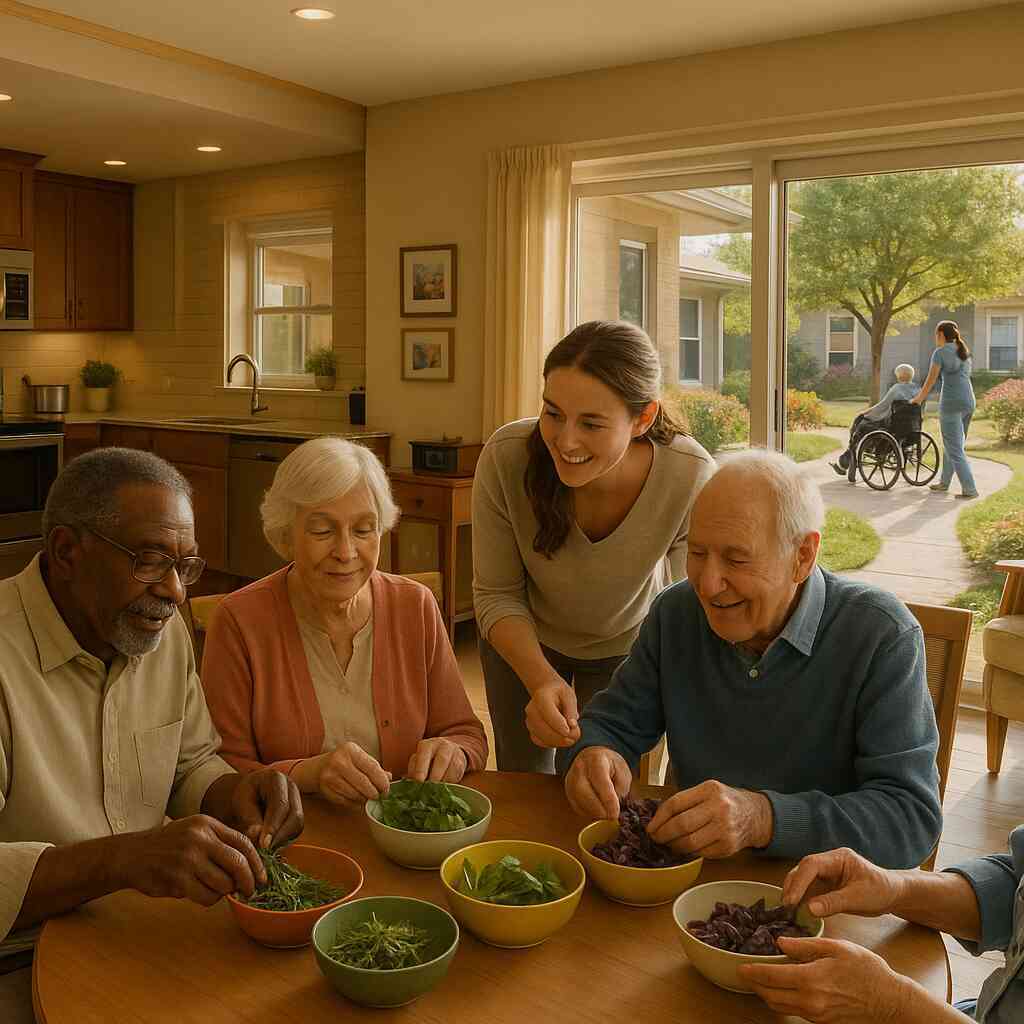 Measuring What Matters: Staff Ratios Costs and Outcomes in Dementia Care Units
Staff to resident ratio in memory units and its link to quality standards
Adequate staffing forms the backbone of a person-centered memory care approach. Research shows lower ratios reduce falls, wandering, and caregiver burnout within secure memory care neighborhoods. Many gerontologists recommend one direct-care employee for every five residents during peak activity hours. You can verify whether a provider meets the recommended nurse to resident ratios in dementia units before signing any admission agreement. Transparent numbers signal accountability and align with the evolving health care continuum for older adults’ expectations.
High ratios alone do not guarantee excellence; training depth also matters. Memory care staff need competencies in behavioral-based memory support programs and adaptive technology for memory support. Ask how frequently employees receive continuing education on Alzheimer’s communication techniques. Facilities boasting interdisciplinary rounding, including occupational and music therapists, usually maintain stronger outcomes. When staffing conversations feel open and data-driven, trust naturally grows between families and leadership teams.
Memory care cost comparison guide: Budgeting for long term care facility choices
Budget discussions often create anxiety, yet clarity emerges when costs are itemized against delivered value. A thorough memory care cost comparison guide examines base rent, care level charges, medication management, and ancillary therapies. Families in the Midwest might face different price tiers than those exploring an assisted living upgrade to memory care in Ohio. Understanding regional benchmarks prevents sticker shock and supports realistic financial planning. Always request a written fee schedule updated at least annually.
Compare more than monthly invoices; examine what each dollar supports. Smaller household model senior living environments may appear pricier but include robust Montessori inspired dementia programming. Conversely, large campuses sometimes add à la carte charges for sensory therapy in memory care settings. Evaluate whether music, garden, or art therapies are bundled or optional. Aligning the budget with your loved one’s lifestyle ensures dollars translate into daily living activities assistance, not hidden surcharges.
Outcome metrics for memory care programs tracking cognitive and holistic wellness
Quality communities measure what truly matters: resident flourishing. Standard outcome metrics include fall frequency, unplanned hospital transfers, and change in neuropsychiatric symptoms. Progressive operators publish quarterly dashboards highlighting participation rates in evidence-based cognitive stimulation activities. Before touring, review facilities that share data on evaluating cognitive fitness activities for seniors. Public reporting keeps teams focused on continuous improvement rather than mere compliance.
Holistic metrics extend beyond clinical charts. Surveys track mood, social connection, and family satisfaction to gauge psychological well-being. Look for memory units using wearable sensors to monitor sleep and hydration, converting raw numbers into proactive care plans. Transparent reporting supports informed choice and pushes the industry toward higher standards. When outcome discussions feel collaborative, you know the provider prioritizes genuine partnership.
Regulatory compliance in memory care facilities and accreditation checkpoints
Every long-term care facility must satisfy federal and state regulations, yet top performers voluntarily exceed minimums. Accreditation bodies audit infection control, emergency preparedness, and resident rights, offering families external validation of excellence. Reviewing inspection histories also reveals how swiftly leadership corrects deficiencies. Operators fluent in current nursing home care standards usually demonstrate stronger risk-management cultures. Ask to see the most recent survey results and corrective action plans during your visit.
Compliance extends to environmental design, such as fire-rated doors and wandering prevention systems. Regulators increasingly reference dementia-specific guidelines that emphasize freedom within safe boundaries. Facilities that integrate purpose-built dementia village design often surpass baseline codes with innovative wayfinding and adaptive lighting. Continuous quality reviews ensure these features remain functional, not cosmetic. Families gain peace of mind when oversight meets innovation.
Family engagement strategies in dementia care boost continuity and trust
Involving relatives transforms good programs into great ones. Weekly care conferences invite families to share life-story insights, ensuring routines remain person-centered as cognition changes. Some providers harness video portals so distant relatives can attend virtually, reinforcing connection despite geography. Before choosing, examine communities that encourage participation through resident councils, shared meals, and volunteer days. Many caregivers start by exploring tools to locate senior living choices near me and then filter by engagement scores.
Strong engagement strategies deliver measurable dividends. Consistent family feedback reduces medication reliance and enhances staff morale because everyone works from the same playbook. Facilities offering transparent digital dashboards let relatives track mood, nutrition, and activity in real time. This openness nurtures accountability, allowing early intervention when patterns shift. Ultimately, an engaged family network safeguards dignity and sustains joy throughout the memory care journey.
Charting a Compassionate Future: Continuum of Care Roadmaps and Smooth Transitions
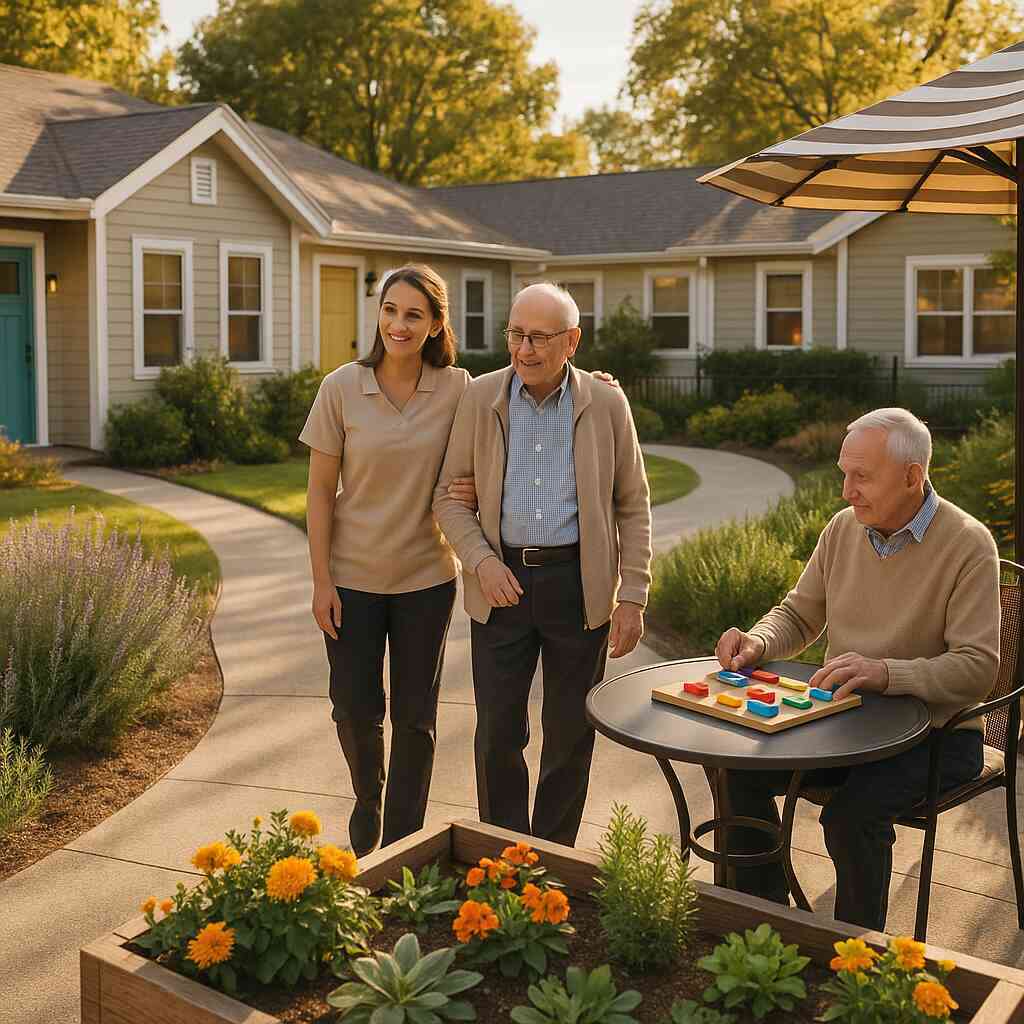 Charting a Compassionate Future: Continuum of Care Roadmaps and Smooth Transitions
Transition planning from assisted living to memory care ensuring minimal disruption
Moving from an assisted living plan to a specialized memory unit requires choreography, not chaos. Families, clinicians, and the community’s transition team should meet weeks in advance to outline personal routines, treasured objects, and social preferences. This roadmap anchors the person-centered memory care approach, so residents encounter familiar faces and schedules on day one. Staff can stage visits to the new dining room or activity studio, letting the resident associate pleasant experiences with the upcoming change. When thoughtful preparation replaces last-minute rushing, emotional distress drops and confidence rises.
Medical continuity matters just as much as emotional comfort. Nurse leaders coordinate medication lists, therapy notes, and primary-care directives to avoid information gaps during the transfer. Technology assists by uploading electronic health records into the dementia care unit’s best practices platform before arrival. Families receive a printed timeline that details packing, transportation, and first-week goals, reinforcing transparency. Post-move debriefs identify tiny adjustments-perhaps softer lighting at bedtime-that fine-tune comfort without delay. Every deliberate step turns an intimidating leap into a graceful pivot.
Holistic wellness programs in memory care integrating music and sensory therapy
Once settled, residents flourish when holistic wellness programs stimulate body, mind, and spirit. Evidence-based cognitive stimulation activities pair with rhythmic drumming or harp meditations to awaken dormant memories. Certified music therapists tailor playlists to each resident’s era of young adulthood, sparking recall and spontaneous conversation. Meanwhile, aromatherapy carts roll through hallways, diffusing lavender during evening wind-down and citrus during morning stretches. These sensory therapies in memory care settings reduce anxiety, improve sleep, and elevate appetite.
Gardens designed for touch invite seniors to stroke velvety lamb’s ear leaves or crumble aromatic mint. Occupational therapists then incorporate harvested herbs into cooking clubs, reinforcing purpose and procedural memory. Residents practicing tai chi among flowers gain balance and serenity simultaneously. By weaving multisensory threads throughout daily living activities assistance, communities exceed basic care and offer true enrichment. Families witnessing these moments feel relief, knowing their loved ones receive more than supervision; they receive daily joy.
Communities for seniors 55+ offering dementia support across the lifespan
Modern communities for seniors 55+ now plan for changing cognition from the outset. Campuses layer independent apartments, assisted living locations, and secure memory care neighborhoods around shared amenities like theaters and pools. Such designs support a seamless continuum of care for Alzheimer’s residents, letting neighbors stay on familiar property even as needs intensify. Friendships persist, favorite staff remain accessible, and cherished walking paths stay within reach. Familiarity shields identity, safeguarding dignity through every chapter.
Some operators merge the small house memory care concept with larger village perks. Ten-resident cottages circle a central green where concerts, farmers markets, and intergenerational festivals unfold. The household model senior living layout keeps noise low inside while community energy thrives outside. Coordinated programming ensures cognitively healthy elders volunteer in memory gardens, fostering purpose on both sides. By bridging abilities rather than segregating them, campuses nurture empathy and belonging for every age and stage.
Leveraging the assisted living locator to map senior living near you
Families juggling jobs, caregiving, and distance need fast clarity, not endless phone calls. The Senior Living Facilities assisted living locator filters housing options for seniors by care level, price, and proximity. Interactive dashboards display staff-to-resident ratios, adaptive technology for memory support, and accreditation scores at one glance. Users can compare the small house model against a purpose-built dementia village design without opening dozens of tabs. Time saved becomes time spent with loved ones, not spreadsheets.
Location remains a pivotal factor, especially when relatives aim to visit weekly. By typing a ZIP code and selecting memory care models comparison, caregivers instantly view drive times, public transit routes, and neighborhood safety data. If family traditions revolve around coastal gatherings, the locator highlights memory care options in Florida for Alzheimer’s that keep seaside rituals alive. Transparent reviews and photo tours shorten the decision cycle and boost confidence in every shortlist.
Putting it all together choosing the best fit memory care model for lasting peace of mind
Selecting a memory program that honors history while embracing future needs demands holistic evaluation. Families should weigh behavioral-based memory support programs, staff credentials, and outcome metrics alongside monthly fees. Touring environments at different hours reveals authentic culture: Are residents engaged after dinner, or does energy fade early? Does the layout prevent wandering without impeding autonomy? These observations, paired with data from the assisted living locator, produce a balanced verdict.
Once a match emerges, documenting next-step milestones solidifies peace of mind. Confirm transition dates, life-story handoffs, and interdisciplinary meeting schedules. Discuss long-range possibilities like hospice partnerships or rehabilitation wings, ensuring the roadmap extends to final seasons. Trust grows when communities articulate how they will adapt care plans as cognition shifts, mobility declines, or new health conditions appear. By aligning expectations today, families secure tomorrow’s serenity, knowing their chosen senior living facility will walk every mile beside them.
Frequently Asked Questions
Question: How can Senior Living Facilities help my family decide between memory care versus traditional assisted living for our loved one?
Answer: Our platform simplifies this pivotal choice by letting you run an instant memory care model comparison. By entering a ZIP code, you can view secure memory care neighborhoods and traditional assisted living locations side-by-side, complete with pricing, staff-to-resident ratio in memory units, and outcome metrics for memory care programs. You’ll also see which communities deliver a person-centered memory care approach, Montessori inspired dementia programming, or behavioral-based memory support programs. These data points, coupled with family reviews, make it easier to determine whether your loved one needs specialized dementia services or the lighter touch of classic assisted living plans.
Question: When I compare memory care models in senior living facilities, what specific features should I focus on to ensure quality and safety?
Answer: Start with licensed staff credentials and a minimum 1:5 staff-to-resident ratio in memory units during peak hours. Next, verify evidence-based cognitive stimulation activities, such as music therapy for seniors with memory loss and sensory therapy in memory care settings. Inspect wandering prevention design features-including secure courtyards, color-coded flooring, and adaptive technology for memory support like discreet motion sensors. Finally, review each community’s accreditation status and regulatory compliance in memory care facilities. Our memory care locator aggregates all these checkpoints so you can filter communities that meet or exceed dementia care unit best practices.
Question: Does the Senior Living Facilities memory care locator provide cost transparency, and how do I use it as a memory care cost comparison guide?
Answer: Absolutely. Each listing breaks down base rent, care-level fees, medication management charges, and à la carte services such as holistic wellness programs in memory care. You can sort communities for seniors 55+ by monthly budget, see regional averages, and calculate long-term projections. Because the information is standardized, you can quickly compare a household model senior living cottage with a purpose-built dementia village design to see where your dollars deliver the most value.
Question: Are innovative programs like Montessori inspired dementia programming and the small house memory care concept available nationwide through your platform?
Answer: Yes. Senior Living Facilities hosts listings from all 50 U.S. states, and many featured providers now incorporate Montessori inspired dementia programming, small house memory care concepts, or household model senior living layouts. Our filters allow you to pinpoint these offerings, whether you need specialized dementia nursing homes for elderly parents in Ohio or a coastal Alzheimer specific senior housing solution in Florida. Each profile details program credentials, outcome data, and resident testimonials so you can verify authenticity before scheduling a tour.
Question: How do Senior Living Facilities support transition planning from assisted living to memory care to ensure a smooth continuum of care for Alzheimer’s residents?
Answer: Once you select a long-term care facility memory unit, our team provides a transition checklist covering medical record transfers, life-story documentation, and family engagement strategies in dementia care. We coordinate directly with community staff to align daily living activities assistance, medication schedules, and preferred routines. Many partner communities also offer virtual orientation sessions, letting your loved one visit the new secure memory care neighborhood online before move-in. By streamlining these steps, we minimize disruption and uphold the resident’s dignity every step of the journey.
Admin
Expert contributor specializing in senior living care. Dedicated to providing families with clear, actionable advice.