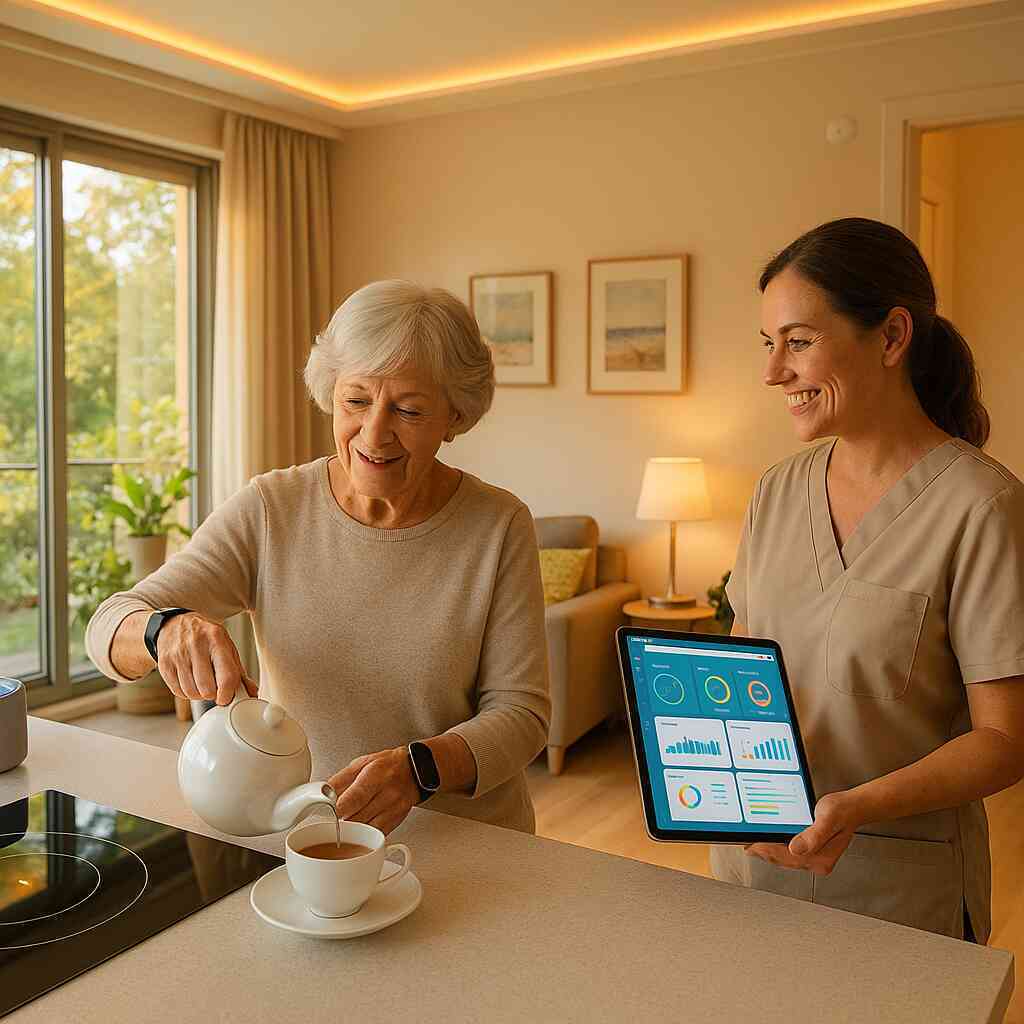
Guide to Smart Tech Adoption at Senior Living Facilities 2026
January 24, 2026
Opening the Door to Connected Care
Why smart technology matters for senior living facilities today
Smart technology in senior living facilities is no longer optional; it underpins reliable safety, health, and joy. Connected devices support activities of daily living, enabling older adults to age with dignity. Operators gain real-time insights that keep a long-term care facility proactive rather than reactive. Families also enjoy unprecedented visibility, strengthening trust across the entire health care continuum for older adults. Therefore, every stakeholder now views technology as both a service enhancer and a reputation builder.
The market already rewards communities that integrate wearable fall detection for seniors, voice-activated emergency response systems, and IoT health monitoring in assisted living. Prospective residents consistently shortlist properties after reviewing a smart senior living facilities overview 2026. Consequently, operators investing early in remote patient monitoring carve out a competitive advantage. They demonstrate measurable commitment to wellness, privacy, and transparency. Forward-thinking leadership, aided by data, turns “nice to have” gadgets into essential care fabric.
From senior housing to assisted living mapping the digital journey
The digital journey begins in independent senior housing, where basic smart thermostats and sensor-based wander management lay the groundwork. As residents’ needs evolve, these foundational layers interface with remote patient monitoring in senior apartments. Seamless upgrades minimize disruption while delivering richer insights to care teams. Strategic planning, mirroring evidence-based retirement community planning principles, prevents costly rip-and-replace cycles. Sustainability and scalability therefore remain central pillars.
Next, assisted living plans incorporate AI-powered medication reminders and digital care coordination for nursing homes within the same campus. Enterprise grade Wi-Fi infrastructure ensures every device communicates securely, supporting telehealth adoption in senior living without lag. Interoperability standards keep data flowing from cloud-based EHR integration into analytics dashboards. By following clearly defined criteria for adopting smart tech in senior living, organizations sidestep vendor lock-in. Ultimately, the journey advances toward predictive, not reactive, care delivery models.
Aligning resident expectations in communities for seniors 55 plus with innovation
Residents entering communities for seniors 55+ bring consumer-grade expectations shaped by everyday smartphones and voice assistants. They want technology that disappears into daily routines, enhancing independence rather than spotlighting limitations. Smart lighting solutions for dementia care illustrate this point; the system protects safety without compromising style. Likewise, touchless access control in senior housing removes physical barriers while respecting personal autonomy. Therefore, design teams must balance functionality with emotional comfort.
Open communication about privacy compliance in senior care technology builds trust and promotes adoption. Training sessions that pair tech champions with hesitant peers create a supportive culture. Voice assistants reducing social isolation also double as user-friendly tutorials, encouraging organic exploration. By gathering feedback through resident engagement apps and acting quickly on insights, operators demonstrate responsiveness. This continuous dialogue ensures innovation remains human-centered, enriching life for every resident.
Building the Invisible Infrastructure
Enterprise grade Wi Fi and network resilience for retirement communities
Reliable Wi-Fi infrastructure for retirement communities forms the nervous system of every connected service, from voice-activated emergency response systems to virtual reality enrichment activities. Residents expect the same seamless streaming they enjoy at home, yet medical IoT traffic must always take priority over video calls with grandchildren. Operators therefore deploy enterprise-grade access points with dynamic bandwidth allocation, ensuring clinical data packets never compete with entertainment. Proactive spectrum analysis identifies interference from nearby buildings before it cripples performance. Many California retirement communities embracing IoT care now use self-healing mesh networks that reroute signals instantly when an access point fails.
Beyond raw coverage, network resilience demands redundant backhaul, surge-protected switches, and automatic failover to cellular connections during outages. Facilities integrating smart technology in senior living facilities often install fiber rings around the campus, delivering low-latency connectivity to every cottage and memory-care wing. Regular penetration testing validates performance under simulated cyber-attacks, confirming residents’ telehealth sessions remain uninterrupted. Clear service-level agreements with internet providers specify uptime, repair windows, and escalation paths. Finally, real-time dashboards alert IT staff when bandwidth spikes threaten critical devices, allowing throttling of non-essential traffic within seconds.
Cybersecurity best practices that safeguard privacy compliance in senior care technology
Data flowing through smart lighting solutions, wearable fall detection for seniors, and remote patient monitoring systems is highly sensitive. Senior living cybersecurity best practices begin with zero-trust architecture, where every device and user must authenticate continuously. Multi-factor logins combined with biometric door access keep unauthorized visitors from “tailgating” into network closets. Encryption at rest and in transit protects health information, satisfying HIPAA and emerging state regulations without burdening staff workflows. A regularly updated asset inventory lets administrators quarantine outdated firmware before hackers exploit known vulnerabilities.
Third-party risk management is equally vital because many platforms integrate external analytics engines or cloud-based EHR systems. Facilities should follow the criteria for adopting smart tech in senior living to vet vendors’ security posture, incident-response plans, and data deletion policies. Quarterly tabletop exercises prepare caregivers to react quickly if an intrusion occurs, minimizing downtime for AI-powered medication reminders. Continuous staff education, spearheaded by a privacy officer, transforms complex compliance language into relatable scenarios. When residents see proactive safeguards, trust in connected care deepens.
Battery backup and power planning for always on medical IoT
Smart devices must remain operational even when external power grids falter, especially in hurricane-prone coastal regions. Battery backup planning for smart devices starts with tiered criticality mapping, identifying which sensors sustain life and which only enhance convenience. Nurse-call platforms, oxygen concentrator monitors, and assistive robotics for older adults fall into the highest tier; they receive double-conversion UPS units plus automatic transfer to generators. Periodic load testing verifies batteries hold charge under real-world stress, not just lab conditions. Environmental sensors inside electrical rooms detect heat spikes that shorten battery lifespan.
Progressive campuses study microgrid models that blend solar arrays with on-site natural-gas turbines, reducing dependency on municipal utilities. Collaboration with utility demand-response programs can offset installation costs while guaranteeing fuel prioritization during regional blackouts. Some Texas assisted living innovation hubs showcase portable energy-storage carts, enabling rapid deployment to any wing needing extra capacity. Smart panels report live consumption data to facility-wide dashboards, allowing maintenance teams to schedule battery replacements before degradation triggers alarms. By aligning sustainability goals with resident safety, operators create resilient communities for seniors 55+ without inflating operating budgets.
Interoperability standards that future proof assisted living tech ecosystems
Installing disparate gadgets without a common language quickly leads to silos that frustrate caregivers and residents alike. Interoperability standards in assisted living tech, such as HL7 FHIR and emerging Matter protocols, ensure wearables, smart thermostats, and cloud-based EHR integration talk seamlessly. Open APIs enable developers to build dashboards that merge wandering-alert data with AI-driven nutritional analytics, revealing holistic insights. Moreover, standards simplify replacement cycles; a failed sensor can be swapped for any compliant device, avoiding vendor lock-in.
Regulatory agencies increasingly cite interoperability when approving remote patient monitoring reimbursements, making adherence a financial necessity. Before purchasing new platforms, leaders compare certification levels and roadmap commitments to standards governance bodies. The telehealth comparison in assisted living today reveals how standard-compliant systems cut integration timelines by months. Periodic interoperability “plug-fests,” hosted virtually, let IT teams verify cross-brand compatibility in a sandbox environment. Transparent data interchange ultimately frees staff to spend less time troubleshooting and more time enhancing activities of daily living support for residents.
Vendor selection checklists for senior living smart solutions
Choosing technology partners can feel overwhelming when marketing brochures all promise seamless, scalable, and secure platforms. A structured vendor selection checklist evaluates functionality, interoperability, cybersecurity, support responsiveness, and total cost of ownership over five years. Site visits to existing deployments provide unfiltered feedback from frontline caregivers who rely on the tools daily. Warranty terms, software update cadence, and training resources weigh heavily because outdated interfaces can discourage even tech-savvy retirees. Environmental impact, including recycling programs for obsolete devices, also matters to eco-conscious senior housing operators.
When decision time arrives, procurement teams consult vendor listings for smart senior living solutions to compare offerings side by side. Pilot programs in a single assisted living location gather usability data, ensuring residents feel empowered rather than monitored. Forming cross-department committees-nursing, maintenance, culinary, and resident councils-reduces blind spots, aligning technical capabilities with lived experience. Finally, contractual clauses should stipulate clear exit strategies, safeguarding flexibility as innovations evolve. This disciplined approach delivers smart technology that enriches life today and adapts gracefully tomorrow.
 Smart Safety and Health Solutions Residents Feel
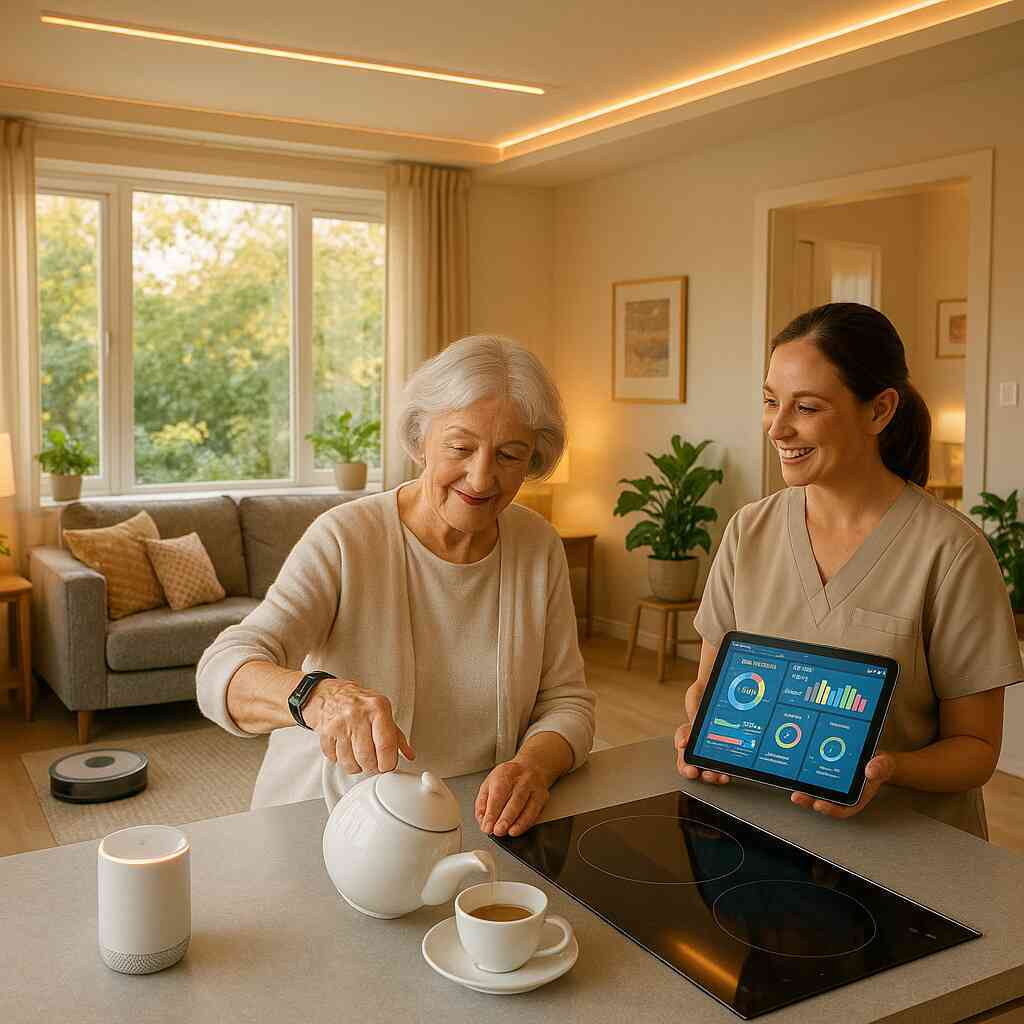 Smart Safety and Health Solutions Residents Feel
Wearable fall detection and voice activated emergency response systems
Wearable fall detection for seniors has evolved into discreet, wrist-sized guardians. Smart accelerometers distinguish between a hand slip and a critical collapse. Instant alerts travel over Wi-Fi infrastructure for retirement communities, reaching nurses within seconds. Families receive simultaneous notifications, strengthening confidence in the senior living facility’s vigilance. Residents regain courage to garden or dance because technology cushions inevitable mishaps. Providers review aggregate fall data, adjusting exercise programs before injuries multiply. That proactive insight transforms reactive incident reports into personalized prevention strategies.
Voice-activated emergency response systems complement wearables, covering moments when devices sit on bedside tables. Natural language processing recognizes distressed shouts even through closed restroom doors. Residents never fumble for pull cords because the room itself listens. Hands-free operation particularly helps people managing arthritis or Parkinsonian tremors. Care teams program location-specific protocols, dispatching lift teams or EMTs automatically. Recorded audio clips integrate into cloud-based EHRs, documenting event context for clinicians. Continuous testing verifies microphones remain sensitive yet ignore normal conversation, preserving privacy.
Remote patient monitoring and IoT health dashboards in senior apartments
Remote patient monitoring in senior apartments now captures vitals without invasive cuffs. Contactless radar sensors read respiration through bedding, encouraging restful nights. Smart weight scales sync with IoT health monitoring in assisted living platforms. Abnormal trends trigger color-coded tasks for nurses, not vague voicemail reminders. This streamlined triage reduces avoidable hospital transfers and promotes medication adherence. Residents appreciate minimal disruption because devices blend into the décor.
IoT health dashboards translate thousands of data points into one intuitive score. Operators visualize wellness across every corridor, apartment, and memory care suite. Predictive analytics highlight residents needing hydration coaching before lab values decline. Families can securely view personalized dashboards, replacing anxiety with measurable transparency. Cloud architecture scales effortlessly as the senior living near you grows. Integrated alerts also inform dining managers to adjust sodium in menus.
AI powered medication reminders and digital care coordination for nursing homes
AI-powered medication reminders eliminate the chaos of blister packs and paper schedules. Smart dispensers unlock compartments only at prescribed times, preventing double dosing. Voice assistants announce dosage details, supporting residents with visual impairment. Caregivers receive mobile confirmations whenever doses get retrieved or declined. Such precise accountability surpasses manual logs still common in many nursing homes for the elderly.
Digital care coordination for nursing homes unifies pharmacy, lab, and therapy notes. Cloud-based EHR integration in long-term care eliminates fax machines entirely. When a prescription changes, the dispenser updates instantly across all wings. Physical inventory counts remain accurate because AI tracks every tablet dispensed. Regulatory audits become smoother, freeing staff to engage residents socially. Most importantly, residents experience fewer adverse drug events and greater peace.
Smart lighting and sensor based wander management in dementia care
Smart lighting solutions for dementia care align circadian rhythms using adaptive color temperature. Soft amber hues during evenings cue the body toward restorative sleep. Brighter daylight tones then energize morning routines without pharmacological stimulants. Automated dimming prevents sensory overload, particularly helpful for residents experiencing sundowning. Facilities report decreased nighttime agitation and, consequently, fewer caregiver injuries.
Sensor-based wander management pairs seamlessly with intelligent lighting pathways. Pressure mats, door contacts, and wearable tags cooperate within a single dashboard. If someone exits a boundary, corridors illuminate gently, guiding a safe return. Simultaneously, caregivers receive mobile wayfinding directions, shortening response times. Unlike noisy alarms, silent alerts respect dignity while maximizing protection. Residents maintain autonomy, yet families trust the campus to prevent elopement.
Touchless access control and smart kitchen appliances are enhancing independence
Touchless access control in senior housing reduces surface contact and lost keycards. Facial recognition or Bluetooth tokens unlock suites, elevators, and wellness centers instantly. Operators program temporal permissions, keeping pool gates closed after therapy hours. Emergency services still gain universal entry, ensuring rapid crisis response. Residents appreciate seamless movement that feels consumer-grade, not institutional.
Smart kitchen appliances for senior independence transform ordinary meals into safe culinary adventures. Induction cooktops shut off automatically when pans are removed. Refrigerators send expiry alerts, preventing accidental consumption of spoiled dairy. Voice recipe assistants adjust ingredient amounts for arthritis-friendly grip strength. Communities for seniors 55+ leverage these features to market vibrant, self-directed lifestyles.
Telehealth adoption and augmented reality physical therapy experiences
Telehealth adoption in senior living now includes high-definition otoscopes and cardiology peripherals on rolling carts. Residents consult specialists without battling traffic, inclement weather, or infectious waiting rooms. Reimbursement parity has encouraged operators to integrate virtual visits into everyday schedules. Real-time data from remote patient monitoring devices populates clinician dashboards during calls. Thus, conversations shift from symptom description to actionable care planning.
Augmented reality physical therapy for seniors overlays holographic footsteps, guiding perfect gait alignment at home. Gamified progress bars encourage adherence, turning exercise into an engaging quest. Therapists adjust resistance settings remotely, watching motion capture metrics instantly. Residents seeking to continue such innovations after discharge often find tech-forward senior living communities near me. These campuses already embed AR therapy suites, ensuring momentum never stalls.
Data Driven Excellence for Operators and Care Teams
Cloud based EHR integration and seamless staff workflows
Cloud-based EHR integration in long-term care replaces fragmented paper charts with one secure, always-synced record. Nurses document vitals once, and every authorized clinician sees updates instantly. Pharmacy orders flow directly into medication carts, eliminating transcription errors that once consumed hours. Because the platform lives in the cloud, software patches apply overnight without dragging IT teams from bed. Staff gain time for hands-on caregiving instead of hunting files or rebooting aging servers.
Role-based dashboards display only what each professional needs, trimming cognitive overload. Nurse aides view hydration reminders, while physicians scan trend graphs before rounds. Built-in interoperability standards push data to billing systems automatically, speeding reimbursements. Audit trails meet stringent senior living cybersecurity best practices, satisfying regulators without extra paperwork. When workflows feel this frictionless, turnover drops and morale climbs across every assisted living location in the portfolio.
Resident engagement apps are reducing social isolation through voice assistants
Voice assistants reducing social isolation greet residents by name, deliver personalized news briefings, and suggest afternoon tai chi classes. The conversational interface respects tremor-prone hands, fostering independence even when mobility wanes. Engagement apps layer on trivia games, medication prompts, and two-way messaging with grandkids. Real-time language translation bridges cultural gaps among diverse resident populations. As friendships bloom through shared digital experiences, depression screenings record measurable improvements.
Care teams monitor sentiment analytics derived from voice tone and engagement frequency. When patterns indicate loneliness, staff schedule small-group outings before emotions deepen. Families appreciate alerts that suggest quick video calls during vulnerable moments. The same platform streams community announcements, ensuring everyone hears schedule changes simultaneously. By turning common rooms into interactive hubs, operators create a vibrant seniors living community that rivals trendy urban co-living spaces.
Energy savings with smart thermostats and environmental sensors
Smart thermostat energy savings in senior apartments begin with adaptive learning algorithms that memorize resident comfort preferences. Sensors track occupancy, humidity, and outdoor temperature, then adjust HVAC output precisely. This granular control trims utility bills without sacrificing health, especially for those sensitive to extreme heat. Operators in Florida senior housing with connected health monitoring report seven-digit annual savings after campus-wide retrofits.
Environmental sensors also detect air quality, alerting maintenance before allergens spike. Automated window shades balance sunlight, lowering cooling loads while protecting aging eyes. Monthly sustainability reports translate kilowatt reductions into equivalent trees planted, inspiring eco-minded residents. Lower operating costs allow reinvestment in new amenities, reinforcing a culture of continuous improvement. Efficiency therefore becomes both a fiscal and marketing advantage.
Advanced analytics translates device data into wellbeing insights
Thousands of signals from wearable fall detection devices, smart lighting, and remote patient monitoring platforms converge in cloud analytics engines. Machine learning models flag subtle deviations-slower gate speed, restless sleep, or reduced dining hall visits-that precede health declines. Care managers receive prioritized action lists instead of scrolling endless spreadsheets. Data analytics for resident wellbeing thus shifts operations from reactive triage to proactive coaching.
Predictive alerts often surface dehydration or urinary infections days before symptoms emerge. Early intervention cuts hospital transfers, preserving Medicare ratings and resident trust. Population-level dashboards benchmark wings against each other, uncovering best practices worth replicating. Secure data sharing with external physicians accelerates specialist consultations, maximizing telehealth adoption in senior living. Transparent, evidence-based insights strengthen conversations with families and regulators alike.
Cost benefit analysis that justifies smart upgrades across multiple sites
Board members demand hard numbers before allocating capital for assistive robotics for older adults or augmented reality physical therapy suites. A disciplined cost-benefit analysis of smart upgrades compares installation expenses against labor savings, reduced penalties, and lengthened resident tenure. Financial models include depreciation schedules and utility rebates, ensuring apples-to-apples comparisons across geographies.
Operators aggregating data from several long-term care facilities spot volume discounts and negotiate stronger vendor contracts. Success metrics integrate quality-of-life indices alongside dollar figures, honoring the mission of compassionate care. When executives see reduced overtime claims and rising occupancy tied to technology, funding flows more freely. Senior Living Facilities advisors guide organizations through these evaluations, translating complex spreadsheets into actionable roadmaps that scale without disrupting daily operations.
Charting the Human Centered Digital Future
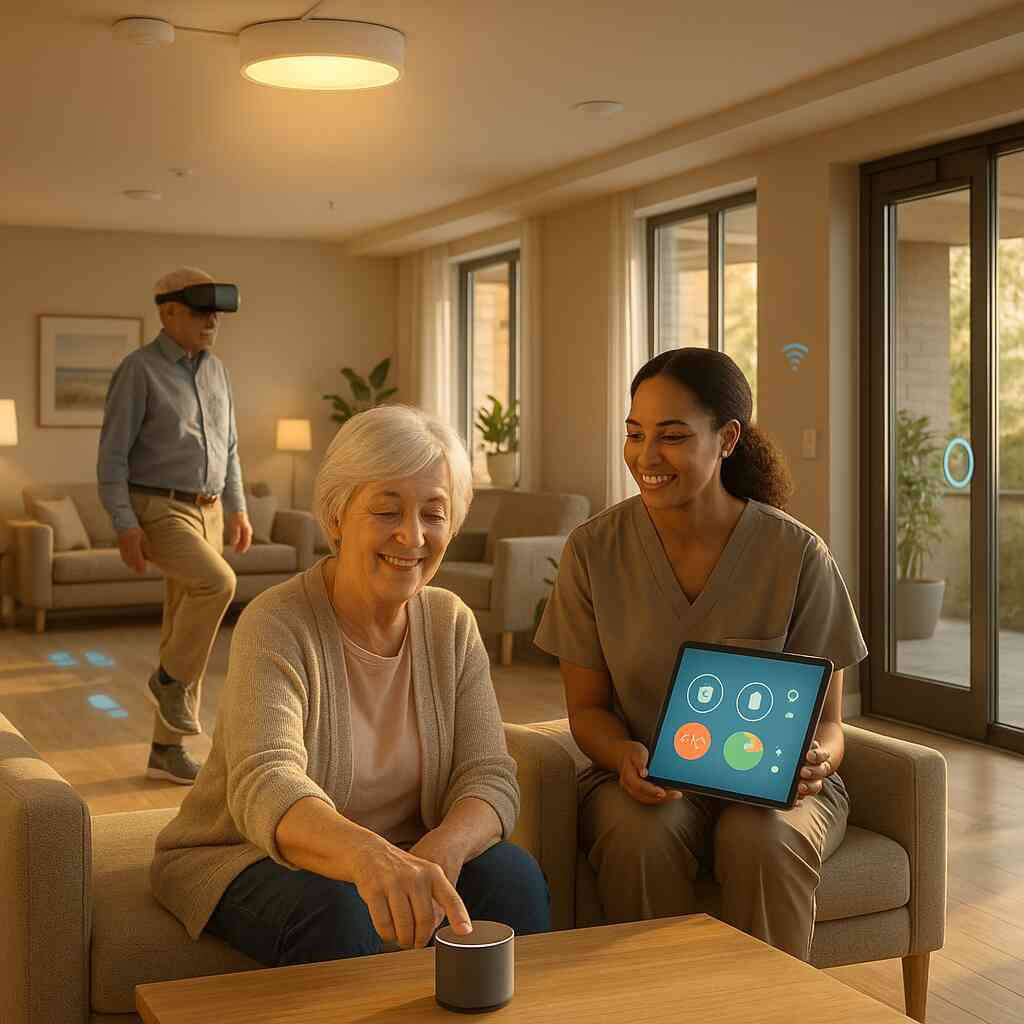 Charting the Human Centered Digital Future
Training caregivers and residents to embrace connected devices
Modern caregiver training for connected devices starts with empathy, not circuitry. Instructors demonstrate how smart technology in senior living facilities frees hands for comforting touch rather than keyboard clicks. Role-play sessions let nurses practice voice commands that summon assistive robotics for older adults, reinforcing confidence before real emergencies. Clear analogies-comparing sensor dashboards to familiar smartphone apps-dispel intimidation quickly. By rooting lessons in daily routines, leaders show that technology augments human compassion instead of replacing it.
Communities for seniors 55+ embracing smart home tech also involve residents directly in workshops. Peer mentors who mastered wearables last season now host coffee-hour demos, proving age is no barrier to innovation. Color-coded guides explain privacy settings step by step, ensuring autonomy remains intact. Facility libraries lend practice devices so neighbors can explore features at their own pace. This inclusive approach turns training into a social catalyst, sparking conversation long after class ends.
Measuring success and iterating on smart technology rollouts
Facilities gauge progress through a balanced scorecard that blends hard data and human sentiment. Metrics include reduced response times from voice-activated emergency systems and increased participation in remote patient monitoring programs. Surveys track resident satisfaction with sensor-based wander management, while data analytics for resident wellbeing reveal hidden trends. Regular reviews keep leadership aligned with frontline experience, preventing flashy gadgets from overshadowing true needs.
Iteration follows an agile loop. Small pilot wings adopt updates first, allowing rapid feedback before community-wide deployment. Maintenance teams log uptime, while nurses note workflow friction inside cloud-based EHR integration. Quarterly retrospectives invite residents to share stories, ensuring their voices guide future upgrades. When issues surface, firmware patches roll out overnight, showcasing a culture of continuous improvement.
Finding senior living near you that already leads in tech adoption
Families searching for senior living near me increasingly prioritize innovation alongside hospitality. The Senior Living Facilities platform simplifies discovery by spotlighting campuses with enterprise-grade Wi-Fi, sensor-rich apartments, and AI-powered medication reminders. Detailed listings clarify whether communities offer telehealth adoption in senior living or experimental augmented reality physical therapy suites. Evaluations reference staff training levels, guaranteeing seamless support from move-in day.
Curated articles help visitors understand how emerging trends translate into everyday comfort. One popular resource explores AI applications enriching daily life for older adults, illustrating why tech-forward environments feel warmer, not colder. Virtual tours show touchless access control in action, while comparison charts reveal cost-benefit analysis of smart upgrades already achieved. With transparent data and expert guidance, families gain confidence, and residents step into digitally empowered futures without hesitation.
Frequently Asked Questions
Question: How can Senior Living Facilities guide my community through the smart technology in the senior living facilities roadmap highlighted in the Guide to Smart Tech Adoption at Senior Living Facilities 2026?
Answer: Senior Living Facilities offers a three-step process-Search, Compare, Connect-that simplifies every phase of smart tech adoption. First, we help you locate peer campuses that already use wearable fall detection for seniors, AI-powered medication reminders, and cloud-based EHR integration in long-term care, so you can see proven results before you invest. Next, our comparison tools let you evaluate interoperability standards in assisted living tech, senior living cybersecurity best practices, and vendor support plans side-by-side. Finally, we facilitate direct connections to vetted suppliers and consultants, ensuring your assisted living plans include enterprise-grade Wi-Fi infrastructure for retirement communities, battery backup planning for smart devices, and data analytics for resident wellbeing. Because our database spans all 50 states, you gain region-specific advice on regulations, rebates, and funding sources-turning the 2026 guide into an actionable blueprint tailored to your facility.
Question: What should we look for when upgrading Wi-Fi infrastructure for retirement communities to support IoT health monitoring in assisted living?
Answer: Start with coverage, capacity, and cybersecurity. Senior Living Facilities recommends enterprise-grade access points that prioritize medical IoT traffic over entertainment streaming, plus redundant backhaul with automatic cellular failover. We also steer you toward vendors that adhere to zero-trust frameworks and encryption standards, protecting residents’ remote patient monitoring data. Using our assisted living locator, you can tour campuses that already deploy self-healing mesh networks and see real-time dashboards in action. These site visits clarify equipment costs, installation timelines, and service-level agreements-helping you future-proof the network for upcoming virtual reality enrichment activities and voice-activated emergency response systems.
Question: How do Senior Living Facilities ensure privacy compliance in senior care technology when recommending smart lighting solutions for dementia care or sensor-based wander management?
Answer: Every technology partner in our directory undergoes a rigorous vetting process aligned with HIPAA, state regulations, and the senior living cybersecurity best practices outlined in our content library. We review each vendor’s encryption methods, incident-response plans, data-deletion policies, and audit trails. During the Compare stage, communities receive a checklist covering multi-factor authentication, biometric access controls, and third-party risk management. Our privacy officers translate technical jargon into clear, resident-friendly language, so families feel confident that smart lighting, touchless access control in senior housing, and other IoT systems respect autonomy while safeguarding sensitive information.
Question: Can Senior Living Facilities help quantify the cost-benefit analysis of adding AI-powered medication reminders and wearable fall detection for seniors across several assisted living locations?
Answer: Absolutely. Our platform aggregates data from long-term care facilities nationwide, providing benchmarks on labor savings, reduced hospital transfers, and extended resident tenure after smart upgrades. We supply customizable financial models that include depreciation schedules, utility rebates, and maintenance projections. By comparing multiple assisted living locations in different states, you can identify volume discounts and negotiate stronger contracts. Many operators discover that the combination of medication adherence improvements and fewer fall-related incidents delivers a payback period of 18-24 months-evidence powerful enough to secure board approval for broader smart technology rollouts.
Question: I’m searching for a senior living near me that offers augmented reality physical therapy for seniors and touchless access control. How can your assisted living locator help?
Answer: Enter your city or ZIP code on SeniorLivingFacilities.com and filter results by smart tech amenities. Our database flags communities for seniors 55+ embracing smart home tech such as augmented reality physical therapy suites, assistive robotics for older adults, and voice assistants reducing social isolation. Each listing details Wi-Fi infrastructure readiness, privacy compliance certifications, and resident engagement apps. You can schedule virtual or in-person tours directly through the site, compare pricing, and read peer reviews. Whether you need senior apartment rentals with smart kitchen appliances or a full-service nursing home for the elderly, our nationwide coverage ensures you find a senior living community that matches both clinical needs and technological expectations.