How Senior Living Facilities in Alaska Define Quality Care
January 22, 2026
Beyond the Northern Lights: Redefining Quality in Alaska’s Senior Living Facilities
The evolving landscape of senior living near me in the Last Frontier
Across Alaska, senior living near me has transformed from isolated lodges to vibrant hubs of wellness. Communities once focused only on shelter now spotlight holistic health. Providers integrate medical oversight, social engagement, and cultural celebration. Technology, including telehealth, shrinks the distance between rural elders and specialists. Consequently, families discover more confident aging pathways without leaving beloved tundra landscapes.
Yet options vary widely between Anchorage, Fairbanks, and coastal villages. Prospective residents often begin by comparing amenities, clinical resources, and activity calendars. Using the Senior Living Facilities platform, families quickly locate quality senior housing options in Alaska that align with their elder goals. Interactive photos, transparent pricing, and resident testimonials empower smarter decisions. As the database grows, the term senior living near me becomes less daunting for those across the expansive state. Ultimately, information access lays the foundation for consistent quality.
Why quality metrics matter for every seniors living community
Quality metrics translate the abstract promise of care into measurable realities. Alaska regulators monitor infection rates, medication safety, and resident satisfaction with heightened scrutiny. Facilities that track these indicators internally spot trends before problems escalate. Families reviewing reports feel reassured that leadership values accountability. Therefore, metrics act as both a compass and a smoke detector for a seniors living community.
Quality metrics in Alaskan assisted living extend beyond clinical numbers to workforce stability. High nurse staffing ratios in long-term care in Alaska correlate with fewer hospital transfers and happier residents. Consequently, state scorecards now highlight tenure, turnover, and continuing education hours. Providers sharing this data publicly build trust and attract mission-driven employees. In effect, transparent metrics create a virtuous cycle of performance improvement.
Aligning personal values with housing options for seniors
Even the most dazzling residence may disappoint if its culture clashes with an elder’s identity. Some Alaskans prioritize access to sled-dog races and subsistence traditions. Others seek bilingual staff fluent in Yupik or Tlingit. Therefore, aligning personal values with housing options for seniors requires honest reflection before touring. Early conversations about spirituality, pet policies, and environmental stewardship narrow the search to communities where residents truly flourish.
Senior Living Facilities curates detailed filters to match unique preferences with communities for seniors 55+. For instance, users can highlight rental housing for seniors that follows green-building principles or supports visiting grandchildren. Each saved preference refines recommendations, saving families countless winter travel miles. Additionally, review sections spotlight resident councils that influence menus and programming. When values align, move-in day feels less like relocation and more like coming home.
Benchmarking Excellence Standards Regulations and Staffing in the 49th State
Understanding Alaska senior care standards and licensure requirements
Alaska senior care standards blend rigorous state statutes with the frontier spirit of self-reliance. Regulators mandate detailed licensure requirements for Alaska nursing homes, assisted living homes, and memory wings. Facilities must demonstrate fire safety, infection control, and culturally responsive elder care in Alaska practices during unannounced surveys. Because quality metrics in Alaskan assisted living feed public scorecards, communities continually refine incident reporting systems. Families reviewing these transparent dashboards gain confidence before stepping through the lobby doors.
Compliance, however, is more than checking boxes; it drives daily decisions. Administrators align medication protocols, menu planning, and enrichment calendars with evolving guidelines. They also track environmental stewardship to satisfy cold-climate senior housing design expectations. Inspectors now review energy audits alongside resident satisfaction surveys, highlighting sustainable senior housing Alaska innovations. When regulations and resident feedback intersect, excellence becomes measurable rather than aspirational.
Nurse staffing ratios and competency expectations in long term care facility settings
Skillful caregivers turn regulatory theory into compassionate practice. The state publishes recommended nurse staffing ratios in long-term care in Alaska, yet leading operators aim higher. They layer competency assessments, simulation labs, and mentorship tracks to ensure person-centered care in Anchorage facilities resonates statewide. As acuity levels rise, management cross-trains aides in dementia-friendly Alaska communities to spot subtle behavioral shifts. This proactive approach reduces avoidable hospital transfers and protects resident dignity.
Many administrators rely on the latest staffing guidelines in long-term care facilities to benchmark internal goals. They translate those benchmarks into career ladders, tuition assistance, and wellness stipends. Consequently, turnover drops, and elders build lasting bonds with familiar faces. Continuous education also emphasizes frost-related safety protocols in senior living, preventing seasonal injuries. Stable staffing, therefore, anchors every other quality initiative.
Leveraging Medicaid waiver assisted living in Alaska for equitable access
Quality care loses meaning if only a few can afford it. The Medicaid waiver assisted living Alaska program bridges that gap by covering room, board, and essential services. Providers willing to navigate complex billing rules open doors for low-income residents, Alaskan veterans senior benefits recipients, and Indigenous elders’ support programs. They pair financial counseling with aging in place resources in Alaska, guiding families through eligibility paperwork. These outreach efforts cultivate socioeconomic diversity within the same hallways.
Equitable access extends beyond dollars. Communities design tiered service packages so elders can add support with activities of daily living as needs evolve. Respite care options for Alaska caregivers prevent burnout and strengthen intergenerational ties. When cost, culture, and clinical acuity align, residents remain home within their continuum of care communities Juneau or beyond. Equity thus becomes a daily operational lens, not a marketing slogan.
Telehealth integration elevating medical care in remote senior living near you
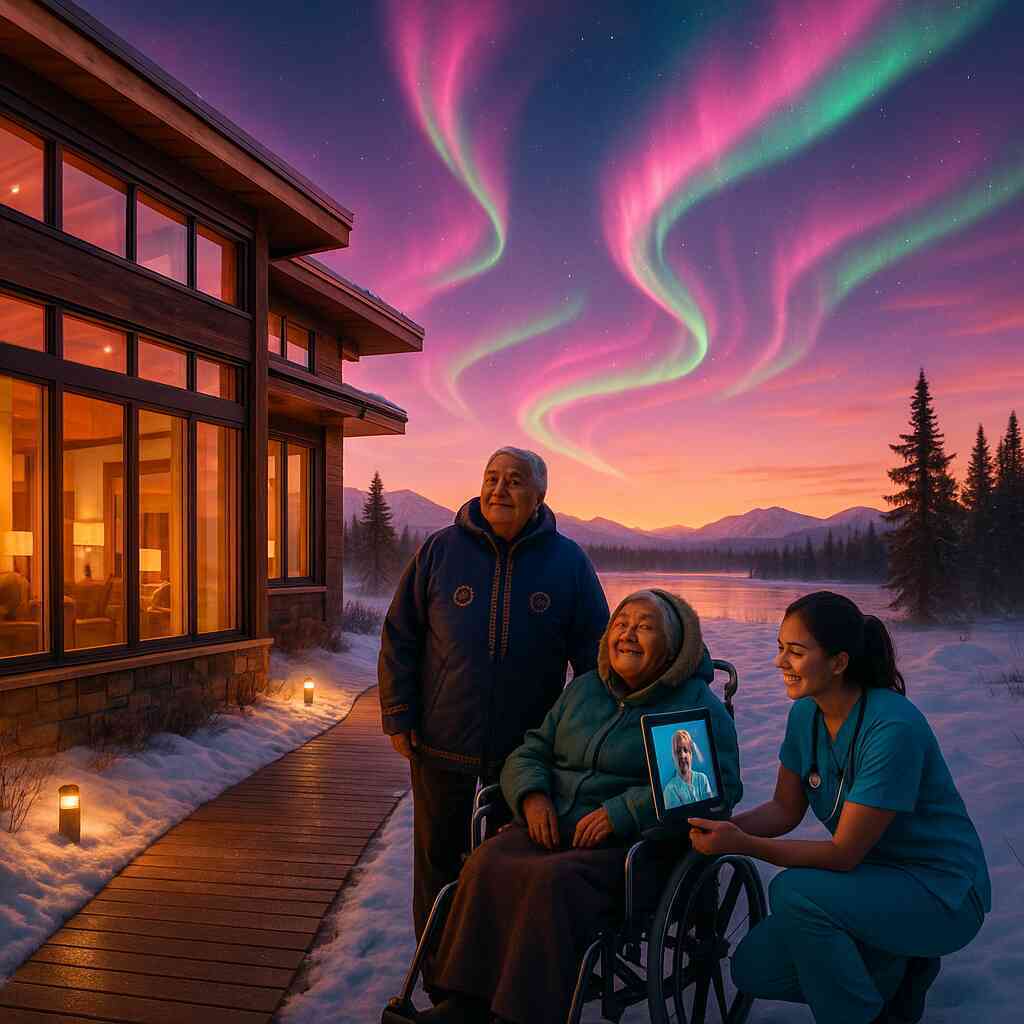
Roadless villages and icy highways once limited specialist visits, but technology now closes geographic gaps. Providers install private kiosks for telehealth integration in senior apartments, enabling cardiology follow-ups without plane tickets. On-site nurses facilitate vital checks, while pharmacists adjust regimens in real time. These virtual rounds enhance holistic health programs for seniors 55+, supporting chronic disease management.
Forward-thinking campuses share their results through statewide collaboratives focused on telehealth adoption on remote senior campuses. Metrics show reduced emergency transfers and improved mental health scores, especially during long winter nights. Administrators also use platforms to train staff on memory care best practices Fairbanks, expanding expertise across ZIP codes. Importantly, robust cybersecurity protocols guard protected health information. The combination of connectivity and compliance sets a new frontier standard.
Emergency preparedness for rural Alaska senior services
Blizzards, earthquakes, and wildfires demand meticulous planning in rural Alaska senior services. Facilities draft all-hazard manuals that integrate emergency preparedness remote senior facilities guidelines with local tribal knowledge. Drills rehearse generator activation, food rationing, and transportation solutions for Alaska elders requiring dialysis. Teams coordinate with bush pilots and Coast Guard crews, refining communication chains every season.
Risk reduction also includes fall prevention strategies for Arctic seniors when ice infiltrates walkways. Maintenance crews deploy heated mats, while therapists lead balance clinics under the aurora. Evacuation plans prioritize residents with dementia, illustrating person-centered triage principles. Community partnerships stock satellite phones and snow machines, guaranteeing continuity even when roads vanish. Through relentless preparation, Alaskan seniors sleep more easily, confident that their homes withstand nature’s extremes.
 Designing for Dignity: Cold Climate Housing and Culturally Responsive Programs
 Designing for Dignity: Cold Climate Housing and Culturally Responsive Programs
Energy efficient and sustainable senior housing Alaska innovations
Alaska’s frigid winters drive innovation in cold-climate senior housing design. Builders prioritize thick insulation, triple-pane windows, and heat-recovery ventilation to reduce drafts while safeguarding respiratory health. Many senior living facilities now integrate solar arrays that operate efficiently despite low sun angles, trimming utility costs for residents on fixed incomes. These practices follow national research on energy efficient design in elder housing and prove that sustainable senior housing in Alaska can thrive above the Arctic Circle. Environmental stewardship also aligns with Indigenous values, reinforcing community pride and intergenerational teaching.
Forward-thinking administrators convert energy savings into resident benefits, such as subsidized transportation vouchers and upgraded wellness spaces. Maintenance teams receive specialized training to calibrate boilers, monitor moisture, and prevent ice dams that threaten roofs. Seniors gain peace of mind knowing their apartment infrastructure meets stringent cold-weather resilience standards. These energy-efficient senior apartment rentals demonstrate how thoughtful engineering supports both dignity and fiscal responsibility. Families touring a seniors living community instantly feel the warmth-both literal and figurative-within these smartly designed walls.
Frost related safety protocols and fall prevention strategies for Arctic seniors
Winter storms transform sidewalks into treacherous ice sheets, so every senior living facility crafts meticulous frost-related safety protocols. Heated entrance mats, motion-activated exterior lighting, and onsite sand stations reduce slip risks before residents even open the door. Inside, vestibules feature non-skid flooring, and caregivers inspect mobility aids for worn tips that could catch on rugs. Such proactive measures embody fall prevention strategies for Arctic seniors, saving both pain and hospital costs.
Education empowers residents to remain active without fear. Physical therapists host balance workshops alongside winter wellness programs for older adults that include yoga, tai chi, and chair hockey under heated domes. Staff demonstrate proper layering techniques and distribute reflective gear for early sunsets. By normalizing safety discussions, the seniors living community fosters confidence rather than caution. Families appreciate transparent reporting on incident data, reinforcing that quality metrics in Alaskan assisted living extend beyond medical charts to environmental safeguards.
Person centered care models that honor Indigenous elders
In many villages, elders carry oral histories that anchor cultural identity. Person-centered care in Anchorage facilities increasingly incorporates smudging ceremonies, traditional foods, and storytelling circles led by tribal leaders. Designers weave artwork featuring Yupik motifs into common spaces, reminding residents they remain valued culture bearers even after relocating. This culturally responsive elder care Alaska approach strengthens mental health and community cohesion.
When families search the national directory of senior living facilities for communities honoring Indigenous customs, detailed profiles reveal language services, subsistence gardens, and drum making workshops. Care teams collaborate with Indigenous elders to support programs to adapt daily schedules around subsistence harvesting seasons. Spiritual counselors versed in local traditions join interdisciplinary rounds, ensuring holistic health programs for seniors 55+ respect every dimension of identity. Such alignment transforms housing options for seniors into extensions of ancestral homelands.
Memory care best practices from Anchorage to Fairbanks
Memory care wings across Alaska draw on international dementia research while adapting to Arctic realities. Low-glare LED lighting reduces sundowning, and heated sensory paths let residents wander safely regardless of snowfall. Interactive digital murals display seasonal tundra scenes, grounding residents in familiar landscapes. These design choices complement caregiver training modules focused on gentle redirection and music therapy.
Providers consult resources on evidence-based memory care practices to refine protocols for medication management and behavioral triggers. Memory care best practices Fairbanks emphasizes rhythmic drumming sessions that synchronize heartbeat and recall. In Anchorage, dementia-friendly Alaska communities invite local schoolchildren to share language lessons, stimulating cognitive engagement through intergenerational play. Continuous quality audits measure responsiveness, ensuring each senior living facility meets evolving licensure requirements for Alaska nursing homes.
Continuum of care communities Juneau supporting aging in place
Juneau’s hilly terrain and limited road network make relocation burdensome, so continuum of care communities Juneau offer tiered support under one roof. Independent apartments sit beside assisted living plans and a skilled nursing wing, letting residents add services without changing neighbors. This model reduces emotional disruption, enhances care coordination, and supports aging in place resources Alaska families value.
Prospective residents compare options using a robust search tool for senior communities nationwide that highlights on-site clinics, telehealth pods, and rehabilitation gyms. Care navigators explain Medicaid waiver assisted living in Alaska eligibility, ensuring equitable access to every service level. Regular town-hall meetings allow seniors to influence policy, embodying person-centered governance. As needs evolve, the long-term care facility seamlessly transitions individuals, preserving social bonds and personal dignity.
Senior wellness activities inspired by the Northern Lights
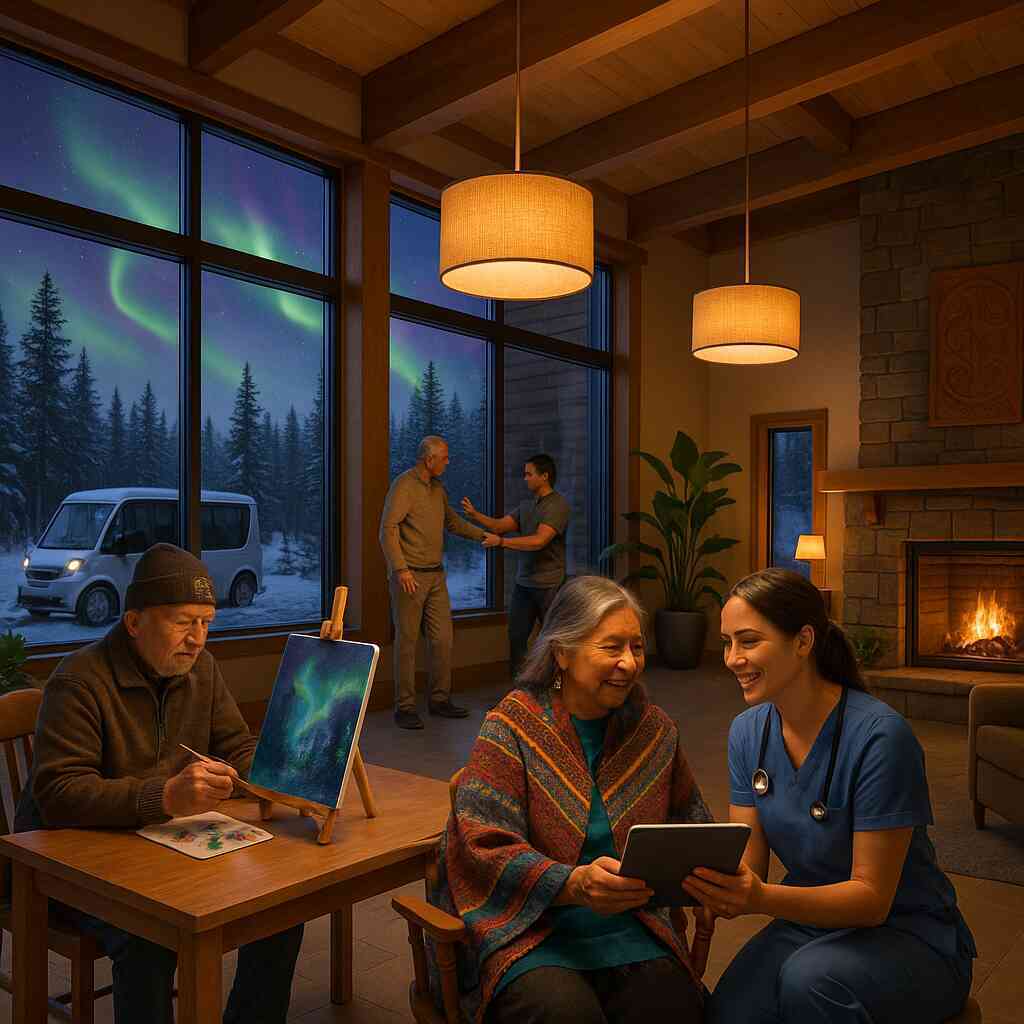
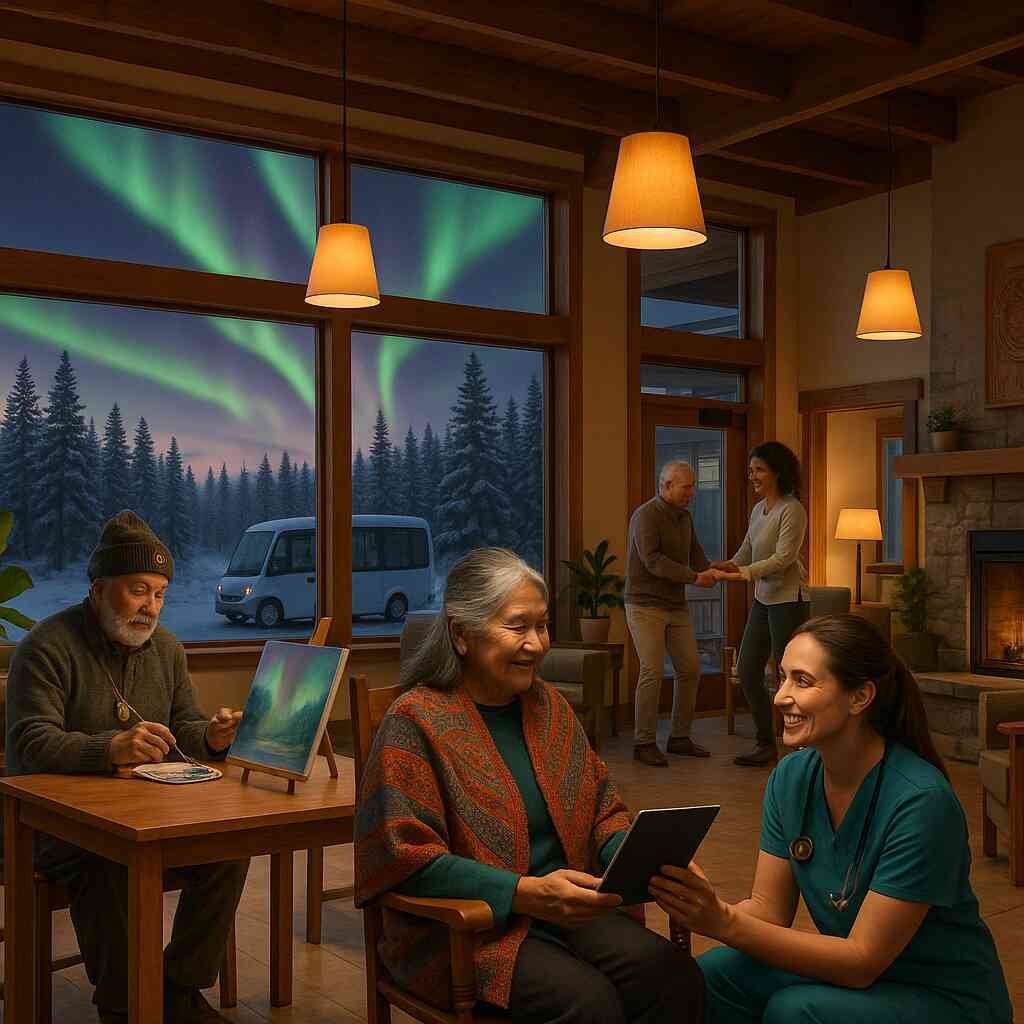
Under shimmering auroras, wellness directors craft programs that merge nature’s spectacle with holistic health. Outdoor viewing decks feature heated seating and adjustable binoculars, encouraging fresh-air mindfulness sessions even when temperatures drop. Guided meditation under the lights fosters spiritual connection and reduces seasonal affective symptoms. Inside, artists teach residents to paint auroral swirls, enhancing fine motor skills while celebrating celestial beauty.
Nurses embed gentle movement routines that mirror the sky’s flowing ribbons, promoting flexibility and cardiovascular health. Dietitians prepare vitamin-D-rich menus, combating limited daylight. Staff also incorporate principles from general concepts in health care for seniors to monitor sleep cycles disrupted by polar light fluctuations. These senior wellness activities Northern Lights themed initiatives showcase how creativity and evidence-based medicine unite within Alaska’s unique environment, solidifying communities for seniors 55+ as truly transformative spaces.
Guiding Families Toward the Aurora of Quality Care
Using an assisted living locator near me for informed choices
Families often begin their journey feeling overwhelmed by Alaska’s vast distances and diverse senior housing choices. An assisted living locator Anchorage near me narrows the field by filtering communities according to medical acuity and lifestyle. The tool compares staffing ratios, emergency preparedness plans, and culturally responsive elder care Alaska initiatives side by side. Transparent dashboards display quality metrics in Alaskan assisted living, giving families evidence instead of marketing slogans. Interactive photo tours allow elders to evaluate accessibility features before scheduling snow-covered site visits. Consequently, decision making becomes collaborative, data driven, and comfort oriented from the very first search.
Alaska residents with adult children living elsewhere often benchmark options against out-of-state examples for a broader perspective. The planner conveniently displays ratings for nearby senior living choices in Washington state alongside local listings, fostering productive family dialogue. By contrasting climates, costs, and service bundles, caregivers appreciate why cold-climate senior housing design demands specialized investments. That insight reinforces the value of selecting senior living near you rather than chasing distant bargains. The locator then schedules tours, coordinates medical record transfers, and confirms insurance acceptance with each long-term care facility. Families can therefore move from uncertainty to confident action before winter roads limit travel flexibility.
Integrating respite care options and caregiver support networks
Informal caregivers often juggle employment, seasonal subsistence hunting, and elder supervision without structured relief. Respite care options for Alaska caregivers provide planned breaks that maintain safety and preserve family income stability. High-quality seniors living community calendars include drop-in day programs, overnight stays, and emergency placements for sudden hospitalizations. These flexible assisted living plans respect cultural expectations of family involvement while preventing dangerous exhaustion. Counselors trained in support with activities of daily living for elders review mobility needs before admission, ensuring seamless transitions. Family satisfaction surveys show lower burnout when respite pathways appear early in the care journey.
Beyond clinical relief, caregiver support networks nurture emotional resilience through peer circles and terrain-specific problem solving. Weekly gatherings cover frost-related safety protocols in senior living, grief management, and digital literacy for remote monitoring apps. Licensed social workers facilitate discussions, guiding families toward Alaskan veterans’ senior benefits or Indigenous elders’ support programs where applicable. The seniors living community also supplies vetted contact lists for meal deliveries, snowplow volunteers, and telehealth troubleshooting mentors. By weaving formal respite with informal allyship, facilities cultivate circles of care that extend far beyond lobby walls. Consequently, elders and caregivers experience strengthened trust, which fuels proactive health maintenance and timely issue reporting.
Transportation solutions and social connection in communities for seniors 55+
Reliable transportation determines whether elders access medical appointments, cultural events, and grocery shelves during icy months. Leading communities for seniors 55+ operate heated shuttle fleets with wheelchair lifts and bilingual drivers versed in rural etiquette. Dispatchers coordinate routes using satellite weather feeds, adjusting departure times when blizzards threaten highway visibility. Residents book seats through simple tablet kiosks or voice calls, preserving autonomy for those uncomfortable with smartphones. Partnerships with tribal councils allow shuttle drivers to deliver prescriptions and cultural supplies during same-day loops. This efficiency supports holistic health programs for seniors 55+ while honoring community reciprocity traditions.
Social connection rides tandem with transit innovation. Vehicles double as mobile conversation lounges, featuring panoramic windows for aurora viewing and storytelling microphones. Staff schedule themed excursions to museums, fisheries, and sled-dog races, transforming practical trips into memory-making adventures. Upon return, residents share photos on communal screens, strengthening neighborly bonds within every senior living facility. The ripple effect manifests as higher meal-time attendance, vibrant resident councils, and reduced feelings of isolation. Measuring these social metrics next to clinical ones offers a fuller picture of quality care.
Measuring success and sustaining quality in senior living facilities across Alaska
Data without follow-through fails elders, so facilities embed continuous improvement loops into daily routines. Quality committees analyze infection rates, fall incidents, and resident satisfaction using cloud dashboards updated every shift. Results inform staff training agendas and capital investment priorities, ensuring resources flow where evidence shows greatest need. Leaders share quarterly scorecards with families, demonstrating compliance with licensure requirements for Alaska nursing homes. Transparent reporting also empowers state agencies to benchmark nurse staffing ratios in long-term care in Alaska more accurately. Collectively, these practices align with global regulations on nursing home care standards while respecting local realities.
Sustaining excellence demands that residents, families, and staff all hold a voice in policy evolution. Annual strategic retreats invite feedback on dining menus, telehealth upgrades, and environmental sustainability checkpoints. Innovations such as sensor-embedded flooring or AI-guided medication dispensers undergo pilot testing before campus-wide rollout. Snapshot surveys afterward determine whether technology truly enhances person-centered care in Anchorage facilities and beyond. When metrics confirm success, administrators document protocols and share them with peer networks throughout rural Alaska senior services. This culture of learning keeps the northern lights of quality care shining brightly for generations.
Frequently Asked Questions
 Frequently Asked Questions
Question: How do Senior Living Facilities track and display quality metrics in Alaskan assisted living communities so families can make evidence-based decisions?
Answer: Quality metrics in Alaskan assisted living-such as nurse staffing ratios in long-term care Alaska, fall rates, infection control, and resident satisfaction-are pulled directly from state scorecards and facility self-reporting. Senior Living Facilities aggregates that data into an easy-to-read dashboard for every senior living facility profile. A single click reveals staffing tenure, emergency preparedness scores, and culturally responsive elder care Alaska initiatives. Because the information updates in real time, you can compare multiple housing options for seniors side by side and quickly spot the communities that consistently outperform Alaska’s senior care standards.
Question: In the article How Senior Living Facilities in Alaska Define Quality Care, telehealth integration in senior apartments was highlighted. How can I tell which listings actually offer strong virtual-care programs for rural Alaska senior services?
Answer: When you search senior living near me on our platform, choose the Telehealth Integration filter. Listings that provide high-speed connectivity, private kiosks, and on-site nursing support are tagged with a blue telemedicine badge. You’ll also see metrics like reduced hospital transfers and chronic-disease outcomes-proof that telehealth integration in senior apartments truly benefits Arctic seniors. Need more details? Click Request Virtual Tour and one of our advisors will schedule a live demo with the community’s clinical team so you can see the technology in action without leaving home.
Question: My family wants person-centered care in Anchorage facilities that respect Indigenous traditions. How do Senior Living Facilities verify culturally responsive programs and Indigenous elders’ support programs?
Answer: We require every senior living community that advertises cultural programming to upload policy documents, sample activity calendars, and photos of events such as smudging ceremonies or Yupik language circles. Our review team cross-checks these materials against licensure requirements for Alaska nursing homes, which now include cultural competency standards. In addition, resident reviews on each listing specifically rate culturally responsive elder care in Alaska on a five-star scale. Communities scoring below three stars receive follow-up audits before their profile remains active, ensuring authentic respect, not token gestures toward Indigenous heritage.
Question: Are there affordable options for my father who needs assistance but relies on Medicaid waiver assisted living Alaska benefits?
Answer: Absolutely. During your search, select Accepts Medicaid Waiver under Payment Options. The system will surface assisted living plans-from continuum of care communities in Juneau to dementia-friendly Alaska communities in Fairbanks-that participate in the Medicaid waiver program. Each profile shows what services the waiver covers (room, board, ADL support) and any out-of-pocket costs. Our advisors can also help you bundle Alaskan veterans’ senior benefits or aging in place resources in Alaska to close financial gaps, all at no cost to your family.
Question: Winter worries me-how do I know a community has strong frost-related safety protocols and emergency preparedness for remote senior facilities?
Answer: Every listing on Senior Living Facilities includes a Safety & Preparedness section detailing emergency preparedness remote senior facilities plans: generator capacity, evacuation partnerships, and supply reserves. For frost-related safety protocols in senior living, you’ll find specifics on heated entryways, non-skid flooring, and fall prevention strategies for Arctic seniors. Communities must upload copies of their latest state inspection and disaster-drill logs; we display the inspection date prominently. You can even filter by Transportation Solutions for Alaska elders to ensure year-round shuttle service for medical appointments and social outings.