
How to Choose Memory Care Near Me in Summer 2026

When memory care near me stops being a search and starts being a decision
You can feel this moment before you can name it. Mom leaves the stove on again. Dad misses the same bill twice. The questions feel small at first, then they stack up fast. If you are searching for memory care near me, you may already be carrying that tight, exhausted feeling that comes from loving someone and not knowing what level of help they need next. That feeling is real. It deserves a serious plan.
The quiet signs that point beyond normal aging and toward dementia care homes
Normal aging can look like slower recall, lost keys, or a forgotten appointment. Dementia usually looks messier. You may notice repeated confusion about time, trouble finding familiar words, or new fear in places that once felt safe. If your loved one starts asking the same question ten times or becomes suspicious in a way that was never part of their personality, that matters.
Here is the part most families miss: the biggest signal is often not memory alone. It is the loss of day-to-day judgment. A person may still sound “fine” on the phone, yet forget how to sort medications, turn off the water, or recognize when food has spoiled. That gap is where dementia care homes and Alzheimer’s care facilities begin to make sense.
One daughter in Phoenix told us her father could still name every grandchild, but he could not follow the microwave. That mismatch is common. He did not need more reminders on sticky notes. He needed a safer setting with memory support services and a routine that did not depend on perfect recall.
Why wandering, sundowning, and medication mix-ups change the care conversation fast
Wandering changes everything. So does sundowning, when confusion, agitation, or anxiety worsen later in the day. Medication errors do too. Once any of those show up, you are no longer choosing only between convenience and comfort. You are choosing between risk and structure.
This is where families often search phrases like assisted living vs nursing home or difference between skilled nursing and assisted living. Those comparisons help, but they only tell part of the story. If someone is leaving the house at night, taking double doses, or becoming unsafe during routine transitions, the care setting must match the behavior, not the wish.
A family in Tampa described a familiar pattern. Their mother could sit through lunch politely, then try to “go home” at 8 p.m. even though she was already home. That is not stubbornness. It is often a sign that the environment needs more supervision, more cues, and stronger safeguards than a standard apartment or retirement homes setting can provide.
What families usually miss when comparing senior living facilities and memory support services
Most people compare dining rooms, activities, and friendly smiles. Those things matter, but they do not answer the real question. Can this senior living facility keep someone oriented, calm, and safe when memory slips become daily?
Families also miss how much variation exists between senior living facilities, residential care facilities, board and care homes, and a larger senior living community. Some communities look warm on a tour, yet lack secure exits or consistent cueing. Others feel simpler, but the staff have stronger routines for redirection and person-centered care planning.
If you want a smart starting point, use a trusted senior living directory and compare more than appearances. A good assisted living locator or senior living advisor can help you sort real care capacity from polished marketing. If you want a broad search tool, how to choose memory care near me in 2026 is a helpful place to organize your questions before tours begin.
What memory care really means when the house can no longer keep up
The word “memory care” gets used loosely. Families hear it and think “safer assisted living.” That is partly true, but not enough. Memory care is built for people whose cognitive changes affect safety, routine, and behavior in daily life. That usually means more structure, more supervision, and more specialized cueing than a standard apartment setting can offer.
What is memory care and how it differs from assisted living plans and assisted living locations
What is memory care? It is a care model designed for people with dementia or Alzheimer’s disease who need daily support in a secure environment. Most communities use consistent routines, trained staff, and layout features that reduce confusion. By contrast, assisted living plans and assisted living locations are usually designed for people who need help with bathing, dressing, meals, or medication reminders, but not intense cognitive supervision.
That difference matters because memory loss changes how care must be delivered. A person may forget instructions seconds after hearing them. They may become frightened by a new face or a noisy hallway. In that case, a familiar rhythm is not a luxury. It is the care itself.
If you are comparing independent living communities, 55+ apartments, or senior apartment rentals with memory support, be honest about the gap. A beautiful apartment does not solve nighttime confusion. A social calendar does not stop someone from leaving unsafe items on the stove. For a deeper comparison, what memory care means and how it compares to assisted living can help you separate the labels from the actual care model.
The difference between skilled nursing and assisted living when cognitive care becomes the priority
This is one of the hardest choices families face. Skilled nursing facilities and a nursing home usually provide a higher level of medical supervision than assisted living. They are often the right fit when a person has complex medical needs, wound care, or frequent clinical monitoring. Assisted living is more about daily support, while skilled nursing is more medically intensive.
The line gets blurry when cognitive decline is also involved. A person with dementia may not need full nursing care, but still need locked exits, cueing, and staff who understand repetition, resistance, and behavioral changes. That is why the difference between skilled nursing and assisted living should be studied carefully before you decide.
Care settingBest forTypical emphasisAssisted livingDaily help with routinesMeals, bathing, reminders, social supportMemory careCognitive impairment and safetySecure layout, supervision, routineSkilled nursingMedical complexityClinical care, monitoring, rehabilitationIf your loved one needs medical oversight and memory support, ask how a community handles both. A page about the difference between skilled nursing and assisted living for cognitive care can help you frame that conversation before you tour.
When an independent living community or 55+ apartment is no longer enough for safety and routine
Many families start with independent living communities or communities for seniors 55+ because they seem like a gentler move. That can work beautifully when the concern is downsizing, not supervision. But once someone forgets to eat, misses medications, or gets lost in a familiar building, independence stops being the main issue.
This is the line families often cross without noticing. At first, a parent only needs help with groceries. Later, you find unpaid rent, unopened mail, and a fridge full of expired food. That is not a housekeeping problem. It is a safety problem.
If someone is still mostly mobile but needs structure, memory care or a secure senior living community may be better than elderly housing or rental housing for seniors. And if the move must happen quickly, a search for senior living with no waitlist can save precious time.
Why secure senior living community design matters more than nice décor or big dining rooms
Pretty spaces can distract people. They cannot protect them. In memory care, design should support orientation, wandering prevention, and calm transitions. That means clear sight lines, secure exits, simple hallways, and quiet spaces that reduce agitation.
A dementia-friendly environment matters more than chandeliers. A secure senior living community matters more than oversized dining rooms. Even the best luxury senior retirement communities should still prove they can support memory loss safely. The same goes for pet-friendly assisted living, which can be wonderful, but still must meet the person’s cognitive needs.
Here is the simple test we use: if your loved one could get confused, where would that confusion lead? If the answer is a locked courtyard, a clearly marked lounge, and staff who can redirect calmly, you are on the right track. If the answer is “we have a nice atmosphere,” keep looking.
The checklist that protects your family from the wrong move
You do not need to become a care expert overnight. You do need a sharper checklist. The wrong move is usually not a disastrous one. It is a reasonable-looking community that cannot truly support cognitive decline once the initial tour glow fades.
Questions to ask assisted living before trusting a community with cognitive care
Start with direct questions. Do not apologize for asking them. If a community handles memory loss well, they will welcome specifics. If they dodge, that tells you something.
Use these questions to ask assisted living before trusting any place with dementia care:
- How do you support residents who wander or become disoriented?
- What happens during evening confusion or agitation?
- How do staff communicate with residents who cannot follow multi-step directions?
- How are medications checked and documented?
- What training do caregivers receive for dementia-specific behaviors?
- How do you keep families updated when changes happen?
If you need a stronger question list, questions to ask assisted living for dementia care is a practical reference. In our experience, the best communities answer calmly and specifically. The weak ones answer broadly and hope you will not press further.
How to judge a dementia-friendly environment without getting distracted by marketing language
Marketing loves words like “vibrant,” “engaging,” and “person-centered.” Those words are fine, but they are not evidence. A real dementia-friendly environment has visible structure. Hallways should be easy to read. Doors should not blend into walls. Staff should speak plainly, not in rushed bursts. You can also watch how residents move through the space. Are people calm? Do staff redirect gently? Is there a sense of rhythm, or does everyone seem to be improvising? Those clues matter more than fresh paint. A neighbor in Orange County once toured three places in one day. The most expensive community had beautiful art and a sparkling courtyard. The one they chose had simpler décor, but every resident seemed oriented and settled. That is the kind of detail families remember later, because it affects daily life more than polished brochures ever will. For a useful first-visit framework, dementia-friendly environment and secure senior living community is worth reviewing. 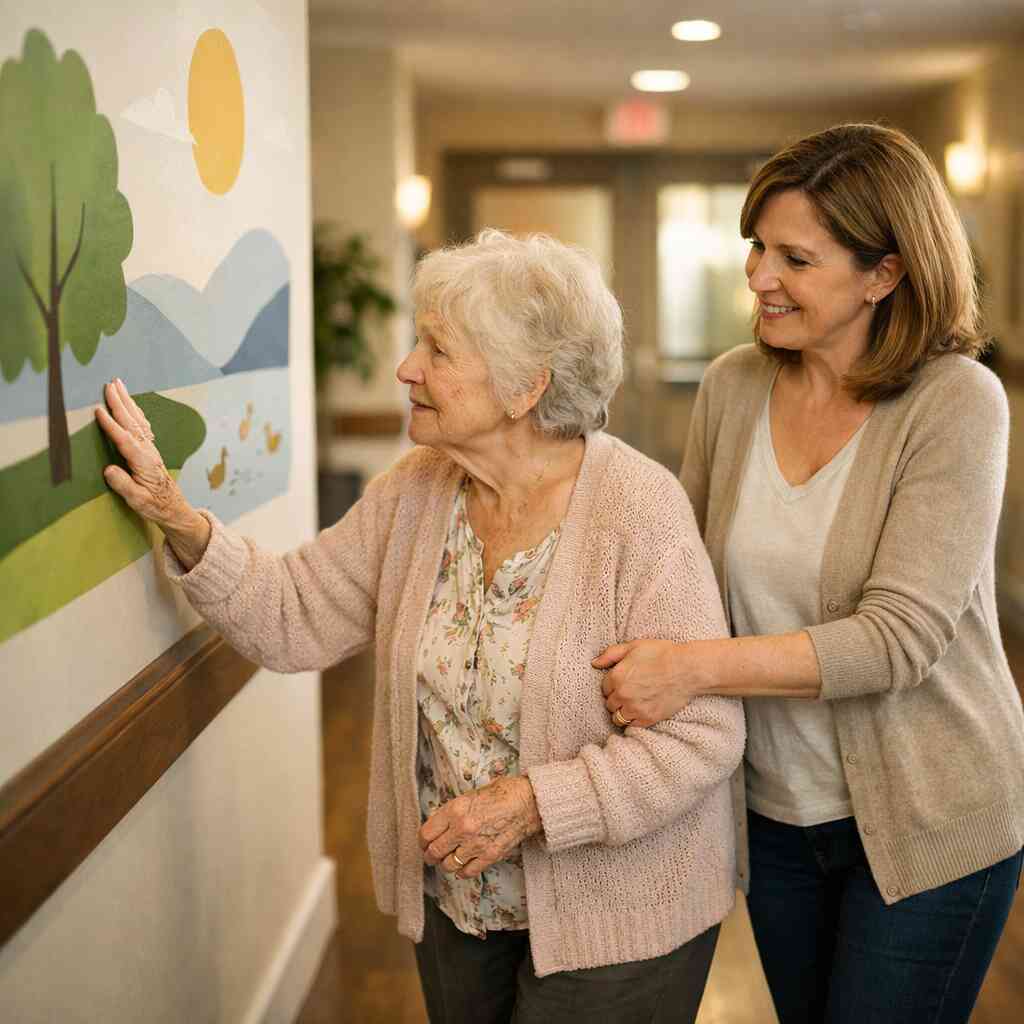
What CMS star ratings can and cannot tell you about a nursing home or long-term care facility
CMS star ratings are helpful, but they are not the whole story. They come from health inspections, staffing, and quality measures. That makes them a useful screening tool for a nursing home or long-term care facility. However, they do not tell you everything about memory support, culture, or the actual day-to-day feel of the place.
Use the rating as a signal, not a verdict. Then ask to see the latest inspection summary and care plan process. Also ask how they train staff to handle cognitive changes. If you are comparing medical settings, how CMS star ratings help compare nursing homes can help you read the data without over-trusting it.
How state senior housing regulations shape memory care rules in places like Florida, California, and Texas
Memory care is not regulated the same way everywhere. Senior housing regulations vary by state, and that changes staffing, training, and licensing expectations. In Florida, California, and Texas, state agencies set rules that affect how communities operate, especially when they serve residents with dementia or medical needs.
That is why local accuracy matters. A beautiful brochure in Tampa is not the same as compliance in Tallahassee. A community in Los Angeles may face different inspection and licensing realities than one in Dallas. If you want to compare state-level rules, senior housing regulations for memory care in 2026 is a smart place to start.
For local searches, region-specific pages can help narrow the field. If you are comparing options now, look at memory care near me in Florida, memory care near me in California, or memory care near me in Texas to see what is available near you.
The money and benefits puzzle including cost of assisted living, Medicaid senior housing, Medicare skilled nursing, VA benefits for senior care, and long-term care insurance
Money changes the timeline. That is the hard truth. The cost of assisted living varies by state, and memory care usually adds another layer of expense because of the added supervision and structure. If you want a state-by-state view, cost of assisted living by state in 2026 helps families compare options without guessing.
The funding side is just as important. Medicaid senior housing may help certain low-income seniors, but eligibility and covered services vary widely. Medicare skilled nursing benefits are limited and usually tied to qualifying medical stays. VA benefits for senior care can help some eligible veterans and spouses, while long-term care insurance may offset costs if the policy is already in place.
According to the Genworth Cost of Care Survey, assisted living costs vary significantly across states and cities. That is why families should compare numbers early, not after a crisis. If affordability is the main barrier, medicaid senior housing options for low-income seniors and VA benefits for senior care in 2026 can help you see what support may fit.
Choosing with confidence before the window closes on better options
A memory care search gets harder when there is urgency. Maybe the hospital discharge clock is ticking. Maybe home care failed. Maybe your loved one is resisting every conversation. That pressure is real, and it can push families toward the first opening instead of the best fit.
How to compare a senior living directory or senior placement services without losing control of the decision
A senior living directory is a tool, not a decision-maker. So are senior placement services. They can save time, widen your options, and filter noise. But you should still control the final choice. The best systems help you compare care, staffing, design, and location without steering you into one answer.
Use a directory to compare nearby assisted living locations, residential care facilities, and memory care homes. Then verify each place yourself. Ask for current licensing status. Ask about their memory care process. Ask what happens when needs change. A senior living directory for finding local communities can give you a clean starting list.
When a free senior living referral helps and when you need a deeper senior living advisor conversation
A free senior living referral can be useful when you are overwhelmed and need a shortlist fast. It is especially helpful if you are comparing housing options for seniors, senior citizen housing, or best senior living near me searches across several neighborhoods. But if your loved one has wandering, diabetes, refusal of care, or advanced dementia, you may need a deeper conversation with a senior living advisor.
That is the point where a short call is not enough. You need someone who understands the difference between a friendly tour and a safe placement. You need a person who can ask better questions, not just send a list. If you want help without pressure, free senior living referral and placement help is designed for exactly that kind of search.
The next move when you need senior living with no waitlist or affordable senior living in a hurry
Urgency changes priorities. If you need senior living with no waitlist, ask immediately about openings, move-in readiness, and temporary options. Sometimes a respite care stay can bridge the gap while you finalize a permanent move. That can keep everyone safe while reducing panic.
Affordability matters too. Families often start by asking for affordable senior living, then learn the real question is fit plus funding. A modest senior living facility that meets the needs today is better than a beautiful one that fails next month. If budget is driving the decision, affordable senior living options for low-income seniors can help you compare realistic paths.
How to balance aging in place hopes with the reality of residential care facilities, respite care, or a continuing care retirement community CCRC
Many families want aging in place to work. Sometimes it does. If the home is manageable, the support is consistent, and the risks are low, staying put can be the right answer for now. But when memory loss grows, aging in place can become a full-time caregiving job for the family.
That is where residential care facilities, respite care, or a continuing care retirement community (CCRC) may fit better. A CCRC can offer a path across care levels without a disruptive move later. Respite care can buy breathing room when family caregivers are exhausted. If you are comparing long-range options, continuing care retirement communities can be worth a close look.
A practical decision frame for finding the best senior living near me and moving forward with peace of mind
Here is the simplest frame I know. Safety first. Then supervision. Then comfort. Then cost. If a community cannot meet the first two, the rest does not matter much.
Use this quick filter when choosing the best senior living near me:
- Does the community understand dementia, not just general aging?
- Can staff explain their daily routine clearly?
- Is the space secure without feeling prison-like?
- Do fees, funding, and move-in timing actually work?
- Can you picture your loved one there on a difficult day?
If you want a trusted place to compare options, Senior Living Facilities can help you search, compare, and connect across all 50 states. You do not have to solve every part today. Start with one call, one tour, and one honest conversation about what safety now really means.
Frequently Asked Questions
Question: In How to Choose Memory Care Near Me in Summer 2026, how can Senior Living Facilities help me compare memory care near me with assisted living vs nursing home options?
Answer: Senior Living Facilities helps families sort through the differences between memory care, assisted living, and skilled nursing facilities so the decision feels clearer and less overwhelming. If your loved one needs a secure senior living community with memory support services, routine, and supervision, our platform can help you compare local senior living facilities, assisted living locations, and long-term care facility options side by side. We also make it easier to understand the difference between skilled nursing and assisted living, which is often the key question when a family is deciding whether the person needs help mainly with daily routines or with more advanced cognitive care and medical oversight. Our goal is to help you search, compare, and connect with communities that fit your loved one’s safety needs, daily support needs, and preferred location without forcing a one-size-fits-all answer.
Question: What should I ask during tours when comparing dementia care homes, Alzheimer’s care facilities, and senior living facilities near me?
Answer: A good tour should help you understand how a community responds to confusion, wandering, sundowning, medication reminders, and changing needs over time. Some of the most helpful questions to ask assisted living and memory care teams include how they support residents who become disoriented, what staff do if someone resists care, how medication is managed, and how they communicate with families when behavior or health changes. Senior Living Facilities encourages families to use a practical questions to ask assisted living approach, because a warm tour is not enough on its own. You want to know whether the community truly offers a dementia-friendly environment, person-centered care planning, and the kind of daily structure that can support safety and dignity. Our directory and guidance tools can help you prepare before you visit, so you can compare communities with confidence instead of relying on brochure language alone.
Question: Does Senior Living Facilities help families find affordable senior living, senior living with no waitlist, or senior living for low-income seniors when memory care is needed quickly?
Answer: Yes. Many families begin their search because they need a safe option now, not months from now. Senior Living Facilities can help you explore affordable senior living, senior living with no waitlist, and senior living for low-income seniors by connecting you with communities that match your timing and budget goals as closely as possible. We also help families understand broader funding paths such as Medicaid senior housing, Medicare skilled nursing, VA benefits for senior care, and long-term care insurance, while keeping expectations realistic about what each program may cover. Because cost of assisted living and senior living costs by state can vary widely, it helps to compare options early and ask direct questions about move-in timing, payment structure, and available support. If memory care is needed quickly, our platform can also help you consider respite care or a temporary solution while you finalize a longer-term plan.
Question: How do I know whether independent living communities, 55+ apartments, or rental housing for seniors are still enough, or whether I need memory support services instead?
Answer: This is one of the most common turning points for families. Independent living communities, communities for seniors 55+, senior apartment rentals, and other housing options for seniors can be a great fit when the priority is convenience, social connection, and downsizing. But if your loved one is forgetting medications, wandering, missing meals, or showing signs of confusion that affect safety, those settings may no longer be enough. That is often when families begin looking at memory care near me, residential care facilities, board and care homes, or a secure senior living community with stronger supervision and routine. Senior Living Facilities helps families compare these options honestly so they can match the setting to the actual level of support needed, not just the preferred lifestyle. We want you to feel informed about aging in place, but also prepared to recognize when it may be time to transition to a more structured environment.
Question: Can Senior Living Facilities help me compare CMS star ratings, senior housing regulations, and state options like Florida senior living, California assisted living, and Texas nursing homes?
Answer: Yes, our platform is designed to help families organize the search by location and quality signals, including CMS star ratings and state-level senior housing regulations. Those tools are helpful when you are comparing a nursing home, skilled nursing facilities, assisted living locations, or a long-term care facility, but they should always be used alongside a direct tour and questions about daily memory support. Because rules and availability can vary by state, it is smart to compare Florida senior living, California assisted living, and Texas nursing homes separately rather than assuming every community operates the same way. Senior Living Facilities helps you search across all 50 states, making it easier to understand what is available locally and how the options differ. That can be especially valuable when your decision involves both medical needs and cognitive care.
Question: Why should families trust Senior Living Facilities when searching for the best senior living near me, luxury senior retirement communities, or pet-friendly assisted living for a loved one with memory loss?
Answer: Families trust Senior Living Facilities because we focus on helping them make a thoughtful, informed decision rather than rushing them into the first available option. Whether you are searching for the best senior living near me, luxury senior retirement communities, pet-friendly assisted living, or a simpler senior living facility, our platform helps you compare what matters most: safety, supervision, layout, staffing approach, and whether the community can support cognitive changes with dignity. We understand that memory care is not just about a nice dining room or attractive décor. It is about whether the environment supports orientation, reduces confusion, and gives families peace of mind. That is why our senior living directory, assisted living locator, senior placement services, and free senior living referral support are built to help you search, compare, and connect with communities that fit your family’s needs. We are here to make the process feel more manageable, more human, and more grounded in real-life care needs.
Admin
Expert contributor specializing in senior living care. Dedicated to providing families with clear, actionable advice.