Unlocking Hidden Trends in Senior Living Facilities 2026
Peering Beneath the Surface: Unlocking Hidden Trends in Senior Living Facilities
Why the next wave of senior living near me is already taking shape
The conversation about senior living facilities has shifted from mere shelter to holistic life design. Families now evaluate a senior living facility by its capacity to nurture identity, purpose, and independence. Market data shows an upswing in demand for tech-enabled senior living facilities that combine predictive analytics in senior care with a warm human touch. At the same time, senior living community residents are asking for stronger social fabrics, pet-friendly policies, and on-site learning studios. These preferences are quietly redrawing blueprints for communities for seniors 55+ across the country.
Local search patterns confirm the momentum. More people type “senior living near me” at earlier planning stages, exploring housing options for seniors that allow them to age on their terms. A single portal can now unlock state-wide choices, letting families effortlessly discover senior living communities near you on a national directory. Such frictionless browsing reveals senior apartment rentals in walkable downtowns, luxury rental housing for seniors on sun-drenched coasts, and rural long-term care facility campuses offering quietude. Transparency breeds empowerment, enabling smarter conversations with care teams and financial planners.
From reactive care to anticipatory ecosystems
Yesterday’s operating model focused on fixing problems after they surfaced, often within nursing homes for the elderly that struggled with staffing. Today, personalized care algorithms in assisted living facilities scan subtle behavioral signals and adjust daily routines before issues escalate. These systems feed 55+ smart home ecosystems, adjusting lighting for circadian rhythm support and triggering AI fall detection alerts when gait patterns shift. As a result, residents experience fewer hospital transfers and maintain agency over their own wellness journey. Families gain peace of mind without constant phone check-ins.
This anticipatory mindset extends beyond medical dashboards. Gamified fitness programs for seniors reward consistent movement, while subscription-based senior transportation services remove barriers to community engagement. An integrated assisted living locator now weighs cultural preferences, budget, and clinical acuity against amenity offerings. Providers leverage big-picture insights to refine assisted living plans, balancing autonomy with safety at every stage. The outcome is a resilient senior housing ecosystem that adapts in real time to evolving resident needs.
From Data to Dignity: Predictive Analytics and Tech Enabled Personalization
Personalized care algorithms are elevating every senior living facility
Personalized care algorithms analyze sleep quality, medication adherence, and micro-movements to craft daily routines that feel custom-made. These models draw from anonymized benchmarks across thousands of communities for seniors 55+, yet they honor individual quirks like preferred meal times or music genres. Staff receive color-coded prompts instead of overwhelming spreadsheets, ensuring interventions arrive before discomfort snowballs. The result is a senior housing culture where technology fades into the background and humanity steps forward. Crucially, algorithms remain transparent, allowing residents to opt out or fine-tune settings without hassle.
Behind the scenes, interdisciplinary teams regularly audit algorithmic recommendations to prevent bias and maintain clinical integrity. Geriatricians, occupational therapists, and data scientists meet in virtual war rooms to validate results and update care protocols. Open governance builds trust, reinforcing the idea that artificial intelligence serves resident dignity rather than corporate margins. Such collaboration also accelerates innovation, introducing new variables like environmental allergens or real-time emotional sentiment. The loop of assessment, feedback, and refinement never closes, keeping each senior living facility future-ready.
Predictive analytics in senior care for proactive wellness
Predictive analytics in senior care turn passive biometric streams into early-warning systems. Wearables track heart rate variability and gait speed, flagging subtle deviations days before a fall or heart event. Integrated EHR connectors then compare these signals against population baselines, assigning risk scores visible on handheld dashboards. Care managers schedule targeted interventions-perhaps hydration checks or strength training-long before hospitalization looms. Proactive wellness thus shifts resources from expensive emergency responses toward empowering daily habits.
Family portals reinforce this proactive stance through plain-language notifications that reduce anxiety, not amplify it. Instead of opaque alerts, relatives receive actionable insights like, “Mom’s mobility score dipped; consider encouraging a short afternoon walk.” Transparent explanations demystify advanced analytics, fostering collaborative problem-solving. Even financiers notice the ripple effect: reduced acute care costs free capital for experiential programming and sustainability upgrades. Predictive analytics thereby supports both financial resilience and resident thriving.
AI fall detection woven into 55 plus smart home ecosystems
In modern 55+ smart home ecosystems, AI fall detection acts as a silent sentinel. Depth-sensing cameras and radar-based devices study movement patterns without recording identifiable images, safeguarding privacy. When atypical acceleration suggests a tumble, lights brighten, doors unlock for responders, and a caregiver receives a real-time alert. Because algorithms learn each resident’s unique gait, false positives drop dramatically, avoiding alarm fatigue among staff. Residents feel reassured, not surveilled, retaining confidence to stroll hallways or tend balcony gardens.
Beyond immediate safety, aggregated fall data informs community design improvements. Facility managers identify high-risk zones-perhaps slippery entryways or poorly lit corridors-and implement targeted upgrades. Rehabilitation teams examine common injury vectors and adjust exercise classes to strengthen vulnerable muscle groups. AI therefore functions as both guardian and teacher, continuously feeding insights back into prevention strategies. The virtuous cycle ultimately cultivates safer, more empowering environments.
Voice activated assisted living plans and hands free confidence
Voice activation technologies eliminate physical barriers that once limited independent living. Residents simply request, “Lower blinds,” or inquire, “What activities are on today’s calendar?” Natural-language processing then interfaces with room controls, event schedulers, and medication dispensers. Such frictionless interactions extend agency to individuals with arthritis, visual impairment, or limited mobility, minimizing frustration. Care teams also benefit; verbal shift reports auto-populate digital charts, cutting documentation time.
Security remains paramount, so systems deploy on-device processing that keeps sensitive audio local whenever possible. Multi-factor authentication-including familiar voice signatures-reduces unauthorized access, even in shared apartments. Importantly, voice data can merge with sentiment analysis, flagging loneliness based on tonal changes and keyword usage. Social workers receive discreet nudges to arrange companionship visits, closing an often overlooked wellness gap. Hands-free confidence thus becomes a bridge to holistic support.
Telehealth integration in senior housing closing the clinical gap
Telehealth kiosks now dot common areas, offering secure video links to specialists once miles away. Residents schedule diabetic foot exams, psychiatric check-ins, or dermatology reviews without leaving campus, reducing transportation barriers. High-definition cameras and connected stethoscopes capture clinical detail equal to many in-office visits. For chronic illness management, remote monitoring devices feed live metrics to clinicians, enabling dosage adjustments within hours instead of weeks.
Care continuity thrives because telehealth platforms synchronize with onsite nursing documentation. Allergies, lab results, and care plans are updated in a single ecosystem, avoiding dangerous information silos. Families join virtual appointments from any state, maintaining engagement even when geography separates loved ones. Additionally, Medicare reimbursement models increasingly reward these integrated services, boosting financial sustainability. Telehealth therefore closes the clinical gap while opening new possibilities for resident autonomy.
Data driven assisted living locator reshaping family decision journeys
Data transparency once limited to glossy brochures now lives in interactive maps that display staffing ratios, hospital readmission rates, and resident satisfaction scores. A data driven assisted living locator synthesizes these metrics, letting families filter by budget, clinical acuity, and lifestyle interests in seconds. Visual heatmaps reveal communities with robust dementia support or vibrant arts programs, demystifying a process historically clouded by marketing jargon. Decision makers appreciate objective comparisons that turn anxiety into informed confidence.
One click deeper, users explore future-focused amenities like robotics-enhanced dining or biophilic design elements. They can even bookmark articles on emerging tech trends in senior living facilities 2026 for further research, ensuring their short list stays aligned with upcoming innovations. Real-time chat connects prospects with credentialed advisors who translate data into personalized guidance. This concierge layer blends empathy with analytics, reinforcing Senior Living Facilities’ commitment to dignified, evidence-based choices. Ultimately, better information accelerates better matches, benefiting residents, families, and providers alike.
 Built Environments Reimagined: Biophilic Design Sustainability and Adaptive Reuse
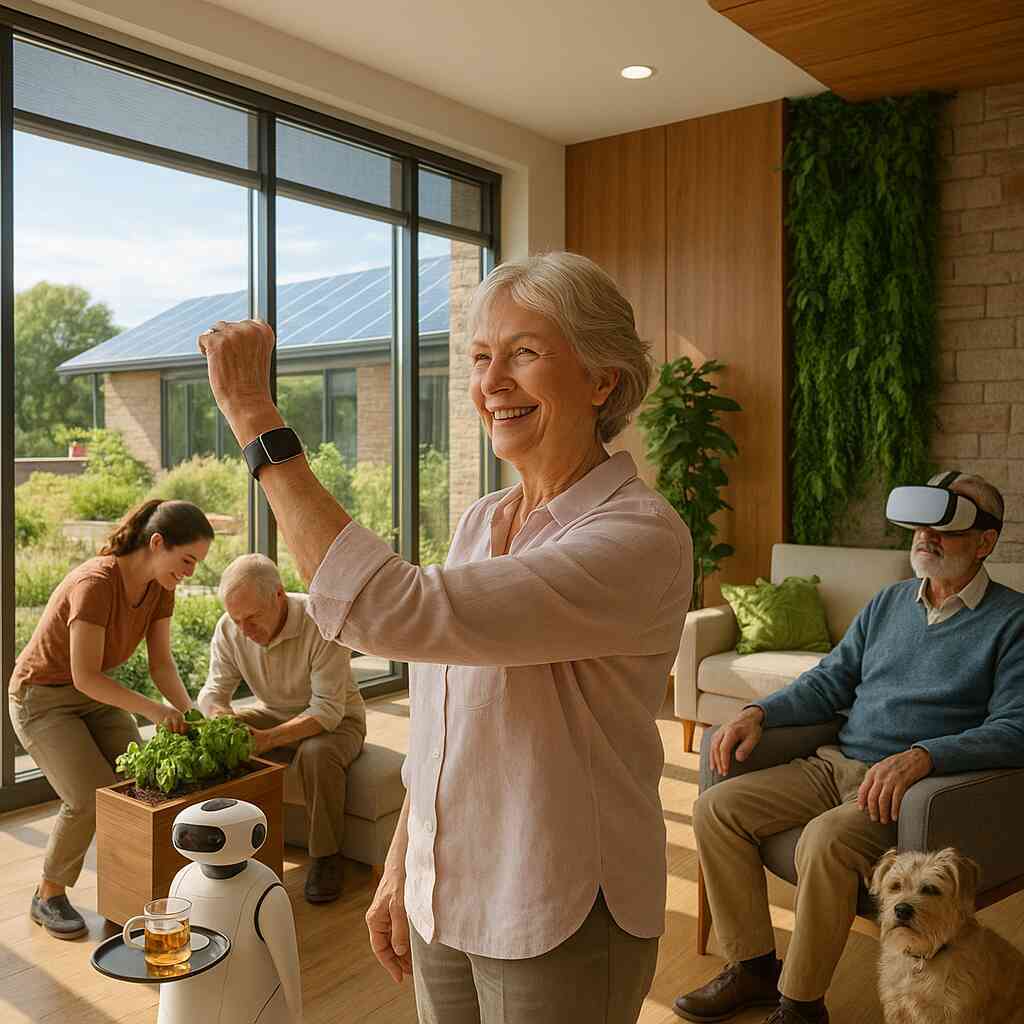 Built Environments Reimagined: Biophilic Design Sustainability and Adaptive Reuse
Green certified senior living facility blueprints for healthier aging
Forward-looking planners now treat every square foot as a wellness tool, embedding non-toxic materials and daylight corridors into each senior living facility blueprint. Architects borrow lessons from sustainable senior communities in Colorado to prove that eco-credentials can power resident vitality. Low-VOC paints, regenerative hardwoods, and solar-shaded atriums combine to reduce respiratory irritants while lifting mood. These decisions strengthen immune response, cut utility costs, and reinforce community pride. Families touring senior living near me increasingly ask to see independent certification seals before discussing floor plans.
Design teams also weave gardens onto rooftops and courtyards, letting older adults harvest herbs for communal meals. Native pollinator plants invite songbirds that spark daily curiosity and conversation. Staff report fewer medication requests for anxiety as nature settles nerves. Moreover, the predictable rhythm of seasonal blooms anchors memory for residents with mild cognitive change. Green certification therefore transcends marketing; it advances measurable, science-backed health outcomes.
Energy efficient long term care facility retrofits that save and sustain
Existing long-term care facility wings once leaked money through outdated boilers and flickering fluorescents. Now, energy auditors deploy thermal drones to map heat loss, guiding strategic insulation and LED upgrades. The capital payback often appears within two budget cycles, freeing funds for personalized care algorithms. Operators also install geothermal loops that stabilize interior temperatures, reducing pneumonia risk during cold snaps. Residents notice steadier comfort rather than drafts along corridor walls.
Crucially, smarter mechanical systems sync with occupancy sensors to adjust airflow based on real-time need. This targeted ventilation lowers pathogen spread and further trims electrical loads. Maintenance teams monitor dashboards instead of chasing alarms, boosting morale and retention. When families compare housing options for seniors, published energy scores increasingly influence final selection. Sustainability thus becomes intertwined with safety, stewardship, and fiscal resilience.
Adaptive reuse senior apartment rentals revitalizing historic cores
Main Streets dotted with retired factories now host adaptive reuse senior apartment rentals that celebrate local heritage. Developers retain brick facades and exposed timbers, creating character impossible in greenfield projects. Heritage tax credits moderate rents, allowing mixed-income placement within the same census block. Seniors relive hometown memories while contributing volunteer hours to nearby arts centers. This reciprocity rebuilds civic fabric faster than any subsidy alone.
Forward planners in cultural districts study case studies like next-gen senior housing in California to replicate success elsewhere. Structural retrofits add elevators, induction cooktops, and wider corridors without erasing historic charm. Smart glass windows maintain thermal comfort while revealing skyline views that entice grandchildren to visit. Adaptive reuse therefore delivers both nostalgia and next-generation resilience under one iconic roof.
Urban micro unit senior housing options unlocking downtown living
Urban micro units challenge the myth that aging requires sprawling suburbs. Compact suites with movable walls grant flexibility without forcing seniors to sacrifice beloved downtown culture. Proximity to theaters, farmers’ markets, and transit supports spontaneous adventure that strengthens cognitive health. Curated amenity floors-gym, maker studio, clinic-compensate for reduced private square footage. Residents trade unused dining rooms for a front-row seat to evolving city life.
To refine layouts, builders examine smart wellness-centric senior living options in Texas that already integrate 55+ smart home ecosystems. Induction cooktops cut fire risk, while under-cabinet lighting reduces falls during midnight snacks. Community managers host welcome circles that foster neighbor support networks, minimizing isolation. Surveys show strong satisfaction among older adults who value location over lawn size. Urban micro units thus democratize downtown vibrancy for every income tier.
Dementia friendly environmental design balancing safety and freedom
Cutting-edge dementia friendly design no longer resembles clinical wards. Instead, softly curved hallways avoid dead ends that trigger agitation, while differentiated color palettes guide safe navigation. Circadian lighting systems simulate gentle dawn and dusk, anchoring sleep cycles without sedatives. Memory nooks display replicas of neighborhood storefronts, sparking recognition and conversation. These subtle cues respect autonomy while reducing elopement risk.
Indoor gardens with secure perimeters invite residents to wander, touch lavender leaves, and hear water features that lower stress hormones. Sensor-embedded flooring discreetly alerts caregivers to restless pacing, allowing timely redirection. Families research senior living near you with memory care and prioritize communities that blend dignity with evidence-based safeguards. As a result, clinical outcomes improve alongside resident joy, validating the investment in thoughtful design.
Biophilic touches and pet friendly communities for seniors 55 plus
Biophilic principles extend beyond planters; living walls purify air and muffle corridor noise, fostering a spa-like calm. Large operable windows encourage cross-breezes that reduce reliance on HVAC, enhancing both comfort and sustainability. Residents gather for sunrise yoga on terraces ornamented with climbing vines, uniting physical flexibility with mental clarity. Even brief nature exposure lowers blood pressure, echoing decades of research on mind-body synergy.
Pet friendly policies further amplify well-being, welcoming rescue cats or small dogs that transform living suites into nurturing homes. Designated dog runs, grooming stations, and vet telehealth kiosks support responsible ownership without burdening staff. Community newsletters spotlight adoption stories, strengthening social connections among animal lovers. Industry observers highlight such features in the insights blog on senior living facilities’ evolution to inspire peers nationwide. Biophilic and pet inclusive touches therefore weave emotional comfort into the architectural fabric.
Beyond Walls Wellness Community and Multigenerational Connection
Holistic wellness programs for older adults’ mind body purpose
Holistic wellness programs unite evidence-based fitness, plant-forward dining, and spiritual exploration under one coordinated umbrella. Care teams craft personalized schedules that balance tai chi, journaling, and preventive screenings. The goal is synchronizing mind, body, and purpose rather than chasing isolated health metrics. Residents report higher satisfaction because each activity links back to values they helped define. This intentional approach converts routine days into curated growth journeys.
Community partners enrich these programs with onsite farmer markets and mindfulness workshops. Licensed nutritionists teach residents to convert garden produce into anti-inflammatory meals. Local universities send psychology interns to facilitate resilience circles that tackle grief, change, and awe. These collaborations stretch limited staffing budgets without diluting quality. Everyone benefits when expertise flows freely across organizational fences.
Gamified fitness programs for seniors are driving daily engagement
Gamified fitness platforms transform exercise from a medical chore into an addictive pastime. Wearable sensors track steps, heart rate, and balance, awarding points for consistency and safe intensity. Leaderboards appear on lobby screens, motivating friendly rivalries among neighbors aged eighty or ninety. Staff position micro-goals strategically, so participants celebrate small victories every day. This positive feedback loop sustains momentum better than periodic coaxing ever could.
Rewards extend beyond digital badges. High scorers can swap points for massage vouchers or choose the evening movie in the theater room. Couples team up to earn cooperative achievements, supporting relational wellness alongside physiology. Even residents with limited mobility join through seated challenges calibrated by occupational therapists. The inclusive design ensures every senior living facility member feels part of the fun.
Intergenerational co-housing models building shared resilience
Intergenerational co-housing embeds communities for seniors 55+ within mixed-age residential clusters. Young professionals exchange light household help for reduced rent, while retirees offer mentorship and childcare. These reciprocal arrangements replace isolation with authentic interdependence. Shared gardens, workshops, and maker labs foster constant skill exchange that benefits all ages. The resulting culture normalizes aging and dissolves damaging stereotypes.
Architects design open courtyards and communal kitchens to spark spontaneous conversation. Program directors curate monthly storytelling nights where elders recall local history and younger neighbors share emerging technologies. Data already show lower emergency calls because someone is always nearby to notice small changes. When disaster strikes, multigenerational networks mobilize faster than single-age enclaves, proving resilience is a social asset.
Community based palliative care models meet residents where they are
Progressive senior housing operators integrate palliative care long before hospice eligibility. Interdisciplinary teams offer pain management, counseling, and goal-setting inside familiar apartments. Residents avoid stressful hospital transfers while receiving dignified comfort. Families gain clearer communication about expectations, reducing uncertainty and guilt. Quality of life metrics rise without ballooning costs.
Strategic partnerships with local health systems allow nurse practitioners to conduct bedside consultations through secure telehealth. Social workers coordinate spiritual advisors and art therapists, addressing emotional and existential pain. Articles like navigating assisted living innovations near you outline how these models shorten care gaps. The lesson is simple: compassionate presence, not geography, defines effective support.
Robotics enhanced nursing homes for the elderly augmenting staffing
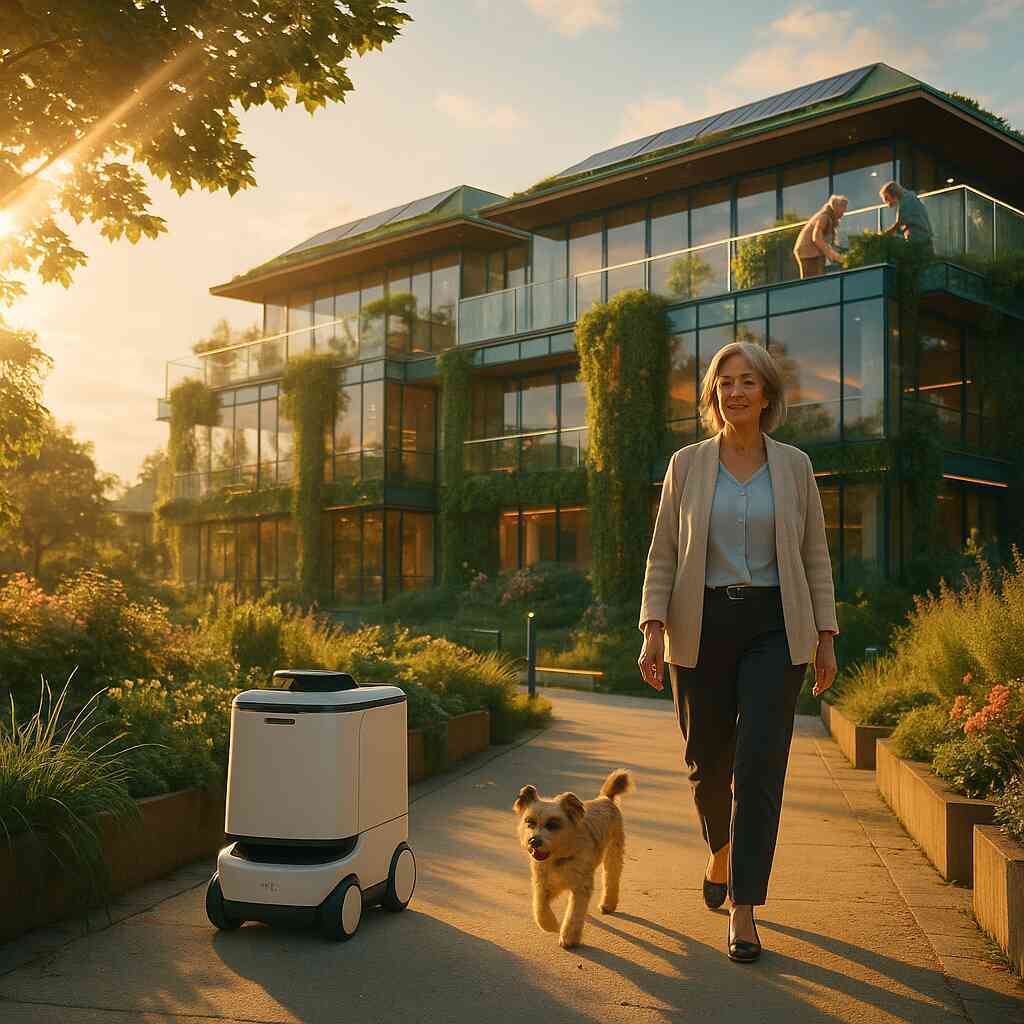
Shortages in skilled labor push nursing homes for the elderly to adopt collaborative robots that handle repetitive tasks. Autonomous carts deliver linens and meals, freeing aides for high-touch interactions. Robotic exoskeletons assist therapists during gait training, reducing strain injuries among staff. Because machines manage physical load, human caregivers focus on nuanced emotional care. Resident satisfaction climbs as attention quality rises.
Safety protocols govern every deployment. Sensors pause movement if an obstacle appears, and real-time dashboards allow remote override. Technicians teach residents to summon robots with voice commands, demystifying advanced technology. Over time, apprehension fades as users realize machines amplify, not replace, human warmth. Staffing budgets stretch further without compromising individualized attention.
Virtual reality therapy in senior living near you restoring memories
Virtual reality suites transport residents to childhood streets, world landmarks, or calming forests in seconds. These immersive sessions stimulate multiple senses, rekindling dormant neural pathways. Therapists use custom scenarios to treat trauma, reduce chronic pain, and slow cognitive decline. Participants often exit headsets laughing, tears of recognition still shining. Such emotional breakthroughs accelerate trust between residents and clinicians.
Community lounges host weekly VR travel clubs where friends “visit” art museums or coral reefs together. Families can upload 360-degree videos of hometown events, enabling shared experiences despite distance. This technology proves especially effective in senior living near me with memory care units, where familiar sights anchor identity. Affordable headsets make expansion feasible across rental housing for seniors regardless of income.
Subscription based senior transportation services expanding horizons
Reliable mobility underpins independence, yet many seniors outlive their driver’s license. Subscription-based transportation services answer by offering unlimited rides for a predictable monthly fee. Vehicles feature low step-in heights, swivel seats, and drivers trained in aging sensitivity. Apps book trips with one-tap simplicity or through concierge phone lines. As barriers fall, participation in off-campus events surges.
Partnerships with local theaters, medical groups, and grocery chains bundle discounted tickets or priority appointment slots into the subscription. Data analytics optimize routing, minimizing wait times and emissions simultaneously. Residents no longer plan around sporadic shuttle schedules; instead, they explore art openings or grandchildren’s recitals on a whim. Freedom of movement becomes a foundational pillar of emotional and physical health.
Charting the Invisible Map: Navigating Tomorrow’s Senior Living Near You
 Charting the Invisible Map: Navigating Tomorrow’s Senior Living Near You
Key takeaways for families scouting senior living in the state of choice
Modern families begin their search online, yet the smartest ones still verify on-site. Start with a data-driven assisted living locator that highlights staffing ratios, biophilic amenities, and predictive analytics in senior care. Then compare short-listed communities against the top senior living trends shaping 2025-26 to confirm future readiness. Next, map travel time for relatives, medical networks, and cultural outings, because proximity feeds social connection. Finally, schedule discovery visits during regular weekdays, not staged events, to witness the authentic daily rhythms of each senior living facility.
After narrowing choices, dig deeper into daily operations. Ask how personalized care algorithms adjust menus or therapy when metrics shift slightly. Request demonstrations of AI fall detection and 55+ smart home ecosystems embedded throughout apartments. Evaluate whether outdoor courtyards, pet-friendly policies, and intergenerational programs truly function, rather than sit unused. Insist on transparent cost projections showing rent, ancillary fees, and escalation caps across potential levels of care. A thoughtful process prevents unwelcome surprises and secures peace of mind.
Action steps for providers to unlock hidden value in every senior living community
Providers cannot rely solely on location anymore; residents expect immersive, tech-enabled senior living facilities that anticipate need. Begin by integrating voice-activated assisted living plans linked to telehealth portals that sync seamlessly with local hospital systems. Layer in gamified fitness programs for seniors to boost engagement while collecting actionable wellness data. Robotics-enhanced nursing homes for the elderly should allocate robots to repetitive logistics, freeing caregivers for meaningful interaction. Each upgrade multiplies retention, referrals, and operational resilience.
Beyond technology, prioritize sustainability in long-term care facilities to lower costs and attract eco-conscious consumers. Adaptive reuse senior apartment rentals often deliver inherent character while reducing embodied carbon, yet they still require green-certified senior living facility retrofits to optimize efficiency. Forge partnerships with community colleges, arts councils, and urban farms to enrich programming without inflating payroll. Lastly, update marketing content to highlight inclusivity, clinical transparency, and measurable outcomes rather than generic comfort claims. Clear storytelling turns hidden strengths into celebrated differentiators.
Frequently Asked Questions
Question: How do Senior Living Facilities leverage predictive analytics in senior care to personalize the search for senior living near me?
Answer: Our platform collects real-time data on staffing ratios, clinical outcomes, resident satisfaction scores, and even the adoption level of personalized care algorithms in assisted living communities. By applying predictive analytics in senior care, we identify patterns that match your loved one’s health profile, lifestyle preferences, and budget with the most compatible senior living facilities in any of the 50 U.S. states. Instead of handing you a generic list, our data-driven assisted living locator produces a prioritized short list of tech-enabled senior living facilities that can proactively support wellness, reduce hospital transfers, and nurture independence.
Question: Your recent blog, Unlocking Hidden Trends in Senior Living Facilities 2026, highlights 55+ smart home ecosystems and AI fall detection. How can I find communities that already offer these technologies?
Answer: When you start a search on Senior Living Facilities, simply select the filters for AI fall detection senior apartments, 55+ smart home ecosystems, or voice-activated assisted living plans. Our back-end database tags every community that has adopted these aging-in-place technology solutions-including depth-sensing cameras, radar-based fall detection, and voice-controlled environmental settings-so you can instantly locate seniors living near you that are truly future-ready.
Question: Can Senior Living Facilities help me compare sustainability in long-term care facilities, such as green-certified senior living facility options or adaptive reuse senior apartment rentals?
Answer: Absolutely. Sustainability in long-term care facilities is one of the fastest-growing decision factors we track. Our search dashboard lets you sort by green certifications, energy-efficient long-term care facility retrofits, and adaptive reuse senior apartment rentals that revitalize historic buildings. Each listing displays energy scores, biophilic design features, and carbon-reduction initiatives, making it easy to weigh environmental stewardship alongside clinical quality and cost.
Question: My parents need a wellness-centric senior living community with holistic programs, telehealth integration, and pet-friendly policies. Can your locator filter for all of these at once?
Answer: Yes. Our wellness filters include holistic wellness programs for older adults, telehealth integration in senior housing, and pet-friendly communities for seniors 55+. Select all three, and our platform will instantly display communities for seniors 55+ that combine plant-forward dining, on-site telehealth kiosks, and dedicated dog parks. We also show availability of gamified fitness programs for seniors and virtual reality therapy for seniors living near you, so your parents can engage mind, body, and purpose every day.
Question: What ongoing support do Senior Living Facilities provide after we choose a community-especially regarding transportation and tech upgrades?
Answer: Our commitment continues long after move-in. Families receive access to a concierge dashboard that spotlights subscription-based senior transportation services, on-campus upgrades like robotics-enhanced nursing homes for the elderly, and upcoming sustainability or wellness enhancements within the chosen senior housing. We also alert you if the community rolls out new features-such as upgraded 55+ smart home ecosystems or voice-activated assisted living plans-so you can opt in and maintain the highest level of independence and safety for your loved one.
Admin
Expert contributor specializing in senior living care. Dedicated to providing families with clear, actionable advice.