Compare Urban versus Suburban Senior Living Facilities
From Skyline to Front Porch: Weighing Urban and Suburban Senior Living
Why lifestyle geography matters for today’s older adults
Many older Americans no longer ask if they will relocate but where. Geography shapes daily rhythms, health access, and overall well-being. Urban senior living facilities offer walkable blocks, vibrant streets, and rich cultural opportunities. Suburban communities present calm sidewalks, birdsong, and neighborly familiarity. Because longevity now stretches decades, selecting surroundings that energize the spirit is as vital as choosing the right floor plan.
Every location also sets the stage for evolving support needs. City towers can layer independent apartments above memory-care floors, while garden campuses provide cottages beside skilled nursing units. Distance to grandchildren, seasonal climate, and existing social networks further influence the decision. Understanding how lifestyle geography affects health and happiness empowers seniors to protect their wellness, purpose, and sense of belonging for years to come.
How Senior Living Facilities supports a confident search for senior housing
Exploring choices alone can feel overwhelming, yet guidance is readily available. Senior Living Facilities curates data for thousands of senior living options across the nation. With robust filters, families can compare assisted living plans, independent living community amenities, and long-term care facility ratings. Detailed floor plans, activity calendars, and staff ratios replace guesswork with clarity.
Users can browse urban senior housing options on Senior Living Facilities to contrast skyline residences against leafy suburban enclaves. The platform highlights transportation scores, pet policies, and affordability ranges side by side. Seasoned advisors also answer nuanced questions about Medicare, veterans’ benefits, and dementia program quality. Better information leads to more confident decisions.
Key decision pillars: cost, care, connectivity, and community
Four pillars consistently guide smart senior housing decisions: cost, care, connectivity, and community. First, budgets must account for entrance fees, monthly rents, and potential future healthcare cost increases. Second, the level of care should align with current abilities yet flex for changing needs. Third, connectivity covers both digital demands – reliable Wi-Fi – and physical access such as public transit or parking.
Finally, community speaks to heart and soul. Does the senior living community host multicultural celebrations, morning yoga, or volunteer outings? Do residents share hobbies and values? Evaluating each pillar in both city and suburban contexts reveals meaningful trade-offs. An assisted living locator grid, explored later in this article, transforms abstract priorities into measurable criteria for a confident decision.
Inside Urban Senior Living Facilities
Walkable senior apartment rentals and public transit freedom
City dwellers appreciate the freedom of leaving the car behind. Many urban independent senior living options occupy mixed-use blocks lined with pharmacies, cafés, and banks. Short, level walks strengthen muscles and support heart health, while curb cuts accommodate walkers and scooters. Beyond sidewalks, robust bus and rail networks extend independence for non-drivers.
Urban operators often negotiate discounted ride-share partnerships, expanding evening mobility. Because errands and entertainment are minutes away, residents frequently retain autonomy longer. This mobility reduces caregiver burden and curbs isolation. Thoughtful urban infrastructure can genuinely support vibrant, active aging.
Metropolitan cultural activities for seniors and lifelong learning
Museums, theaters, and universities cluster downtown, creating an exceptional cultural environment. Many urban assisted living facilities coordinate docent-led tours, opera rehearsals, and library lectures. Exposure to art and ideas stimulates cognition and helps combat depression. Seniors enrolled in nearby course audit programs often report renewed purpose and meaningful intergenerational friendships.
Seasonal festivals fill plazas with music, offering spontaneous outings that require little planning. Even during inclement weather, indoor atriums host dance classes, poetry readings, and foreign language circles. Continuous intellectual engagement is one of the key differentiators that metropolitan senior housing options offer compared to quieter locales.
Healthcare proximity and long-term care facility access
Downtown medical corridors place specialists within minutes – a real comfort for seniors managing chronic conditions. Emergency departments, cardiac centers, and cancer institutes cluster near urban cores, which means ambulance travel times are shorter and outcomes can improve. Many high-rise communities maintain direct transfer agreements with teaching hospitals for seamless care escalations.
On-site clinics also flourish in urban settings, blending primary care, rehabilitation, and telehealth services. Routine lab work no longer requires exhausting trips across town. When health needs progress, adjacent nursing home wings provide continuity under one roof. For seniors who value rapid response and access to leading research trials, urban settings offer significant reassurance.
Social engagement in high-rise independent living communities
Vertical communities buzz with neighborly energy. Shared sky lounges, rooftop gardens, and art studios invite spontaneous mingling. Daily calendars list everything from chair Pilates to memoir workshops. Residents often form peer-led clubs – photography, chess, or civic advocacy – creating numerous connection points throughout the day.
Because elevators replace long outdoor walks between buildings, attendance at activities remains high even during storms. Staff cultivate inclusive atmospheres that celebrate diverse faiths, cultures, and identities. Rich social environments reduce loneliness, a proven mortality risk factor. Seniors seeking consistent stimulation often find high-rise living deeply engaging.
Safety, street noise, and pet-friendly policies in downtown environments
Urban settings present unique safety considerations. Well-lit entrances, keyed elevators, and 24-hour concierge desks deter unauthorized access. Many buildings partner with local police for regular visibility patrols. Street noise can disrupt sleep, so developers invest in triple-pane windows and acoustic curtains to address this concern.
Pet-friendly senior living locations thrive downtown, though leash etiquette and designated relief areas require careful management. Indoor dog runs help on rainy days. Prospective residents should review house rules covering breed size, vaccination requirements, and noise curfews to balance pet companionship with harmony for neighbors.
Cost comparison for city-based assisted living
Urban real estate commands a premium, so monthly fees often exceed suburban rates. However, bundled packages frequently include meals, utilities, cable, and housekeeping, which can narrow that gap considerably. Higher occupancy can lower per-resident staffing costs, occasionally delivering competitive overall value. Additionally, proceeds from selling a city condominium may offset entrance deposits.
Families should analyze total out-of-pocket spending, including transportation savings from giving up a car. Seniors who no longer drive may redirect those funds toward dining plans or curated excursions. A thorough ledger that captures not just rent but all related costs provides a fair, accurate picture of affordability across city and suburban options.
Life at a Suburban Senior Living Facility
Campus-style communities for seniors 55+ with expansive green space
Suburban senior living facility campuses often spread across rolling lawns, offering walking trails, fishing ponds, and bocce courts. These environments encourage outdoor movement and vitamin D absorption. Fresh air lowers stress hormones, while community gardening plots engage both hands and minds.
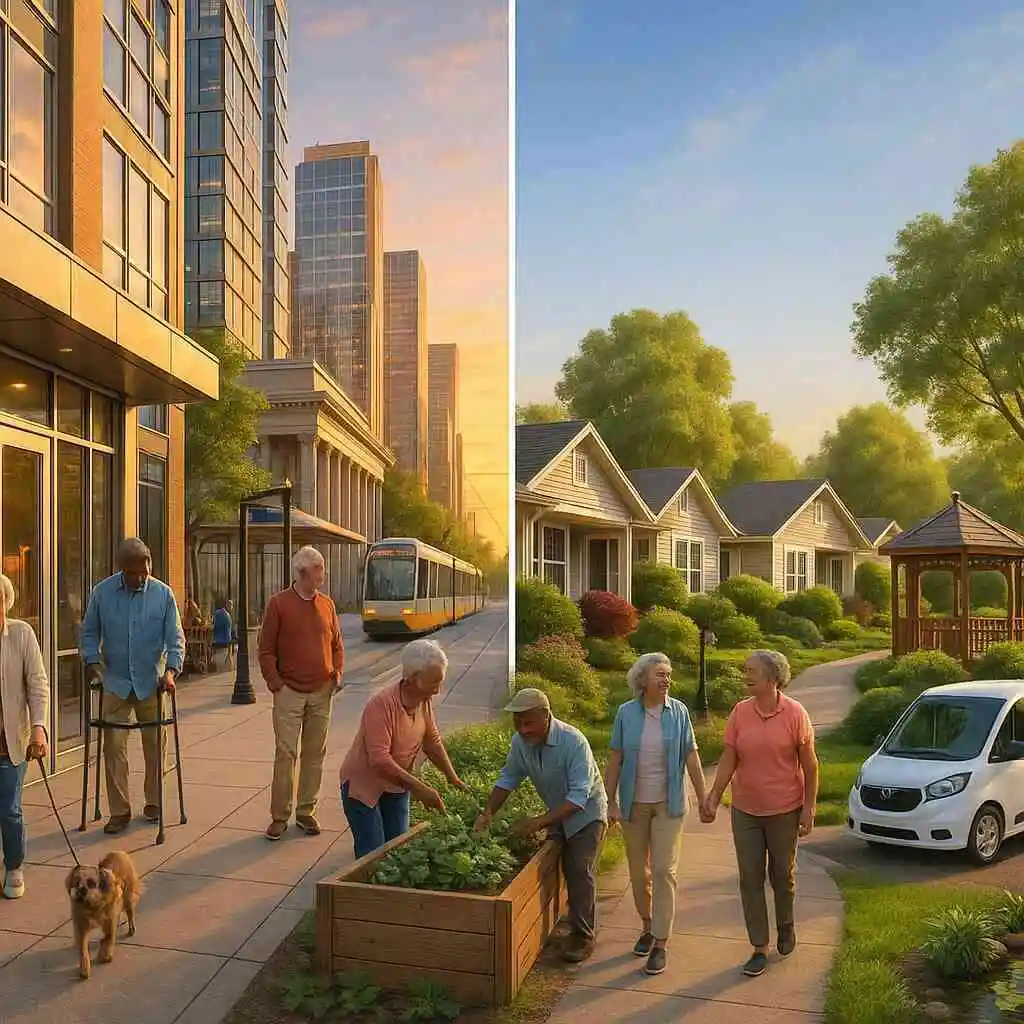
Many newer developments mirror college campus layouts, clustering cottages, villas, and apartment buildings around a central clubhouse. Residents navigate via golf carts along traffic-free lanes. The generous space also enables dog parks and greenhouse complexes, supporting hobbies that simply are not feasible in denser urban settings.
Transportation services for seniors and the rise of on-demand shuttles
Although fewer public bus routes serve the suburbs, creative solutions fill the gap. Scheduled shuttles carry groups to supermarkets, worship services, and medical appointments. Some campuses are piloting app-based microtransit, where residents summon electric vans within minutes.
Volunteer driver programs extend reach further, pairing retirees with training and mileage reimbursements. Together, these layers can effectively replace individual car ownership and keep non-drivers well-connected. Evaluating shuttle frequency and booking ease remains essential when comparing communities for seniors 55+ in suburban areas.
Quiet neighborhood retirement homes near parks and trails
Many retirees seek calm mornings, birdsong, and rustling leaves. Quiet neighborhood retirement homes deliver that serenity. Streets feature cul-de-sacs rather than heavy traffic. Nearby municipal parks add paved loops and accessible picnic shelters.
Evening strolls along tree-lined sidewalks support cardiovascular health without air-quality concerns common in dense urban areas. Clearer nighttime skies are an unexpected bonus for amateur astronomers. Tranquil surroundings can also enhance sleep quality, an underrated but critical wellness factor in aging populations.
Intergenerational engagement and community gardens
Suburban zoning often places schools, libraries, and youth sports fields within easy reach. Partnerships between senior communities and local schools create reading buddy programs, art fairs, and computer-skills mentoring sessions. These connections nurture a sense of purpose in older adults while giving younger generations access to real-world wisdom.
Community gardens become living classrooms where friendships grow alongside squash vines and tomato plants. Harvest festivals unite neighbors of all ages in potluck celebrations. Meaningful intergenerational engagement counters social isolation and strengthens the fabric of the broader community.
Value of rental housing for seniors near shopping and recreation
Lower suburban land costs allow for larger floor plans at more modest price points. A two-bedroom senior apartment rental with a patio may cost the same as a city studio. Proximity to shopping still matters, however. Ideally, grocery stores, pharmacies, and cafés should fall within a few miles, limiting reliance on scheduled shuttles.
Golf courses, recreation centers, and local faith congregations enrich daily life without steep membership fees. Calculating true value means weighing square footage, the amenity package, and access to preferred activities – not just the base rent.
Safety, privacy, and overnight staffing in suburban nursing homes
Lower population density often correlates with reduced crime rates, which eases family concerns. Fenced perimeters, gated entries, and perimeter lighting reinforce security. Residents also enjoy greater privacy, with windows overlooking gardens rather than busy sidewalks.
Overnight staffing levels can vary, however. Prospective residents and their families should ask about nurse-to-resident ratios during night hours and review emergency response protocols. Transparent reporting and a willingness to accommodate unannounced tours signal a genuine culture of accountability in suburban nursing homes.
Choosing Your Ideal Setting: Matching Priorities to Place
A decision grid for city versus suburb assisted living
A structured approach helps families move past emotional reactions. Build a grid listing must-have criteria down the left column and potential communities across the top. Rate each attribute – cost, care continuum, transportation, social life – on a consistent scale. Digital tools within the Senior Living Facilities assisted living locator can export such comparisons as spreadsheets, saving significant time.
Those scores reveal clear patterns. Urban entries may lead on cultural programming while suburban sites dominate for outdoor space and privacy. Seeing trade-offs in black and white prevents decision paralysis and supports productive conversations among family members, advisors, and the future resident.
Balancing budget, amenities, and future care needs when downsizing
Downsizing is both a financial strategy and a lifestyle evolution. Selling a long-held home can fund entrance fees, shore up investments, or finance travel. Monthly service packages differ widely, though, so compare meal credits, housekeeping frequency, and wellness class access carefully before signing anything.
Planning for tomorrow’s health needs is equally important. Confirm whether the community guarantees current residents priority placement when higher care levels become necessary. Understanding a community’s full care continuum – from independent senior living through skilled nursing – ensures continuity and avoids another disruptive move down the road.
Finding senior living near you through Senior Living Facilities
Once preferences are clear, families can find senior living options by ZIP code in seconds. The platform’s filters refine search radius, budget ceiling, and pet policies, generating a focused shortlist quickly. Interactive maps display nearby cafés, hospitals, and parks for helpful context.
Live advisors are available to explain contract details or schedule tours, making the next steps straightforward. For deeper questions, simply contact Senior Living Facilities for compassionate, unbiased guidance. A well-informed decision today lays the foundation for genuine comfort, connection, and purpose in the years ahead.
Frequently Asked Questions
Question: How can Senior Living Facilities help me quickly compare urban senior living facilities with quiet neighborhood retirement homes in the suburbs?
Answer: The assisted living locator lets you place city-center high-rise options side by side with campus-style suburban senior living facilities in seconds. Simply enter your ZIP code and apply filters such as walkable senior apartment rentals, public transit access for older adults, or green space senior living amenities. Interactive maps, cost breakdowns, and verified resident reviews appear together, so you can evaluate healthcare proximity, street noise considerations, and pet-friendly senior living locations without juggling multiple websites.
Question: What factors should I include in my decision grid after reading this comparison of urban versus suburban senior living?
Answer: We suggest rating each community on cost, care continuum, connectivity, and community. Cost covers entrance fees, monthly rent, and potential long-term care facility expenses. Care continuum measures whether memory care, nursing home care, and rehabilitation are available on campus. Connectivity addresses both Wi-Fi reliability and transportation services for seniors, while community looks at cultural activities, community gardens, and intergenerational engagement. Our platform can export these categories into a spreadsheet automatically, making your comparison both thorough and objective.
Question: Are suburban communities for seniors 55+ really more affordable than metropolitan senior housing options?
Answer: In most markets, suburban rental housing for seniors offers larger floor plans at lower base rates, but a fair comparison must include every line item. City residences sometimes bundle meals, utilities, and concierge transportation that suburban sites list as separate charges. Use our cost comparison tool to total parking, transit passes, housekeeping, and healthcare co-pays. Many families discover the gap is smaller than it first appears – and proceeds from selling a car or condominium can even tip the numbers in favor of an urban independent living community.
Question: How does Senior Living Facilities evaluate safety in senior living communities, whether downtown or in a suburban setting?
Answer: Safety is multi-layered, so our database records street-level crime statistics, 24-hour staffing patterns, secured entry systems, and overnight nurse-to-resident ratios. For urban senior living facilities, we highlight noise-mitigation features like triple-pane windows and proximity to well-lit transit stops. For suburban nursing homes, we verify perimeter lighting, gated access, and emergency response times from local fire departments. Transparent data plus on-site photos help families feel confident well before scheduling an in-person tour.
Question: If my parent’s health needs change, can they stay within the same community instead of moving again?
Answer: Yes. Many listings on our platform feature tiered care models that begin with independent living, progress to assisted living, and extend to skilled nursing or memory care – all on one campus. Whether you choose a skyline tower or a suburban community with cottages, our filters identify which locations guarantee resident priority for higher care levels. Planning ahead with Senior Living Facilities means one address can meet today’s active lifestyle goals and tomorrow’s medical realities.
Admin
Expert contributor specializing in senior living care. Dedicated to providing families with clear, actionable advice.