
Difference Between CCRCs and Senior Living Facilities Today

Charting the New Landscape of Senior Housing
Defining a continuing care retirement community and a senior living facility
A continuing care retirement community, often shortened to CCRC, is a planned campus that offers a tiered continuum of care model. Residents usually enter through independent living and progress to assisted living levels of service or skilled nursing care without leaving the grounds. This structure bundles housing, hospitality, and future health services within one long-term contract. Because care escalates in place, CCRCs promise an age-in-place advantage that many older adults value. Contracts and entrance fees vary, yet the core concept remains comprehensive life-stage support.
By contrast, a typical senior living facility focuses on a single level of assistance, such as independent apartments or stand-alone assisted living plans. These settings may still deliver outstanding amenities, but they do not guarantee lifelong medical coverage under one roof. Families therefore piece together additional services as needs rise. For a deeper look at the subtle distinctions, explore CCRCs versus modern senior living explained. Understanding these definitions up front prevents surprises later in the journey.
How changing demographics are reshaping communities for seniors 55+
America’s aging curve is swelling, and the silent generation is now passing the baton to younger baby boomers. This new cohort demands vibrant programming, tech-enabled conveniences, and flexible pricing inside communities for seniors 55+. Developers respond by converting malls, university hubs, and mixed-use districts into intergenerational enclaves. Independent living apartments for seniors 55+ increasingly feature coworking lounges and electric-vehicle charging, mirroring broader lifestyle trends. As expectations rise, so does competition-benefiting consumers with more customized housing options for seniors.
Affordability also shifts as retirees migrate toward sunlight, grandkids, or tax relief. Comparing markets shows striking price gaps between coasts and heartland regions. To see how costs and amenities differ state to state, start by comparing senior living facilities across the U.S.. Geographic data reveals which locations pair lifestyle dreams with realistic budgets, ensuring the right financial fit.
Why language drives expectations when evaluating senior living near you
Industry marketing often blurs lines between independent living, assisted living, and long-term care facilities. Phrases such as “senior housing,” “maintenance-free living,” or “care-enhanced suites” can signal very different service packages. Prospective residents should push for plain-English breakdowns of staffing ratios, activities of daily living support, and medical care coordination. When communities clearly label features, families feel empowered to choose wisely among senior living near me listings.
Precise terminology also matters when you plan moves across state lines. Regulations, Medicaid waivers, and licensing titles can shift dramatically. A senior living facility in one region may equal an adult foster home elsewhere. Before touring, review a step-by-step guide to evaluating communities in 2026. With a shared vocabulary, conversations stay transparent, expectations align, and resident rights remain protected.
Inside the Walls of a Continuing Care Retirement Community
Independent living apartments and the age-in-place promise
Independent living apartments for seniors 55+ form the welcoming gateway of a continuing care retirement community. Residences feel more like boutique condos than institutional settings, yet maintenance remains completely handled by staff. Because services scale later, residents enjoy the coveted age-in-place advantage without future relocation stress. Daily calendars brim with fitness classes, art studios, and volunteer projects that nurture social connection in senior communities. When prospects want to explore options, they often start by using tools that help them find senior living communities near their home.
The economics of this first tier merit careful study. A life-care entrance fee contract often secures predictable health costs for decades. Some CCRCs now pair that guarantee with a refundable entrance fee option, reducing legacy worries for heirs. Monthly service packages bundle dining credits, housekeeping, and transportation, simplifying budgeting. Consequently, many older adults compare CCRC vs senior living facilities calculators to decide if the embedded security outweighs the higher upfront investment.
Assisted living levels of service in the tiered continuum of care model
When daily tasks start requiring help, residents transition smoothly to assisted living levels of service housed within the same campus. This tiered continuum of care model personalizes support for dressing, bathing, or medication without severing community friendships. Suites remain private, yet proximity to nurses provides reassurance for families juggling work and caregiving. Transparent care plans outline exactly which activities of daily living receive assistance and how costs adjust. Pennsylvania leads innovation here, prompting many families to study new continuum-of-care options in Pennsylvania before making commitments.
Service tiers flex as health changes. A resident may require temporary rehabilitation after surgery, then step back to lighter assistance once recovered. This adaptability distinguishes CCRCs from stand-alone assisted living locations that may lack higher acuity resources. Because all services operate under one governance umbrella, medical care coordination for older adults stays streamlined. Families therefore avoid the often-stressful hunt for outside providers every time needs evolve.
Skilled nursing care and memory care neighborhood design
Skilled nursing care within a CCRC delivers round-the-clock clinical oversight without severing community ties. Licensed therapists, dietitians, and geriatric physicians collaborate under rigorous federal standards. Residents benefit from shorter transfer times to on-site clinics, which can improve recovery outcomes. Private or semi-private suites emphasize dignity through hotel-style finishes, natural light, and family gathering spaces. Moreover, Medicare coverage inside a CCRC may differ from outside contracts, underscoring the need for proactive financial planning.
Memory care neighborhood differences deserve equal attention. Secure wings often feature circular hallways, contrast-color cues, and sensory gardens that ease wandering anxiety. Specialized staff trained in dementia interventions use music, storytelling, and aromatherapy to spark recognition and calm. Integrated design allows couples to remain on the same campus even when cognitive paths diverge. New York families, for example, increasingly tour lifecare communities near New York residents to keep loved ones close while safeguarding safety.
Wellness programs and social connection as preventive medicine
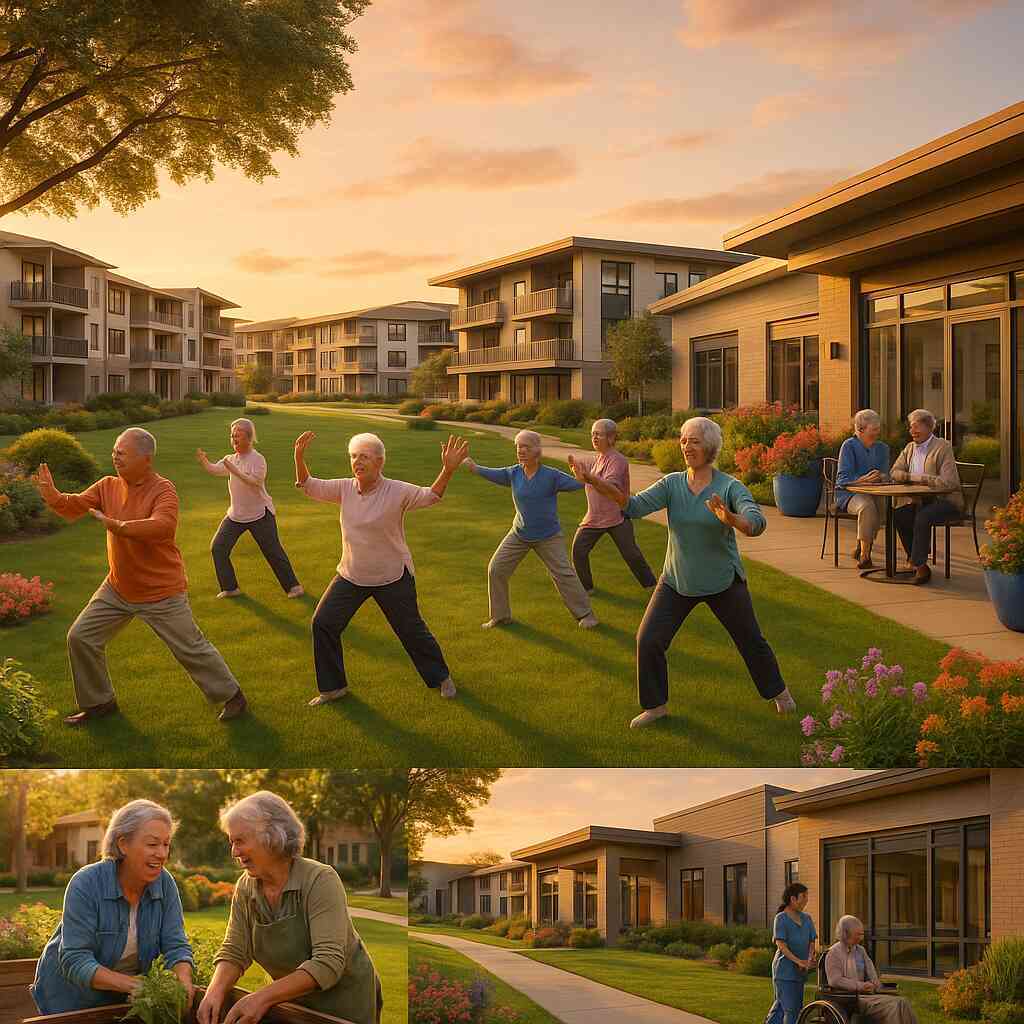
Modern CCRCs view wellness programs as preventive medicine, not mere recreation. Evidence-based classes-from tai chi to balance clinics-reduce fall risk and hospital admissions. Nutritionists collaborate with chefs to craft menus addressing diabetes, hypertension, and taste preferences. Spiritual centers, meditation rooms, and lifelong learning partners further elevate holistic health. These initiatives embody the idea that purpose, not age, defines vitality.
Social architecture strengthens outcomes. Shared gardens invite intergenerational volunteers; maker-spaces transform residents into mentors; resident councils influence event calendars. Researchers now link sustained friendship networks to slower cognitive decline, validating investment in robust community engagement. Potential residents often review rankings of the best communities for adults 55 and older to gauge a campus’s culture before visiting. Ultimately, wellness ecosystems inside CCRCs illustrate how infrastructure, programming, and relationships combine to support graceful longevity.
 Beyond the Campus: Traditional Senior Living Facilities Explained
 Beyond the Campus: Traditional Senior Living Facilities Explained
Rental housing for seniors and senior apartment rentals affordability check
Many older adults start their research by comparing rental housing for seniors against purchase-based models like a continuing care retirement community. Monthly rent feels familiar, yet several variables influence overall affordability. Lease terms, meal packages, and utility caps can hide extra charges that strain fixed incomes. Reading the fine print or exploring the hidden costs to watch for in senior housing helps families protect budgets before signing. Transparent pricing empowers residents to focus on community culture rather than unexpected fees.
Senior apartment rentals cater to active adults who want flexibility and fewer maintenance responsibilities. Age-restricted complexes often include wellness centers, dog parks, and shuttle service, creating built-in social connections in senior communities. Because no long-term medical care is bundled, retirees remain free to choose outside providers if health needs rise. This arrangement preserves autonomy but requires proactive planning for future healthcare security for seniors. Comparing amenities, safety systems, and neighborhood walkability ensures the chosen senior living facility matches lifestyle aspirations.
Stand-alone assisted living locations versus long-term care facilities
Stand-alone assisted living locations specialize in assisted living levels of service, supporting personal care and medication without offering on-site skilled nursing care within a CCRC. Residents benefit from homelike suites, restaurant-style dining, and robust activity calendars that nurture purpose. However, if health acuity increases, a transfer to a long-term care facility or nursing home for the elderly may become necessary. Families should examine staff credentials, nighttime coverage, and emergency protocols to confirm quality and continuity.
Long-term care facilities provide twenty-four-hour clinical oversight, rehabilitation therapies, and specialized memory programs exceeding assisted living plans. While they ensure comprehensive medical care coordination for older adults, the environment can feel clinical compared to boutique senior housing. Evaluating each setting’s philosophy, family involvement policies, and resident rights in continuing care communities clarifies which path aligns with personal values. Understanding the difference between CCRCs and senior living communities aids smoother transitions when needs evolve.
Comparing entrance fees and monthly rent across housing options for seniors
Entrance fees function like an insurance policy, locking predictable health-care access inside a life-care entrance fee contract. These sizable, often partially refundable payments secure guaranteed accommodation through every tiered continuum of care model. Conversely, senior apartment rentals’ affordability rests on lower up-front costs but variable future expenses. Prospective residents should compare entrance fees versus monthly rent using a housing options for seniors comparison worksheet to reveal long-term impacts.
Refundable entrance fee options appeal to retirees wishing to preserve an estate for heirs while safeguarding future services. Yet refund percentages vary widely, so cost transparency in senior housing contracts is crucial. When analyzing CCRC vs senior living facilities budgets, include inflation assumptions, possible elective service add-ons, and Medicare coverage in CCRC’s limitations. Thorough financial planning for CCRCs prevents sticker shock and supports confident decision-making.
Leveraging an assisted living locator to evaluate senior living near me
With hundreds of communities for seniors 55+ in every region, screening options alone can overwhelm. An assisted living locator like Senior Living Facilities simplifies the process by aggregating verified data on amenities, staffing ratios, and resident reviews. Users enter a zip code, then filter results by care level, price, or lifestyle focus, quickly identifying seniors living near you that deserve in-person tours. Built-in checklists prompt questions to ask about activities of daily living support and cost escalators.
The platform also highlights state-specific regulations so families selecting senior living in your state avoid compliance surprises. Whether exploring age-in-place advantage communities or short-term rental models, side-by-side charts spotlight differences at a glance. Personalized guidance helps clarify which senior housing opportunities in California differ from assisted and independent living in Illinois, ensuring informed choices. Ultimately, leveraging technology transforms daunting research into an empowering journey toward the right senior living facilities fit.
The Money Map Contracts Costs and Coverage
Life-care entrance fee contracts versus refundable entrance fee options
Life-care entrance fee contracts bundle housing, hospitality, and unlimited healthcare into one lifelong promise. Residents pay a sizable upfront sum, then enjoy stable monthly rates even as care needs escalate across the tiered continuum of care model. Because the contract behaves like long-term insurance, it often attracts planners seeking maximum age-in-place advantage. Yet some hesitate, fearing their estate will lose liquidity. For them, many CCRCs now offer refundable entrance fee options that return a defined percentage to heirs, balancing security with legacy goals.
Comparing these two structures demands more than headline numbers. Families should examine amortization schedules, refund triggers, and solvency benchmarks published in audited financial statements. Asking whether medical inflation clauses exist prevents surprises decades later. Reviewing state oversight reports also verifies that reserves supporting refunds remain healthy. Tools such as decoding rental models for 55-plus living illustrate how entrance fees stack up against pure rentals, helping shoppers project lifetime value.
Medicare coverage nuances inside and outside a CCRC
Medicare rules appear universal, yet coverage dynamics shift once services occur within a CCRC campus. Skilled nursing care delivered under the community’s provider number may align seamlessly with Part A after a qualifying hospital stay, reducing paperwork for families. However, ancillary therapies sometimes bill under Part B, triggering separate copays. Understanding which department holds each license ensures accurate budgeting and compliance.
Outside a CCRC, beneficiaries often depend on external rehab facilities or home health agencies, introducing transportation costs and coordination gaps. Traditional senior living facilities that lack on-site clinics rely heavily on third-party providers, potentially extending recovery timelines. Residents should confirm whether their supplemental insurance honors services provided by campus clinicians or mandates network substitutes. Clarity here prevents claim denials and preserves future healthcare security for seniors.
Financial planning for future healthcare security
Robust planning starts years before the first moving box appears at the new independent living apartment. Advisors encourage clients to map assets against several scenarios, including extended memory care or couples requiring different service levels simultaneously. A comprehensive housing options for seniors comparison worksheet can spotlight pressure points long before cash flow tightens. Pairing that analysis with realistic longevity projections delivers a roadmap rather than guesswork.
Tax-advantaged strategies also deserve attention. Portions of certain entrance fees may qualify as pre-paid medical expenses, generating sizable deductions when itemized correctly. Meanwhile, health savings accounts cannot reimburse monthly service fees once Medicare enrollment begins, a nuance frequently missed. Coordinating withdrawal timing across taxable, tax-deferred, and Roth buckets cushions market swings and locks essential coverage even during downturns. The result is a resilient portfolio aligned with care priorities, not market whim.
Cost transparency and resident rights in senior housing
Legislation now presses communities to disclose pricing formulas, staffing ratios, and future fee escalation caps before contracts close. Transparent charts comparing entrance fees vs monthly rent empower prospects to benchmark offers side by side. Regulators further mandate plain-language explanations of what services fall under activities of daily living support and which incur à la carte charges. This clarity strengthens resident rights in continuing care communities by preventing surprise invoices.
Enforcement matters as much as policy. Residents should know their state’s grievance procedures and the deadlines for arbitration requests. Joining resident councils or finance committees keeps leadership accountable while fostering collaborative problem solving. Finally, families reviewing cost transparency in senior housing should document every verbal promise in writing, ensuring contracts reflect the full agreement. Informed consumers not only protect themselves but also elevate industry standards for everyone.
Choosing Your Path Forward
 Choosing Your Path Forward
Community culture fit and lifestyle aspirations
Finding a community that mirrors your passions matters as much as any amenity list. Before signing, attend resident events, taste the dining options, and ask about committees shaping daily schedules. The vibe of art studios, lecture halls, or pickleball courts can reveal whether purpose thrives on campus. When you tour, contrast the social calendars of a continuing care retirement community with those of a more flexible senior living facility. Exploring retirement living choices in Florida shows how beach walks, boating clubs, and multicultural festivals influence satisfaction.
Lifestyle alignment also depends on demographic mix and age range. Some communities for seniors 55+ lean youthful and entrepreneurial, while others prize quiet gardens and reflective spaces. Clarify whether pets, grandchild sleepovers, or late-night jam sessions are encouraged. A transparent conversation with the sales counselor prevents mismatched expectations later. Remember, culture cannot be retrofitted after move-in, so weigh it heavily.
Downsizing and transition logistics for older adults
Right-sizing possessions can feel daunting, yet starting early reduces stress. Break the process into rooms, labeling items to keep, gift, donate, or sell. Professional move managers specialize in guiding older adults through sentimental choices without pressure. Many senior living facilities now partner with estate sale teams who handle marketing, pricing, and online auctions. Asking for written timelines and labor costs ensures clear budgeting.
Transportation of cherished furniture pieces demands careful measurement of independent living apartments for seniors 55+. Obtain floor plans and scale mock-ups before movers arrive. Schedule utility shutoffs and mail forwarding at least two weeks ahead of departure. If traveling a long distance, coordinate medication refills and medical records transfer simultaneously. A detailed checklist safeguards continuity from the first packed box to welcome dinner.
Medical care coordination and wellness priorities checklist
Healthcare touches every housing decision, even during healthy seasons. Verify on-site clinics, therapy spaces, and pharmacy delivery options during tours. Ask how staff communicate with outside physicians and whether electronic records integrate seamlessly. Communities offering a tiered continuum of care model simplify future transitions by keeping services under one roof. Families comparing CCRCs versus senior living facilities often prioritize this streamlined medical bridge.
Specialists matter too. Inquire about memory care protocols, fall-prevention programs, and emergency response times. Compare staffing credentials between an assisted living location and a long-term care facility to gauge clinical depth. Reliable coordination allows residents to enjoy wellness classes rather than juggle appointments. For region-specific policies, scan senior care resources in Texas to see licensing nuances that could affect coverage.
Using Senior Living Facilities to compare connect and decide
Online research accelerates informed decisions when paired with in-person visits. The Senior Living Facilities platform aggregates verified data on amenities, pricing, and resident reviews from every state. Enter your zip code, filter by care level, and instantly draft a shortlist of senior living near you. Built-in cost calculators contrast entrance fees versus monthly rent, clarifying long-term affordability across housing options for seniors.
After narrowing choices, request introductions through the site’s concierge team. Advisors explain contract fine print, coordinate tours, and prepare personalized question lists. Tools highlight state regulations, revealing why senior living in your state may require specific disclosures. Finally, save notes, photos, and impressions inside your private dashboard for easy family discussion. This guided approach transforms a complex journey into a confident, actionable decision.
Frequently Asked Questions
Question: What is the main difference between a continuing care retirement community and a traditional senior living facility, and how can Senior Living Facilities help me decide which is right for me?
Answer: A continuing care retirement community (CCRC) bundles independent living apartments for seniors 55+, assisted living levels of service, and skilled nursing care within one campus and one life-care entrance fee contract. A traditional senior living facility-whether an active-adult rental, stand-alone assisted living location, or long-term care facility-typically delivers only a single level of support and bills month-to-month. This means future moves or outside providers may be needed as health changes. By using the Senior Living Facilities assisted living locator, you can compare both housing options for seniors side by side, view cost transparency, and filter results by care level, contract type, and state regulations. Our platform’s data-rich profiles and concierge guidance empower you to weigh the age-in-place advantage of a CCRC vs senior living facilities that operate on a rental model, ensuring you choose the setting that matches your health, budget, and lifestyle priorities.
Question: How does the tiered continuum of care model in a CCRC work, and what should I look for when comparing entrance fees vs monthly rent?
Answer: The tiered continuum of care model lets you start in independent living, then transition to assisted living or skilled nursing care within the same community as needs evolve. You pay a one-time entrance fee-often partially refundable-and a predictable monthly service package. When comparing entrance fees vs monthly rent, ask for amortization schedules, refund percentages, and future fee-increase caps. Senior Living Facilities provides downloadable worksheets that plug these numbers into lifetime cost projections, making it easy to see whether a life-care entrance fee contract or a lower-up-front senior apartment rental offers better long-term value for your situation.
Question: I read the blog Difference Between CCRCs and Senior Living Facilities Today; how can Senior Living Facilities show me communities near me that offer an age-in-place advantage?
Answer: Simply enter your zip code into the Senior Living Facilities search bar and select the CCRC filter. You’ll instantly see communities for seniors 55+ that provide independent living, assisted living, memory care neighborhood differences, and skilled nursing care within one campus. Interactive maps highlight senior living near you in every state, while comparison cards detail wellness programs, medical care coordination for older adults, and resident rights in continuing care communities. Our advisors can then schedule tours and review contracts so you can experience the age-in-place promise firsthand.
Question: What role does Medicare coverage play inside and outside a CCRC, and how can Senior Living Facilities guide my financial planning for future healthcare security?
Answer: Inside a CCRC, skilled nursing care often bills through the community’s provider number, which can streamline Medicare Part A reimbursement after a qualifying hospital stay. Ancillary therapies may fall under Part B, carrying separate copays. Outside a CCRC, you may rely on third-party rehab centers or home health agencies, introducing coordination hurdles and transportation costs. Senior Living Facilities connects you with experts who clarify Medicare coverage in CCRCs, outline supplemental insurance gaps, and build a financial plan that integrates refundable entrance fee options, tax-deductible medical expenses, and long-term care contingencies-safeguarding future healthcare security for seniors.
Question: When evaluating senior living near me, what questions should I ask about wellness programs and social connection to ensure the community culture fits my lifestyle?
Answer: Start by asking about staffing ratios for fitness and therapy professionals, the range of evidence-based classes (tai chi, balance clinics, lifelong learning), and how resident councils influence the activity calendar. Inquire about intergenerational events, volunteer opportunities, and dedicated spaces such as maker studios or meditation rooms. Senior Living Facilities’ amenity checklists prompt you to verify these details during tours, compare social connections in senior communities across multiple properties, and match each campus’s culture to your hobbies, dietary needs, and pet or grandchild policies. Using our platform ensures you select a senior living facility where wellness programs and community spirit truly align with your goals.
Admin
Expert contributor specializing in senior living care. Dedicated to providing families with clear, actionable advice.