
How Senior Living Facilities Improve Resident Transit
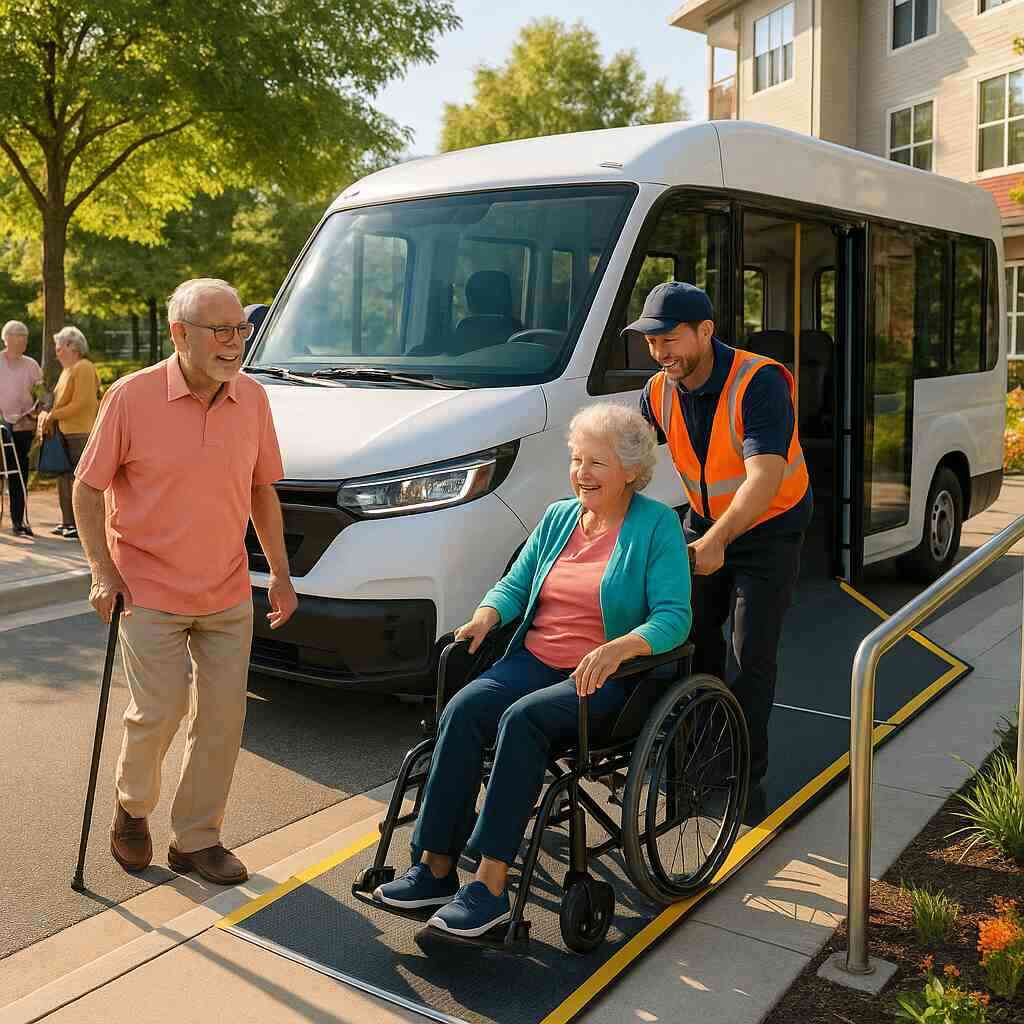
Opening the Passenger Door to Purposeful Journeys
From isolation to connection through senior transportation services
Reliable door to door shuttle for seniors changes the emotional landscape of aging. When residents know a friendly driver will appear on schedule, anxiety about traveling alone fades quickly. That confidence encourages newcomers to leave their rooms, join clubs, and build friendships during shared rides. Mobility assistance in assisted living also supports couples who fear being separated by health differences because both can attend events together. Ultimately, transportation becomes the social glue that bonds diverse neighbors into one caring network.
Senior transportation services reach beyond the campus gate and revitalize each resident’s relationship with the surrounding city. Weekly routes to libraries, faith centers, and parks restore cherished routines that many feared were gone forever. Shopping shuttles transform errands into group adventures, complete with helpful staff who load packages and ensure fall prevention during boarding. Even a quick escort service to doctor visits feels uplifting when companions share encouragement along the way. Consistent access to meaningful places thus rewires the brain toward optimism and belonging.
How mobility fuels wellness and social engagement in a seniors living community
Movement is medicine, and scheduled rides function like daily prescriptions for holistic health. Studies show that older adults who travel frequently enjoy higher cognitive scores, lower depression rates, and better sleep quality. Senior living facilities harness this truth by aligning on demand transit in senior communities with exercise classes, volunteering, and cultural outings. Each purposeful trip sparks new conversations, creating powerful social engagement that further boosts immune response and resilience.
Transportation benefits in independent living reach even deeper by supporting personal choice, a known determinant of longevity. When residents select preferred departure times or destinations through an integrated transportation and activities calendar, they regain a sense of agency. That autonomy reduces stress hormones and encourages proactive self-care, such as booking wellness screenings without delay. By weaving mobility into every dimension of community life, providers cultivate a self-reinforcing cycle of vigor, friendship, and joy.
Mapping today’s senior living facilities transit ecosystem
Modern long-term care mobility programs operate as sophisticated ecosystems rather than simple shuttle loops. A transportation coordinator role now oversees ride coordination for older adults, balancing resident preferences with fleet efficiency. ADA compliant shuttle fleet planning includes wheelchair accessible senior vans, mobility scooter storage solutions, and clear emergency evacuation protocols for seniors. Data dashboards track ridership trends, ensuring scheduled medical appointment rides remain timely and equitable.
Partnerships also extend the reach of campus vehicles. Senior friendly ride share services act as safe driving alternatives for seniors during evenings or overflow periods. Community bus routes for retirees link rural senior transit solutions with regional attractions, while transit subsidies for senior residents unlock broader public systems. Together, these interconnected services form a flexible network that adapts gracefully to changing health needs, seasonal weather, and personal goals.
Engineering Accessible Pathways in Senior Living Facilities
Designing door to door shuttle for seniors within a long term care facility
Every successful long-term care mobility program begins with a thoughtful route blueprint. Planners map distances, curb cuts, and lighting to guarantee that a door to door shuttle for seniors never leaves anyone behind. Dedicated loading zones reduce congestion, while clear signage lowers anxiety for first-time riders. Staff use resident feedback sessions to refine schedules and comfort features, creating a partnership rather than top-down direction. The result mirrors the expansive mobility programs in Texas assisted living communities, where seamless boarding feels as routine as morning coffee.
Purposeful interior design keeps travel restorative. Wide aisles support walkers, grab bars line every seat row, and adjustable climate control protects fragile lungs. Communities for seniors 55+ often add soothing artwork that sparks conversation during short hops to the fitness studio. Drivers greet passengers by name, reinforcing a supportive culture that extends far beyond the vehicle. Each design choice turns ordinary transit into a daily affirmation of dignity.
Building an ADA compliant shuttle fleet with wheelchair accessible senior vans
Fleet composition sits at the heart of equitable mobility. Facilities prioritize ADA compliant shuttle fleet acquisition, balancing smaller vans for winding roads with larger buses for peak outings. Wheelchair accessible senior vans deploy hydraulic lifts tested weekly to ensure uninterrupted reliability. Operators document inspection results digitally, feeding dashboards that alert maintenance teams before issues surface. This data-driven vigilance empowers confident travel even for residents with complex health profiles.
Green engineering now intertwines with accessibility goals. Lithium-ion batteries, regenerative braking, and solar canopy charging stations slash emissions without sacrificing power. Forward-thinking campuses mirror the best practices outlined in eco-friendly energy and fleet design for senior shuttles by pairing sustainability with quiet, smooth rides. Residents enjoy cleaner air, while operators report lower fuel costs-proof that ethical choices can also be fiscally sound.
Fall prevention during boarding and mobility assistance in assisted living
Physical safety anchors every boarding protocol. Drivers receive quarterly training on body-mechanics, gait belt usage, and real-time observation of balance cues. Portable steps feature non-slip surfaces and contrasting colors that aid low vision travel accommodations. Inside, high-visibility seat edges guide depth perception, decreasing missteps that could harm fragile hips. Staff remain within arm’s reach until seat belts click, reinforcing confidence.
Administrators monitor performance through documented incident reviews. They cross-reference outcomes with benchmarks like those in measuring safety metrics during senior transport boarding to spot trends before patterns escalate. Lessons learned inspire policy updates, from slower ramp angles to pre-trip stretching classes. Continuous improvement transforms potential hazards into teachable moments that elevate the entire seniors living community.
Creating reliable mobility scooter storage solutions
Personal scooters expand independence but require strategic parking. Indoor storage rooms with temperature control protect batteries from extreme weather, extending equipment life. Outfitted charging docks share surge-protected power rails, preventing tripping hazards caused by tangled cords. A unique tag system helps the transportation coordinator role match devices to riders quickly at departure, shortening wait times and supporting on demand transit in senior communities.
Technology propels further innovation. Smart lockers send alerts when a scooter reaches full charge, freeing space for the next device. Pilots inspired by emerging mobility tech for elder transportation 2026 illustrate how automation reduces staff burden while giving residents real-time status updates on smartphones. Integrated systems keep hallways clear, batteries healthy, and spirits high.
Integrating dementia friendly transportation planning into daily operations
Cognitive changes require subtle yet powerful design shifts. Vehicles feature contrasting seat fabrics that simplify visual discrimination, while repetitive patterns are avoided to prevent overstimulation. Drivers follow consistent routes, announcing landmarks in calm tones that anchor memory. This predictability transforms scheduled medical appointment rides into comforting routines.
Community life enrichment teams embed sensory aids inside buses. Lavender diffusers, gentle music, and photo boards of upcoming destinations spark anticipation. Caregivers report reduced agitation and improved orientation after such thoughtful touches. Facilities committed to purpose-driven outings via community buses near you prove that compassionate engineering unlocks participation for residents at every cognitive stage.
 Smart Coordination and Technology Driven Ride Management
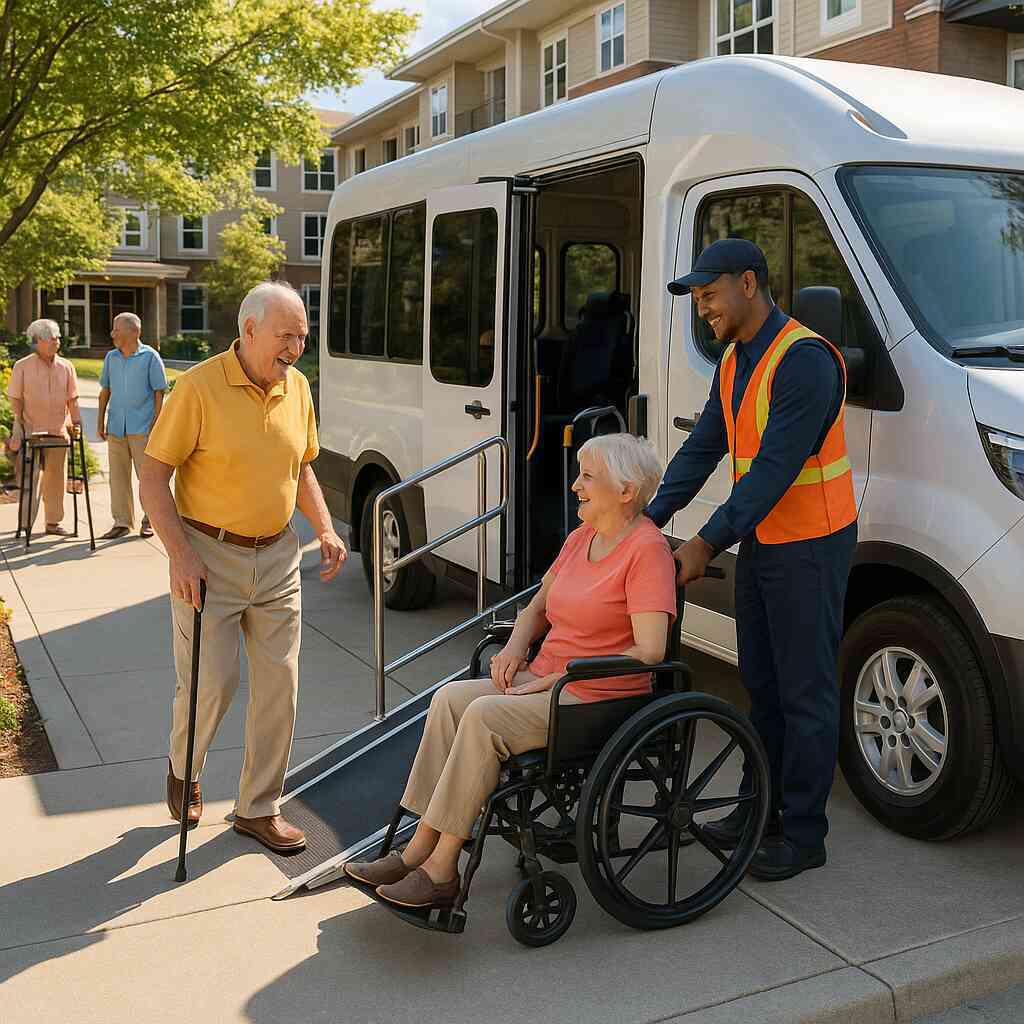 Smart Coordination and Technology Driven Ride Management
Leveraging on demand transit in senior communities for real time freedom
Modern seniors expect rides the moment inspiration strikes, and on demand transit in senior communities delivers exactly that. Smartphone or kiosk requests reach dispatch software within seconds, then drivers receive optimized routes that cut idle miles. Residents track arrivals on large-print screens, which lowers anxiety and boosts participation in spontaneous senior outing bus trips. Because algorithms account for mobility assistance in assisted living, wheelchair accessible senior vans arrive equipped and ready. This seamless precision transforms senior living facilities transportation from a scheduled chore to a gateway of independence.
Florida operators pioneered data dashboards that combine weather, traffic, and rider health records into one actionable feed. As a result, facilities now highlight the statewide transportation benefits in Florida senior living when families compare communities. Predictive models even suggest popular destinations before residents ask, fueling richer activity calendars. The system notifies staff if falls or dementia friendly transportation planning considerations require extra escort service to doctor visits. By anticipating needs, managers protect dignity while expanding choice.
Synchronizing an integrated transportation and activities calendar
An integrated transportation and activities calendar acts as the community’s heartbeat. Recreation leaders input concert times, therapy sessions, and seniors’ riding service for shopping into one cloud hub. Transportation software then assigns fleet assets, ensuring every door to door shuttle for seniors arrives ten minutes before each program. Residents receive color-coded paper prints or voice alerts that respect low vision travel accommodations. This tight orchestration eliminates schedule clashes that once frustrated caregivers.
The calendar also captures personal preferences, so transportation benefits in independent living remain personalized. For example, early risers always secure first-wave yoga rides while night owls claim evening museum tours. Families view the same interface remotely, gaining confidence that their loved ones access wellness through transportation access daily. Over months, analytic trends reveal which hobbies need more seats, guiding long term care mobility programs toward growth. In short, technology turns disparate timetables into a single, empowering narrative.
Defining the transportation coordinator role for seamless ride coordination
At the center of this digital web stands the transportation coordinator role, a hybrid of logistics expert and compassionate host. Coordinators monitor live GPS feeds, rebalance vehicles, and solve last-minute cancellations without panic. Because they know every resident’s health profile, they instantly dispatch ADA compliant shuttle fleet units when walkers or oxygen tanks appear on the manifest. Their constant vigilance keeps fall prevention during boarding front and center.
Training extends beyond software mastery. Coordinators master motivational interviewing to encourage hesitant riders, and they study integrated health care and transportation coordination principles. Weekly briefings with nursing teams flag new dietary or cognitive shifts that might influence escort service to doctor visits. This cross-department rapport prevents gaps that could derail even perfect algorithms. Ultimately, coordinators weave technology and humanity into one unbreakable fabric of trust.
Partnering with senior friendly ride share services as safe driving alternatives for seniors
Facility vehicles cannot cover every spontaneous wish, especially after hours. Therefore, leadership forges senior friendly ride share partnerships vetted for background checks, vehicle inspections, and driver empathy training. Residents request rides through a branded portal that mirrors campus booking screens, creating a consistent user experience. Pricing integrates with transit subsidies for senior residents, so cost never blocks participation.
These safe driving alternatives for seniors expand geographic reach far beyond community bus routes for retirees. Whether attending a grandchild’s recital or a specialist clinic, older adults enjoy continuity of care. Trip data flows back to coordinators, who monitor punctuality and report concerns instantly. Insurance teams appreciate the documented oversight, which lowers liability and strengthens funding proposals. Partnerships thus transform the broader city into an accessible extension of home.
Ensuring scheduled medical appointment rides and escort service to doctor visits
Health appointments demand punctuality and sensitivity. Automated reminders prompt residents to confirm scheduled medical appointment rides twenty-four hours ahead, allowing coordinators to adjust routes proactively. Wheelchair accessible senior vans arrive early, providing calm boarding time and privacy for medication storage checks. Drivers trained in activities of daily living aided by transportation access walk passengers to reception desks, then record hand-offs in a digital log.
Return trips wait-list automatically, preventing stranded confusion after procedures. Because coordinators view real-time clinic delays, they redeploy vehicles rather than leaving engines idling. Family portals display status updates, easing caregiver stress miles away. By aligning transport and health timelines, facilities reduce missed visits and improve integrated outcome metrics. Ultimately, reliable medical transit safeguards both longevity and resident confidence.
Establishing clear emergency evacuation protocols for senior residents
Technology shines brightest when the stakes are highest. Evacuation software overlays resident mobility levels onto live floor maps, instantly highlighting wheelchair locations and low vision travel accommodations. Preloaded routes steer drivers toward safe zones while avoiding flood-prone roads. Each ADA compliant shuttle fleet seat carries an RFID scanner that logs boarding, assuring no one is left behind.
Quarterly drills rehearse these protocols alongside local responders, reinforcing southern shuttle coordination in Alabama senior facilities’ best practices. Coordinators distribute grab-and-go packs with medication lists and comfort items, reflecting lessons from rural winter transportation in Maine senior housing scenarios. After drills, debrief analytics expose bottlenecks, prompting equipment upgrades or extra staff certification. Continuous refinement transforms fear into prepared resilience, proving that smart transit management protects life as well as lifestyle.
Expanding Horizons Beyond the Campus
Launching community bus routes for retirees and rural senior transit solutions
Reliable community bus routes for retirees shatter geographic barriers that once limited daily choice. Senior living facilities map schedules around pharmacy hours, farmers’ markets, and local festivals to keep social calendars full. By coordinating departure points with nursing teams, the routes also accommodate mobility assistance in assisted living without added stress. Residents who feared isolation in remote areas now join friends effortlessly, boosting mental health while reducing family driving burdens. The campus becomes a launchpad, not a boundary.
Winter storms and winding country roads demand special planning, yet innovation prevails. Facilities study best practices such as rural winter transportation in Maine senior housing to refine tire selection and driver training. They add heated handrails at boarding zones, which strengthen fall prevention during boarding in icy months. Drivers carry satellite phones, ensuring continuity if cellular networks falter. These thoughtful measures make rural senior transit solutions as dependable as urban options, regardless of the weather.
Organizing seniors’ riding service for shopping recreation and cultural outings
A well-run seniors riding service for shopping turns errands into lively excursions. Coordinators allocate wheelchair accessible senior vans to grocery trips earlier in the week, when aisles are quieter. Staff walk with residents through markets, offering reach assistance and nutrition reminders. Packages load into labeled bins, so everyone exits with dignity intact. The practice delivers wellness through transportation access and healthy meal preparation at home.
Culture lovers enjoy themed senior outing bus trips to galleries, concerts, and botanical gardens. Inspiration flows when travelers share commentary on scenic routes resembling mountain region shuttle services in Colorado retirement communities. In return, activity directors capture feedback to curate future itineraries that reflect diverse tastes. Because the door to door shuttle for seniors removes parking anxiety, previously hesitant artists and veterans discover common ground. Each trip thus strengthens community identity while expanding personal horizons.
Championing green senior living transportation initiatives that cut emissions
Senior living facility fleets now embrace green senior living transportation initiatives that protect both lungs and landscapes. Electric buses equipped with regenerative braking slash carbon output and provide whisper-quiet rides that soothe sensitive hearing. Solar canopies over parking lots double as charging stations, reducing utility costs while showcasing a visible commitment to stewardship. Residents appreciate the cleaner air and celebrate their role in collective climate action.
Forward-thinking campuses learn from pioneers of zero-emission mobility in California senior campuses when selecting battery chemistries and route lengths. Mechanics receive specialized training to maintain high-voltage systems safely, which furthers E-E-A-T confidence. Marketing teams highlight reduced particulate exposure as a medical benefit, aligning sustainability with clinical outcomes. Consequently, families searching “senior living near me” increasingly value eco-conscious transit as a marker of quality care.
Offering transit subsidies for senior residents to broaden accessible options
Even the best in-house shuttles cannot cover every spontaneous desire. Transit subsidies for senior residents therefore extend mobility into evenings and regional destinations. Facilities negotiate discounted fares with safe driving alternatives for seniors, then load digital wallets on resident ID cards. The program removes cost anxiety and encourages continuous exploration, reinforcing autonomy in independent living.
Administrators track usage patterns similar to data from Midwest seniors on the move in Ohio living residences. Analytics reveal gaps in late-night medical access, prompting an extra escort service to doctor visits where necessary. Because subsidies integrate with the broader integrated transportation and activities calendar, budget forecasting remains transparent. The result is a fiscally responsible, socially equitable system that celebrates personal choice.
Providing accessible public transit training and low vision travel accommodations
Knowledge empowers seniors to step beyond private shuttles. Certified instructors host accessible public transit training workshops that demystify ticket kiosks, route maps, and safety etiquette. Participants practice boarding city buses using portable ramps set up in the community hall. Repetition builds muscle memory and reduces anxiety, making future solo trips realistic milestones of independence.
Low vision travel accommodations complete the empowerment toolkit. Orientation specialists teach residents to use high-contrast phone apps, tactile platform edges, and audio stop announcements. Facilities install large-print schedules at exits to reinforce learning daily. These efforts reflect the broader commitment of senior living facilities to holistic, lifelong mobility education. Ultimately, every resident gains the confidence to navigate public systems with grace and security.
Navigating Toward a Resilient Transit Future
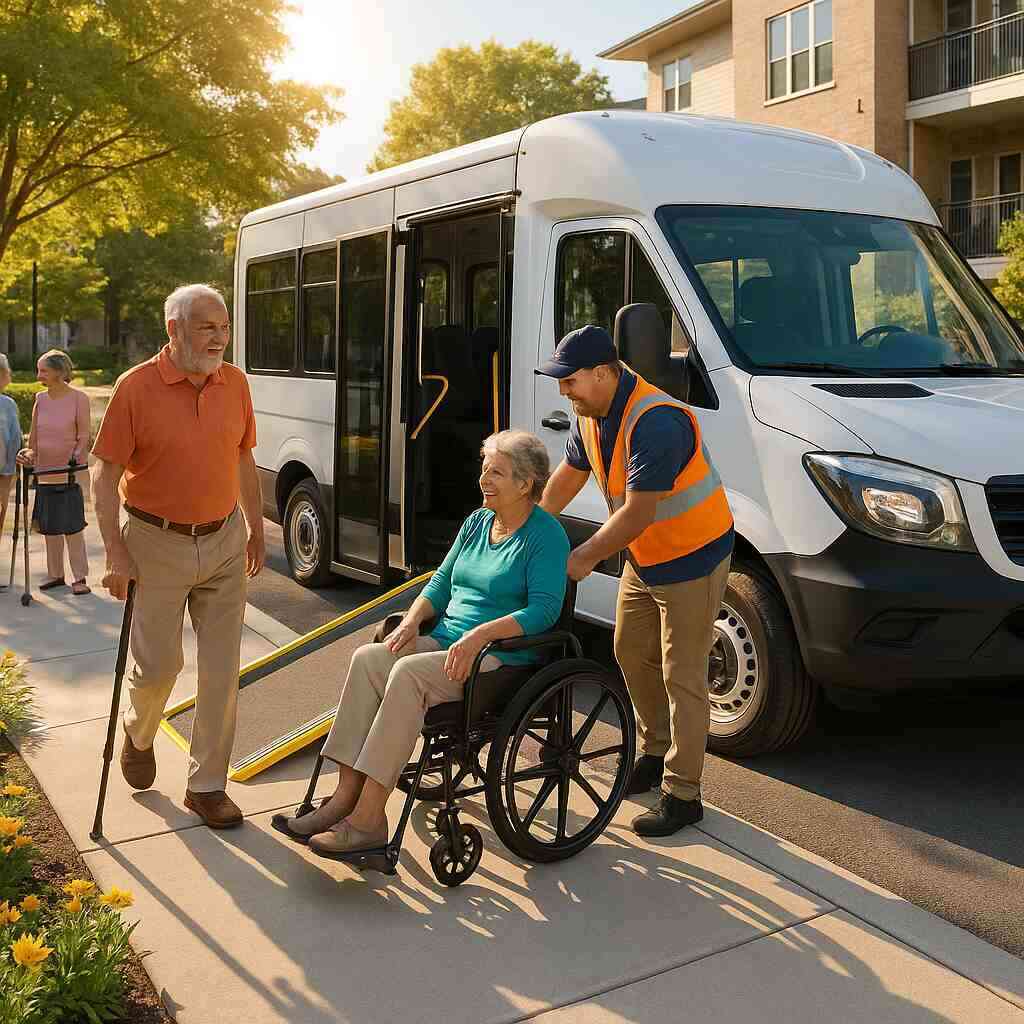 Navigating Toward a Resilient Transit Future
Measuring resident wellness through transportation access metrics
Older adults thrive when movement becomes medicine, so communities now track results with precision. Monthly dashboards compare ride frequency, mood surveys, and blood-pressure trends, revealing direct links between wellness through transportation access and overall vitality. High usage of scheduled medical appointment rides often predicts fewer emergency calls, confirming preventive benefits. Communities also log participation on community bus routes for retirees to gauge social engagement growth. When metrics dip, the transportation coordinator role audits routes, seat comfort, and communication clarity. Corrective tweaks, such as adding midday shuttles, usually restore participation quickly. Transparent reporting keeps families informed and reassures regulators about evidence-based quality.
Smart metrics go beyond numbers and spotlight individual stories. Drivers record anecdotal improvements, like residents who regained confidence after consistent senior transportation services to therapy. Coordinators pair these narratives with data to secure grants that fund rural senior transit solutions, broadening reach. Communities integrate findings into an integrated transportation and activities calendar, guaranteeing popular classes remain accessible. The resulting loop of measurement, response, and celebration embeds continuous improvement into everyday life.
Aligning long term care mobility programs with evolving housing options for seniors
Housing preferences shift as health changes, so transit must flex equally fast. Assisted living transit services often require wheelchair accessible senior vans, while independent retirees prefer smaller vehicles that feel like personal cars. Planners therefore design tiered long term care mobility programs that adjust fleet size, seating, and ramp styles as residents transition between housing options for seniors. Environmental goals influence choices too; many fleets mirror green transit initiatives in Oregon retirement homes by selecting electric drivetrains. Sustainable power lowers noise and fumes, supporting respiratory comfort without sacrificing range. Coordinators update route maps annually, ensuring new residential wings enjoy equal coverage.
Alignment extends to lifestyle ambitions. Transportation benefits in independent living emphasize spontaneous on demand transit in senior communities, granting retired artists freedom to reach studios at dawn. Conversely, memory-care wings focus on dementia friendly transportation planning with fixed, soothing loops. Both models share centralized ride coordination for older adults, which balances cost control with personal choice. By tailoring mobility to every stage of residence, communities guarantee continuity of dignity and adventure.
Continuous staff education on safe driving and fall prevention strategies
People, not vehicles, determine safety outcomes, so education never pauses. Drivers complete quarterly workshops covering defensive techniques, ADA compliant shuttle fleet equipment checks, and updated state regulations. Instructors stage simulations emphasizing fall prevention during boarding, giving staff muscle memory that protects fragile hips. New hires shadow veterans until they master mobility assistance in assisted living, including proper gait-belt usage. Continuing modules review emerging assistive technologies, such as sensory alerts that detect unsecured wheelchairs.
Education also addresses human empathy. Trainers discuss communication styles for low vision travel accommodations and cognitive decline, reinforcing patience and respect. Role-playing exercises highlight how tone and pacing influence rider confidence. Supervisors track competency through ride-along assessments, then reward excellence publicly. This culture of learning nurtures professionalism and bonds teams, ultimately translating classroom lessons into road-ready vigilance.
Fostering collaborative advocacy with local agencies for sustainable change
No campus exists in isolation; resilient transit requires community alignment. Facility leaders attend regional planning meetings, advocating wider curb cuts, improved lighting, and universal signage. Partnerships with transit authorities unlock bulk passes and transit subsidies for senior residents, expanding reachable destinations. Health departments contribute data demonstrating cost savings when seniors use safe driving alternatives for seniors instead of costly ambulance trips. Together, stakeholders craft county-wide plans that embed elder perspectives from the start.
Advocacy also taps private innovation. Senior friendly ride share partnerships pilot geofenced pick-up zones, guaranteeing drivers reach doorways safely. Local universities analyze pilot results, offering unbiased evidence that strengthens funding bids. Joint press events celebrate milestones, positioning the seniors living community as an essential civic partner. These collaborations ultimately reshape public systems to serve every generation more effectively.
Committing to ongoing improvement in senior living facilities transportation
Progress never stops, because residents’ dreams keep expanding. Annual forums invite residents to rate senior outing bus trips, mobility scooter storage solutions, and escort service to doctor visits. Feedback drives budget priorities, whether upgrading batteries or adding art inside vans. Leadership benchmarks outcomes against peer networks to keep senior living facilities’ transportation at the industry forefront. They also review emergency evacuation protocols for seniors, updating playbooks after drills reveal surprises.
Ongoing improvement relies on embracing technology without losing heart. Data science refines routes, yet personal greetings still anchor every door to door shuttle for seniors. Flexibility remains key; when weather disrupts plans, coordinators reroute within minutes and communicate changes clearly. This relentless pursuit of excellence ensures that every journey, whether mundane or monumental, reinforces the promise of security, autonomy, and joy.
Frequently Asked Questions
Question: How do Senior Living Facilities handle door to door shuttle for seniors and overall ride coordination for older adults across all 50 states?
Answer: Senior Living Facilities partners with vetted providers in every state to offer a fully integrated ride coordination for older adults. A dedicated transportation coordinator role at each community manages real-time scheduling software, ensuring a punctual door to door shuttle for seniors to everything from fitness classes to community bus routes for retirees. Because we oversee thousands of senior living facilities nationwide, we can quickly scale resources-whether that means adding an ADA compliant shuttle fleet in a large campus or arranging rural senior transit solutions in a small town. Residents or family members simply request a ride through our secure portal, and the closest wheelchair accessible senior van, golf-cart shuttle, or senior friendly ride share partnership is dispatched within minutes.
Question: What specific transportation benefits in independent living help residents maintain wellness through transportation access?
Answer: Independent-living residents enjoy unlimited access to on demand transit in senior communities, scheduled medical appointment rides, and seniors’ riding service for shopping. These services promote wellness through transportation access by keeping preventive doctor visits on track, encouraging daily social engagement, and reducing isolation. Our integrated transportation and activities calendar lets residents choose their own departure times for yoga, volunteering, or senior outing bus trips, reinforcing autonomy and lowering stress. Data collected from every trip feeds wellness dashboards that track mood, blood-pressure improvements, and fall prevention during boarding, so care teams can intervene early and keep residents thriving.
Question: How do the ADA compliant shuttle fleet and wheelchair accessible senior vans support mobility assistance in assisted living and memory-care neighborhoods?
Answer: Every long-term care facility in the Senior Living Facilities network maintains an ADA compliant shuttle fleet featuring hydraulic lifts, handrails, and securement straps for walkers, wheelchairs, and mobility scooter storage solutions. Drivers receive quarterly training in gait-belt techniques, dementia friendly transportation planning, and low vision travel accommodations. For memory-care residents, vehicles run consistent routes announced with calm voice prompts and contrasting signage to minimize confusion. These wheelchair accessible senior vans ensure that residents with differing abilities travel together comfortably, strengthening community bonds while meeting all federal safety standards.
Question: In the blog post How Senior Living Facilities Improve Resident Transit, green senior living transportation initiatives were highlighted. What eco-friendly practices are actually in place?
Answer: Senior Living Facilities actively deploys green senior living transportation initiatives such as fully electric shuttles, regenerative braking systems, and solar-powered charging canopies installed at many assisted living locations. By transitioning fleets in California, Oregon, and Florida communities to zero-emission vehicles, we reduce operating costs and protect respiratory health-an especially important factor for nursing homes for the elderly. Real-time telematics monitors battery performance, while route-optimization software cuts idle miles by up to 30 percent. Residents experience smoother, quieter rides and take pride in contributing to a cleaner environment.
Question: Do you provide safe driving alternatives for seniors outside of scheduled medical appointment rides, and are there transit subsidies for senior residents who travel off-campus?
Answer: Absolutely. When residents need transportation after shuttle hours-whether to a grandchild’s recital or an evening worship service-we arrange safe driving alternatives for seniors through senior friendly ride share partnerships. All partner drivers pass enhanced background checks and receive sensitivity training focused on fall prevention during boarding. To keep trips affordable, most communities offer transit subsidies for senior residents that automatically apply to approved ride-share fares, regional buses, or accessible public transit training programs. This blended model guarantees freedom of movement 24/7 without financial worry, reinforcing the independence that makes our seniors living community network stand out.
Admin
Expert contributor specializing in senior living care. Dedicated to providing families with clear, actionable advice.