
Top 5 Benefits of Pet Friendly Assisted Living in 2026

1) When a pet is the deal breaker that finally makes assisted living feel possible
You may already see the problem clearly. Mom needs more help, but she keeps saying she will not move without her cat. That kind of standoff is common, and it is painful because the pet is not the real issue. The pet represents home, routine, and the life she still recognizes.
Why older adults who love animals often resist a move until pet policy changes the conversation
Many families start by searching for a pet-friendly assisted living in 2026 option only after every other discussion stalls. That makes sense. For many older adults, pets are not extras. They are daily comfort, steady company, and a reason to get out of bed. If you are already comparing assisted living plans, pet rules can become the detail that turns resistance into relief.
Here is the part most families miss. A pet-friendly policy can change the emotional math of moving. Suddenly, assisted living is not a loss-only decision. It becomes a safer place that still preserves the bond between a person and an animal. We hear this from families all the time, especially when they are comparing assisted living for pet owners across several assisted living locations.
A daughter in suburban Tampa told us her father refused every tour for months. He finally agreed after one community explained its pet accommodations in plain language. He still worried, but the conversation shifted. He was no longer choosing between safety and his terrier. He was choosing a safer setting that respected both.
How companionship from pets can ease loneliness, support routine, and make senior living feel more like home
Pet companionship can do more than brighten a room. It can support emotional steadiness, reduce loneliness, and give the day structure. That matters in senior living communities, especially when someone is adjusting to new surroundings. For many residents, a cat curling up nearby or a dog waiting for breakfast creates a familiar rhythm.
That rhythm often matters as much as physical support. When someone feeds, brushes, or walks a pet, the day has shape. That shape can help the transition feel less abrupt. It also supports social connection in assisted living because pets often invite conversation. People stop to smile, ask questions, and share stories. Small moments become real connection.
If you are exploring senior living with pets, think beyond the policy sheet. Ask how the community treats emotional support for seniors, where pets can go, and how neighbors respond to animals in hallways or common areas. Those details affect daily life more than many families expect. They also tell you whether the community feels supportive or merely permissive.
What families should confirm in assisted living plans before assuming a community is truly pet friendly
Not every “pet friendly” community works the same way. Some allow only certain animals. Some require documentation, size limits, or behavior rules. Others may welcome pets but create practical barriers through building design or staffing policies. That is why pet accommodations in assisted living deserve a closer look before anyone signs.
Ask direct questions. Keep them simple. You want to know whether the pet can stay if care needs change, who handles cleanup if the resident is ill, and whether there are quiet-hour rules. You should also ask about vaccination records, leash requirements, and any expectations for daily care. If you are using a senior living directory or working with senior placement services, request written clarification before touring.
A good community will answer clearly. A vague answer is a warning sign. If you are comparing questions to ask about assisted living, pet policy belongs near the top. It is not a side issue. For many families, it is the issue.
2) The quiet mental health lift families notice when pets stay in the picture
The emotional shift is often quieter than people expect. It does not always look dramatic. Sometimes it looks like fewer tears at bedtime. Sometimes it looks like a resident getting dressed earlier because the dog needs a walk. Those small changes can matter a great deal.
How daily pet care can support purpose, structure, and emotional steadiness for older adults
A pet gives the day a purpose beyond appointments and meals. That is powerful. Older adults often lose pieces of identity when they move, especially if they have been managing a household for decades. A pet restores a piece of daily responsibility. It can be as simple as fresh water, a morning leash walk, or brushing a coat in the afternoon.
That routine helps emotional steadiness. It also supports aging in place with pets for people who are not ready to move yet, which is why many families compare housing options for seniors before making a final choice. If the pet is part of the caregiving routine, then the person’s sense of control often improves too. That feeling is not trivial. It is often the difference between cooperation and shutdown.
One woman we spoke with in Phoenix said her beagle kept her moving after knee stiffness made mornings hard. She admitted she was anxious about assisted living at first. Then she realized the dog was the reason she kept a schedule at all. Once she found a community that welcomed pets, the move felt less like surrender and more like continuity.
Why reduced loneliness for older adults often matters as much as physical safety in senior living communities
Families understandably focus on falls, medications, and meals. Those are critical. Yet loneliness can quietly undo progress even in a safe setting. That is why reduced loneliness for older adults should be part of every move discussion. A pet may not solve everything, but it can soften the hardest edges of transition.
In many senior living communities, a pet also becomes a social bridge. Residents and staff often respond more naturally to a pet than to a formal introduction. That matters in the early days, when everything feels unfamiliar. It also helps explain why companionship in senior living is not a luxury term. It is a real quality-of-life factor.
If you are comparing independent living communities with assisted living, this is where the difference becomes personal. Independent living may preserve more autonomy, but assisted living can offer more support when the pet, the person, and the family all need consistency. Some families also compare a continuing care retirement community (CCRC) because it offers future flexibility. The right choice depends on care needs, pet needs, and how much change the resident can handle.
When pet-friendly assisted living may fit better than an independent living community or a continuing care retirement community
If your loved one needs help with bathing, medication reminders, or meals, assisted living may fit better than independent living. If the pet is emotionally central, the move also needs to feel humane. That is where pet-friendly assisted living often stands out. It combines support with familiarity.
Still, there are tradeoffs. Some CCRCs and independent living communities welcome pets too, but the level of daily help may differ. If memory concerns are part of the picture, you may also need to ask about what is memory care and when a separate setting becomes safer. Families sometimes mix up assisted living and nursing home care, but the difference between skilled nursing and assisted living is important. Assisted living focuses more on daily support, while skilled nursing is for more intensive medical care.
Use the decision to match the person, not the label. If the pet helps your loved one stay calm, engaged, and cooperative, that matters. It can tip the balance toward a setting that feels livable instead of clinical. That is often the real goal.
3) Why moving with a pet can reduce the stress of aging in place alone
Aging in place sounds ideal until the details pile up. Dog food runs out. The litter box gets heavy. The vet visit needs transportation. Suddenly, the pet is still beloved, but the workload is getting harder. That is when many families realize the home is no longer simple.
How aging in place with pets can become harder when mobility, errands, or home upkeep start to pile up
The challenge is usually not love. It is logistics. A person may still manage affection easily, but not stairs, ice, heavy bags, or long drives to the clinic. If they are also managing medications or bathroom safety concerns, the pet care burden adds another layer. That is why aging in place with pets can become exhausting before anyone calls it a problem.
We see this most often after a small fall, a winter storm, or a hospital stay. Suddenly, daily routines that once felt normal take twice as much effort. The pet still needs care, and the home still needs work. That combination can push a family toward more supportive elderly housing options faster than expected.
This is where reality matters more than pride. If the pet is still thriving but the owner is struggling, the situation needs adjustment, not judgment. A move can preserve the bond while reducing the strain.
What housing options for seniors actually work when a dog or cat is part of the household
Some housing options for seniors are a better fit than others. Rental housing for seniors and senior apartment rentals may work if the resident still wants independence and can manage pet care. 55+ apartments can also help if the community allows pets and the building is easy to navigate. For others, senior citizen housing or retirement homes with pet policies offer a simpler daily life. 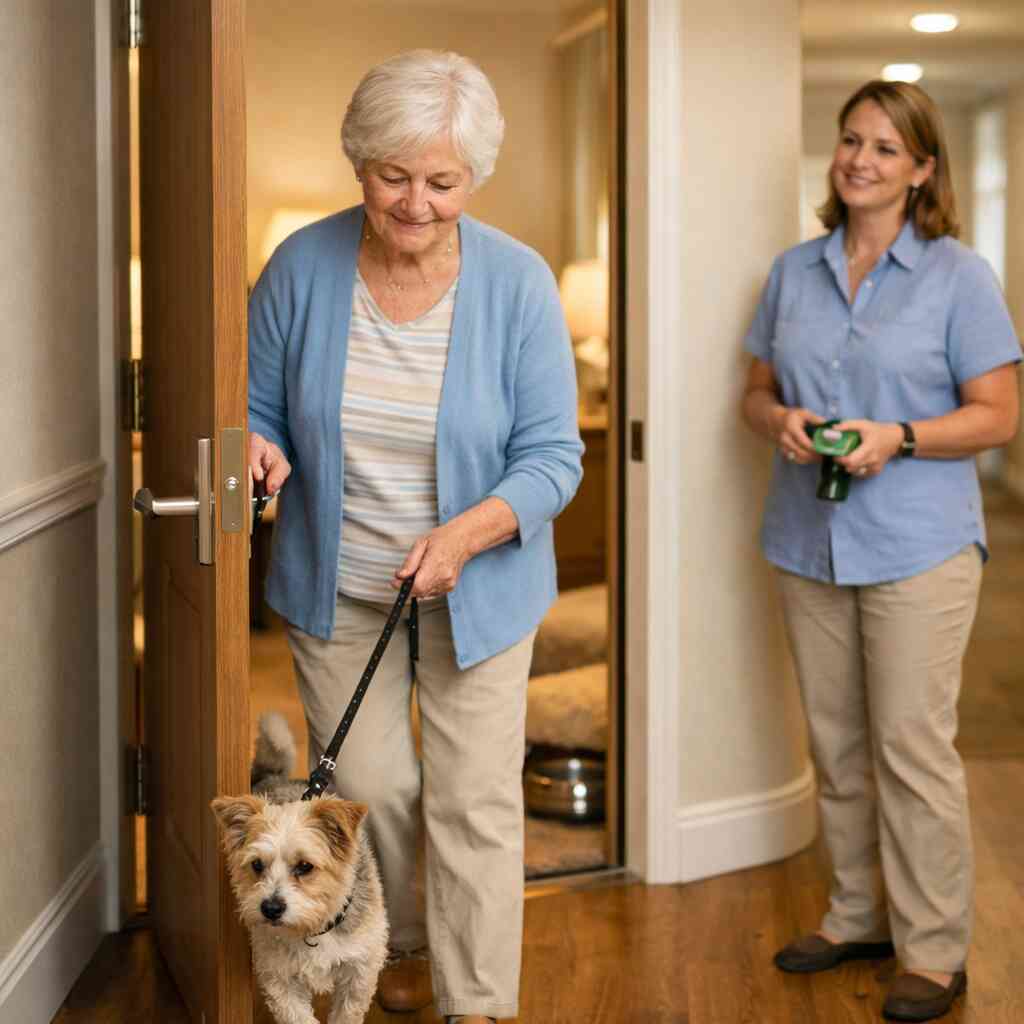
Here is a basic comparison:
OptionBest forPet considerationsIndependent livingMostly self-sufficient adultsOften pet friendly, but care is on the residentAssisted livingAdults needing daily supportMore help, but rules may be stricterBoard and care homesSmaller, more personal settingsPolicies vary widelyCCRCsPeople planning for future care changesPet rules can differ by level of careFamilies comparing assisted living versus nursing home should also ask about pet policy early. Nursing homes and skilled nursing facilities often have tighter rules because of medical and safety requirements. If your loved one needs more medical care, the difference between skilled nursing and assisted living matters before any pet decision.
How an assisted living locator can help families compare communities for seniors 55+ that welcome pets
A good assisted living locator near you can save hours of frustrating calls. You can search by city, care level, and pet policy instead of guessing which communities might work. That is especially helpful if you are scanning best senior living near me options in a hurry after a health scare. Senior Living Facilities can also help you compare communities in all 50 states, which matters when family members live in different places.
Location still matters. For example, senior living facilities in Florida may differ from senior living facilities in Texas in layout, climate, and licensing rules. If you are comparing Florida senior living communities, ask about outdoor pet areas and hurricane-related planning. If you are reviewing Texas nursing homes, ask how pet visitation or pet ownership is handled in the specific setting.
The right locator does not just list names. It helps you compare fit. That is the real value.
4) The hidden care advantage families miss when pets improve daily routine
Pets do not just comfort people. They can improve the shape of the day. That is the hidden advantage many families overlook at first. Once routines improve, other parts of care often become easier to manage.
How pet companionship can encourage walking, social interaction, and more consistent daily habits
A dog needs walking. A cat needs feeding on time. Those simple tasks can create movement, structure, and a reason to get dressed before noon. In senior wellness, that matters. It can support balance, mobility, and a more regular pace.
This is one reason communities sometimes pair pet support with broader senior wellness and pet therapy ideas, even when they do not offer formal therapy animals. A resident who walks to the courtyard with a small dog is more likely to bump into neighbors. A resident who talks about a cat often opens up about family too. That is social connection in assisted living in plain view.
Here is what we see in practice. People who were reluctant to join activities sometimes start by walking their pet near the entrance. That tiny routine becomes familiar. Familiar becomes comfortable. Comfortable becomes engaged.
Why pet-friendly senior housing can feel more like a true seniors living community than a temporary placement
The phrase senior living community means more when a pet can stay part of life. Without that, a move can feel temporary and clinical. With it, the apartment starts to feel like a home again. That emotional shift helps residents settle faster.
A true senior living facility should understand that pet-friendly living is not just a perk. It affects stress, routine, and social trust. It may also affect how long a resident remains comfortable in the setting. That is why many families ask about senior living options for pet lovers when they search for communities for seniors 55+ or communities for seniors 55+ with broader support.
If the pet is a dog, ask whether hallways, elevators, and outdoor spaces are practical. If the pet is a cat, ask about window safety and litter management. The best communities treat those questions as normal, not annoying. That is a good sign.
What to ask about pet accommodations in assisted living, support animals in senior communities, and pet care policies before touring
Before touring, ask about support animals in senior communities, resident responsibilities, and backup plans. Do not assume the answer from a brochure. Confirm the details in person. If you are comparing senior living advisor guidance, use a checklist and write down every answer.
Useful questions include:
- Are there breed or size restrictions?
- Is there a pet deposit or recurring pet fee?
- Who helps if the resident is hospitalized?
- Are visitors allowed to bring pets?
- What happens if care needs increase and the animal can no longer stay?
These are practical questions, not picky ones. The point is to avoid surprises later. If a community says yes to pets, ask how that policy works day to day. That is where the truth usually lives.
5) The money and logistics families should understand before saying yes
Money can make a tender decision feel harsh fast. Families want the right fit, but they also need a realistic plan. That tension is real, and it is one of the hardest parts of the search.
How pet-friendly assisted living can affect the search for affordable senior living without forcing a rushed decision
Pet-friendly assisted living does not always mean higher monthly stress, but it can add logistics. You may need to consider deposits, supplies, grooming, and veterinary transportation. That is why families exploring affordable senior living should include pet-related costs in the comparison. If you are looking at senior living for low-income seniors, every added rule matters.
Funding can also shape the search. Some families ask about Medicaid senior housing, long-term care insurance, or VA benefits for senior care when care needs are rising. If medical support is increasing, Medicare skilled nursing may become part of the conversation too. Just remember: funding rules and pet rules are separate. You need to verify both.
On the projects and placements families ask about most, the mistake we see is rushing because the pet policy feels rare. It is better to slow down for a week than regret the decision for a year.
What to compare when reviewing cost of assisted living, senior living costs by state, and any pet-related rules
Families often start with the cost of assisted living and then realize the details vary by state and by community. That is why senior living costs by state should be part of the search. The Genworth Cost of Care Survey remains a useful reference point for broad market comparison, but local quotes still matter more. CMS star ratings can help when reviewing regulated care settings, though they do not replace a tour.
If you are comparing a long-term care facility with assisted living, keep the care level clear. The needs of someone who requires a nursing home are very different from someone who can live in assisted living with support. That distinction matters for pet rules too. Some facilities allow pets in limited ways, while others do not.
Here is a simple comparison:
TopicAssisted livingNursing homeDaily helpHelp with routine tasksMore intensive medical supportPet rulesOften possible, but variesOften more restrictedFit for pet ownersSometimes a strong fitDepends on facility policyMain questionCan the pet stay safely?Can the facility accommodate the pet at all?### Which questions to ask assisted living staff about breed limits, size limits, deposits, and what happens if care needs change
This is the practical part. Before choosing a community, ask:
- Are there breed or weight limits?
- Is there a pet deposit, and is it refundable?
- Are there extra cleaning or maintenance rules?
- What if the resident’s mobility changes?
- What if the pet outlives the resident’s ability to care for it?
- Are service animals treated differently from pets?
- Is written approval required before move-in?
Those questions to ask assisted living should be part of every tour. If the answers are vague, keep looking. If you are comparing senior housing regulations in different states, remember that licensing can vary. That is one reason best senior living near me searches should always end with a real conversation.
If you are ready to compare pet-friendly options, start with one trusted directory and one honest call. Senior Living Facilities can help you review communities, confirm pet policies, and narrow the field without adding pressure. You do not have to solve everything today. Start with one tour request and one clear question about the pet.
Frequently Asked Questions
Question: What should families ask when comparing pet-friendly assisted living and assisted living plans for a loved one who wants to keep a pet?
Answer: Start with the practical questions that shape daily life. Ask whether the community truly offers pet-friendly assisted living, whether there are size, breed, or weight limits, and how pet care works if the resident needs more help later. It is also wise to ask about deposits, written approval, cleaning expectations, and whether support animals in senior communities are treated differently from pets. Senior Living Facilities can help you compare assisted living plans across assisted living locations and sort through the details before you tour. That is especially helpful when you are trying to decide between housing options for seniors, independent living communities, or a senior living facility that can better support both the person and the pet.
Question: How does Top 5 Benefits of Pet Friendly Assisted Living in 2026 help families understand the emotional benefits of senior living with pets?
Answer: The blog explains why senior living with pets can matter so much during a move. For many older adults, a pet is not just a companion. It is part of home, routine, and emotional stability. Keeping that bond in place can support emotional support for seniors, companionship in senior living, reduced loneliness for older adults, and a smoother transition into a senior living community. Senior Living Facilities helps families find communities for seniors 55+ that recognize those needs and understand that pet accommodations in assisted living are not a small detail. They can be the difference between resistance and peace of mind.
Question: Can Senior Living Facilities help compare housing options for seniors if my loved one is aging in place with pets but may need more support soon?
Answer: Yes. If aging in place with pets is becoming harder because of mobility, errands, or home upkeep, Senior Living Facilities can help you compare rental housing for seniors, senior apartment rentals, 55+ apartments, senior citizen housing, retirement homes, board and care homes, residential care facilities, and assisted living for pet owners. The platform is designed to help families compare care level, pet policy, and support needs in one place. If the situation is more complex, you can also look at continuing care retirement community (CCRC) options, memory care near me searches, or even nursing home and skilled nursing facilities depending on the level of care required. The goal is to help you choose a setting that feels workable, safe, and humane rather than rushed.
Question: What should I know about cost of assisted living, senior living costs by state, and pet-related rules before choosing a community?
Answer: It is smart to compare more than one factor at once. Families often start with the cost of assisted living, then review senior living costs by state, senior housing regulations, and any pet-related rules that could affect the move. A community may be affordable senior living overall, but still have pet deposits, cleaning rules, or other requirements that matter to your budget. Senior Living Facilities can help you compare communities and ask the right questions to ask assisted living staff before making a decision. If your family is also reviewing Medicaid senior housing, long-term care insurance, VA benefits for senior care, or Medicare skilled nursing, it helps to keep funding questions separate from pet policy questions so nothing gets overlooked.
Question: How can Senior Living Facilities help me compare assisted living vs nursing home options when a pet is part of the decision?
Answer: The difference between skilled nursing and assisted living matters a lot when pets are involved. Assisted living may be a better fit for someone who needs help with daily tasks but still wants the comfort of a pet nearby, while a long-term care facility or nursing home may have more restrictions because of medical needs and safety rules. Senior Living Facilities can help families compare assisted living vs nursing home choices, review assisted living plans, and understand whether a pet can stay safely in the setting being considered. If your loved one may eventually need what is memory care or one of the Alzheimer’s care facilities or dementia care homes, the team can help you think through the next step without losing sight of the pet’s role in daily comfort and companionship.
Question: How do I use Senior Living Facilities to find the best senior living near me, including Florida senior living, California assisted living, or Texas nursing homes with pet-friendly options?
Answer: Senior Living Facilities makes it easier to search by location, compare communities, and connect with the right fit. You can use the senior living directory or assisted living locator to explore best senior living near me options, including Florida senior living, California assisted living, and Texas nursing homes when appropriate. The platform covers all 50 states, so families can compare assisted living locations, independent living communities, and other senior living facilities without guessing which ones welcome pets. If you want a free senior living referral or help from a senior living advisor, the team can guide you through your options, including luxury senior retirement communities, senior living for low-income seniors, senior living with no waitlist, and other housing options for seniors. That way, the search stays focused on fit, comfort, and trust rather than pressure.
Senior Living Facilities Editorial Team
Expert contributor specializing in senior living care. Dedicated to providing families with clear, actionable advice.