
What Are the Best VA Benefits for Senior Care in 2026

When VA benefits can quietly change the entire senior care plan
If you are staring at bills and wondering how care will keep going, that knot in your stomach makes sense. Families often think VA help is only for hospital visits or disability pay. It can do more than that. The right benefit can change which senior living facilities fit your budget, your care needs, and your peace of mind. That is why many families start searching for best VA benefits for senior care in 2026 only after they feel the squeeze.
Why families miss the overlap between VA pension for seniors and long-term care costs
The biggest mistake is treating VA money like a small side benefit. In reality, VA pension for seniors can become part of the core funding plan when daily help is needed. Families also miss how it may intersect with long-term care insurance, Medicaid senior housing, and the cost of assisted living. Here is the part most people miss: the benefit is not always about the label on the care setting. It is about whether the veteran needs help with activities of daily living and senior care.
In the projects and referrals we see most often, families wait until the first crisis. Then they rush. That is when options shrink. A veteran who still fits independent living communities may need a different plan next month, especially if bathing, dressing, or medication reminders become daily issues. The quicker you map the care need, the easier it is to compare housing options for seniors, elderly housing, and senior citizen housing without panic.
The care settings where VA support can matter most, from assisted living to skilled nursing facilities
VA support can show up in several care settings. It may help in assisted living locations, board and care homes, residential care facilities, and some skilled nursing facilities. It may also matter in a long-term care facility or nursing home, depending on eligibility and medical need. Families often ask for the assisted living locator first, then discover the funding question comes later. That order usually adds stress.
A son in central Florida once told us his father could still enjoy lunch with friends, but showers had become a safety risk. The family thought they needed a nursing home. After reviewing care needs and benefits, they realized a nearby senior living facility with lower daily support might work better. The decision was not about giving up. It was about matching the level of help to the real need.
What a surviving spouse needs to know before money runs short
A conversation about surviving spouse VA benefits for senior care costs can be painful, because it usually starts with fear. Money can tighten fast after a spouse dies. That is why surviving spouses should look early at eligibility, household income, and which benefits may continue. The rules can be complex, and details matter. A widow or widower should also ask whether the surviving spouse may still qualify for help through pension-based support.
We hear this from families in places like Texas, California, and Virginia all the time. The veteran was careful with money. Then caregiving expenses, prescriptions, and a move to assisted living plans changed everything. The surviving spouse now needs a steadier plan, not a vague promise. That may mean checking senior living costs by state, comparing affordable senior living choices, and reviewing Medicaid and VA benefits coordination before savings get thin.
The hidden reason some veterans qualify for help but never use it
Here is the hidden reason: many veterans do not realize they qualify, and many families assume the paperwork is worse than it is. That combination keeps money on the table. Another barrier is pride. Some veterans do not want to say they need help with bathing, meals, or transfers. But the benefit system exists because those needs are real.
The VA also does not always explain how support can fit with retirement homes for veterans, senior apartment rentals, or communities for seniors 55+. Families searching for free senior living referral help often need someone to translate the options into plain English. A good senior living advisor can help you sort through the path without pushing a single care type too soon. The goal is simple: keep the veteran safe and keep the family from burning out.
The benefit mix that actually moves the needle for veterans and caregivers
The right mix is usually not one benefit. It is several working together. That is why families should compare VA benefits for senior care alongside Medicare, Medicaid, and any private coverage. A solid plan may combine help for daily care, respite for the caregiver, and coverage for higher-acuity settings. When the pieces fit, the household feels the pressure ease.
How the veterans aid and attendance benefit can support daily care needs without confusing the rest of the household budget
The veterans aid and attendance benefit is often the most useful starting point. It can help older veterans who need regular assistance with daily routines. That may include dressing, bathing, eating, or safe mobility. For many families, this benefit helps bridge the gap between living at home and moving to a care setting. It can also support veteran benefits for assisted living costs without replacing every other expense.
According to VA rules, the benefit is tied to care needs and eligibility factors, not a simple one-size-fits-all formula. Families should review the veteran’s income, assets, and medical support needs before making assumptions. If you are comparing assisted living vs nursing home for veterans, this benefit can shift the math. It may also reduce the pressure to sell a house too quickly or drain savings before help is approved. A careful review now can save a rushed decision later.
When VA home care benefits make more sense than a move into residential care
Sometimes the best fit is not a move. It is VA home care benefits and in-home care for veterans. That choice can work well when the veteran still knows the home, stays oriented, and only needs support for certain tasks. It can also help families who want to keep a spouse nearby and preserve familiar routines. For many, aging in place with VA benefits feels less disruptive.
In one suburban Atlanta case, a veteran needed meal help and bathing support, but not full-time supervision. The family wanted a larger move because they felt stuck. After reviewing the situation, they chose home care plus a safety plan. That decision bought time and reduced stress. It also made future options clearer, including senior living options on aging in place and later transitions if needs increased.
Why VA nursing home coverage and VA respite care benefits can be the pivot points for family caregivers
Some situations do call for stronger support. That is where VA nursing home coverage for veterans can matter. A veteran with advanced medical needs may need a skilled nursing facility rather than a lighter care setting. The difference between skilled nursing and assisted living is not subtle. One is medical and highly supervised. The other is more about daily help and supervision. Families should not let marketing blur that line.
At the same time, VA respite care benefits for family caregivers can be a lifeline. Caregivers burn out when they never get a break. A few days or longer of relief can protect your health and help you make better decisions. That is especially true when a spouse is exhausted, or when adult children are juggling jobs and children too. The plan does not fail because you need rest. It fails when you never ask for it.
Where Medicaid and VA benefits coordination becomes essential for affordable senior living
This is where many families need a spreadsheet, not guesswork. Medicaid and VA benefits coordination can make affordable senior living possible when savings are limited. But the programs do not always cover the same services in the same way. One may help with custodial care in certain settings. The other may support medical or pension-related needs. The interaction matters.
The national median monthly cost for assisted living has been tracked by the Genworth Cost of Care Survey, and that number keeps families awake at night. That is why people often search for senior living for low-income seniors, Medicaid assisted living, and senior living costs by state at the same time. If you are looking in Florida, California, or Texas, state rules can change what is available. A senior living directory that includes state pages can save time. For example, families comparing Florida senior living, California assisted living, or Texas nursing homes need state-specific detail, not broad promises.
What Medicare can and cannot do when the real need is senior care
Medicare and VA benefits for seniors are often confused, and that confusion leads to bad assumptions. Medicare can help with certain medical needs, especially short-term skilled care after a qualifying hospital stay. But it does not pay for most long-term custodial care. That is the part families often expect too much from. If Mom needs help getting dressed every day, Medicare usually will not cover that ongoing support. 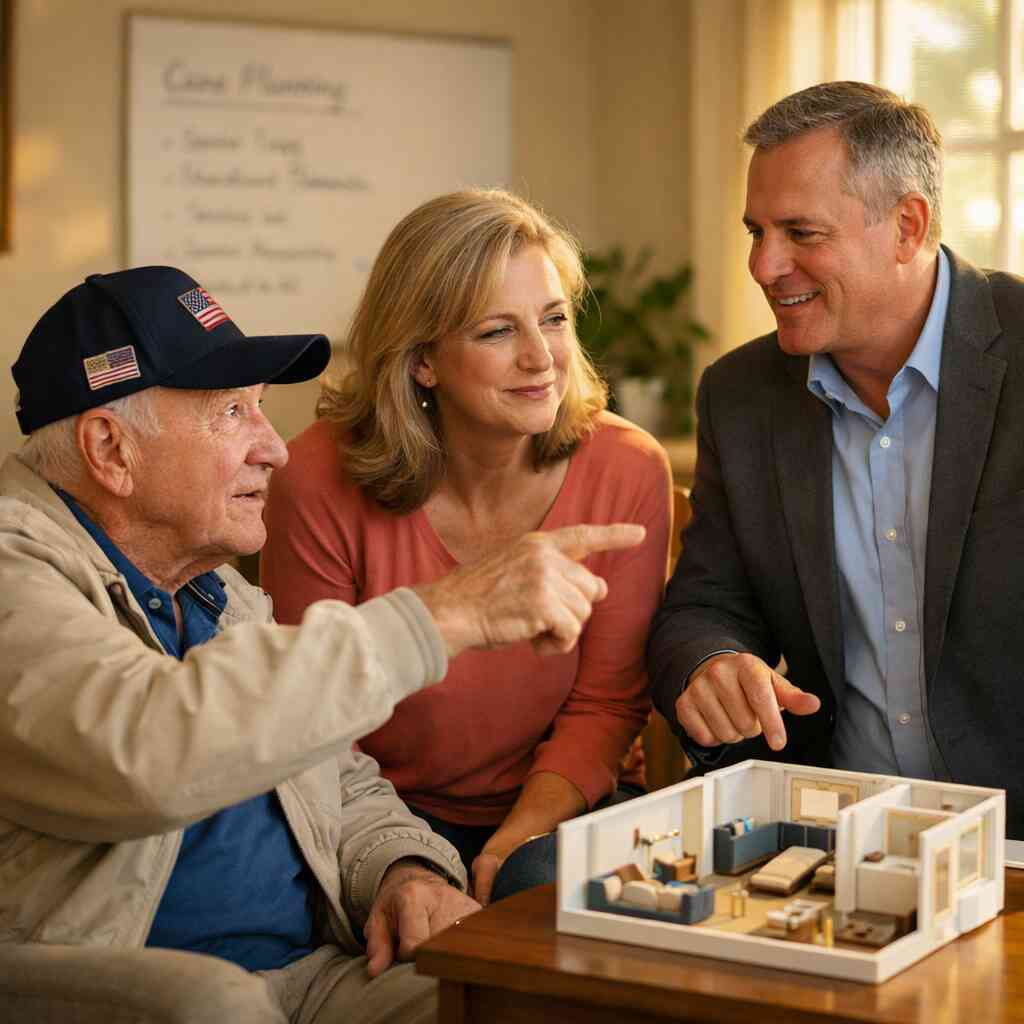
That is why Medicare skilled nursing coverage must be understood carefully. It can help after an acute event, but it is not a full long-term solution. If the real need is daily supervision, meals, and bathing support, you may still need VA home care benefits, private pay, Medicaid, or a move into a care community. A strong plan blends sources without overpromising what one program can do.
Choosing the right next move for a veteran before the paperwork and waitlists win
This is the point where families feel pressure from every direction. The paperwork is real. The waitlists are real. The emotions are real too. Still, you can make a clear decision if you compare the care level first and the marketing language second. That shift changes everything.
How to compare assisted living vs nursing home for veterans without getting lost in marketing language
Start with the care question, not the brochure. Assisted living vs nursing home for veterans comes down to how much medical oversight the person needs. Assisted living usually supports daily life. Nursing homes support more complex medical care. If the veteran still wants some independence, assisted living support for veterans may be enough. If the veteran needs round-the-clock clinical attention, skilled nursing facilities for veterans may be the safer path.
Care settingBest fitTypical focusIndependent living communitiesActive veterans who need little daily helpConvenience, social life, light supportAssisted livingHelp with daily tasksMeals, bathing support, supervisionMemory careDementia-related needsSafety, routines, secure environmentNursing homeHigher medical needs24-hour skilled careFamilies often search for the best senior living near me, then realize the real question is care level. That is why a trusted assisted living locator or senior living facility search should always be paired with a medical and functional review. Otherwise, the tour looks nice, but the fit is wrong.
The questions to ask about VA senior care before you tour any senior living facility
Before you tour, write down the questions. Use them. Do not rely on memory. The best questions to ask about VA senior care are simple and direct. They should help you understand benefit eligibility, staffing, and what the community can realistically provide. A good tour starts with facts, not glossy smiles.
Use this checklist:
- Does the veteran qualify for any VA-related funding support?
- How does the community coordinate with VA or Medicare?
- What level of daily help is included?
- How does the community handle falls, wandering, or medication support?
- Is there a clear path if care needs increase?
These questions matter for assisted living locations, board and care homes, and residential care facilities alike. If you are reviewing options in North Carolina or Virginia, state rules may shape staffing and licensing. Always verify licensing through the state agency, and check CMS star ratings where they apply. That protects you from making a choice based only on marketing.
How to think about memory care near me for veterans when dementia changes the rules
Dementia changes the decision. Fast. If you are searching for memory care near me for veterans, you are probably already seeing wandering, confusion, or personality shifts. The question is no longer just where the veteran wants to live. It is where the veteran can stay safe and calm. A setting designed for memory loss may reduce stress for everyone.
One family we spoke with near Tampa kept hoping their father could stay in regular assisted living. He could not safely manage the hallways anymore. The move to specialized care did not erase the grief, but it did reduce the daily emergencies. That is why memory care options for veterans near me often become the right search once dementia reaches a certain point. If you are comparing what is memory care versus assisted living, look first at supervision, security, and staff training.
When aging in place with VA benefits works and when it becomes too hard to sustain
Aging in place with VA benefits can be a strong choice when the home is safe, the care needs are modest, and family support is steady. It works best when the veteran can still manage many routines and only needs targeted help. But there is a limit. If falls increase, memory worsens, or caregiver strain becomes constant, the home may stop being the safest place. That is not failure. It is data.
A smart plan weighs the home against elderly veteran housing options and future needs. That may mean comparing 55+ apartments, independent living communities for veterans, and later continuing care retirement community options for veterans. A continuing care retirement community (CCRC) can make sense when a family wants one campus with changing levels of care. The best decision is the one that fits today and leaves room for tomorrow.
What a smart senior living advisor or senior placement services partner should help you verify
A good senior living advisor or senior placement services partner should do more than hand you a list. They should help verify care level, licensing, and fit. They should also explain whether a free senior living referral is truly unbiased. Ask how they screen communities, what they know about staffing, and whether they can help with senior housing regulations. You deserve clarity.
That support matters if you are comparing senior living facilities for veterans, retirement homes, or housing for seniors 55+. It also matters if you want pet-friendly assisted living, luxury senior retirement communities, or senior living with no waitlist. A strong advisor will not promise outcomes. They will help you verify the facts and avoid wasted tours. That alone can save days of frustration.
Which decision paths fit elderly veteran housing options from independent living communities to continuing care retirement community choices
Every veteran’s path looks different. Some start in independent living communities because they want freedom and fewer chores. Others move from home care to assisted living, then later to skilled nursing. Some benefit from a continuing care retirement community because it can absorb changes over time. Others need senior apartment rentals or rental housing for seniors with accessible features.
If you are comparing retirement community housing for older adults or senior citizen housing for veterans, keep the care trajectory in view. Not just the rent. Not just the meal plan. The real issue is how much help the veteran may need six months from now. A thoughtful plan can prevent a second move, which is often the hardest move of all.
What to do next if the best fit is a free senior living referral or a senior living directory search
If you are still unsure, use a senior living directory search and a free senior living referral together. That combination helps you see options without locking into one path too soon. Search by state, compare care levels, then verify benefit fit. If you are in Florida, California, Texas, Virginia, or North Carolina, start with location-specific pages and then narrow by service type. That is much faster than calling random places one by one.
If you want a practical next move today, gather three things: the veteran’s care needs, household finances, and any VA paperwork you already have. Then compare two or three communities and one home-care option. You do not have to solve every part tonight. Start with one call, one comparison, and one honest conversation with a trusted senior living advisor or the team at Senior Living Facilities.
Frequently Asked Questions
Question: What are the best VA benefits for senior care in 2026, and how can Senior Living Facilities help families compare VA benefits for senior care with housing options for seniors?
Answer: The most useful VA benefits for senior care in 2026 often include the veterans aid and attendance benefit, VA pension for seniors, VA home care benefits, VA assisted living support, VA nursing home coverage, and VA respite care benefits. Which benefit matters most depends on the veteran’s care needs, income, assets, and living situation. For example, some veterans may be better served by in-home care for veterans and aging in place with VA benefits, while others may need a move into assisted living locations, skilled nursing facilities, or memory care near me for veterans. Senior Living Facilities helps families compare these options in one place so they can review care level, location, and community fit before making a decision. We make it easier to search, compare, and connect with senior living facilities that may work for veterans, including independent living communities, board and care homes, residential care facilities, and long-term care facility choices. That helps families move from uncertainty to a practical plan without having to sort through everything alone.
Question: How does the veterans aid and attendance benefit work for assisted living plans and veteran benefits for assisted living costs?
Answer: The veterans aid and attendance benefit is often one of the most important resources for older veterans who need help with activities of daily living such as bathing, dressing, meals, or mobility support. It may help offset part of the cost of assisted living, which is why many families reviewing assisted living plans or veteran benefits for assisted living costs start here. The benefit does not replace every expense, but it can be a meaningful part of the funding strategy when paired with other resources like long-term care insurance, Medicaid senior housing, or family support. Senior Living Facilities can help you compare assisted living locations, senior apartment rentals, and communities for seniors 55+ so you can see which setting matches the veteran’s needs and household budget. Because we serve families in all 50 states, we can also help you search for state-specific options like Florida senior living, California assisted living, or Texas nursing homes while keeping the focus on the care level that truly fits.
Question: What should families know about assisted living vs nursing home for veterans when comparing skilled nursing facilities and retirement homes for veterans?
Answer: The biggest difference between skilled nursing and assisted living is the level of medical oversight. Assisted living is usually best for veterans who need regular help with daily routines but do not require round-the-clock clinical care. Skilled nursing facilities for veterans are better suited for people with more complex medical needs or ongoing supervision. Families often begin with a search for the best senior living near me and then realize they need help understanding how the care level changes from retirement homes for veterans to nursing home settings. Senior Living Facilities helps make that comparison clearer by guiding families through senior living directory options, assisted living locator searches, and senior placement services if needed. We also encourage families to check CMS star ratings where available and verify licensing and senior housing regulations before choosing a community. That way, the decision is based on care needs, not just marketing language.
Question: Can Senior Living Facilities help veterans find affordable senior living, memory care near me for veterans, or senior living for low-income veterans with Medicaid and VA benefits coordination?
Answer: Yes. Many families need a plan that combines Medicaid and VA benefits coordination, especially when they are looking for affordable senior living or senior living for low-income veterans. The right path may include Medicaid senior housing, veteran long-term care assistance, Medicare and VA benefits for seniors, or a blend of benefits and private payment. If dementia is part of the picture, families may also need help finding memory care near me for veterans or veteran benefits for memory care. Senior Living Facilities can help compare housing options for seniors across care levels, including Alzheimer’s care facilities, dementia care homes, residential care facilities, and continuing care retirement community (CCRC) options. We also help families think through whether aging in place is still realistic or whether a move into a more supportive senior living community is safer. Our role is to make the search more manageable so families can focus on fit, safety, and long-term stability.
Question: How do I apply for VA aid and attendance, and what questions should I ask about VA senior care before choosing a senior living facility?
Answer: How to apply for VA aid and attendance can feel overwhelming at first, but the process becomes easier when you start with the veteran’s care needs, income, and assets. Families should gather relevant VA paperwork, medical information, and household financial details before reviewing eligibility. It is also smart to ask questions to ask about VA senior care before touring any senior living facility. Those questions should include whether the veteran may qualify for any VA-related funding support, how the community coordinates with Medicare or VA benefits, what daily help is included, and how future care changes are handled. Senior Living Facilities can help families compare assisted living locations, board and care homes, independent living communities for veterans, and even pet-friendly assisted living or senior living with no waitlist when available. We are here to support a careful, informed search so families can choose with confidence rather than pressure.
Question: What should surviving spouses and caregivers know about surviving spouse VA benefits, respite care, and aging in place with VA benefits?
Answer: Surviving spouse VA benefits can be an important source of support when a household changes after the veteran passes away, especially if money becomes tighter and daily care needs remain high. Families should review eligibility early because the rules can be detailed and timing matters. In many cases, VA respite care benefits and veteran caregiver support can also help protect the health of family caregivers who are exhausted from daily responsibilities. For some households, aging in place with VA benefits remains the right choice, especially if the home is safe and the veteran only needs limited support. In other cases, a move to senior citizen housing for veterans, elderly housing for military families, or assisted living support for veterans may be the better path. Senior Living Facilities helps families compare these options, including rental housing for seniors, 55+ apartments, and continuing care retirement community for veterans choices, so they can plan for both current needs and future changes.
Senior Living Facilities Editorial Team
Expert contributor specializing in senior living care. Dedicated to providing families with clear, actionable advice.