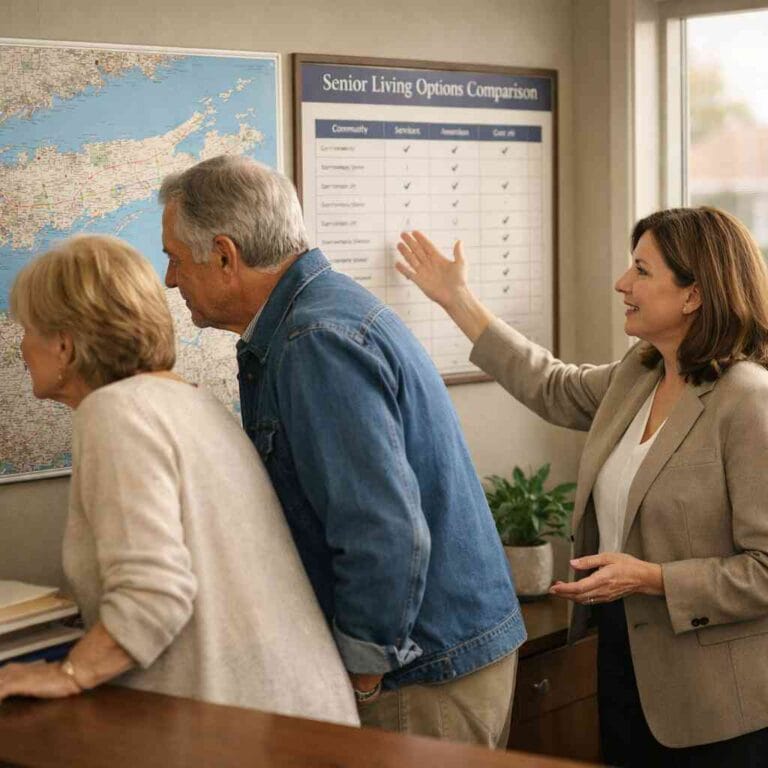
Top 7 Questions About Memory Care Near Me in 2026

1) What memory care really is when forgetfulness starts changing daily life
If you are searching for memory care near me, you may already feel the ground shifting under you. Forgetfulness is no longer a small annoyance. It is changing meals, medication, bathing, or safety at home. That is hard to watch, and it is even harder to name. Families often wait too long because they hope the bad week will pass. Usually, it does not.
How memory care near me differs from assisted living and independent living communities
Memory care is a focused service for people living with dementia, including Alzheimer’s disease. It is designed around supervision, structure, and safety. Assisted living helps with daily tasks, but it is usually broader and less specialized. Independent living is different again because it supports active seniors who do not need regular hands-on help. A senior living facility can offer several levels, but not every seniors living community is prepared for memory loss. That difference matters.
Here is the part most families miss. A person can look “fine” during a short tour and still need memory support every day. In our experience, the needs show up in repetition, wandering, fear at night, and missed medications. Those are not small issues. They are the reasons families begin asking what is memory care and whether a move is safer. If you are comparing housing options for seniors, you need more than pretty hallways.
The signs that point to dementia care homes instead of general senior living facilities
A move toward dementia care homes or Alzheimer’s care facilities often starts with a pattern, not one dramatic event. You may notice burned pans, strange bills, or a loved one leaving the house at odd hours. You may also see anger, confusion, or a growing fear of being alone. These are common warning signs that general senior living facilities may not be enough. A retirement home or elderly housing setting can feel comfortable, but comfort is not the same as dementia support.
One daughter called after her father wandered from a gated courtyard near Clearwater. He was not injured. Still, the family realized the issue was not the courtyard fence. It was that he no longer understood why he was leaving. That is the moment many families move from searching senior apartment rentals to searching residential care facilities or board and care homes.
What families usually mean when they ask what is memory care and what it actually includes
When people ask what is memory care, they usually mean, “What are we really paying for?” The answer is simple, but important. Memory care usually includes a structured daily routine, staff presence, cueing, meal support, and a safer environment. It may also include help with dressing, bathing, and transitions between activities. Some communities build specialized neighborhoods inside larger continuing care retirement community (CCRC) campuses. Others are smaller, stand-alone long-term care facility settings.
Memory care is not just a locked door. That old image is outdated and unhelpful. The better question is whether the space reduces confusion and supports dignity. Look for clear sight lines, calm noise levels, and staff who understand dementia behaviors. If you are comparing rental housing for seniors, 55+ apartments, or communities for seniors 55+, remember that those are usually not appropriate for dementia care. They are age-restricted, not care-specific.
2) The questions that tell you whether a community is built for dementia, not just decorated for it
A glossy lobby can hide a weak care model. Families feel this fast, even if they cannot yet explain it. A pretty dining room does not tell you how staff respond at 2 a.m. or how they prevent elopement. That is why the best questions to ask memory care communities go far beyond décor. You are looking for a place that understands behavior, not just wallpaper.
How to spot real memory support in a senior living facility without getting distracted by nice lobby features
A true senior living facility built for dementia support will show its structure in small ways. Hallways should be easy to follow. Doors should be clearly marked. Staff should redirect calmly, not rush or correct harshly. The meal schedule should be predictable. The best communities for memory care for dementia treat routine like medicine.
We have seen families choose a place because the lobby looked like a boutique hotel. Two weeks later, they called because Dad kept trying to exit through the side door. The building was lovely. The care model was not built for his needs. That is why the right assisted living locations and memory communities are often less flashy than people expect. Function matters more than finish.
Which questions to ask memory care communities about routines, supervision, and wandering precautions
Before you tour, write down your concerns. Then ask direct questions. You do not need polished sales language. You need facts. Strong questions to ask assisted living teams and memory teams include:
- How do you handle wandering risk?
- What does overnight supervision look like?
- How do staff redirect agitation?
- How often do residents follow the same daily routine?
- What training do staff receive for dementia care?
- How do you communicate changes to families?
If you want a deeper guide, use this questions to ask memory care communities before touring resource as a starting point. Good communities answer plainly. Weak ones answer broadly. Ask again if the answer sounds scripted. You are choosing care, not a brochure.
Why board and care homes, residential care facilities, and Alzheimer’s care facilities can feel similar but function very differently
A board and care home is usually smaller and more residential. A residential care facility may offer more oversight, but state rules vary widely. An Alzheimer’s care facility usually means the community intentionally serves residents with memory loss. Those can all sound similar during a phone call. In practice, they can differ a lot in staffing, layout, and daily structure.
This is where families get tripped up in places like Phoenix and Tampa. A small home may feel warm, but if a resident needs repeated redirection, the staffing pattern may not fit. A larger senior citizen housing campus may advertise memory features, yet still function more like general housing. Ask how the community handles behaviors, not just activities. That one question reveals a lot.
3) When assisted living is enough and when memory care is the safer fit
Many families start with assisted living plans because the person still seems independent. That is reasonable. It is also why this decision gets delayed. Your loved one may dress well, carry a conversation, and insist nothing is wrong. Meanwhile, bills pile up, meals are missed, and medications go untouched. The gap between appearance and safety is where families struggle most.
The difference between assisted living vs memory care for a parent who still wants independence
The phrase assisted living vs memory care often sounds like a simple comparison, but it is really about supervision and predictability. Assisted living can help with bathing, meals, and medication reminders. Memory care adds more structure, tighter monitoring, and staff trained for confusion and wandering. If your parent still handles routines and asks for help when needed, assisted living may be enough for now. If they become lost in familiar places, memory care may be safer.
The difference between assisted living and skilled nursing article can help you separate those differences more clearly. We often tell families to watch the hardest hour of the day. For many people, that is late afternoon or evening. If that is when confusion spikes, the placement decision becomes clearer.
When a senior living facility should be ruled out in favor of a long-term care facility or nursing home
A long-term care facility or nursing home becomes more appropriate when medical needs rise beyond daily support. If your loved one needs frequent clinical monitoring, complex wound care, or rehabilitation, memory care may not be enough. The difference between skilled nursing and assisted living matters here because the two settings are not interchangeable. Skilled nursing facilities provide more intensive medical oversight. Memory care focuses on supervision, routine, and dementia support.
Think of it this way. If the main risk is confusion, memory care may fit. If the main risk is medical instability, a skilled nursing facility may be better. Some families also ask about Medicare skilled nursing coverage, which usually relates to qualifying medical needs after a hospital stay. That is a separate conversation from dementia placement. The right setting depends on the dominant need.
How to compare assisted living plans against memory care for dementia without guessing
Do not compare by name alone. Compare by support level. A good side-by-side approach helps. If you are looking at assisted living locations, ask what the staff actually does at each level. Then compare that to what memory care provides every day.
Care AreaAssisted LivingMemory CareDaily structureHelpful, but flexibleHighly structuredSupervisionModerateHigher, especially for wanderingDementia trainingVariesMore likely to be specializedMedical careLimitedLimited, but more supervised for dementiaBest fitMild to moderate support needsCognitive decline with safety concernsIf you want a fuller overview, review the difference between skilled nursing and assisted living. That comparison keeps many families from choosing the wrong level of care too quickly.
4) The money conversation families avoid until it gets urgent
Money is often the most emotional part of this process. Families hesitate because they do not want to sound cold. But avoiding the question makes it harder. The real issue is not just cost. It is value, timing, and what kind of help your loved one truly needs. The cost of assisted living and memory care can shape the whole plan.
What really drives the cost of assisted living and memory care without making false price promises
Several factors affect price. Care level matters. So do staffing patterns, apartment size, and whether the community is private-pay or accepts certain programs. A luxury senior retirement community will usually cost more than modest affordable senior living options. Special services, higher supervision, and dementia training also influence the total.
The cost of assisted living and memory care in 2026 is not one fixed number. That is why careful comparison matters more than guessing. The cost of assisted living and memory care in 2026 guide is a useful place to start. If you are helping a parent with limited income, ask about senior living for low-income seniors, shared rooms, or lower-cost regional options. Some families also need free senior living referral help to compare choices faster.
How senior living costs by state can change the decision in places like Florida, California, and Texas
Location changes everything. Senior living costs by state can vary sharply, especially in Florida, California, and Texas. In South Florida, demand can be intense, and senior living with no waitlist may be hard to find. In California, local licensing and labor conditions can affect availability. In Texas, larger metro areas may offer many choices, but distances can stretch family visits. If you are comparing regions, use state pages like memory care and assisted living locations in Florida, memory care and assisted living locations in California, and memory care and assisted living locations in Texas. That kind of search helps you compare realistic assisted living locations instead of chasing the wrong market. The Genworth Cost of Care Survey remains a useful benchmark for national context, even though local numbers change. ### Where Medicaid senior housing, long-term care insurance, and VA benefits for senior care may help cover care 
Funding options can help, but they are never automatic. Medicaid senior housing rules differ by state, and benefits may depend on income, assets, and care needs. Long-term care insurance can help if the policy is still active and the policy terms fit the situation. VA benefits for senior care may help some veterans and surviving spouses, especially through Aid and Attendance rules. These programs can be meaningful, but they require careful review.
If you need a place to start, review senior living costs by state in 2026 and then check funding pages by state and benefit type. A senior living advisor can also help you sort private pay from public support. That said, no one should promise a benefit before the paperwork is reviewed. Real help begins with real documents.
5) The checklist that separates a good tour from an expensive mistake
A good tour feels calm, not rushed. A bad tour feels polished but slippery. Families often leave with a stack of brochures and no clear answer. That is frustrating, especially when you are already tired. A structured checklist keeps the visit honest.
Questions to ask assisted living and memory care teams about staffing, training, and supervision
Start with staffing. Ask who is on duty during the day and overnight. Ask how they train new staff for dementia behaviors. Ask how they handle falls, bathing resistance, or sudden confusion. These are the kinds of questions to ask assisted living and memory care teams that reveal how the building actually works.
Use questions to ask assisted living and memory care teams as a tour guide. You should also ask whether families get called for changes in behavior, not just emergencies. In memory support, early communication matters. It prevents small issues from growing into crises.
How to read CMS star ratings, state licensing details, and senior housing regulations without getting overwhelmed
CMS star ratings help you compare some skilled settings, but they do not tell the whole story for every senior community. Use them as one data point, not the final word. State licensing records matter too, because senior housing regulations are enforced at the state level. In California, for example, the regulatory picture is different from Florida or Texas. That is why local review matters.
If you want to go deeper, study how to review CMS star ratings for senior care. Then verify the community’s current state license and complaint history. A clean lobby cannot replace a strong compliance record. This is one place where careful checking protects your family.
What to look for in senior living with no waitlist, pet-friendly assisted living, and affordable senior living options
Availability matters more than many families expect. A loved one may need help now, not months from now. So senior living with no waitlist can become a practical priority. Still, do not accept the first opening blindly. Check whether the room type, staffing, and care level still fit.
If a pet matters, ask about pet-friendly assisted living rules before touring. Some communities allow small pets with limits; others do not. If budget is tight, focus on affordable senior living and compare care value, not just monthly fees. A reasonable room in the wrong setting is still the wrong choice. The right community balances timing, support, and safety.
6) Why the location around the community matters more than most families expect
Families often fixate on the building itself. That makes sense. But the area around the community affects stress, visits, and access to care. A good location can reduce missed appointments and make family support easier. A poor location can add friction every single week.
How assisted living locations and memory care near me searches should account for hospital access, family visits, and local traffic
When you search memory care near me, do not stop at the nearest pin on the map. Check whether the community is close to hospitals, specialists, and the family member who visits most. Traffic matters too. In Miami, Dallas, or Orange County, a ten-mile drive can feel much longer during rush hour. If frequent visits are important, that should influence your choice.
The best assisted living locations are convenient without feeling chaotic. A calmer side street may help a resident with dementia stay settled. A busy boulevard may create more agitation. Here is what almost no online guide mentions: the commute can affect family involvement more than the brochure ever will. If visiting becomes exhausting, visits happen less often.
Why state-by-state rules can change what you see in a senior living directory or assisted living locator
A senior living directory or assisted living locator can help narrow the field, but it cannot replace state-specific review. Licensing rules vary. Staffing expectations vary. Even terminology can vary. What one state labels a residential care setting, another may describe differently. That can make searches confusing fast.
If you are looking at senior housing regulations in California, for example, you will see different oversight details than you might in Florida. That is why a strong directory should let you compare more than name and city. It should help you compare care type, staffing level, and policy fit. A good senior living facility search tool should feel like a filter, not a sales funnel.
When communities for seniors 55+ or 55+ apartments are the wrong match for someone needing dementia support
A communities for seniors 55+ model is built for age eligibility, not memory care. The same is true for many 55+ apartments and independent rental communities. They can be excellent for active adults. They are usually not enough for someone with dementia. Safety, not age, becomes the deciding factor.
Families sometimes start here because it feels simpler and less medical. That is understandable. But if your loved one needs cueing, supervision, or wandering precautions, age-restricted housing is not the right tool. In places like Sarasota, Los Angeles, and San Antonio, those options are common. That does not make them suitable for dementia support.
7) The care path that protects dignity when memory loss keeps moving forward
Memory loss often changes in steps. A person may need one level of help today and more tomorrow. That is why the safest care plan is flexible. It should protect dignity, reduce confusion, and leave room for change. Families do best when they plan for the next stage before a crisis forces the decision.
When respite care can buy time while the family decides on the next move
Respite care can help when you need breathing room. It gives families time to test a setting, recover from burnout, or coordinate the next placement. For a spouse who is exhausted, that break can matter. For adult children, it can create space to compare options without panic. Short-term care is not a failure. It is often smart timing.
A free senior living referral service can help you identify respite options quickly. That can be especially useful after a hospitalization or a rough month at home. In our experience, families make clearer choices after they see how a person responds to structure. Some even realize the need for a more permanent move. That clarity is valuable.
How to compare skilled nursing facilities, Medicare skilled nursing, and continuing care retirement community options
A skilled nursing facility is a medical setting with more intensive care. A nursing home is often used as a broad term for that level of support. Medicare skilled nursing can help in limited circumstances after a qualifying hospital stay. A continuing care retirement community (CCRC) may offer multiple care levels on one campus, which can help if needs are likely to grow. Each option serves a different purpose.
If your loved one still needs mostly supervision and dementia support, memory care may be the better match. If medical complexity is growing fast, skilled nursing may be more appropriate. A nursing home care compared with memory care reference can help frame the distinction, but your real decision should rest on current needs. The goal is not the fanciest option. It is the safest and most respectful one.
What a senior living advisor or free senior living referral should help you confirm before you choose
A good senior living advisor should help you verify the essentials. They should confirm care level, availability, funding fit, and licensing. They should also help you compare best senior living near me options without pressure. If they rush you, that is a warning sign. Good guidance feels steady.
Before you commit, confirm these items:
- Current care level and staffing model
- Memory support training
- State license status
- Move-in timeline
- Family communication process
- Funding options, including Medicaid senior housing or long-term care insurance
- Whether the setting truly fits dementia needs
Senior Living Facilities can help you compare those choices across all 50 states, so you can search, compare, and connect with more confidence. Start with one call, one search, or one tour request today. You do not have to solve everything at once, and you do not have to do it without support.
Frequently Asked Questions
Question: What is memory care, and how do I know when memory care near me is a better fit than assisted living?
Answer: Memory care is a specialized type of senior living designed for people living with dementia, including Alzheimer’s disease. It usually provides more structure, supervision, and dementia-focused support than general assisted living. If your loved one is missing medications, wandering, becoming confused in familiar places, or needing repeated cueing for meals and daily routines, it may be time to compare memory care near me options more closely. Senior Living Facilities helps families understand the difference between assisted living vs memory care so they can choose a setting that supports safety, dignity, and daily comfort. We make it easier to compare assisted living plans, senior living facility options, and memory care communities across all 50 states.
Question: What questions should I ask memory care communities before choosing one for my parent?
Answer: The best questions to ask memory care communities focus on daily support, supervision, staff training, and communication with families. Ask how wandering risk is managed, what overnight supervision looks like, how staff respond to agitation, and how the community keeps routines predictable. You should also ask about state licensing, how the community handles changes in condition, and whether the setting truly supports memory care for dementia. Senior Living Facilities can help you compare communities in a way that feels clear and practical, rather than overwhelming. Our senior living advisor approach is built to help families ask better questions and compare the right details before touring.
Question: How can Senior Living Facilities help me compare assisted living locations, Alzheimer’s care facilities, and dementia care homes near me?
Answer: Senior Living Facilities is designed to help you search, compare, and connect with senior living options that fit your needs. Whether you are looking at assisted living locations, Alzheimer’s care facilities, dementia care homes, board and care homes, or a continuing care retirement community (CCRC), our platform helps you narrow the choices by care level, location, and community type. That matters because not every seniors living community is built for memory support, and not every retirement home is the right match for someone with dementia. Our goal is to help families find the best senior living near me options without having to sort through every listing alone. We also help families compare senior living facilities across different states, including Florida senior living, California assisted living, and Texas nursing homes.
Question: How do I compare the cost of assisted living, senior living costs by state, and possible funding help like Medicaid senior housing or VA benefits for senior care?
Answer: Cost is a major part of the decision, and it is wise to compare options carefully. The cost of assisted living and memory care can vary based on care level, location, staffing, and the type of community you choose. Senior living costs by state can also differ widely, which is why families often use a senior living directory or an assisted living locator to compare regions before making a decision. If affordability is a concern, you may want to look into senior living for low-income seniors, Medicaid senior housing, long-term care insurance, or VA benefits for senior care if the person qualifies. Senior Living Facilities helps families understand these choices without making false promises about pricing or benefits. We can also connect you with a free senior living referral so you can compare realistic options more efficiently.
Question: Can Senior Living Facilities help me find affordable senior living, pet-friendly assisted living, or senior living with no waitlist?
Answer: Yes. Many families need more than one priority at the same time, such as affordable senior living, pet-friendly assisted living, or senior living with no waitlist. That is why our platform is built to help you search for communities based on both care needs and personal preferences. If your loved one is trying to age in place less safely at home, or if they need a quicker move than a typical waitlist allows, we can help you compare housing options for seniors more efficiently. We also understand that some families are looking for senior apartment rentals or 55+ apartments at first, only to realize that more supportive residential care facilities or memory care may be a better fit. Senior Living Facilities helps you sort through those possibilities with compassion and clarity.
Question: How do I know whether I need a nursing home, skilled nursing facilities, or a memory care community instead?
Answer: This usually comes down to the level of medical support needed. If the main concern is confusion, wandering, or help with daily routines, memory care may be the better fit. If your loved one needs more intensive medical oversight, rehabilitation, wound care, or frequent clinical monitoring, skilled nursing facilities or a nursing home may be more appropriate. Understanding the difference between skilled nursing and assisted living is important, especially when families are comparing assisted living vs nursing home choices. Senior Living Facilities helps you evaluate those differences so you can choose the right path without guessing. We can also help you review CMS star ratings, senior housing regulations, and how to choose a nursing home if that level of care becomes necessary.
Admin
Expert contributor specializing in senior living care. Dedicated to providing families with clear, actionable advice.