What Does Wellness Tech Mean at Senior Living Facilities
Beyond Call Buttons: The Emergence of Wellness Tech in Senior Living Facilities
From reactive care to predictive wellbeing in senior living near me
Wellness technology has pushed senior housing far beyond basic emergency pull cords. Today’s platforms weave sensors, analytics, and cloud software into an anticipatory safety net that prevents problems before they escalate. Families exploring senior living near me increasingly expect predictive dashboards that alert nurses when hydration dips or sleep patterns change. Therefore, forward-thinking operators leverage artificial intelligence to translate routine vitals into early warnings, allowing staff to intervene quickly and cut hospital transfers. For an excellent overview of wellness technology in senior living, visit our resource hub-****.
Consequently, the conversation has shifted from cost containment to holistic quality of life. Predictive analytics enrich resident autonomy by flagging risks without constant human oversight, which respects privacy while assuring safety. The same data also empowers clinical teams to personalize exercise, nutrition, and medication schedules. Moreover, transparent reporting boosts family confidence because they can track meaningful health trends remotely. Ultimately, proactive digital care bridges the gap between independence and security, redefining expectations for modern senior living communities.
Defining wellness technology for seniors across communities for seniors 55 plus
Industry experts describe wellness technology as an ecosystem of interconnected tools-wearable safety sensors, AI-powered fall detection systems, electronic medication management, and seamless Wi-Fi infrastructure. Within communities for seniors 55+, these solutions converge to address physical, cognitive, and social well-being rather than isolated conditions. By integrating remote vital sign monitoring platforms and digital therapeutics for older adults, providers cultivate environments where seniors thrive, not merely survive. Clear definitions help residents understand the tangible benefits of investing in tech-enabled residences.
At the same time, caregivers must demystify jargon so prospective residents appreciate everyday advantages. For example, voice-activated caregiving tools let a resident request housekeeping without hunting for a phone, while connected medical alert systems dispatch help automatically during emergencies. In addition, activities of daily living support metrics inform staff which mobility exercises deliver the best outcomes, strengthening individualized care plans. Families can compare offerings through search tools for senior living options near you, aligning personal health goals with the right technology stack-****.
How smart health devices unlock personalized lifestyles in senior apartment rentals
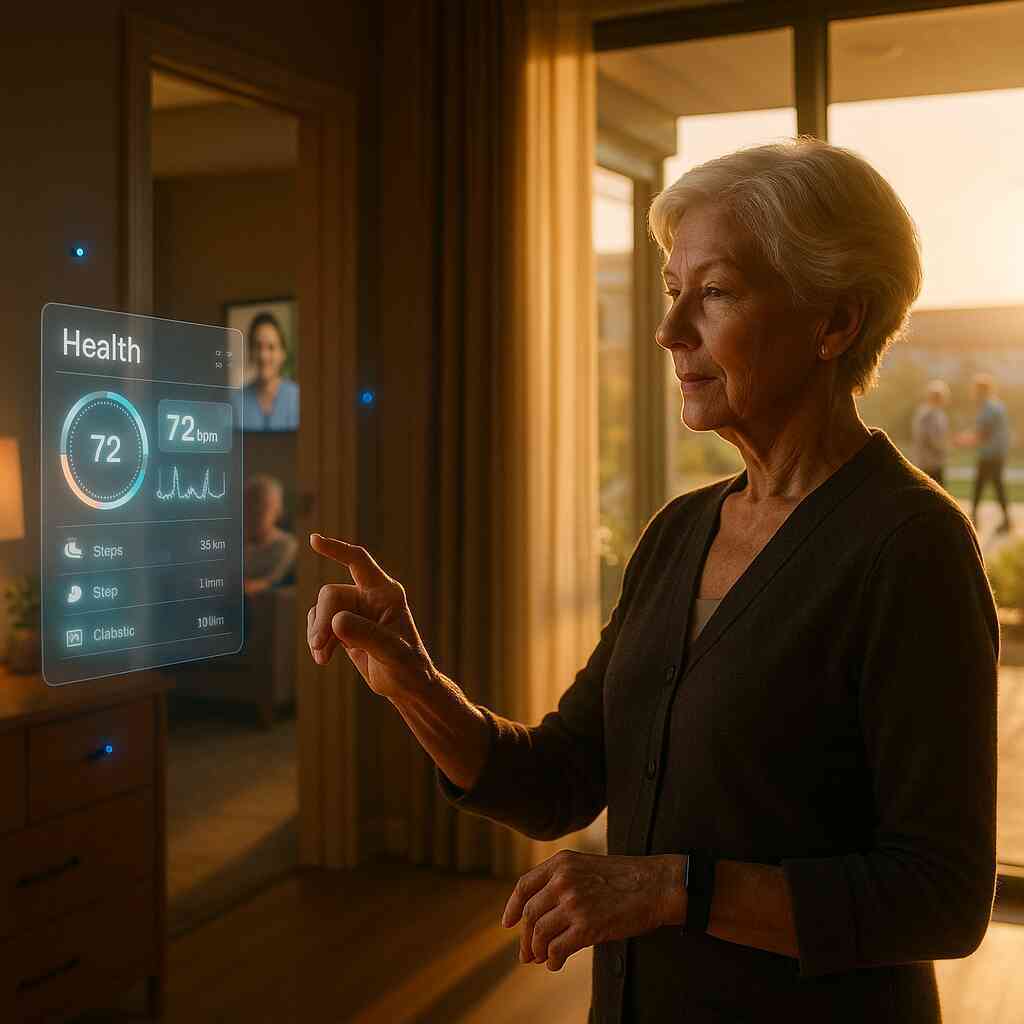
Smart health devices in senior apartment rentals transform daily routines into actionable insights. Wearables track heart rate variability, sleep cycles, and step counts, then synchronize data with personalized health dashboards. These dashboards suggest stretching routines, hydration reminders, and AI nutrition planning, thereby fostering self-management skills among active adults. Equally important, sensor-based activity tracking spots abnormal patterns, alerting clinicians before issues escalate into costly interventions.
Furthermore, residents embrace smart home automation-thermostats that adjust for optimal comfort, lights that adapt to circadian rhythms, and refrigerators that inventory healthy groceries. Such amenities appeal to tech-savvy retirees seeking communities that rival luxury condos. Operators who adopt these innovations position themselves among the most tech-forward senior communities in California and other states. Consequently, rental housing for seniors becomes synonymous with vibrant, data-driven living rather than institutional care. Engaging technology thus enables personalized lifestyles while safeguarding well-being.
The Digital Care Ecosystem Inside a Senior Living Facility
Internet of Things health sensors and smart home automation in senior housing
Internet of Things health sensors lie at the heart of modern senior housing. Wearable safety sensors for seniors track gait velocity, temperature, and posture without intrusive wires. Bed-embedded pressure mats notice when someone rises unexpectedly during the night. Smart toilet seats even estimate hydration, glucose, and heart variability to flag subtle changes early. All these endpoints feed a secure gateway that streams real-time wellness signals to clinicians.
Before deployment, leaders weigh energy load, resident readiness, and upkeep budgets using criteria for adopting smart tech in senior housing. Successful pilots start in select apartments, then scale property-wide once data security and resident comfort are proven. Smart home automation in senior apartments adjusts lighting, HVAC, and blinds automatically, reducing fall risks and energy waste. Voice-activated caregiving tools let residents change room settings without straining joints. Continuous over-the-air updates ensure each device evolves alongside changing clinical guidelines and resident preferences.
AI powered fall detection systems and connected medical alert solutions
Falls remain the leading cause of injury among older adults, so AI-powered fall detection systems now serve as vigilant guardians. Unlike basic motion sensors, computer vision models analyze skeletal outlines and velocity to identify true emergencies. When a fall occurs, connected medical alert systems in senior living near you dispatch on-site staff within seconds. Simultaneously, family members receive push notifications, easing anxiety even when they live across the country. Machine learning refines sensitivity over time, reducing false alarms that once plagued earlier generation devices.
Predictive analytics for senior fall prevention digests months of gait data to spotlight growing instability before accidents strike. Clinical teams then prescribe targeted strength exercises or adjust medications that cause dizziness. AI applications improving daily life for older adults also integrate lighting cues that gradually brighten when sleepers rise at night. In-room speakers give voice reminders to stand slowly, lowering orthostatic hypotension risk. Together, these layers transform passive apartments into intelligent partners that anticipate danger and act autonomously.
Electronic medication management and personalized health dashboards in long term care facilities
Medication errors can derail otherwise stable health journeys, especially for residents juggling complex regimens. Electronic medication management solutions replace paper charts with bar-code scanning and automated dispensing cabinets. Systems cross-check dosages, allergies, and timing, then alert nurses when a discrepancy appears. Residents see simplified reminders on smart health devices in senior living facilities, reducing confusion. Pharmacists can adjust schedules remotely, minimizing unnecessary trips and supporting independent lifestyles.
Personalized health dashboards in long-term care facilities display adherence trends, blood pressure changes, and sleep quality at one glance. Remote vital sign monitoring platforms merge with these dashboards, creating holistic views that guide daily decisions. Clinicians use mobile health apps for independent living residents to adjust dosages without waiting for clinic appointments. Families appreciate transparent charts, which translate medical jargon into clear, color-coded compliance scores. As a result, medication adherence improves, hospitalizations drop, and confidence in staff accountability strengthens.
Seamless Wi Fi networks that power cloud based care coordination software
All these digital layers rely on seamless Wi-Fi infrastructure for wellness tech adoption throughout the property. Dead zones can render wearable data useless, so operators perform heat maps to guarantee blanket coverage. Access points prioritize telehealth services in assisted living, ensuring video consultations never buffer mid-sentence. Traffic shaping also allocates bandwidth to cloud-based care coordination software during peak medication rounds. Residents still stream movies or chat with grandchildren because enterprise networks segment clinical and personal traffic safely.
Edge computing nodes cache critical algorithms locally, allowing AI responses even when the external internet falters. Redundant fiber trunks feed data-driven wellness programs in communities for seniors 55+, preventing downtime during storms. Encrypted tunnels protect blockchain-secured health records in nursing homes for the elderly, complying with strict regulations. IT teams monitor latency, packet loss, and unauthorized access through predictive dashboards that trigger instant alerts. Reliable connectivity ultimately stitches every device, caregiver, and resident into a cohesive digital safety net.
 Telepresence and Remote Medicine Redefining Independent and Assisted Living
 Telepresence and Remote Medicine Redefining Independent and Assisted Living
Telehealth services and telemedicine kiosks in assisted living locations
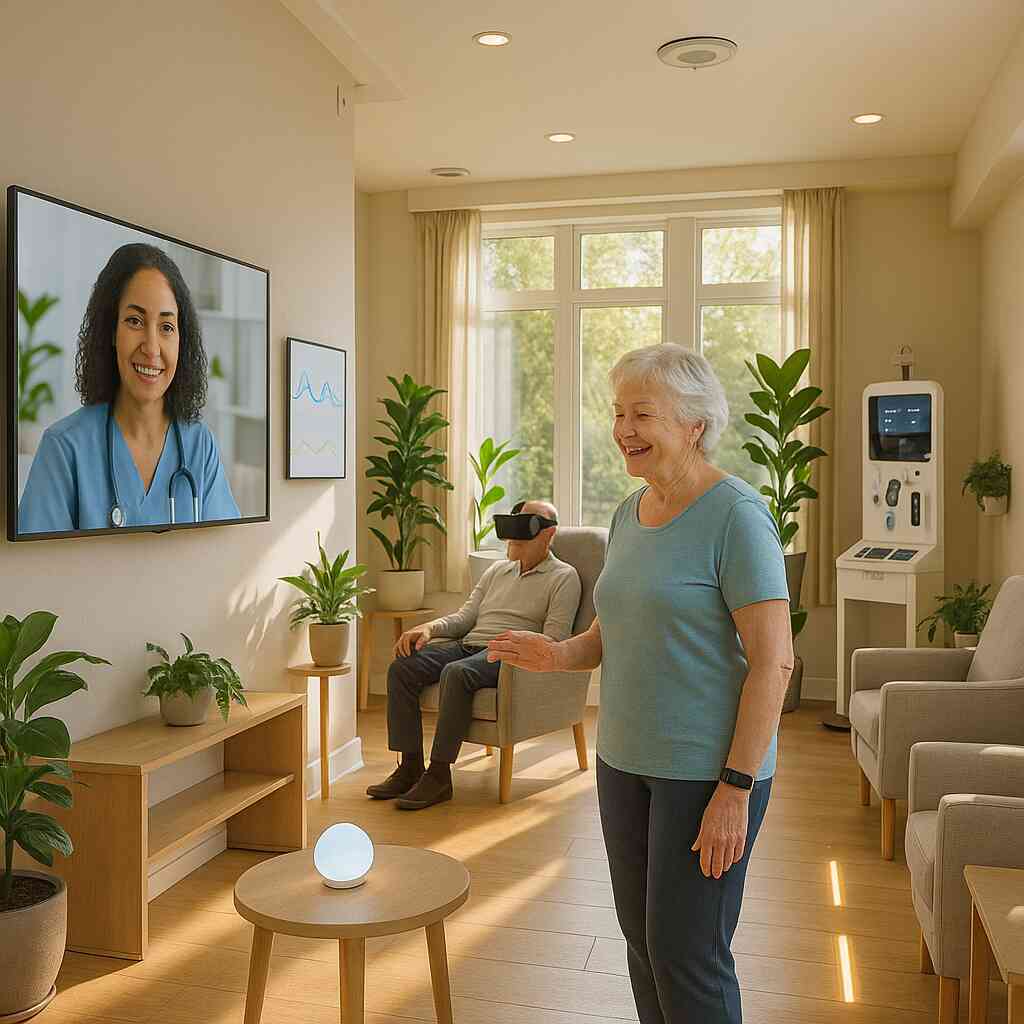
Telehealth services in assisted living no longer feel experimental; they operate as the community’s digital front door to clinical care. Licensed practitioners appear on high-definition screens within minutes, sparing residents exhausting travel while maintaining continuity with familiar physicians. Families appreciate the schedule flexibility, and staff value quicker medication adjustments that avert hospital transfers. When evaluating telehealth services in assisted living, administrators typically measure connection reliability, device sanitation workflows, and resident satisfaction scores before full rollout. Robust vendor training ensures every nurse can troubleshoot common issues, preserving confidence throughout the facility.
Telemedicine kiosks complement in-room video visits by centralizing advanced diagnostic peripherals. Residents step into a private booth where digital stethoscopes, otoscopes, and pulse oximeters stream exam data directly to remote clinicians. Because these kiosks sit inside monitored yet comfortable lounges, residents feel empowered to seek care independently. Assisted living locations that deploy multiple kiosks reduce wait times and encourage proactive health queries. As a result, the seniors living community experiences fewer urgent-care transports and stronger preventive care outcomes.
Remote vital sign monitoring platforms for rental housing for seniors
Remote vital sign monitoring platforms extend clinical oversight into every apartment without intruding on privacy. Lightweight wearables and discreet bed sensors transmit heart rate, oxygen saturation, and respiratory patterns to a secure cloud dashboard. Algorithms flag borderline readings instantly, prompting nurses to check on residents before minor issues snowball. In rental housing for seniors, these passive tools foster autonomy because residents avoid repetitive manual checks that feel clinical. Families reviewing prospective housing options for seniors often rank continuous monitoring as a must-have service.
Even the network layer matters; communities boasting robust digital health infrastructure in Washington senior facilities demonstrate smoother data streams and faster clinician response. Property managers therefore invest in redundant Wi-Fi, encrypted gateways, and battery-backed edge devices. Real-time dashboards integrate seamlessly with electronic medication management, giving caregivers a holistic context when adjusting treatment plans. Over time, aggregated metrics inform population-level wellness initiatives, turning raw data into strategic insights that elevate every resident’s quality of life.
Voice activated caregiving tools and virtual caregiver companions in senior living near you
Voice-activated caregiving tools transform everyday tasks into effortless conversations. Residents simply say, “Schedule my physical therapy,” or “Dim the hallway lights,” and cloud assistants comply in seconds. Natural language processing reduces cognitive load, which especially benefits older adults managing mild memory concerns. Moreover, virtual caregiver companions provide friendly reminders about hydration, upcoming events, or medication times, blending social interaction with gentle coaching. These features make senior living near you feel less institutional and more like a personalized smart home.
Communities that integrate conversational AI with maintenance systems unlock rapid service tickets without paper forms. For example, a resident in one of the smart senior apartments in New York can report a flickering bulb simply by speaking. Simultaneously, caregivers receive multilingual prompts that enhance inclusivity among diverse populations. Privacy controls remain transparent; residents decide which commands store history and which remain ephemeral. This balance sustains trust while showcasing technological sophistication.
Blockchain secured health records and data privacy in nursing homes for the elderly
As digital touchpoints multiply, safeguarding sensitive information becomes mission critical. Blockchain-secured health records create immutable audit trails that track every access request and modification. Each transaction receives a unique cryptographic signature, preventing unauthorized edits and ensuring clinicians always reference the latest data. Nursing homes for the elderly adopting this framework witness higher family confidence because transparency is verifiable, not just promised. Furthermore, smart contracts automate consent management, allowing residents to grant or revoke data sharing with a single tap.
Data privacy policies align with the strongest regulatory standards while remaining understandable to non-technical audiences. Staff undergo regular training on phishing defense, device encryption, and role-based permissions. Some operators collaborate with academic partners to stress-test their ecosystems, proving resilience against evolving threats. Facilities championing data-driven care in Illinois senior living illustrate how rigorous security can coexist with open analytics that enrich day-to-day care. Ultimately, robust governance turns advanced wellness technology for seniors from a luxury into a dependable cornerstone of modern eldercare.
Engagement Rehabilitation and Cognitive Vitality Through Immersive Tech
Virtual reality therapy and robotics assisted rehabilitation in senior living communities
Virtual reality therapy now anchors engagement programs inside many senior living facilities. By immersing residents in calming beaches or familiar hometowns, VR reduces anxiety and sparks conversation. Physical therapists also harness gamified sessions that transform repetitive shoulder lifts into lively fishing adventures. Early adopters report higher adherence and quicker range-of-motion gains compared with conventional exercise rooms. Industry surveys, including the latest wellness innovations in elder care facilities, list VR as a leading satisfaction driver.
Robotics-assisted rehabilitation complements VR by giving therapists precise force and motion feedback in real time. Interactive exoskeletons support weak limbs, enabling safer gait training within busy senior housing corridors. Residents gain confidence because the robot corrects posture while therapists focus on encouragement, not catching falls. Metrics stream to personalized health dashboards in each long-term care facility, tracking repetitions, fatigue, and progress. These objective data points justify assisted living plans during family conferences and motivate residents to exceed weekly goals.
Cognitive fitness apps and digital therapeutics for memory care residents
Memory care suites once relied on paper puzzles; today, cognitive fitness apps deliver adaptive brain exercises on secure tablets. Algorithms adjust difficulty instantly, ensuring challenge without frustration for residents at varying stages of impairment. Sessions last ten minutes, yet consistent practice strengthens attention, sequencing, and verbal recall. Staff review progress through mobile health apps for independent living residents, allowing personalized encouragement after breakfast walks. Because devices integrate with voice-activated caregiving tools, residents launch games hands-free, preserving dignity and independence.
Digital therapeutics for older adults extend beyond games by incorporating validated reminiscence modules and mindfulness coaching. Clinicians load family photos, regional music, or faith readings to evoke positive emotions and reduce sundowning behaviors. Outcomes feed secure analytics, which highlight which sensory cues most effectively calm each nursing home for the elderly wing. Families viewing the same dashboards gain insight into daily triumphs, creating uplifting phone conversations rather than worry. Consistent digital engagement therefore nurtures emotional health alongside cognitive vitality in every senior living community.
AI nutrition planning with sensor based activity tracking and smart mattress sleep monitoring
Balanced meals fuel rehabilitation, yet appetite and activity vary widely among residents. AI nutrition planning analyzes sensor-based activity tracking in rental housing for seniors to tailor caloric intake precisely. If a resident spends mornings gardening, algorithms suggest extra protein at lunch for muscle recovery. Kitchen staff view color-coded charts that translate dietitian recommendations into simple plating instructions. Feedback loops reduce waste, support health goals, and demonstrate the facility’s commitment to data-driven wellness programs.
Nighttime recovery matters, so smart mattress sleep monitoring in senior housing records micro-movements, heart rate, and temperature trends. Poor sleep quality triggers push alerts for gentle evening stretches or earlier hydration routines. Personalized insights appear on resident tablets, reinforcing autonomy and sparking meaningful chats with wellness coaches. Because nutrition and rest data converge within one personalized health dashboard, staff coordinate interventions seamlessly across departments. Families see clear progress bars rather than abstract numbers, strengthening trust in the senior living facility’s holistic care.
Wearable safety sensors GPS enabled wandering prevention and predictive analytics for fall prevention
Wearable safety sensors for seniors now resemble stylish bracelets instead of hospital bands, encouraging everyday adoption. Accelerometers, gyroscopes, and barometers work together to detect subtle balance shifts before an actual stumble. Predictive analytics for senior fall prevention analyzes these micro-signals and sends coaching notifications through voice-activated caregiving tools. Residents respond with targeted ankle exercises, turning potential incidents into confidence-building routines. Regular success stories circulate across data-driven wellness programs in communities for seniors 55+, fostering friendly competition.
For memory care neighborhoods, GPS-enabled wandering prevention wearables establish safe zones rather than restrictive locks. If a resident nears a perimeter, caregivers receive discrete alerts on cloud-based care coordination software. Simultaneously, hallway lights adjust brightness, gently guiding the individual back toward familiar areas. Such layered interventions uphold freedom while satisfying safety expectations of families searching for senior living near me. By blending GPS guidance with real-time analytics, senior living in every state sets a new gold standard for proactive care.
Toward a Data Driven Culture of Wellbeing Across Senior Living Near You
 Toward a Data Driven Culture of Wellbeing Across Senior Living Near You
Integrating data driven wellness programs into assisted living plans
Data integration sits at the heart of modern wellness technology for seniors. By merging sensor-based activity tracking with electronic medication management, communities gain holistic insight. These insights power assisted living plans that adapt daily, not quarterly. If heart rate variability dips, care teams nudge hydration or adjust physical therapy intensity. Personalized health dashboards present the change in plain language, encouraging resident participation. Because everything feeds a single platform, duplicative charting disappears and staff reclaim meaningful time. Residents feel heard, and families witness measurable responsiveness.
Early adopters prove that data driven wellness programs scale gracefully when leadership champions transparency. Take the tech-forward senior communities in California which publish anonymized success metrics for all stakeholders. Their weekly dashboards show reduced falls, shorter rehabilitation periods, and higher satisfaction scores. This openness builds trust among residents who once feared constant monitoring. It also inspires frontline caregivers because their interventions gain visible recognition.
Measuring value for residents families and senior living facility operators
Data has little value unless communities translate numbers into human outcomes. Operators therefore measure impact across clinical, emotional, and financial dimensions. Key indicators include fall frequency, hospital readmissions, and adherence to daily medication schedules. Surveys capture perceived autonomy, social connection, and overall mood, rounding out quantitative metrics. When datasets converge, leadership evaluates whether interventions truly enhance each senior’s living community.
Families appreciate concrete evidence when deciding among housing options for seniors. Seeing improved mobility scores justifies monthly fees and reduces decision fatigue. For operators, cleaner data means smarter staffing, lower liability, and stronger partnerships with insurers. Investors also favor properties that convert wellness insights into revenue stability. The virtuous cycle continues as better margins fund richer programming for every resident.
Future horizons for wellness tech adoption in senior living in every state
Wellness technology evolves quickly, yet the core mission remains constant. Future platforms will triangulate ambient sensors, genomics, and behavioral cues to anticipate needs. Imagine a wearable safety sensor that suggests outdoor tai chi when vitamin D trends low. Or picture an AI caregiver adjusting lighting to match circadian rhythms before insomnia begins. Such anticipatory care transforms senior housing into a living health companion.
Nationwide adoption demands open standards, continued staff education, and partner ecosystems. Senior Living Facilities remain positioned to guide residents and operators through that expansion. Our platform continuously curates proven solutions while screening for privacy resilience. As communities implement these tools, collective data will refine best practices across every state. The journey toward smarter aging is collaborative, inclusive, and already well underway.
Frequently Asked Questions
Question: How do Senior Living Facilities evaluate wellness technology for seniors when helping families compare communities for seniors 55+?
Answer: Our assisted living locator team maintains a nationwide database of Internet of Things health sensors in senior housing, smart health devices in senior living facilities, and other emerging solutions. When you begin a search, we match your loved one’s clinical profile and lifestyle goals with properties that already operate electronic medication management, AI-powered fall detection systems, and data-driven wellness programs in communities for seniors 55+. You receive side-by-side comparisons that highlight which senior living facility offers remote vital sign monitoring platforms, which delivers telehealth services in assisted living, and how each option scores on resident satisfaction. This transparent process turns complex tech jargon into plain-language insights so you can choose a seniors living community that truly fits.
Question: In your blog What Does Wellness Tech Mean at Senior Living Facilities, you mention AI-powered fall detection systems; how do connected medical alert systems in senior living near me actually work?
Answer: Modern connected medical alert systems blend wearable safety sensors for seniors with cloud-based care coordination software. A discreet wristband or lanyard watches for sudden acceleration, changes in posture, or impact. The moment the algorithm confirms a fall, the device sends an encrypted alert over the community’s seamless Wi-Fi infrastructure to on-site caregivers, while simultaneously pinging family members’ smartphones. Because the platform also stores predictive analytics for senior fall prevention, staff can review gait patterns and intervene with tailored exercises before the next incident. Senior Living Facilities only recommends locations that have validated response times under 60 seconds and document follow-up care in personalized health dashboards.
Question: What role do telehealth services in assisted living and remote vital sign monitoring platforms play in daily care plans?
Answer: Telehealth services in assisted living give residents instant access to physicians, specialists, and therapists without leaving the property. High-definition video visits integrate with telemedicine kiosks that capture pulse-ox, blood pressure, and digital stethoscope readings. Meanwhile, remote vital sign monitoring platforms stream continuous heart rate, oxygen saturation, and sleep data from smart mattress sleep monitoring or sensor-based activity tracking devices. The information flows into mobile health apps for independent living residents and into clinicians’ dashboards, enabling same-day medication tweaks or therapy adjustments. By weaving these tools into assisted living plans, communities can cut ER transfers, boost preventive care, and deliver a level of oversight that families now expect from senior living near you.
Question: How can voice-activated caregiving tools and smart home automation in senior apartments enhance independence for older adults?
Answer: Voice-activated caregiving tools let residents adjust lighting, HVAC, or even schedule housekeeping with simple spoken commands-no remotes, buttons, or fine-motor precision required. Paired with smart home automation in senior apartments, the system can raise blinds at sunrise, dim hallway lights for safe nighttime navigation, or trigger hydration reminders based on room temperature. For residents managing arthritis or mild cognitive impairment, these conveniences translate into real autonomy and reduced fall risk. Properties listed on Senior Living Facilities that deploy these features also integrate virtual caregiver companions, giving friendly prompts about medication times or upcoming community events to strengthen social connection and daily rhythm.
Question: What steps do Senior Living Facilities take to ensure data privacy, such as blockchain-secured health records in nursing homes for the elderly?
Answer: Trust is foundational. We vet every long-term care facility, nursing home for the elderly, and rental housing for seniors on our platform for HIPAA compliance, end-to-end encryption, and clear consent practices. Many of our preferred partners now deploy blockchain-secured health records that create immutable audit trails, so only authorized clinicians-and the resident-can view or update information. We also confirm that each senior housing operator offers role-based access controls, regular staff cybersecurity training, and redundant data backups. Families using Senior Living Facilities can therefore embrace advanced wellness technology for seniors with confidence that personal information stays protected.
Admin
Expert contributor specializing in senior living care. Dedicated to providing families with clear, actionable advice.