
What to Know About VA Benefits for Senior Care in Texas

What Texas veterans need to know when the care bill starts speaking louder than the diagnosis
The diagnosis may be stable, but the monthly care bill is not. That is the moment many Texas families feel their stomach drop. If you are reading this while sorting through papers at the kitchen table, take a breath. The hardest part is often not the care decision itself. It is figuring out which benefits apply and which ones do not.
Why VA benefits for senior care in Texas are often misunderstood until the family is already under stress
We hear this from families every week. A veteran needs help with bathing, meals, or medication reminders, and suddenly the question shifts from care to coverage. That is where confusion starts. VA benefits for senior care in Texas can help in some situations, but not every senior living setting fits the same rules. The details matter, and small misunderstandings can create big delays.
One spouse in San Antonio told us her husband had served decades ago, yet nobody had ever explained Texas veterans senior care benefits in plain English. She thought the VA would “just cover everything.” It did not work that way. What she really needed was a clear map of aid, pension support, and the care setting itself. That map is what families usually need before they choose a senior living facility or stay home.
The Texas senior housing choices that can work with VA support and which ones usually do not
Some senior living facilities for veterans may align with VA-related support, while others fit better with private pay, Medicaid, or long-term care insurance. Assisted living locations for veterans in Texas can be a good match when help is needed with daily tasks, but the VA does not directly pay every bill. A nursing home or skilled nursing facility may involve different coverage rules. That is why the setting matters as much as the benefit itself.
Here is the part most families miss. The word “care” covers many housing types. It can mean independent living communities, communities for seniors 55+, board and care homes, residential care facilities, or a continuing care retirement community (CCRC). It can also mean a long-term care facility or a memory care near me search when dementia is part of the picture. Each option changes the benefits conversation in a different way.
How the difference between aging in place and moving to a senior living facility changes the benefits conversation
Aging in place with VA support can work well when needs are light and family help is steady. In that case, veterans may use home modifications, family caregiver support, or outside services. But once personal care becomes daily, the discussion changes fast. A move to a senior living facility can open new planning choices, especially if the veteran needs help beyond what family can safely provide.
On a recent Texas case, a daughter in Fort Worth was trying to keep her father at home after a fall. The house was familiar. The stairs were not. After a caregiver evaluation, she realized his needs had crossed into a level that home visits could not cover reliably. That kind of shift is common, and it is why many families compare housing options for seniors with benefits before they wait too long. If you want a starting point, a Senior Living Facilities directory in Texas can help you compare care styles without guesswork.
The benefit map that decides who pays for what and when
Money decisions get messy when three systems overlap. VA rules, Medicare rules, and Medicaid rules do not behave like one big program. They each solve different problems. If you understand that early, you can avoid false assumptions and wasted time.
How VA aid and attendance benefits may help with assisted living plans and veterans pension support
VA aid and attendance benefits may help eligible veterans or surviving spouses who need help with daily living tasks. That can matter in assisted living plans and sometimes in veterans pension support for assisted living costs. The key issue is not only service history. It is also the person’s functional need, income, and medical circumstances. Families often underestimate that part.
Think of it this way. Aid and Attendance can sometimes help with the pressure point around monthly care, but it is not a blank check. It may fit alongside affordable senior living for veterans, but you still need to check the actual residence type and care contract. For some families, the better move is to compare senior apartment rentals for veterans against a more supportive setting. For others, the priority is getting the veteran safely into care sooner rather than later. A VA benefits guide for senior housing can help frame those choices.
When Medicaid and VA benefits can work together and when they should be treated as separate paths
Medicaid and VA benefits for senior housing can sometimes exist in the same family plan, but they are not interchangeable. Medicaid is usually the more direct path for qualifying long-term care support at the state level. VA benefits can supplement that picture, but they do not automatically replace Medicaid rules. In Texas, that distinction matters a lot for senior living for low-income seniors and families trying to preserve options.
What we see often is this: one benefit solves the housing cost, while another helps with care coordination or medical coverage. That is useful, but it requires careful timing. A veteran might qualify for both Medicaid senior housing support and a VA-related pension, yet the order of application can affect the outcome. Do not assume the strongest program will cover the broadest need. If the budget is tight, compare pathways early with a Texas benefits and Medicaid overview and Medicaid senior housing options.
Benefit areaWhat it may help withCommon limitationVA Aid and AttendancePersonal care supportMust meet eligibility rulesMedicaidLong-term care coverageIncome and asset limits applyMedicareMedical servicesUsually does not cover custodial careLong-term care insurancePrivate care costsPolicy terms vary widely### What Medicare skilled nursing and VA coverage can actually do for Texas nursing homes and skilled nursing facilities
Medicare skilled nursing and VA coverage are often misunderstood together. Medicare may cover short-term skilled care after a qualifying hospital stay. That can include therapy, wound care, or recovery support in skilled nursing facilities for veterans. But Medicare is not usually the answer for ongoing custodial help. That is where families get caught off guard.
A Texas nursing home for veterans may accept Medicare for a limited period, then shift to another payer source. VA coverage may help with some connected needs, but it is not the same as blanket nursing home payment. Families should always ask how coverage changes after the rehab window ends. This is also where CMS star ratings for Texas facilities can help you compare quality indicators before committing. If you need a deeper comparison, the skilled nursing and Medicare guide is a useful place to start.
Where long-term care insurance fits for veterans who need more than a short stay
Long-term care insurance for veterans can be a useful bridge when care needs are expected to last beyond a brief recovery. It may help with respite care, assisted living, or some custodial services, depending on the policy. That makes it different from Medicare, which focuses mainly on medical treatment and short-term rehabilitation. It also differs from VA support, which depends on eligibility and the type of need.
If you already have a policy, do not assume it matches the care contract automatically. Read the daily benefit rules, elimination period, and care-setting limits carefully. If you do not have a policy, it may still help to compare private pay costs against a retirement homes for veterans shortlist. For families needing a broader funding view, Texas veteran care options can clarify which path fits the need.
The Texas care setting puzzle from memory care to CCRC and everything in between
The real challenge is not finding “a place.” It is matching the person to the right environment. Texas offers a wide range of choices, and the names can blur together fast. Clear comparisons prevent expensive mistakes.
When assisted living vs nursing home becomes the real decision for a veteran and spouse
Assisted living vs nursing home for veterans is one of the hardest choices families face. Assisted living usually fits people who need help with daily tasks but do not need round-the-clock medical care. A nursing home is more appropriate when medical oversight is constant or mobility and safety risks are much higher. The difference sounds simple. In practice, it is deeply personal.
SettingBest forTypical focusAssisted livingHelp with daily routinesMeals, bathing, remindersNursing homeHigher medical needsSkilled nursing and monitoringResidential careSmaller, home-like supportLimited resident countCCRCChanging care needsMultiple care levelsHere is what almost no online guide mentions. Spouses often have different care needs at the same time. One may still enjoy independent living communities for veterans, while the other needs a higher level of care. In those cases, a continuing care retirement community for veterans can preserve togetherness longer. A Texas care comparison guide can help you sort the choice before stress drives the decision.
What memory care means for veterans with dementia or Alzheimer’s concerns and how to judge memory care near me
What is memory care for veterans? It is a specialized setting designed for people living with dementia-related confusion, wandering, or safety concerns. If you are searching memory care near me for veterans, focus on structure, staff supervision, and environment. Families sometimes use the term loosely, but the care model should be intentional and secure. The same applies to Alzheimer’s care facilities for veterans and dementia care homes for veterans. 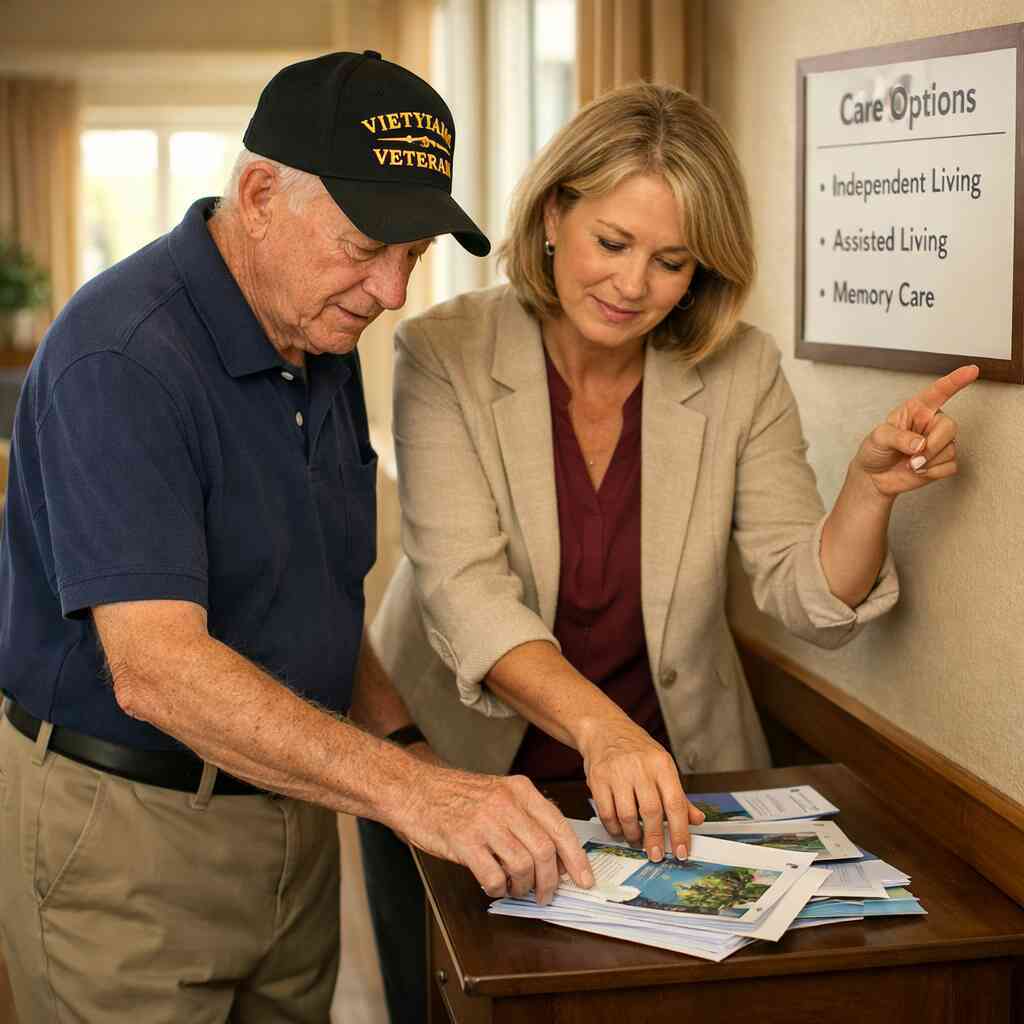
On a visit in the Dallas area, a son noticed that his mother kept trying to reach the exit door. The community handled it calmly and quietly, with a layout that reduced confusion and a staff response that never felt rushed. That told him more than any brochure could. When you compare memory care support for veterans, ask how staff handle wandering, agitation, and bathing resistance. If you need a place to compare options, start with memory care near me for veterans. ### Why independent living communities and communities for seniors 55 plus can still matter when care needs are still light
Not every veteran needs heavy care right away. Sometimes the right move is one of the independent living communities for veterans or communities for seniors 55+ in Texas. These settings can reduce home maintenance, social isolation, and daily stress. That matters when the goal is safer, simpler living rather than hands-on care.
This is especially helpful when a person wants connection but not clinical oversight. A senior citizen housing for veterans option may feel less intimidating than a nursing environment. Aging in place with VA support can also overlap here, especially if a veteran is still active and only needs light assistance. For a lighter-care comparison, independent living communities for veterans can be a smart search term to begin with.
How to think through residential care facilities board and care homes and continuing care retirement community options in Texas
Residential care facilities for seniors and board and care homes for veterans are often smaller and more intimate than larger campuses. That can be a relief for families who want a quieter setting. These homes may work well when someone needs help, but not a full institutional environment. Still, staffing patterns and service scope vary, so ask direct questions before moving forward.
A continuing care retirement community (CCRC) offers another kind of planning. It may let a resident move through several care levels without changing campuses. That continuity can reduce disruption for couples and aging veterans who want long-term stability. It is not the right answer for everyone, but it is worth evaluating early. For families comparing this path, continuing care retirement community options for veterans can make the research easier.
What affordable senior living looks like for veterans comparing senior apartment rentals rental housing for seniors and senior citizen housing
Affordable senior living in Texas for veterans often means comparing multiple housing styles, not just one price point. Rental housing for seniors, senior apartment rentals, and senior citizen housing for veterans can be practical if care needs are light. These options may preserve independence while keeping monthly costs and maintenance simpler than a house. They can also be a good fit while waiting for a better care opening.
Texas families in Houston, San Antonio, and along the I-35 corridor often ask the same question. “Can we keep Dad near home without locking ourselves into the wrong level of care?” The answer is sometimes yes. It depends on support needs, transportation, and whether the veteran can still manage daily routines safely. If budget is the main concern, compare affordable senior living in Texas for veterans alongside benefits options.
The move that turns confusion into action without losing time or benefits
Once the care type is clearer, the job becomes practical. You need to verify safety, staff approach, and paperwork before signing anything. This part feels tedious, but it saves families from painful reversals later.
Which questions to ask assisted living and nursing homes before you assume a place is a fit
The best questions to ask assisted living for veterans are simple and specific. Ask who helps with medications, toileting, and overnight needs. Ask how the community handles falls, dementia symptoms, and family updates. Then ask what happens if the resident’s needs increase quickly.
For questions to ask a nursing home in Texas, focus on medical oversight, therapy access, and escalation procedures. You also want to know how the community handles staffing changes and care-plan revisions. Never rely on a tour alone. Good lighting and a friendly lobby do not tell the whole story. If you want a checklist, questions to ask assisted living for veterans is a solid place to anchor your review.
How to use a senior living advisor or senior placement services for veterans without giving up control
A senior living advisor for veterans can save time, especially when the family is juggling work, distance, and stress. Senior placement services for veterans may help narrow the field and explain care levels in plain language. Still, you should stay in control of the final choice. A referral is not a decision.
The best advisors ask questions before they recommend anything. They should ask about fall risk, memory concerns, budget, and the veteran’s comfort with change. They should also know the difference between a long-term care facility and a lighter-care option. If you want support without pressure, a free senior living referral for veterans can help you compare options with less overwhelm.
Why CMS star ratings Texas facility records and Texas senior housing regulations should be checked before any commitment
CMS star ratings for nursing homes in Texas are a useful starting point, not the whole answer. They help you compare health inspections, staffing, and quality measures. But ratings should be read alongside state records, complaint history, and your own tour notes. A five-star score is not a substitute for direct questions.
Texas also has senior housing regulations in Texas that affect how communities operate. Those rules can differ by care type, especially between assisted living and nursing home settings. Ask for the current license information and review any public reports you can find. In a state as large as Texas, local consistency matters. For broader comparison, CMS star ratings for Texas facilities gives you a more structured view.
How to build a short list using a senior living directory Texas families can trust and a free senior living referral for veterans
A senior living directory in Texas helps you compare options without starting from scratch every time. That matters when you need best senior living near me for veterans and do not have hours to spare. Use the directory to sort by care level, location, and benefit fit. Then cross-check the best matches with licensing and family needs.
What we have seen in 2026 specifically is that families move faster when they work from a short list, not a giant spreadsheet. Three to five options is enough to start. From there, compare how each community handles daily care, communication, and transitions. If you want a more organized path, a senior living directory for veterans benefits can help you keep the process manageable.
What to do next if you need a Texas-focused plan for assisted living locations for veterans or a long-term care facility near home
If you are trying to place someone soon, narrow your search by care level and geography. Look at assisted living locations for veterans first if daily help is the main need. Move to Texas nursing homes for veterans or skilled nursing facilities for veterans if medical oversight is the priority. That sequence keeps you from shopping outside the right category.
For families in Austin, Fort Worth, and along the Gulf Coast, local drive time matters more than most people expect. Visits are easier when the community is close enough for regular check-ins. The goal is not to chase every option. It is to match the veteran’s needs with a stable, realistic plan. Start with one call, one tour, and one honest conversation with a Texas-focused senior living match. You do not have to solve everything today, but you can take a clear step before the week ends.
Frequently Asked Questions
Question: What should Texas families know first when exploring VA benefits for senior care in Texas and comparing senior living facilities for veterans?
Answer: The first thing to understand is that VA benefits for senior care in Texas can help in some situations, but they do not work the same way as Medicaid, Medicare, or private pay. Families often start by identifying the veteran’s care needs, then matching those needs to the right setting, whether that is assisted living locations for veterans, independent living communities for veterans, or a nursing home. Senior Living Facilities helps simplify that process by letting families search, compare, and connect with senior living options in one place, which makes it easier to narrow down housing options for seniors with benefits without feeling overwhelmed.
Question: How can Senior Living Facilities help when comparing assisted living plans for veterans, memory care near me for veterans, and Texas nursing homes for veterans?
Answer: Senior Living Facilities is designed to help families compare care settings side by side, which is especially useful when deciding between assisted living vs nursing home for veterans or evaluating what is memory care for veterans. If a veteran needs daily help with bathing, meals, or medication reminders, assisted living plans may be a better fit. If medical oversight or more structured support is needed, skilled nursing facilities for veterans or Texas nursing homes for veterans may be more appropriate. For families dealing with dementia concerns, memory care support for veterans and Alzheimer’s care facilities for veterans may also need to be considered. Our platform helps families organize those choices, compare the differences between skilled nursing and assisted living, and use a senior living directory in Texas to start with communities that match the right level of care.
Question: Can Senior Living Facilities help me find affordable senior living for veterans, including senior apartment rentals, rental housing for seniors, or senior citizen housing for veterans?
Answer: Yes. Many families want to keep monthly costs manageable while still finding a safe and comfortable environment, and that is where affordable senior living for veterans becomes important. Senior Living Facilities can help you explore senior apartment rentals for veterans, rental housing for seniors with VA support, communities for seniors 55+ in Texas, and senior citizen housing for veterans. This is especially helpful when the goal is to preserve independence while keeping care costs and day-to-day stress lower. Families can also compare options that may support aging in place with VA support or look at retirement homes for veterans and residential care facilities for seniors if needs change over time. By comparing communities in one place, it becomes easier to weigh the cost of assisted living against the level of support a veteran actually needs.
Question: Does Senior Living Facilities help families understand Medicaid and VA benefits, Medicare skilled nursing and VA coverage, and long-term care insurance for veterans?
Answer: Yes, and this is one of the most valuable parts of the process. Families often assume one program will cover everything, but Medicaid and VA benefits, Medicare skilled nursing and VA coverage, and long-term care insurance for veterans each play different roles. Medicare is often tied to short-term skilled recovery, while VA aid and attendance benefits may help with personal care needs, and Medicaid senior housing support may be more relevant for long-term care eligibility. Senior Living Facilities helps families compare these paths so they can make a more informed decision before choosing a long-term care facility, board and care homes for veterans, or skilled nursing facilities for veterans. Having a clear view of the benefit picture can reduce delays and help families choose a more realistic care plan.
Question: What questions should I ask before choosing assisted living locations for veterans, and can Senior Living Facilities help with senior placement services for veterans?
Answer: Absolutely. When touring communities, the best questions to ask assisted living for veterans usually focus on daily support, medication help, staffing, fall response, and what happens if care needs change. For families considering a nursing home, how to choose a nursing home in Texas should include questions about medical oversight, therapy access, and care plan updates. Senior Living Facilities can support that process through senior placement services for veterans and a free senior living referral for veterans, helping families identify communities that fit the veteran’s needs, budget, and location. We also make it easier to compare CMS star ratings for Texas facilities and review senior housing regulations in Texas, so families can feel more confident before making a commitment.
Senior Living Facilities Editorial Team
Expert contributor specializing in senior living care. Dedicated to providing families with clear, actionable advice.