Best Pet Stewardship Practices in Senior Living Facilities
Welcome to the Pet Inclusive Paradigm: Redefining Companion Care in Today’s Senior Living Facilities
The rise of pet friendly senior living facilities and what it means for aging well
Not long ago, pets were considered liabilities inside retirement corridors. That view has transformed as research underscores the health dividends of the human-animal bond. Pet-friendly senior living facilities now outnumber pet-restrictive counterparts in many regions. Operators catering to communities for seniors 55+ understand that a cherished cat can anchor a daily purpose. Residents report lower blood pressure, improved mobility, and heightened optimism when animals accompany them.
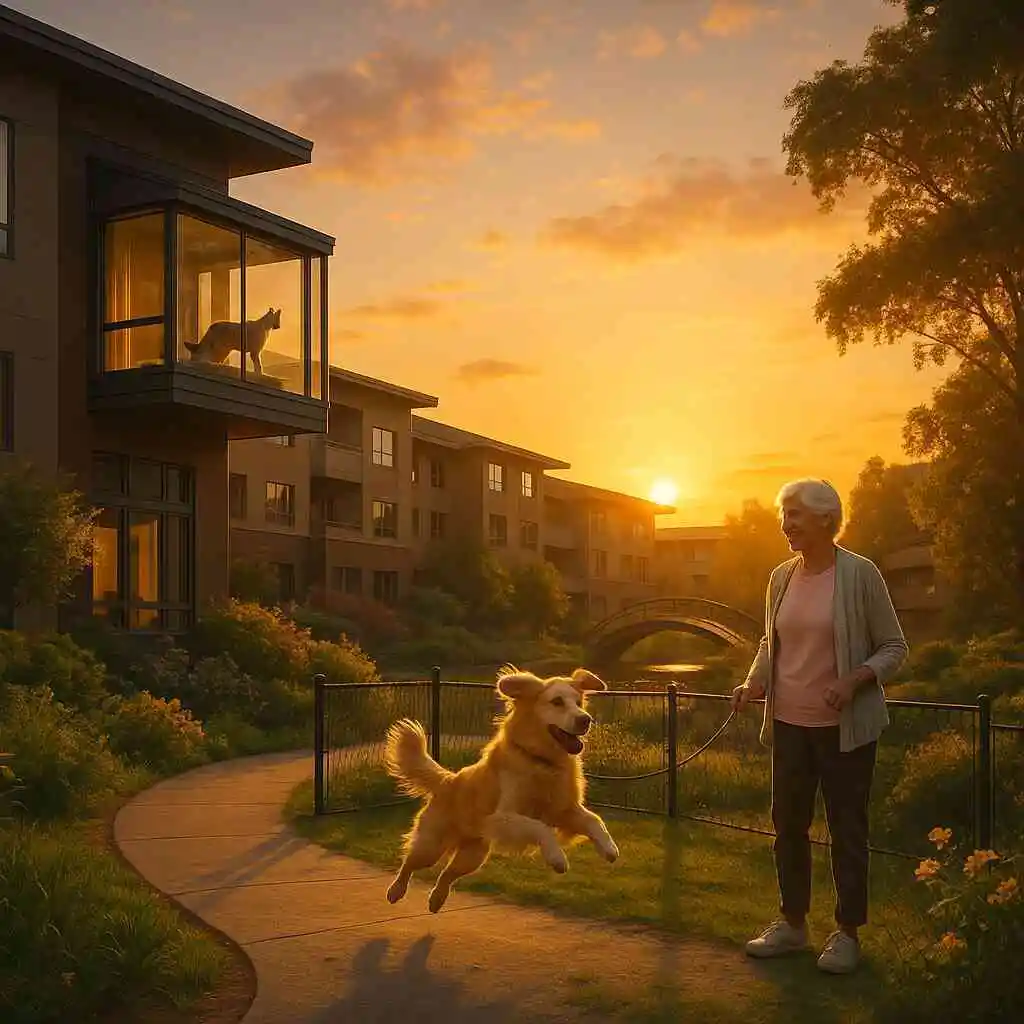
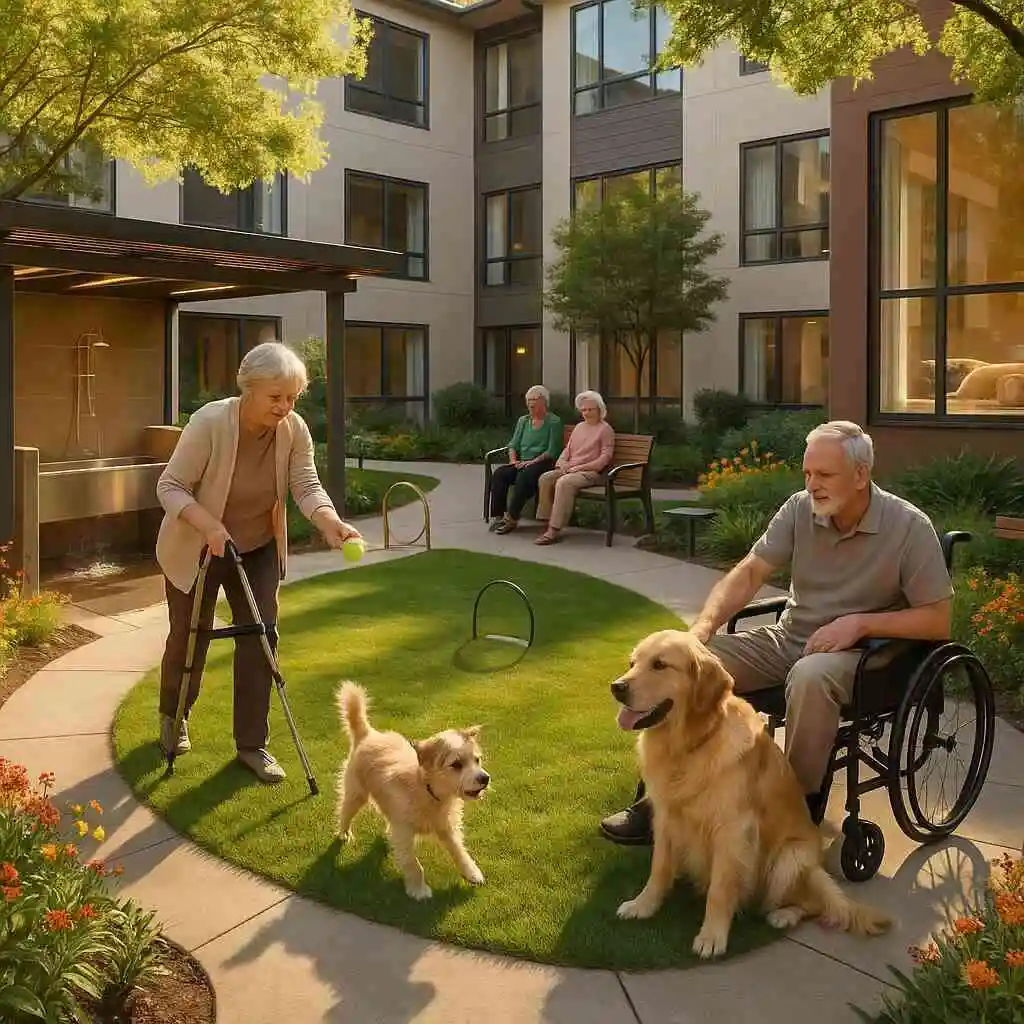
Forward-thinking architects now include grooming stations, dog runs, and screened patios in every blueprint. These amenities not only attract future residents but also influence adult children searching for ‘senior living near me’ on smartphones. Marketing data shows tours increase when facility websites showcase animal companions in banner images. Importantly, senior living facility pet policies have matured, balancing resident autonomy with safety for allergic neighbors. Clear guidelines enable pets to become integrated members rather than tolerated guests.
How companion animals elevate cognitive and emotional vitality in a senior living community
The neurological advantages of routine animal interaction stack up impressively during later life. Studies comparing residents with regular dog contact to control groups reveal sharper memory recall after six months. Anecdotal reports within a seniors living community mirror the data, with caregivers noting brighter morning effects. Researchers attribute this to oxytocin release and reduced cortisol, measurable biomarkers of stress. Facilities that track engagement through measuring social connection through companion animals dashboards now link pet visits to reduced depression scores.
Animal-assisted therapy in senior housing extends beyond casual cuddles. Certified teams guide structured sessions that pair gentle dogs with residents diagnosed with mild cognitive impairment. The rhythmic action of brushing a calm retriever encourages repetitive motion, which soothes agitation in dementia friendly environments. Speech therapists also advocate reading aloud to cats because the nonjudgmental audience reduces performance anxiety. As a result, conversational frequency rises, strengthening social networks that often erode in a long-term care facility.
Aligning senior apartment rentals and housing options for seniors with the human animal bond
Successful placement of an older adult and a beloved pet begins long before move-in day. Families typically start with online tools that allow them to search for pet welcoming residences near them in minutes. Filtering by dog weight limits, nearby veterinarians, and fenced walking trails narrows daunting choices. Database matching pairs senior apartment rentals with each pet’s lifestyle, whether energetic terrier or low-key tabby. This alignment reduces the heartbreaking surrender of pets during transitions.
Leasing structures adjust accordingly within progressive communities. Rental housing for seniors often waives traditional pet deposits and instead uses monthly wellness fees funnelled into on-site clinics. Assisted living plans incorporate an assisted living locator that flags facilities providing litter delivery or scheduled dog-walking. Even nursing homes for the elderly, once thought incompatible with animals, now pilot pocket-pet programs supported by occupational therapists. The result is a continuum of housing options for seniors that respects both species throughout evolving care needs.
 The Stewardship Blueprint Operational Best Practices for Harmonious Human Animal Communities
 The Stewardship Blueprint Operational Best Practices for Harmonious Human Animal Communities
Crafting resident pet ownership agreements that balance freedom with responsibility
Clear pet agreements anchor every successful senior living facility’s pet policy. Administrators outline acceptable species, size limits, and quiet‐hour expectations in plain language. Residents appreciate transparent rules that honor personal choice while protecting community harmony. The agreement also identifies emergency caregivers, ensuring no animal is left unattended during hospital stays. Because the document is signed at move-in, misunderstandings rarely escalate into stressful conflicts.
Forward-thinking senior housing managers embed emotional support animal guidelines that senior living residents frequently need. A streamlined verification process respects privacy yet maintains legal compliance. Additionally, rental housing for seniors often waives punitive deposits when owners attend quarterly education workshops. These workshops cover grooming, vaccination schedules, and apartment safety checks. Consequently, both pets and neighbors thrive without surprise disruptions.
Designing communal pet areas and dog parks for communities for seniors 55 plus
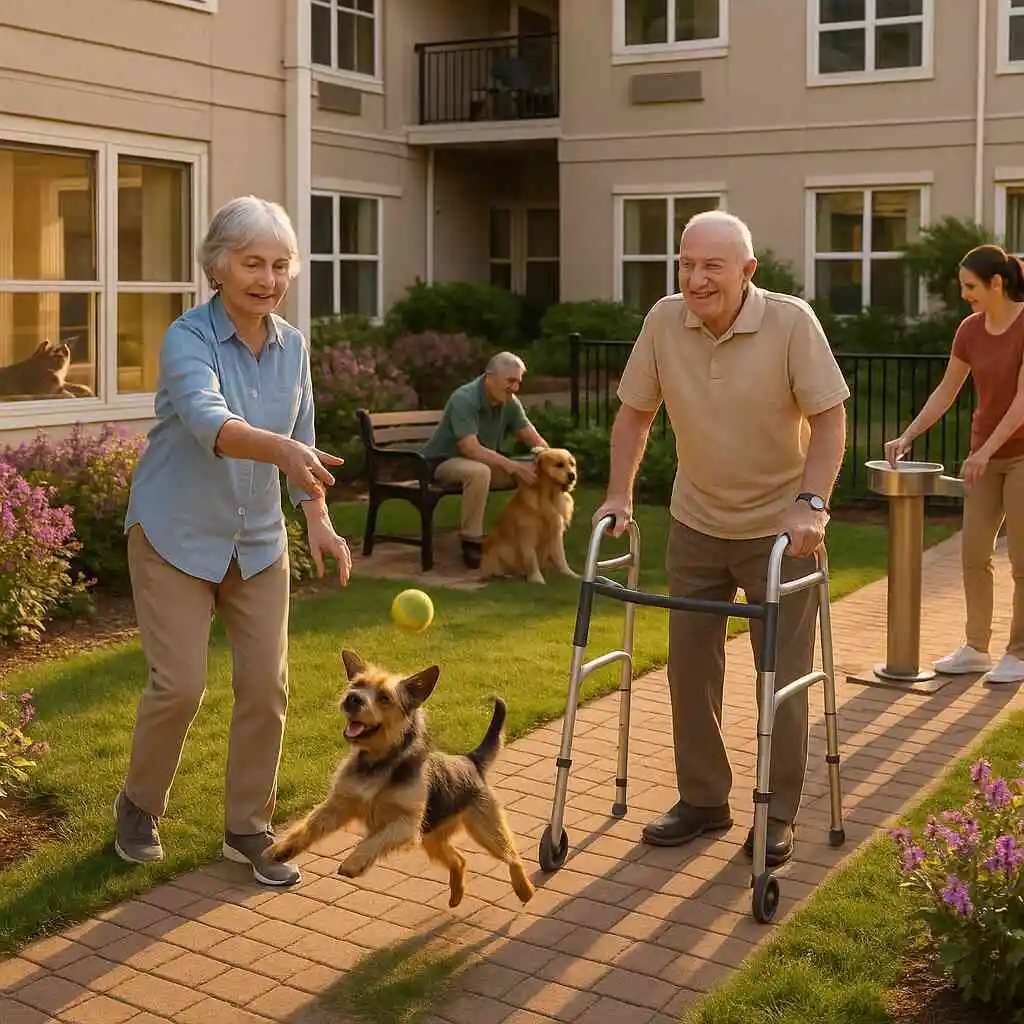
Purpose-built dog parks transform passive lawns into social engines. Designers place seating at multiple heights to accommodate walkers and wheelchairs. Shade sails reduce heat stress, while water fountains serve both species. Separate zones for small and large dogs limit accidental injuries. Because sidewalks lead directly from residential wings, even residents with limited mobility can join daily romps.
Inside buildings, cat solariums line south-facing windows, providing enriched perches without risking wildlife. Synthetic turf neutralizes odors and simplifies cleaning, an important advantage for maintenance crews. Communities for seniors 55+ often flank these areas with herb gardens, creating multisensory strolls. Strategic lighting encourages evening walks that reinforce circadian rhythms. By merging aesthetics with practicality, developers elevate pet stewardship to art.
Implementing low impact pet exercise routines and multi species enrichment activities
Many older adults cannot handle vigorous fetch sessions, yet pets still need movement. Low impact pet exercise routines include hallway lead walks, puzzle feeders, and gentle stair climbs. Staff members demonstrate safe techniques during orientation, reinforcing confidence. As a result, residents keep joints limber while pets burn excess energy. Regular movement also reduces veterinary issues like obesity.
Multi-species enrichment activities for older adults prevent boredom in birds, rabbits, or even miniature pigs. Rotating toy libraries and scent trails stimulate natural behaviors. Volunteers track participation through simple logs, allowing care teams to adjust intensity. Monthly feedback meetings celebrate successes and brainstorm new ideas. This cycle of innovation keeps engagement fresh throughout the seasons.
Partnership models with local veterinarians and humane societies for on site wellness clinics
Veterinary partnerships in long-term care facility settings bring professional expertise directly to residents. Mobile clinics park near entrances, offering vaccinations, microchipping, and dental cleanings without stressful travel. Seniors observe procedures, gaining knowledge that strengthens daily care routines. Because appointments occur during predictable windows, staffing schedules remain intact. Families praise the convenience and transparency.
Humane societies often supply educational brochures, foster animals, and discounted spay vouchers. Joint fundraising events, such as leash-friendly walks, build goodwill in the wider neighborhood. Additionally, student veterinarians conduct seminars on aging pet nutrition, aligning with assisted living plans focused on holistic wellness. These collaborations reduce costs while elevating care quality. Everyone benefits from the shared mission.
Infection control and allergy mitigation protocols that keep senior health paramount
Even well-loved pets can introduce allergens or pathogens. Therefore, janitorial teams follow hospital-grade cleaning schedules, focusing on high-touch surfaces. HEPA filtration in common lounges captures dander before it circulates. Grooming stations include antimicrobial mats that withstand repeat sanitization. Regular air-quality audits provide measurable benchmarks for accountability.
Resident education remains equally vital. Workshops teach safe litter disposal and proper hand hygiene after handling reptiles or birds. Assisted living locations often supply hypoallergenic bedding to owners with sensitive roommates nearby. When combined with vaccination compliance checks, these measures create layered protection. Ultimately, the entire community breathes easier-literally and figuratively.
Dementia friendly pet interaction guidelines and intergenerational visitation programs
Memory-care wings adapt interaction protocols to protect vulnerable residents. Animals with calm temperaments receive specialized training to ignore sudden movements. Sessions last ten minutes, a duration proven to prevent sensory overload. Caregivers maintain one-to-one ratios, ensuring quick redirection if confusion arises. Visual cue cards help residents anticipate each step, reinforcing comfort.
Facilities extend engagement through family events featuring grandchildren and certified therapy dogs. These gatherings encourage intergenerational engagement with therapy pets, strengthening social ties and collective joy. Structured storytelling circles allow participants to share pet memories, stimulating long-term recall. Staff record observable mood changes for later therapy planning. By intertwining generations, the program multiplies emotional rewards.
Pet waste management innovations and eco-conscious landscaping in retirement community trails
Modern retirement trails incorporate solar-powered waste stations with biodegradable bag dispensers. Color-coded bins differentiate compostable litter from general trash, simplifying resident participation. Grounds teams convert collected waste into nutrient-rich compost for flowerbeds, closing an ecological loop. Informational signage explains the process, fostering environmental pride among walkers. The system keeps lawns pristine and odor-free.
Native plants line pathways, requiring minimal irrigation and reducing chemical runoff. Permeable pavers allow stormwater to seep naturally, protecting local waterways. Benches crafted from recycled plastics resist weathering and remind residents of conservation goals. Together, these elements transform simple strolls into eco-education experiences. Sustainability and stewardship blend seamlessly.
Fostering programs and adoption counseling supported by an assisted living locator
Some residents crave animal companionship but cannot commit long term. Fostering programs offer flexible timelines, matching seniors with pets awaiting permanent homes. Trained counselors evaluate lifestyle factors, preventing mismatches that strain resources. Monthly check-ins verify health and behavioral progress, safeguarding all parties involved. The approach turns temporary care into mutual enrichment.
Digital tools amplify success rates. An assisted living locator within the community app lists available pets, required care levels, and support resources. Interested residents can filter by species, age, or energy level, mirroring senior apartment rentals search functions. Counselors also facilitate adoption counseling when bonds become permanent. Consequently, every placement feels intentional, compassionate, and sustainable.
Sustaining the Bond: Measuring Impact and Future Directions in Senior Living Near You
Resident led pet committees as catalysts for continuous improvement
Residents remain the best judges of daily pet dynamics, so forward-thinking senior living facilities empower them to lead. Volunteer committees meet monthly, review incident logs, and propose actionable adjustments. Because peers craft the recommendations, adoption rates soar across every seniors living community on campus. Staff facilitators simply provide data and mediate discussions, respecting resident autonomy. This shared governance model fosters accountability while reinforcing purpose for older adults.
Committees also survey neighbors about allergy comfort, preferred enrichment schedules, and dog-park etiquette. Findings circulate through colorful bulletin boards, encouraging transparent dialogue in each senior living facility. New arrivals quickly learn the culture because mentors invite them to meetings during orientation. For deeper guidance, many members consult the ultimate handbook on pet friendly senior living before drafting policy updates. Continuous feedback loops keep best practices fresh without overwhelming administrative budgets.
Data driven assessments of animal assisted therapy outcomes in long term care facility settings
Quantitative evaluation elevates animal-assisted therapy from a feel-good program to a clinical intervention. Long-term care facility nurses now record blood pressure, mobility range, and mood indices before and after each session. Over quarters, analytics software highlights meaningful trends, validating investments. When numbers show reduced falls or shorter rehabilitation periods, budget committees eagerly expand programming. Evidence displaces anecdotes, strengthening the case for broader adoption.
Technicians also track companion animal interaction minutes using wearable proximity badges. The unobtrusive devices respect privacy while producing granular engagement maps. Therapists correlate high-engagement zones with elevated social connection scores, confirming strategic placement of cat lounges. Such concrete insights convince regulators that animal programs enhance quality measures, not merely amenities. Families see that transparency and trust deepen.
Scaling best practices across senior living in the state and beyond through technology platforms
A single community’s success story gains real power when shared across networks of housing options for seniors. Digital repositories host video tutorials on leash safety, grooming stations, and dementia-friendly interaction tips. Operators in different counties download templates, customize, and implement within days. This rapid transfer shortens learning curves for emerging communities for seniors 55+, ensuring consistent excellence.
Cloud dashboards now integrate maintenance tickets, vaccination expirations, and assisted living plans into one mobile view. Push notifications remind owners about grooming days, while managers monitor compliance remotely. Facilities exploring smart collars or automated feeders can review case studies via leveraging smart tech for resident pet care in 2026. Technology democratizes knowledge, so even modest senior apartment rentals adopt gold-standard protocols without hiring consultants.
A vision for resilient pet inclusive senior housing ecosystems
Looking forward, pet stewardship will anchor holistic wellness strategies across senior living near me searches. Campus master plans already allocate flexible green spaces that shift from dog agility courses to community gardens as demographics change. Partnerships with humane societies create micro-satellite shelters, turning nursing homes for the elderly into lifesaving outposts during emergencies. Resilience depends on designing for both species from blueprint to daily operations.
Ultimately, thriving ecosystems require ongoing collaboration among residents, caregivers, veterinarians, and technologists. Senior Living Facilities continues to convene these voices, curating webinars and regional forums. Stakeholders ready to champion innovation can connect with the Senior Living Facilities team for toolkits and mentorship. Together, we will ensure every senior housing campus remains welcoming, safe, and vibrant for people and their beloved companions.
Frequently Asked Questions
 Frequently Asked Questions
Question: How can Senior Living Facilities help me find pet-friendly senior living facilities with clear senior living facility pet policies and on-site companion animal programs?
Answer: Our database spans all 50 U.S. states and is filtered specifically for pet-friendly senior living facilities. When you enter your location, the search tool instantly highlights communities that advertise dog runs, cat solariums, grooming stations, or resident pet ownership agreements. You can even refine results by weight limits, species allowances, or whether animal-assisted therapy in senior housing is offered. Each community profile displays its complete senior living facility pet policy up front, saving you hours of phone calls and giving you confidence that both you and your companion will be welcomed.
Question: What resident pet ownership agreements and emotional support animal guidelines do Senior Living Facilities recommend to ensure harmony in a senior living community?
Answer: The best practice highlighted in many of the listings on our site is a plain-language agreement signed at move-in. It should outline acceptable species, size limits, vaccination requirements, quiet-hour expectations, and designate an emergency caregiver if a resident is hospitalized. For emotional support animals, we advocate a streamlined verification process that respects privacy while maintaining legal compliance. Many communities waive punitive deposits when residents attend quarterly pet stewardship workshops covering grooming, low-impact pet exercise routines, and infection control for pets in senior living settings. These agreements keep communities tranquil while preserving residents’ freedom to enjoy their beloved companions.
Question: In your blog, Best Pet Stewardship Practices in Senior Living Facilities, you mention veterinary partnerships in long-term care facility settings-how do Senior Living Facilities evaluate these collaborations before recommending a property?
Answer: We vet each community by confirming written agreements with licensed veterinarians or local humane societies. Our review team checks that mobile pet wellness clinics visit the campus regularly for vaccinations, microchipping, and dental cleanings. We also look for discounted spay/neuter services and educational seminars on aging pet nutrition. Communities that track preventive care through digital dashboards score higher in our comparison matrix, ensuring that when you select a property through Senior Living Facilities, you’re choosing a location where animal health is proactively managed alongside resident well-being.
Question: I’m searching for communities for seniors 55+ with dog parks, dementia-friendly pet interaction protocols, and an assisted living locator near me-can Senior Living Facilities filter these exact features?
Answer: Absolutely. After entering your zip code, you can apply multiple filters, such as communities for seniors 55+ with dog parks, dementia-friendly pet programs, or pet waste management solutions. Our assisted living locator then ranks properties by proximity, amenity match, and resident satisfaction scores. Each listing provides photos of communal pet areas, details on dementia-friendly pet interaction guidelines, and notes on intergenerational pet visitation events, helping you make an informed, side-by-side comparison in minutes.
Question: How do Senior Living Facilities ensure that allergy mitigation and infection control protocols are in place at the senior living near you locations they recommend?
Answer: We require every partner community to document HEPA filtration systems in common areas, hospital-grade cleaning schedules, and up-to-date vaccination records for resident pets. Many of our featured properties also use hypoallergenic bedding, antimicrobial grooming mats, and schedule regular air-quality audits. During our verification process we review these protocols and display them as part of each property’s profile so families can quickly confirm that senior health remains paramount while still enjoying a pet-inclusive environment.
Admin
Expert contributor specializing in senior living care. Dedicated to providing families with clear, actionable advice.