Compare Telehealth in Senior Living Facilities Today
When Wi-Fi Meets Warmth: The New Front Door of Senior Living Facilities
From nursing homes for the elderly to independent living communities why virtual care for older adults is now table stakes
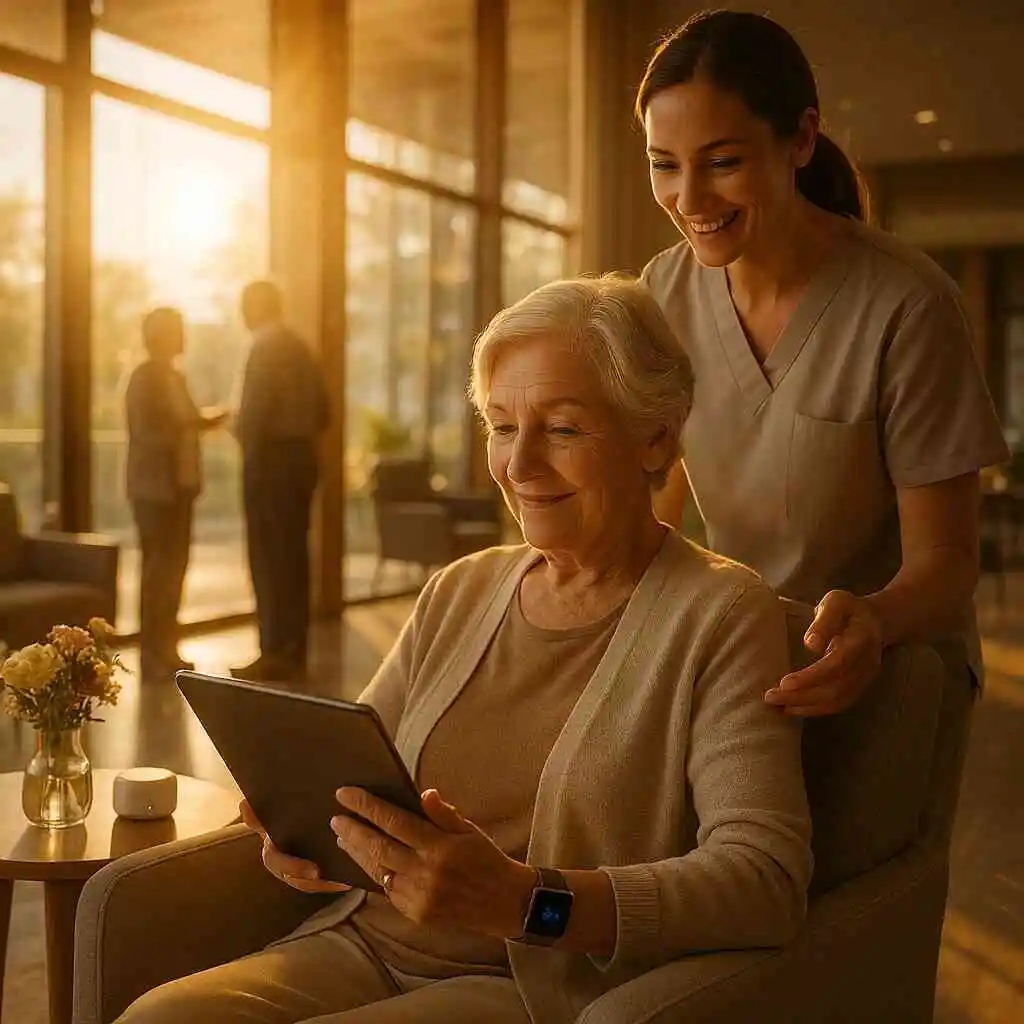
Telehealth in senior living facilities has shifted from novelty to necessity almost overnight. Residents expect convenient video doctor visits in retirement communities just as younger families expect mobile banking. Therefore, communities for seniors 55+ that lack virtual care for older adults risk falling behind on both safety and market appeal. Forward-thinking operators now embed robust Wi-Fi, remote patient monitoring in assisted living, and digital triage tools into everyday routines. Families see these moves as proof that a senior living facility can keep loved ones connected, engaged, and medically supported without constant ambulance rides.
Virtual care also directly addresses workforce shortages affecting nursing homes for the elderly nationwide. By routing routine follow-ups through secure portals, onsite nurses gain time for hands-on care that technology cannot replicate. At the same time, physicians clear their schedules of simple medication questions, freeing slots for complex cases. Moreover, reimbursement parity has arrived, allowing Medicare to pay for telemedicine benefits for seniors on par with office visits. Consequently, financial administrators finally view digital health platforms for nursing homes as revenue protectors rather than cost centers. In short, telehealth solutions in senior living facilities have become the new front door, welcoming wellness into every apartment.
How the Senior Living Facilities platform helps families search compare and connect with senior living near me that offers telemedicine
Families often begin with a frantic browser tab labeled “senior living near you,” unsure what separates one brochure from another. The Senior Living Facilities search engine simplifies that journey by letting users filter communities by onsite clinics, wearable device integration, and secure family portals. Thus, within minutes, caregivers can compare virtual-care communities near you on staffing ratios, broadband strength, and specialty teletherapy options. Detailed dashboards reveal whether a long-term care facility partners with hospital systems for overnight tele-hospitalist coverage. Transparent data lessens anxiety and speeds the path from research to confident placement.
Connection does not stop once a shortlist emerges. Advisors on the platform walk families through licensing reports, Medicare coverage for senior telemedicine, and state policy variations that govern remote consults. They then schedule virtual tours where residents wave from devices already used for chronic disease management via telehealth. Observing seamless workflows reassures adult children that tech is truly operational, not a marketing slide. Finally, the service routes encrypted applications to communities that align with both health acuity and budget, turning telehealth expectations into lived reality.
Key terms decoded telehealth telemedicine remote patient monitoring and digital health platforms in senior housing
Many people use telehealth and telemedicine interchangeably, yet subtle differences matter when evaluating housing options for seniors. Telemedicine refers specifically to clinical visits, such as a cardiology follow-up conducted over encrypted video. Telehealth in senior living facilities is broader, covering wellness coaching, physical therapy apps, and mental health teletherapy for seniors. Meanwhile, remote patient monitoring in assisted living involves connected devices that feed vital signs to dashboards reviewed by nurses and physicians. Understanding these layers helps families match a resident’s health profile with the right digital toolkit.
Digital health platforms for nursing homes must also meet strict regulatory and usability thresholds. HIPAA compliance for digital senior care mandates encryption, role-based access, and detailed audit trails. User interfaces need large icons, voice guidance, and fall detection technology integrated care modules. Furthermore, systems must plug into existing EHRs so that emergency teletriage events update medication lists instantly. When these elements converge, a senior living facility can deliver AI-powered health assessments for elders without overwhelming staff or residents.
Inside the Digital Clinic: Telehealth Modalities Transforming Communities for Seniors 55+
Video doctor visits in retirement communities are closing the primary-care gap
Telehealth in senior living facilities now brings board-certified physicians onto every resident’s tablet within minutes. Video doctor visits in retirement communities eliminate long van rides that often exhaust fragile bodies before an appointment even begins. Because virtual care for older adults allows faster triage, minor infections or medication tweaks occur days earlier than traditional scheduling. Residents experience fewer lapses in continuity of care, which directly supports independence and overall morale. Families appreciate that their loved ones can consult familiar clinicians without leaving a warm apartment.
The technology also solves the national shortage of geriatric specialists by letting one physician support several senior living facilities during a single morning. Secure high-definition video, digital stethoscopes, and connected otoscopes transform the resident’s living room into a mini-exam suite. Onsite nurses facilitate vitals, while cloud documentation updates shared EHRs in real time. This hybrid workflow preserves human touch yet scales medical expertise across many senior living community campuses. Operators see stronger census retention, since reliable medical access remains a top decision factor during placement.
Chronic disease management via telehealth integrating wearable devices in assisted living locations
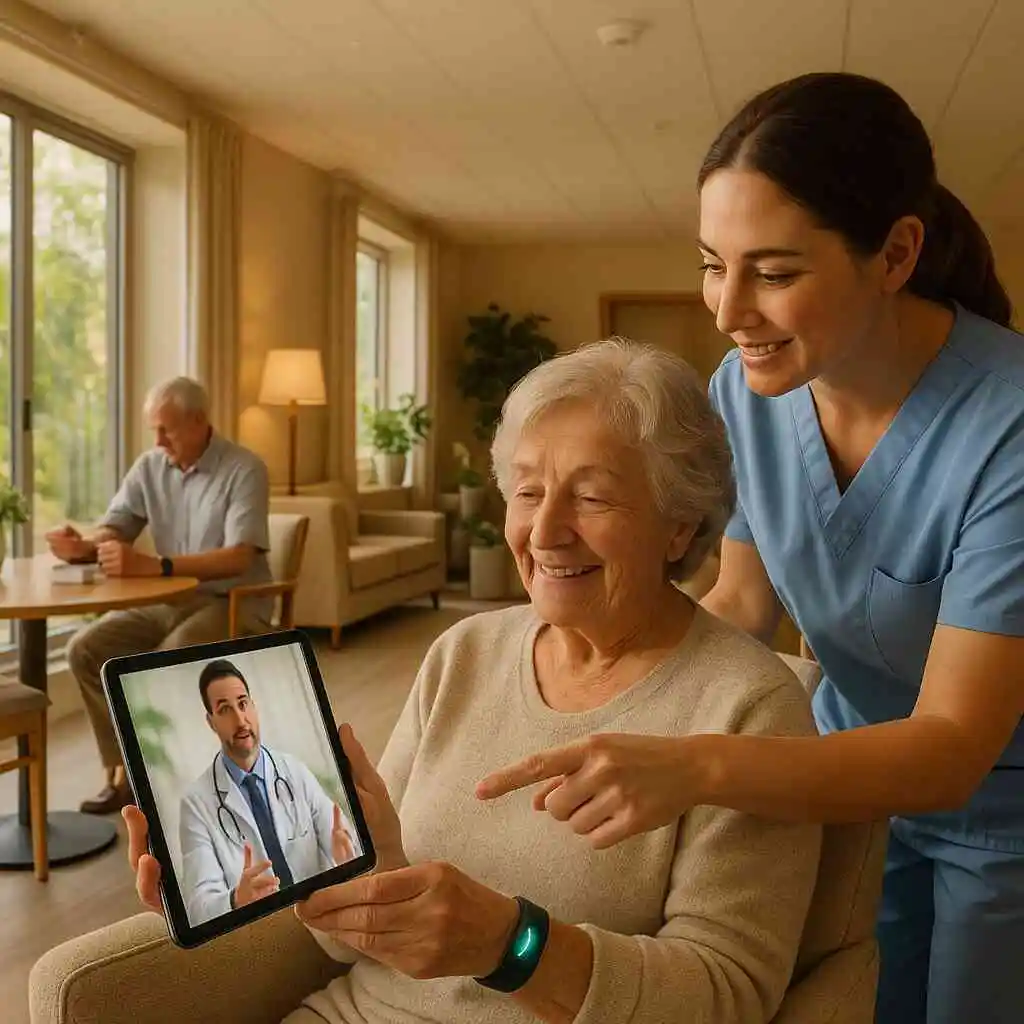
Smartwatches, Bluetooth glucometers, and cuffless blood-pressure sensors now feed continuous data streams into dashboards monitored by clinical teams. These wearable devices turn chronic disease management via telehealth from episodic check-ins to proactive surveillance. When a trendline flags concern, a nurse schedules an immediate video visit, preventing escalation to emergency care. Residents feel empowered, as they can review nightly heart-rate graphs and ask targeted questions during consults. Transparency nurtures collaboration rather than reprimand.
Facilities leverage remote patient monitoring in Texas assisted living case studies to replicate best practices nationwide. Automated alerts integrate with medication cabinets, reminding staff to confirm dosing when vitals stray. Over months, this closed loop reduces hospital readmissions, cuts insurance penalties, and proves ROI for digital health platforms for nursing homes. Administrators use aggregated, de-identified data to persuade payers to expand telemedicine benefits for seniors. Residents, in turn, celebrate fewer finger sticks and less anxiety.
Mental health teletherapy for seniors combating isolation with licensed counselors online
Social isolation remains a silent epidemic in many housing options for seniors, eroding cognition and mood. Mental health teletherapy for seniors introduces weekly video sessions with licensed counselors who specialize in late-life psychology. Because scheduling is flexible and stigma is lower behind a screen, participation rates exceed traditional group therapy attendance. Consistent counseling improves sleep, appetite, and engagement in community activities. Workplace stress on caregivers also lessens when residents receive professional emotional support.
Platforms integrate cognitive-behavioral modules, guided journaling, and mindfulness classes directly into resident portals. These tools track mood trends and trigger intervention if depressive markers rise. Communities share anonymized analytics with executives to measure social connection and prove wellness outcomes to regulators. The model even extends to family therapy, allowing adult children to join sessions from afar. Collectively, teletherapy enables seniors to build resilience while staying firmly rooted in vibrant social networks.
Telehealth-assisted rehabilitation programs speech therapy and PT are beamed into senior apartment rentals
After orthopedic surgery, a resident no longer waits for weekly outpatient transportation. Telehealth-assisted rehabilitation programs deliver physical therapists onto widescreen TVs in senior apartment rentals. Motion-tracking cameras gauge joint angles, ensuring proper technique during each leg lift. Therapists adjust routines in real time, praising progress and preventing injury. Residents stay motivated by seeing measurable gains without disrupting daily routines.
Speech-language pathologists employ gamified cognitive drills through tablets, addressing stroke-related aphasia or Parkinsonian speech decline. The private setting reduces embarrassment, encouraging participants to practice vocal exercises more boldly. Consistent sessions accelerate neural plasticity, while outcome reports sync with the primary physician’s plan of care. Family portals let relatives watch milestone videos, celebrating achievements that once remained unseen. Altogether, rehab via telehealth shortens recovery windows and boosts quality of life.
AI-powered health assessments fall detection technology and emergency teletriage in long-term care facility settings
Artificial intelligence now augments routine vitals with predictive analytics, flagging subtle deviations before humans notice. AI-powered health assessments for elders analyze sleep patterns, gait speed, and speech cadence, estimating frailty scores overnight. Integrated floor sensors and wearable pendants provide fall detection technology that dispatches onsite responders within seconds. Simultaneously, emergency teletriage connects residents to off-site nurses who assess injuries and coordinate next steps. This layered safety net reduces unnecessary emergency department transfers and related stress.
Dashboards rank risk levels, enabling caregivers to focus attention where it matters most. Over time, machine-learning models refine predictions using facility-specific data, enhancing accuracy. Executive directors appreciate how these insights bolster clinical oversight within nursing homes and support compliance audits. Insurers, meanwhile, recognize reduced liability and may offer premium incentives. In practice, data science becomes a silent guardian, allowing residents to roam confidently while staff rest easier.
Prescription management through telemedicine e-pharmacy refills and adherence support
Medication complexity often grows with age, leading to dangerous omissions or duplications. Prescription management through telemedicine simplifies this maze by synchronizing electronic prescriptions with e-pharmacy refills. Pharmacists appear on screen to review side effects, reconcile pillboxes, and educate residents about timing. Automated text or voice reminders reducing missed doses improve chronic disease outcomes. Families gain peace of mind through real-time adherence dashboards.
When lab results recommend dosage adjustments, physicians update orders instantly, and next-day blister packs arrive without clerical delays. The system also cross-checks for drug interactions, sending red flags to nurses before distribution. Assisted living plans that adopt this closed-loop workflow report fewer falls linked to polypharmacy. In turn, state surveyors commend these communities for creating a transparent medication chain of custody. Ultimately, tele-pharmacy elevates safety and preserves autonomy for older adults navigating complex regimens.
 Proof in the Portal: Measuring Value Obstacles and ROI of Virtual Care in Senior Housing
 Proof in the Portal: Measuring Value Obstacles and ROI of Virtual Care in Senior Housing
Cost comparison of telehealth services versus traditional onsite visits in rental housing for seniors
Operators once assumed virtual care for older adults added expense. Fresh accounting shows the opposite. Every redirected ambulance ride saves thousands, while each video consultation costs mere dollars. Furthermore, bundled telemedicine benefits for seniors allow predictable budgeting, unlike fluctuating transportation invoices. Administrators can now create cost dashboards that reveal telehealth in senior living facilities trims overall medical spend without sacrificing quality.
Hidden savings emerge beyond direct clinician fees. Staff lose fewer hours accompanying residents to off-site appointments, lowering overtime budgets. Insurance premiums drop when fall detection technology integrated care reduces incident frequency. Even utility costs decrease because fewer shuttle buses idle curbside. When leaders compare cost per treated episode, digital health platforms for nursing homes consistently beat legacy models, particularly in rural markets with long travel distances.
Reducing hospital readmissions with remote patient monitoring in assisted living
Hospital returns devastate both resident morale and facility ratings. Remote patient monitoring in assisted living catches trouble early, so interventions occur before a crisis. Wearable devices in communities for seniors 55+ stream vitals to dashboards reviewed hourly. Nurses adjust care plans quickly, preventing fluid build-up or infection flare-ups. Consequently, reducing hospital readmissions with remote care becomes a measurable reality.
Data from high-adoption campuses show double-digit declines in thirty-day readmits. Residents remain in familiar surroundings, and families avoid frantic late-night calls. Payers notice the improvement, offering incentive contracts that further boost ROI. Victory stories strengthen marketing because prospects seek assisted living plans that keep loved ones out of emergency rooms. The feedback loop fuels ongoing investment in sensor upgrades and AI-powered health assessments for elders.
Accessibility challenges in rural senior living near you broadband bandwidth and device literacy
Coverage gaps still slow progress. Mountains, forests, and aged copper lines restrict bandwidth to many housing options for seniors. Without stable connections, high-definition video doctor visits in retirement communities freeze, frustrating residents and clinicians alike. Teams must lobby internet providers while exploring cellular backups to overcome rural broadband challenges in senior housing.
Device literacy also hurts adoption. Some residents hesitate to swipe or tap unfamiliar icons. Staff therefore stage weekly clinics that teach tablet basics and reinforce confidence. Simple laminated guides sit beside every lounge charger. Over months, participation rates climb, proving that thoughtful education can outrun geography. Commitment to accessibility transforms “senior living near me” searches into genuine opportunity, regardless of zip code.
Privacy compliance in digital senior care HIPAA GDPR and resident consent workflows
Trust anchors any successful telehealth rollout. Communities must honor strict privacy compliance in digital senior care. Policies reference HIPAA, GDPR, and state statutes, yet documents alone are not enough. Facilities implement encrypted tunnels, role-based controls, and biometric logins for every session. Audit trails automatically record who saw what and when, deterring misuse.
Consent remains critical. Admissions packets now include clear telehealth opt-in forms written in plain language. Residents can withdraw anytime without penalty. Quarterly refresher sessions update everyone on new regulations and phishing risks. By weaving privacy into culture, leadership protects dignity while unlocking digital convenience. Regulators respond positively during surveys, granting higher quality scores.
Staff training for telehealth adoption building confidence from CNAs to executive directors
Technology shines only when people embrace it. Effective staff training for telehealth adoption therefore starts at orientation. Certified nursing assistants practice mock video calls with colleagues acting as physicians. They learn camera placement, lighting, and device sanitation. Confidence grows through repetition, reducing anxiety when residents watch.
Supervisors track core competencies and schedule booster workshops after software updates. Executive directors participate, signaling top-down commitment. Cross-department telehealth champions troubleshoot issues before frustration spreads. As proficiency rises, workflow efficiency follows. Employees celebrate faster clinical resolutions and lower paperwork burdens, reinforcing a culture that prizes innovation.
Medicare coverage and evolving telehealth policy for long-term care reimbursement
Financial sustainability hinges on reimbursement. Encouragingly, federal policy now rewards virtual visits almost on par with in-person care. Detailed guidance appears within the official Medicare reimbursement rules on telehealth. Administrators monitor updates to ensure billing codes remain current and compliant.
Advocacy groups lobby for permanent parity, recognizing that pandemic-era waivers proved value. Meanwhile, state Medicaid programs pilot incentives tied to chronic disease management via telehealth. Facilities that document outcomes effectively secure enhanced rates, further validating investment. Continuous policy vigilance guarantees revenue streams align with rising resident expectations for modern service delivery.
Integrated EHR and family portals for virtual health updates keeping everyone in the loop
Last, transparency cements trust between clinicians and loved ones. Integrated EHR in senior living telehealth synchronizes lab values, medication changes, and emergency teletriage notes. Family portals for virtual health updates grant secure, role-based views, letting caregivers confirm progress anytime. This open window reduces phone tag and anxiety.
Information flows in both directions. Relatives can upload questions or mood observations that enrich the clinical picture. The system flags urgent comments, prompting rapid follow-up. Over time, resident satisfaction with telehealth visits climbs because everyone feels informed. Ultimately, seamless information exchange transforms isolated encounters into a connected continuum that supports holistic wellbeing.
Toward a Connected Continuum: Crafting Hybrid Care Models that Delight Residents and Families
Future of telehealth in independent living communities balancing autonomy with safety nets
Independent living residents cherish freedom, yet they also want rapid access to trustworthy clinicians. The next wave of telehealth in senior living facilities honors both desires through invisible sensors and on-demand portals. Motion detectors quietly monitor patterns, while virtual care for older adults intervenes only when data points spike. Residents schedule video calls, but they remain free to spend afternoons gardening or attending art workshops. That harmony keeps autonomy intact and calms families who once feared hidden health declines.
Operators also integrate community chat boards, letting neighbors share wellness tips without replacing professional guidance. When patterns show shared concerns, staff arrange group tele-education sessions, creating a social buffer against medical anxiety. Meanwhile, remote patient monitoring in assisted living remains available if independence later shifts toward greater oversight. Because the infrastructure already exists, the transition happens smoothly, preserving residents’ dignity during changing circumstances. Future-ready campuses therefore treat telemedicine not as a gadget, but as a lifelong safety net.
Assisted living locator with a telemedicine filter helping prospects find senior living in their state of choice
Selecting the right community can feel overwhelming once medical technology enters the checklist. A modern assisted living locator with telemedicine filters narrows thousands of listings into personalized, health-ready options. Families simply enter chronic conditions, budget parameters, and preferred region, then review curated matches. Listings display broadband strength, onsite nurses, and availability of speech therapy online for older residents. Transparency shortens research time and reduces emotionally charged decision fatigue.
Senior Living Facilities enhances that search with real-time advisors who decode reimbursement and explain software training commitments. Because every profile reflects verified licensing, prospects avoid misleading marketing gloss often found elsewhere. Advisors also flag communities offering chronic disease management via telehealth, ensuring continuity from day one. When a shortlist emerges, the team arranges virtual tours where caregivers witness workflow in action. Momentum stays high, converting research into confident placement before stress erodes family harmony.
Resident satisfaction with telehealth visits: Lessons from high-adoption senior living facilities
Data from high-adoption campuses reveals a surprising outcome: residents actually prefer virtual encounters for many needs. Reasons vary, yet convenience, privacy, and shorter wait times consistently top surveys. Grandparents appreciate being addressed by name without hurried hallway distractions typical of offsite clinics. Moreover, wearable devices in communities for seniors 55+ feed accurate readings, preventing the white-coat spikes common in hospitals. Reduced travel stress further boosts satisfaction scores across cognitive, physical, and emotional domains.
Facility leaders harvest this feedback through family portals for virtual health updates and monthly pulse surveys. They then refine lighting, camera angles, or appointment slots, demonstrating responsive listening. Engagement skyrockets because residents witness tangible improvements based on their comments. Consequently, retention climbs, and word-of-mouth strengthens community reputation faster than paid advertising. Industry peers now view such feedback cycles as the gold standard for resident-centered telehealth adoption.
Blueprint for scaling virtual care across all 50 US states from Alaska to Florida without friction
Scaling virtual care nationwide demands more than gadgets; it requires replicable playbooks adaptable to local culture. Senior Living Facilities aggregates case studies, highlighting policy nuances, staffing ratios, and procurement timelines. Leaders then customize templates, avoiding reinvented wheels and costly missteps. The approach accelerates deployment while preserving community identity, from desert ranches to coastal towers. Most importantly, it keeps the resident voice central, ensuring technology complements existing customs. Hybrid caregiving models in senior apartments therefore flourish, blending telepresence rounds with neighborly check-ins.
Geography no longer dictates quality; even remote regions now have access to specialized clinicians through fiber, cellular, or satellite. For example, programs delivering connected elder care in Alaska communities mirror successes achieved in dense suburbs. Similar toolkits support video doctor visits in Florida retirement homes, proving scalability across climates. Standardized metrics track uptime, resident engagement, and incident reduction, guiding continuous improvement. Because data travels with residents, seasonal relocations no longer disrupt care continuity.
National expansion also respects differing regulations by embedding auto-updated billing rules into scheduling platforms. Administrators see valid codes during appointment set-up, preventing claim denials. Staff training modules align with state mandates, boosting confidence and avoiding compliance penalties. Cloud frameworks reference government broadband maps to prioritize infrastructure grants wisely. United, these strategies form a seamless continuum where seniors thrive anywhere, anytime, with minimal friction.
Frequently Asked Questions
 Frequently Asked Questions
Question: How do Senior Living Facilities help my family compare telehealth options when searching for senior living near me?
Answer: Our platform includes an assisted living locator with telemedicine filters that highlight everything from broadband strength to on-site nurses trained in virtual care for older adults. Simply enter your city or ZIP code, then sort communities by video doctor visits in retirement communities, remote patient monitoring in assisted living, fall detection technology integrated care, and more. Side-by-side dashboards show cost comparison of telehealth services, staffing ratios, and resident satisfaction scores so you can quickly see which senior living facility fits your medical, social, and budget goals.
Question: What specific telemedicine benefits for seniors can my loved one expect after moving into a community listed on Senior Living Facilities?
Answer: Communities on our site typically offer same-day video consults with board-certified physicians, chronic disease management via telehealth that syncs wearable devices with EHRs, mental health teletherapy for seniors, prescription management through telemedicine with e-pharmacy refills, and emergency teletriage in long-term care. These digital health platforms for nursing homes reduce ambulance rides, lower medication errors, and provide family portals for virtual health updates so you stay informed around the clock.
Question: In Compare Telehealth in Senior Living Facilities Today, you mention wearable devices in communities for seniors 55+. How are these integrated with remote patient monitoring in assisted living communities found on your platform?
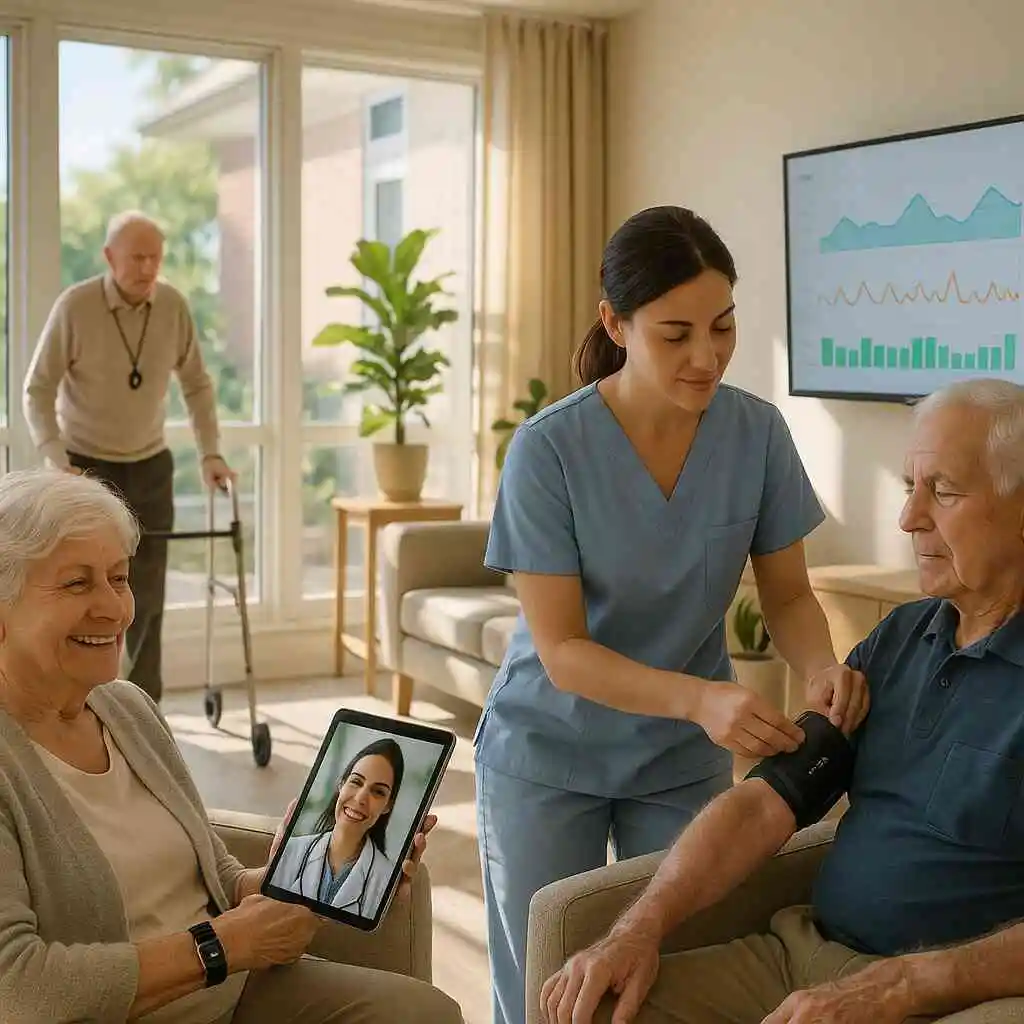
Answer: Listed providers pair Bluetooth blood-pressure cuffs, smartwatches, and glucometers with HIPAA-compliant dashboards reviewed by on-site nurses and off-site physicians. When data trends flag concern, a video visit is triggered automatically, preventing complications and reducing hospital readmissions with remote care. Families can view non-critical summaries through secure portals, while AI-powered health assessments for elders learn each resident’s baseline to improve accuracy over time.
Question: How do Senior Living Facilities ensure privacy compliance in digital senior care and guide operators on Medicare coverage for senior telemedicine?
Answer: Every senior living facility we partner with must demonstrate encryption, role-based access controls, and documented HIPAA workflows before appearing on our site. We also provide administrators with up-to-date telehealth policy updates for long-term care, including the latest Medicare coverage for senior telemedicine billing codes. During onboarding, our advisors share consent templates and staff training for telehealth adoption so communities remain audit-ready and residents’ data stays protected.
Question: What support do you offer rural senior housing operators facing weak broadband that can disrupt video doctor visits in retirement communities?
Answer: Senior Living Facilities connects rural providers with grant resources, cellular backup vendors, and satellite solutions to overcome accessibility challenges in rural senior housing. We also supply best-practice guides on caching medical data for low-bandwidth environments and simplified tablets that boost device literacy among residents. By tackling infrastructure and education together, we ensure older adults in remote areas receive the same high-quality virtual care as those in urban senior apartment rentals.
Admin
Expert contributor specializing in senior living care. Dedicated to providing families with clear, actionable advice.