
How to Compare Senior Living Facilities in 10 Steps
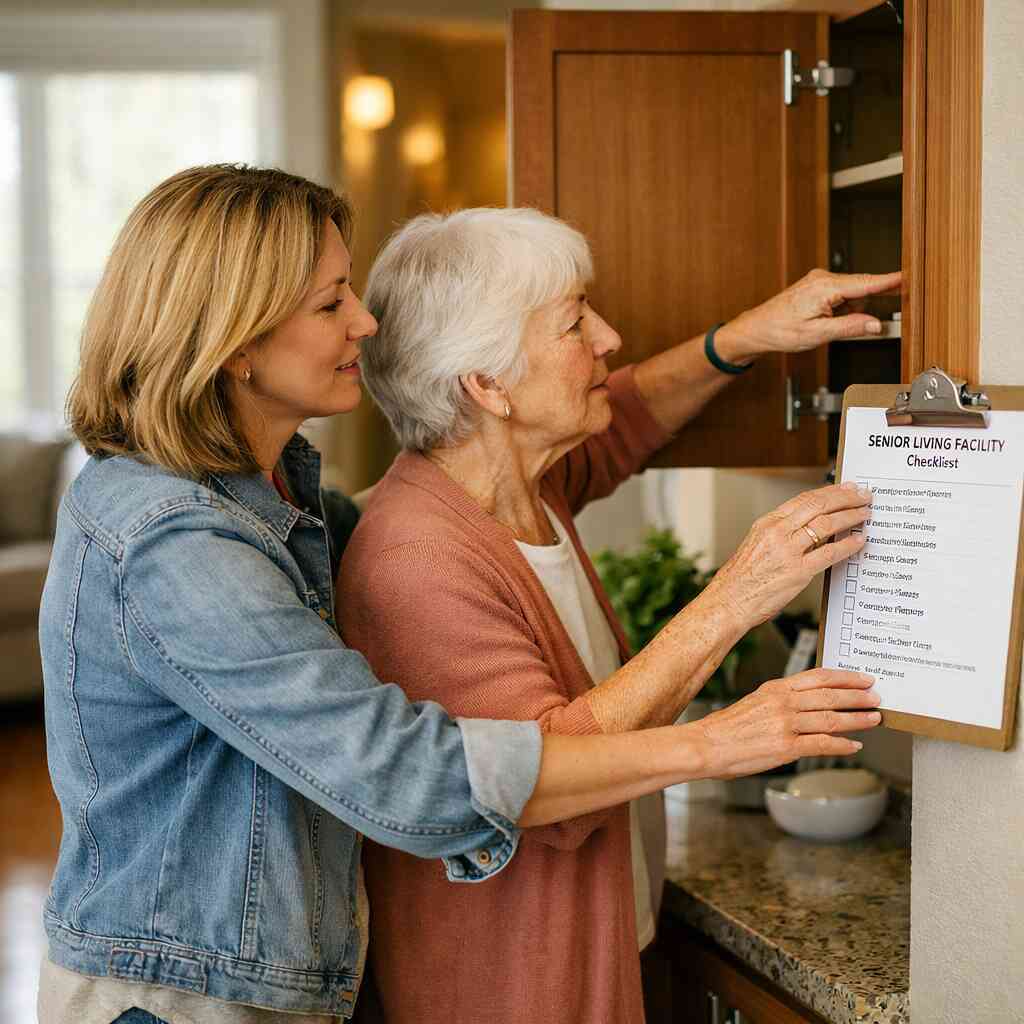
You notice Mom’s forgetfulness is not just normal aging. You are tired, worried, and probably comparing places after dinner. That feeling is heavy, and it can make every tour blur together. The good news is that you can compare senior living facilities with a clear process.
The red flags that make one senior living tour feel right and another feel wrong
Why a polished lobby can hide the real day-to-day experience
A shiny lobby can calm your nerves fast. That is exactly why it can mislead you. I have watched families focus on flowers, chandeliers, and coffee bars, then miss hallway noise and a rushed staff tone. The real test is not the welcome area; it is how people live after the tour guide leaves.
Look past the sales script. Listen for ordinary sounds, not staged answers. Do people greet each other naturally? Do residents seem engaged, or quietly parked in front of a screen? A warm atmosphere matters, but so does function. If you are using a senior living facility checklist for first visits, pay attention to details that do not show up in brochures.
The quiet signs families miss when comparing senior living facility options
The small signals often tell the truth. Check whether staff make eye contact, whether call lights seem ignored, and whether residents look clean and settled. Notice if doors are propped open, if odors linger, or if the dining room feels rushed. Those clues matter more than a polished sales pitch.
One daughter in Tampa told me the deciding moment was not the suite tour. It was seeing a resident ask for water twice before anyone responded. That kind of delay is not proof of a bad community, but it is a warning to ask more. If you are using a free senior living referral service, use it to narrow the field, not skip the observation.
How to separate comfort, safety, and sales language during the first visit
Sales language sounds smooth. Safety language sounds specific. Comfort language should describe daily life, not just feelings. Ask how staff respond after hours, how meals work for diabetic residents, and how transportation is scheduled. If answers stay vague, keep digging.
Here is the part most families miss. A beautiful space is not enough if routines are chaotic. Comfort comes from predictability. Safety comes from clear process. Sales language often avoids both. When you compare senior living facilities near you, keep a notebook and write down exact phrases, not impressions alone.
The care level mismatch that turns a good move into a hard one
Independent living communities versus assisted living locations versus skilled nursing facilities
This is where many families get stuck. The buildings may look similar, but the care models are very different. Independent living communities fit seniors who want fewer chores and more social life. Assisted living locations add help with daily tasks. Skilled nursing facilities support people who need regular nursing oversight and rehabilitation.
The difference between skilled nursing and assisted living is not just paperwork. It changes staffing, clinical supervision, and who can safely live there. A move can feel wrong if the care level is off by even one notch. If your loved one still manages medications, bathing, and meals with light support, a nursing home may be too much. If they need round-the-clock monitoring, independent living will not be enough.
When memory care near me is the better fit than a general senior living facility
Memory loss changes the decision fast. If wandering, confusion, or repeated safety issues are showing up, a general senior living facility may not be enough. That is when what is memory care and how to compare it becomes the right question. Memory care programs usually focus on structure, cueing, and secured environments.
Ask whether the community understands dementia care homes and Alzheimer’s care facilities as a specialized setting, not a marketing phrase. Do they use consistent routines? How do they handle sundowning? What happens if a resident tries to leave? Families often feel relief once they see that memory care is designed for patterns, not just comfort.
How to tell when aging in place is still realistic and when support needs are changing
Aging in place sounds appealing because it is familiar. It works well for some people. But it gets harder when falls, missed medications, isolation, or driving problems start stacking up. The question is not love of home. The question is whether home still matches the care needed.
We hear this from families almost every week. They waited because the kitchen still looked fine and the house was paid off. Then one winter fall changed everything. If you are weighing independent living communities against staying home, look at function first. Safety, medication management, and social support matter more than sentiment.
The paper trail that tells you whether a community is truly trustworthy
How to check CMS star ratings, state licensing, and senior housing regulations without getting lost
Paperwork is boring until it saves you from a mistake. For nursing homes, start with CMS star ratings for nursing homes. CMS ratings reflect health inspections, staffing, and quality measures. They are not perfect, but they are a useful starting point. Then check state licensing, because senior housing regulations vary by state.
State agencies usually publish inspection reports and enforcement actions. That is where patterns show up. One small citation may be fixable. Repeated issues are a different story. If you are comparing senior living regulations, focus on current status, not old marketing language.
What to look for in inspection history, staffing information, and care disclosure documents
Inspection history tells you what happened, not what was promised. Staffing information tells you who is there to respond. Care disclosure documents show what the community says it can handle. Together, they give you a much clearer picture than a tour alone.
Ask whether staffing numbers change on nights and weekends. Ask how turnover affects consistency. Ask who handles care plan updates. If you are reviewing a senior living directory, treat every profile as a lead, not proof. Reliable communities usually answer with specifics, not slogans.
Why board and care homes, residential care facilities, and CCRCs need different verification questions
A board and care home is small and personal. A residential care facility may offer a different mix of support. A continuing care retirement community, or CCRC, adds multiple levels under one campus. Each model needs different questions.
Ask board and care homes about awake staff coverage, medication support, and emergency transfer plans. Ask CCRCs about contract type, entrance criteria, and what happens when care needs rise. For families comparing a continuing care retirement community (CCRC), the contract matters as much as the apartment. That is where trust lives, not in the lobby.
The cost clues families should compare before they fall in love with a place
How to read the real cost of assisted living without getting tripped up by add-ons
The sticker shock usually comes from what is not on the first page. The base rate may look manageable, then add-ons appear for medication help, extra meals, transportation, or higher care levels. That is why the real cost of assisted living by state should be read as a range, not a promise.
The 2023 Genworth Cost of Care Survey is still one of the most cited national references for senior care pricing patterns. Use it to understand direction, then verify local details. Ask for the full fee schedule in writing. If a community hesitates, that is a clue. Transparent communities usually explain charges clearly.
Where to compare Medicaid senior housing, Medicare skilled nursing, long-term care insurance, and VA benefits for senior care
Funding sources work very differently. Medicaid may help with certain senior housing or care settings, depending on state rules and eligibility. Medicare skilled nursing coverage is usually tied to short-term, medically necessary recovery. Long-term care insurance can help with eligible services. VA benefits for senior care may also matter for qualifying veterans.
That mix can feel overwhelming. It is. But it gets easier when you separate room, board, and care. A family in Orlando once compared three places before realizing one would accept a veteran’s benefit and another would not. That changed the math completely. If you need guidance, use senior living advisor help for choosing a facility to sort the options.
Why senior living costs by state can change the entire decision and how to spot affordable senior living options
State lines matter more than many families expect. Senior living costs by state comparison can show wide differences in cost, regulation, and availability. Florida, California, and Texas each bring different market pressures, labor costs, and care rules. That affects your choices.
Affordable does not mean bare bones. It means sustainable for the long run. Look for communities with clear pricing, predictable care tiers, and fewer surprise fees. Also ask about waiting lists, because a low monthly figure means little if the timing does not work. Families searching for affordable senior living options for low-income seniors should compare eligibility rules just as closely as amenities.
The social fit that decides whether a senior living facility feels like home
Which communities for seniors 55 plus support the right level of independence
Social fit is not fluff. It shapes mood, routine, and confidence. Communities for seniors 55+ often work well for active adults who want fewer household burdens and more contact with peers. But they are not all the same. Some feel like resort living. Others feel quiet and simple.
Ask how residents actually spend their days. Do people organize themselves? Is there enough privacy? Do the spaces support a real routine? For some people, 55+ apartments are enough. For others, senior citizen housing with more built-in support makes more sense. The right choice depends on independence, not image.
What pet-friendly assisted living and senior living with no waitlist really mean for daily life
Pets can be emotional anchors. A pet-friendly assisted living community may help a resident feel calmer and more at home. Still, ask about weight limits, vaccination rules, and cleanup expectations. “Pet-friendly” can mean one small cat, not a full family arrangement.
A no-waitlist claim also needs context. It may mean immediate availability today, or it may mean one unit in one wing. Ask what level of care is open now. Ask whether the room fits your budget and care needs. That is how you avoid rushed decisions. Comparing senior living options for families works best when you treat availability as part of fit, not just convenience.
How to compare senior apartment rentals, 55 plus apartments, and senior citizen housing
These labels overlap, but they are not identical. Senior apartment rentals may be age-restricted with minimal services. 55+ apartments usually emphasize lifestyle and community rules. Senior citizen housing can include affordable programs, subsidy options, or more basic setups. The key is to match the model to the person.
Use a simple table when you compare them:
OptionBest forWatch forSenior apartment rentalsIndependent adultsLimited support services55+ apartmentsActive retireesAge rules and feesSenior citizen housingBudget-sensitive seniorsFewer amenitiesThat table should sit beside your care notes, not replace them. The social feel matters. So does the backup plan if health changes.
The care plan details that separate reassurance from vague promises
Questions to ask assisted living about medication support, mobility help, and daily routines
This is where questions to ask assisted living becomes more than a search phrase. Ask who helps with meds, how often care plans are reviewed, and what happens if mobility declines. Ask about bathing, dressing, and toileting support with the same plain language you would use at home. Good communities answer clearly. You want routines, not guesses. Ask how breakfast is served, when assistance is available, and how staff handle early risers. If your loved one sleeps late, that matters. If they need a walker at night, that matters more. Small details reveal whether the plan is real. ### How to compare assisted living plans with the reality of board and care homes or respite care 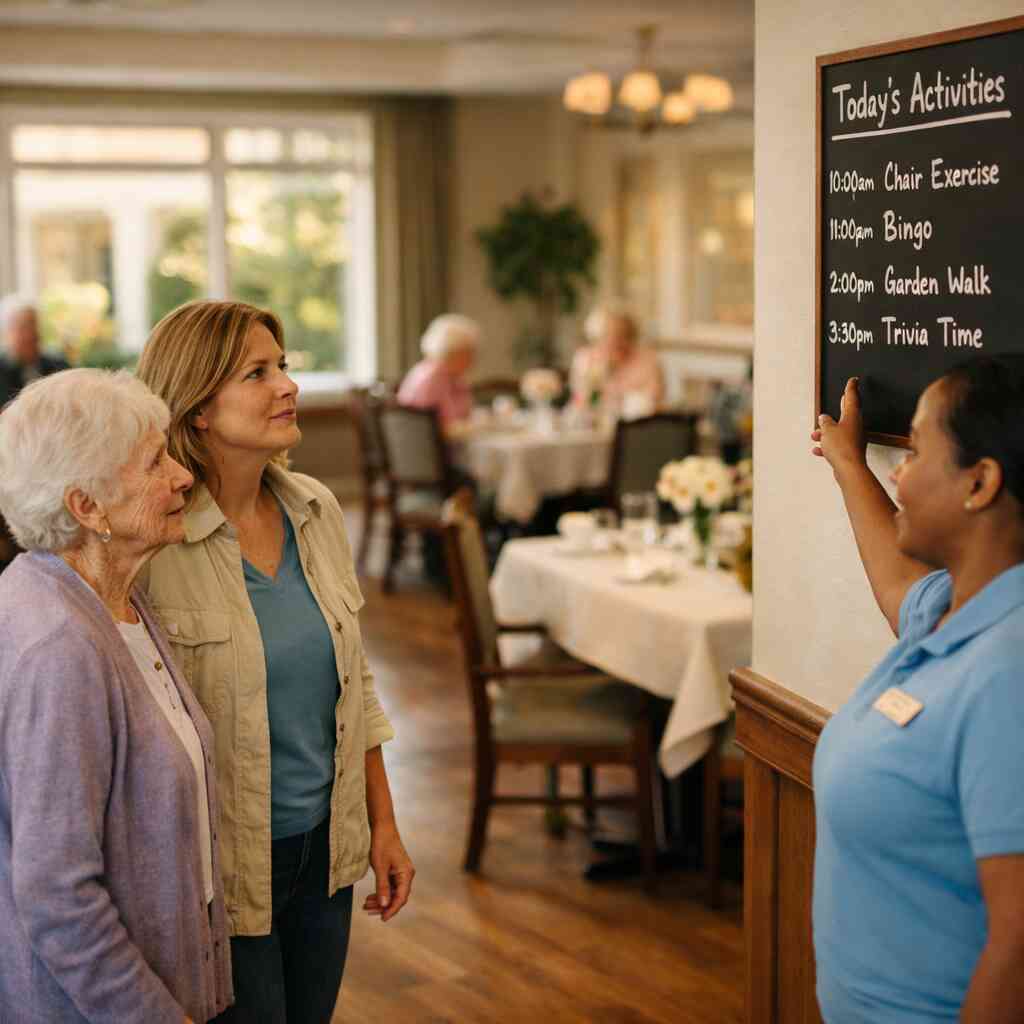
Assisted living plans can look polished on paper. Board and care homes may offer a more intimate setting. Respite care may be the right short-term bridge after a hospital stay or when family caregivers need relief. Each option serves a different purpose.
A family near Sarasota chose respite care after a stroke scare, then used that time to observe what support was actually needed. That pause prevented a rushed move. If you are comparing assisted living vs. nursing home, remember that temporary care and long-term living are not the same decision. The wrong frame creates unnecessary fear.
What to ask when a community says it offers dementia care homes or Alzheimer’s care facilities
Ask what daily structure looks like. Ask how the environment reduces confusion. Ask how staff redirect agitation without escalating tension. Also ask whether the program uses consistent assignments, because familiar faces matter.
A community may say it offers dementia care homes, but the details decide quality. Does it secure exits? Does it use visual cues? Does it train staff in redirection and behavior support? If you are researching what is memory care, look for clear process, not broad claims.
The location clues that matter more than glossy brochures
Why an assisted living locator should be filtered by neighborhood access, hospitals, and family travel time
A strong assisted living locator should help you compare more than ZIP codes. Look at hospital access, family drive time, pharmacy proximity, and grocery options. If family visits will happen weekly, traffic matters. If a specialist is across town, that matters too.
The best location is not always the closest or the prettiest. Sometimes it is the one that reduces stress on everyone. A daughter in the Chicago suburbs once ruled out a lovely community because the winter drive would have been brutal. That was the right call. Convenience is care.
How Florida senior living, California assisted living, and Texas nursing homes can differ in rules and culture
State differences are real. Florida senior living often reflects hurricane readiness and a large retiree population. California assisted living may involve different licensing and cost pressures. Texas nursing homes bring their own staffing, survey, and market realities.
You do not need to master every rule. You do need to ask state-specific questions. What are the licensing standards? How often are inspections posted? Are contracts easy to understand? When you compare communities across states, culture matters as much as amenities.
What local factors change the decision in places with heat, storms, traffic, or spread-out suburbs
Weather can shape care more than people expect. Extreme heat changes transportation and outdoor activity. Storms affect evacuation planning and backup power. Spread-out suburbs make family visits harder, and traffic can wear on older drivers and visiting relatives.
In Phoenix, for example, shaded courtyards and hydration routines matter. In coastal Florida, storm planning matters. In Dallas or Houston, travel time can decide whether a family stays connected. Local reality should show up in the tour. If it does not, ask why.
The staff and family support signals that reveal the true culture
How to verify staff qualifications and ask about training without sounding confrontational
You can ask directly and still sound respectful. Start with simple questions about role, training, and supervision. Ask how many caregivers are on duty, how they are trained for falls or dementia, and how turnover is handled. You are checking safety, not judging people.
If a community gets defensive, note that. Good teams understand why families ask. They should explain whether staff are certified, how medication support is supervised, and who handles emergencies. Never assume qualifications. Verify them. That is part of responsible choosing.
What a strong senior living advisor or senior placement services team should help you compare
A helpful senior living advisor should do more than hand you names. They should help you compare care levels, budgets, locations, and timing. They should also explain when a community is not a fit. That honesty matters.
Good senior placement services should save time without pushing you into a move. They can narrow the search, flag obvious mismatches, and point you toward better questions. If someone promises the perfect answer too quickly, slow down. Real guidance feels useful, not pushy.
When a free senior living referral is useful and when you need to slow down and ask more questions
A free senior living referral service is useful when you need speed, local knowledge, and a shorter list. It is especially helpful if you are balancing work, caregiving, and travel. But referrals should not replace your own judgment.
Use them to gather options. Then verify licensing, care fit, and cost. If the first three places sound identical, ask for more detail. A strong referral should sharpen your thinking, not end it.
The comparison framework that keeps emotion from outrunning evidence
How to build a senior living facility checklist that ranks care, cost, location, and fit side by side
A checklist keeps panic from making the decision for you. Rank each community on care fit, total cost, location, social feel, and staffing confidence. Then add one column for gut reaction. That last column matters, but only after the facts.
Use a simple scale from one to five. Write short notes beside each score. Include things like lighting, meal pace, and resident mood. Then compare all of it side by side. A well-built senior living facility checklist for first visits keeps emotion honest.
Why comparing assisted living vs. nursing home matters differently for short-term recovery and long-term living
This comparison changes depending on the goal. If the need is short-term recovery, a skilled setting may be better. If the need is daily support with a more home-like feel, assisted living may work better. The decision should follow the care need, not the label.
The difference between skilled nursing and assisted living matters for therapy, nursing oversight, and eligibility. Short-term rehab can be appropriate after surgery. Long-term living needs a different lens. Families often make better decisions once they stop asking which is nicer and start asking which is medically and practically right.
How to use a senior living directory to compare communities for seniors 55 plus without losing the bigger picture
A directory is a map, not the destination. It helps you compare neighborhoods, care types, and contact details quickly. But it will not tell you how the hallway feels or how staff respond under pressure. That still requires visits.
Use the directory to build a shortlist. Then compare the shortlist against your checklist and care needs. If you are looking for the best senior living near me, remember that “best” means best for this person, in this season, with these needs. That is a much more useful standard than “most polished.”
The decision filter that turns a long list into one clear next move
Which two or three places deserve a second visit and which should come off the list now
By now, the list should be shorter. Keep the places that answered clearly, matched the care need, fit the budget, and felt steady. Remove the ones with vague answers, hidden fees, or weak staff presence. Two or three serious options are enough.
A second visit should look different from the first. Go at meal time if you can. Ask to see a routine day, not just model rooms. Watch how residents move through the space. That is where the truth shows up.
How to choose between the best senior living near me options when the differences feel small
Small differences matter most when the stakes are high. One place may be better for memory support. Another may be stronger on transportation. Another may simply feel calmer. That is enough to decide.
If you still feel stuck, compare the trade-offs in writing. Call the community that best matches care first, then the one with the best location, then the one with the most transparent staff answers. A senior living advisor can help you break ties without rushing.
What to do after the tours so the final choice feels calm, practical, and future-ready
Do not leave the decision hanging in your head. Sleep on it once. Review notes. Call back with one or two follow-up questions. Then decide with the facts in front of you, not the memory of a beautiful lobby.
Pick one place to revisit and one to remove from consideration today. That is enough progress for one evening. You do not have to solve every future need right now. Start with the next call, and let the rest unfold from there.
Frequently Asked Questions
Question: How do I use How to Compare Senior Living Facilities in 10 Steps to narrow down the best senior living near me?
Answer: Start with the blog’s step-by-step approach and use it as a practical senior living facility checklist. Begin by comparing care level, safety cues, total cost, location, and day-to-day fit rather than relying on a polished tour. Senior Living Facilities helps families search, compare, and connect with communities for seniors 55+, senior apartment rentals, assisted living locations, independent living communities, and more across all 50 states. That makes it easier to build a shortlist from a trusted senior living directory, then revisit the communities that truly match your loved one’s needs. The goal is not to find the flashiest place, but the one that feels right, answers clearly, and fits the care situation now and later.
Question: What questions to ask assisted living communities when comparing assisted living plans, board and care homes, and respite care options?
Answer: Focus on the details that affect daily life. Ask how medication support works, how mobility help is handled, what happens after hours, how care plans are updated, and whether the community can support changing needs. It also helps to ask about staffing patterns, dining routines, and whether the environment is suitable for someone who may need more support later. Senior Living Facilities encourages families to compare assisted living plans alongside board and care homes and respite care so the decision fits the person, not just the brochure. If a community gives vague answers, that is a signal to keep asking or compare another option through a senior living advisor or free senior living referral.
Question: How does Senior Living Facilities help families understand assisted living vs nursing home and the difference between skilled nursing and assisted living?
Answer: Many families are comparing two very different care models without realizing it. Assisted living is generally designed for help with daily tasks, while skilled nursing facilities provide a higher level of nursing oversight and rehabilitation support. Senior Living Facilities helps make that difference easier to understand by letting you search and compare housing options for seniors based on care level, not just appearance. That matters when deciding between a long-term care facility, a nursing home, or a more home-like assisted living location. Families can also compare memory care near me options, dementia care homes, and Alzheimer’s care facilities when memory support becomes part of the decision. The right choice is the one that matches current care needs and can adapt as those needs change.
Question: Can Senior Living Facilities help compare cost of assisted living, senior living costs by state, and funding options like Medicaid senior housing or Medicare skilled nursing?
Answer: Yes, and that comparison is often where families gain the most clarity. The blog highlights that the true cost of assisted living can include add-on fees, so it is important to review the full fee structure and not just the base rate. Senior Living Facilities helps families compare senior living costs by state, look at different senior living options, and understand how funding sources may apply depending on the situation. That can include Medicaid senior housing, Medicare skilled nursing coverage, long-term care insurance, and VA benefits for senior care when relevant. Families can also use the site to explore affordable senior living and senior living for low-income seniors while keeping dignity, safety, and social connection in view. When cost is compared carefully, it becomes easier to find sustainable rental housing for seniors without rushing the decision.
Question: What should I look for when comparing memory care near me, aging in place, and senior citizen housing?
Answer: Start by looking at safety, routine, and how much support is truly needed. If memory loss, wandering, confusion, or repeated safety issues are becoming more common, what is memory care becomes an important question, because memory care is designed around structure and cueing that general senior housing may not provide. If the person is still mostly independent, aging in place or senior citizen housing may still be realistic, especially when paired with the right support services. Senior Living Facilities helps families compare independent living communities, 55+ apartments, senior apartment rentals, and assisted living locations so the plan fits the person’s daily reality. The search tools and senior placement services can also help you narrow down pet-friendly assisted living, senior living with no waitlist, or luxury senior retirement communities if those features matter. The key is to match the setting to the actual needs, not the wish list.
Question: Why should I trust Senior Living Facilities when comparing CMS star ratings, senior housing regulations, and senior living advisor support?
Answer: Because the platform is built to help families compare with more confidence and less stress. Senior Living Facilities brings together search, comparison, and connection in one place, so you can review communities side by side and use trusted tools like CMS star ratings, inspection history, and senior housing regulations as part of the decision-making process. The platform is designed to support careful comparison across assisted living locations, nursing home options, continuing care retirement community (CCRC) choices, residential care facilities, and skilled nursing facilities without making you do all the work alone. Families can also use senior placement services or a free senior living referral to save time while still verifying details themselves. That combination of guidance and independence is especially helpful when choosing a senior living facility, because the right decision should feel informed, practical, and calm.
Admin
Expert contributor specializing in senior living care. Dedicated to providing families with clear, actionable advice.