Intergen Life at Senior Living Facilities What It Means
Bridging Years in One Place: The New Frontier of Senior Living
Weaving multigenerational senior housing into the American fabric
American neighborhoods once placed grandparents on the porch, teens on skateboards, and toddlers in chalk-lined driveways. Over the decades, zoning rules, rising land costs, and single-purpose buildings separated these age groups. Multigenerational senior housing is knitting that familiar tapestry together again. By welcoming older adults into campuses that also host children and working parents, senior living facilities evolve from quiet enclaves into community crossroads. The result is a living arrangement where communities for seniors 55+ thrive beside playground chatter and farmers’ markets.
Within a mixed-age independent living community, design details encourage effortless mingling. A wide veranda might border both the senior apartment rentals and the on-site preschool, creating spontaneous hellos each morning. Shared art studios invite retirees to teach ceramics while seventh graders experiment with glazes. These daily overlaps build social capital faster than any scheduled mixer. When intergenerational living communities feel woven into everyday routines, respect and empathy spread naturally across decades.
Why intergen living communities resonate with families today
Modern families juggle demanding careers, skyrocketing housing prices, and a longing for reliable support systems. Intergen living communities address every challenge at once by positioning grandparents, children, and neighbors within one supportive hub. Residents gain on-site childcare, elders enjoy constant purpose, and parents know trusted eyes watch their kids if meetings run late. That practical convenience explains why cross-generational connections in assisted living are no longer fringe concepts but mainstream expectations.
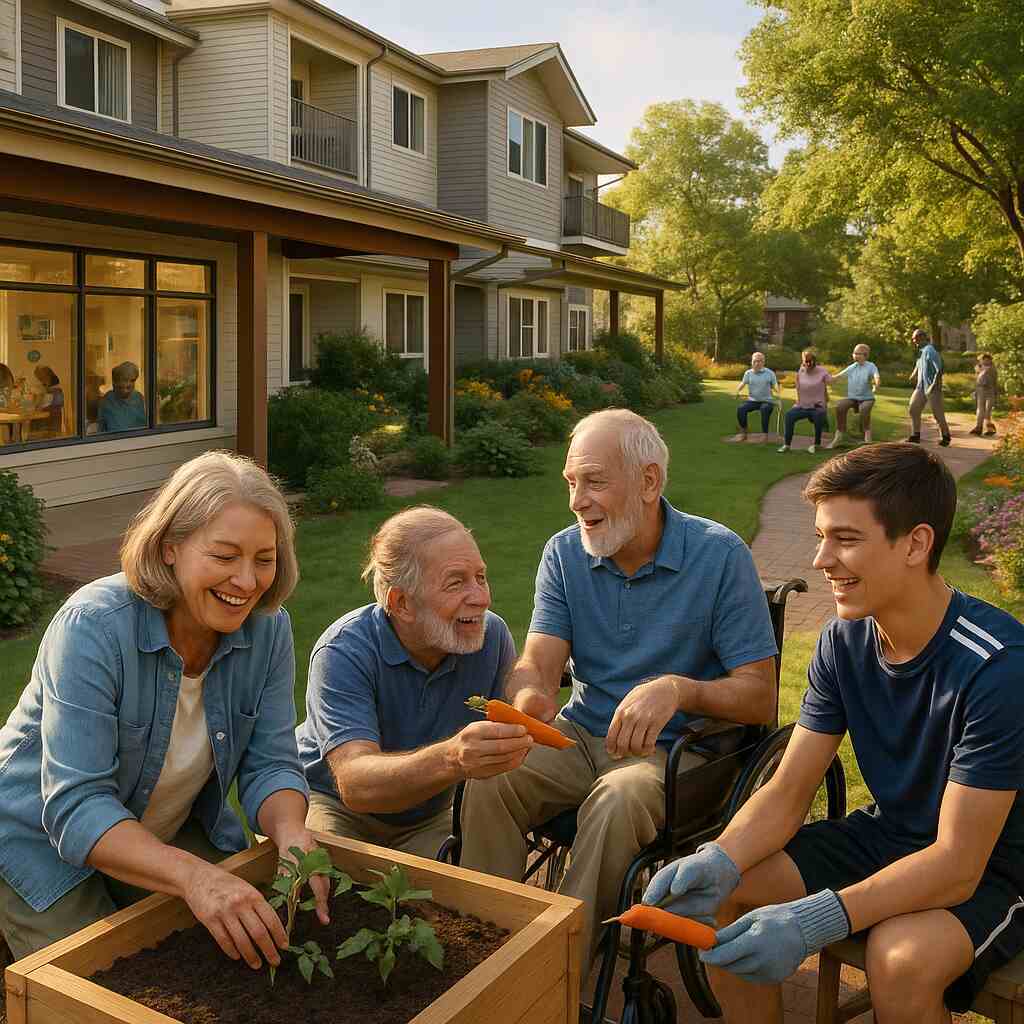
Emotional benefits reinforce the appeal. Older adults rediscover roles as mentors, coaches, and storytellers instead of passive care recipients. Meanwhile youngsters witness aging as a vibrant, engaged stage of life rather than something to fear. Shared wisdom programs in senior living facilities-such as memoir writing workshops or community gardening for all ages-turn mutual dependence into mutual growth. The arrangement feels less like a service and more like belonging.
The role of a senior living locator in the discovery journey
Finding the perfect intergen campus can feel daunting because property websites rarely reveal daily energy or cultural fit. A trusted senior living locator translates abstract brochures into lived realities by comparing amenities, staffing models, and neighborhood engagement. Families using a resource that lets them compare senior housing options near you quickly filter for communities where playgrounds sit beside assisted living plans rather than across town.
Locators also coach visitors on what questions unlock the truth behind polished tours. They prompt families to observe whether teens volunteer in the memory-care garden, or if the dining schedule accommodates school pick-up times. Those seemingly small details signal whether the advertised multigenerational vision actually thrives. By spotlighting genuine intergen benchmarks, the locator speeds confident decisions and minimizes relocation stress.
Social connection across generations as a core care metric
Forward-thinking providers now track friendship density, event participation, and resident mood with the same rigor as blood-pressure readings. These metrics to gauge social connection quality illuminate how effectively a campus sparks meaningful cross-age bonds. When data reveals that residents greet three different age groups daily, leaders know the design truly promotes relationship-rich living.
Qualitative feedback matters, too. An elder’s smile while describing yesterday’s technology tutoring by teens counts as real-world evidence of thriving. Administrators document such stories to refine program calendars and allocate budgets toward high-impact gatherings. Over time, these insights prove that human connection is not a luxury extra but a measurable health intervention embedded in every successful senior living facility.
From Concept to Campus: Anatomy of an Intergen Senior Living Facility
Mixed-age independent living community blueprints
Blueprints for a mixed-age independent living community start with corridors that invite chance meetings, not silent passing. Architects cluster mailboxes, coffee nooks, and workout studios along one walk to ensure overlap. Transparent staircases replace hidden elevators so youthful energy reaches every floor. Outdoor seating blends shaded benches with child-sized picnic tables. Research on design factors shaping intergen senior campuses 2026 confirms that proximity and visibility drive cross-generational connections. Therefore, planners map sightlines as carefully as exits. Each decision answers one question: will residents of every decade see, hear, and greet one another daily?
The infrastructure also anticipates future mobility shifts without stigmatizing age. Floors accept modular rails that appear like modern decor until needed for balance. Lighting stays balanced at eye level to assist both toddlers and older adults with depth perception challenges. Wi-Fi nodes blanket courtyards because video calls with grandchildren or professors may happen anywhere. By embedding accessibility into beauty, senior living facilities prove that inclusive design can feel aspirational.
Cohousing models for seniors 55 plus nested in vibrant neighborhoods
Unlike gated complexes, cohousing models for seniors 55 plus weave private dwellings around a shared commons. Residents still own or lease personal kitchens and bedrooms, yet share decision making on gardens and budgets. This governance nurtures autonomy while delivering built-in social safety nets. Housing options for seniors meet walkable streets, lively cafés, and transit stops that encourage daily exploration. The neighborhood benefits as elders mentor storefront start-ups and watch school crossings.
Communities for seniors 55+ that adopt cohousing principles often layer multiple care levels close by. An assisted living locator can later guide residents toward on-campus suites if health needs change. This continuum keeps friendships intact even during medical transitions. It also lessens pressure on distant adult children by ensuring help sits across the courtyard, not across town. Scholars label the model senior housing as promoting age diversity with dignity.
Childcare within senior living campuses reimagining daily rhythms
Placing childcare within a senior living facility sparks symphonies of routine interactions. Morning drop-off synchronizes with elders’ strolls, creating spontaneous waves and high-fives. Story time becomes richer when a retired librarian voices each character. Parents value convenience, while kids absorb respect for older generations. The arrangement transforms separate errands into one joyful commute.
Operationally, leaders schedule naps opposite peak therapy sessions to minimize hallway congestion. These cross-generational connections in assisted living environments demonstrate measurable cognitive gains. They coordinate security protocols so badge systems recognize both family visitors and nursing staff. Long-term care facility administrators report higher resident vitality scores alongside child laughter indices. Regulators now note fewer isolation complaints than in traditional nursing homes for the elderly. In short, young energy functions like non-pharmacological medicine.
Senior apartment rentals with intergen amenities that spark community gardening
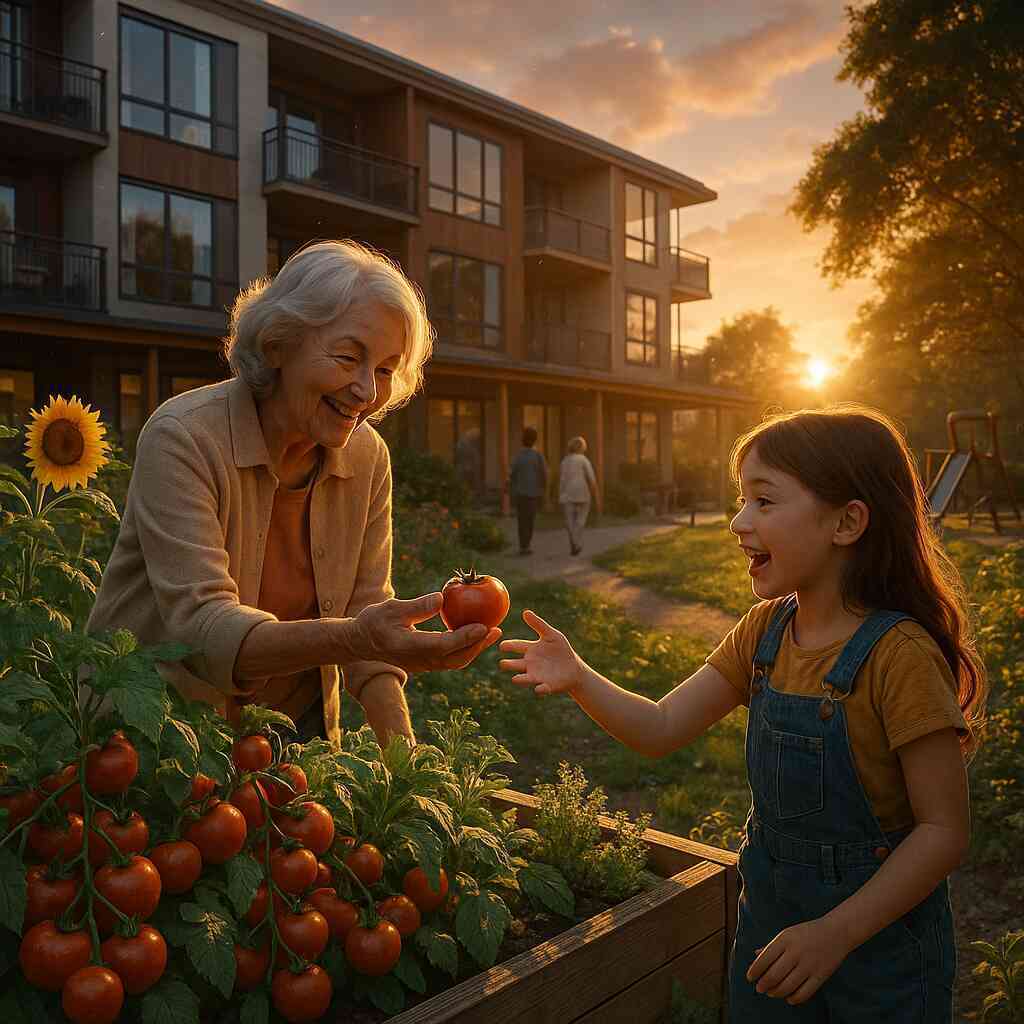
Senior apartment rentals succeed when amenities inspire purpose beyond comfortable beds. Rooftop greenhouses invite seasoned growers to tutor first-grade classes on seed sprouting. Raised beds at accessible heights let wheelchair users join harvest days. Produce then travels to an on-site café where teens practice culinary skills beside grandfriend volunteer initiatives. The cycle nourishes bodies and relationships simultaneously.
Developers keep rents stable by allocating a portion of produce sales toward maintenance funds. This circular economy differentiates their senior living near me listings from sterile high-rise alternatives. Residents proudly showcase tomato vines during tours, convincing families that assisted living plans can be vibrant. Prospective tenants sense authenticity because soil under fingernails cannot be staged. Consequently, waiting lists grow, proving that community gardening for all ages sells itself.
 Programming that Unites Shared Wisdom and Mutual Growth
 Programming that Unites Shared Wisdom and Mutual Growth
Storytelling circles bridging generations and cultures
Storytelling circles give intergenerational living communities a heartbeat that is both ancient and remarkably fresh. Older adults share migration tales, while grade-school neighbors recount science-fair triumphs, weaving diverse perspectives into one tapestry. These storytelling circles bridging generations nurture empathy because each listener imagines life through another decade’s eyes. Memory-care residents practice recall in a nonclinical setting, strengthening cognitive pathways while feeling admired, not examined. Parents attending after work hear their children applaud elders, which confirms that multigenerational senior housing supports mutual respect.
Shared wisdom programs in senior living facilities flourish when staff become invisible facilitators rather than formal hosts. Chairs form welcoming circles near fireplaces, not conference tables, signaling warmth. Conversation prompts appear on colorful cards to reduce anxiety about speaking first. Attendance logs reveal that residents who participate weekly report fewer feelings of isolation than their peers. Administrators use insights on multigenerational support programs to refine themes, ensuring every voice finds relevance.
Technology tutoring by teens for older adults building digital confidence
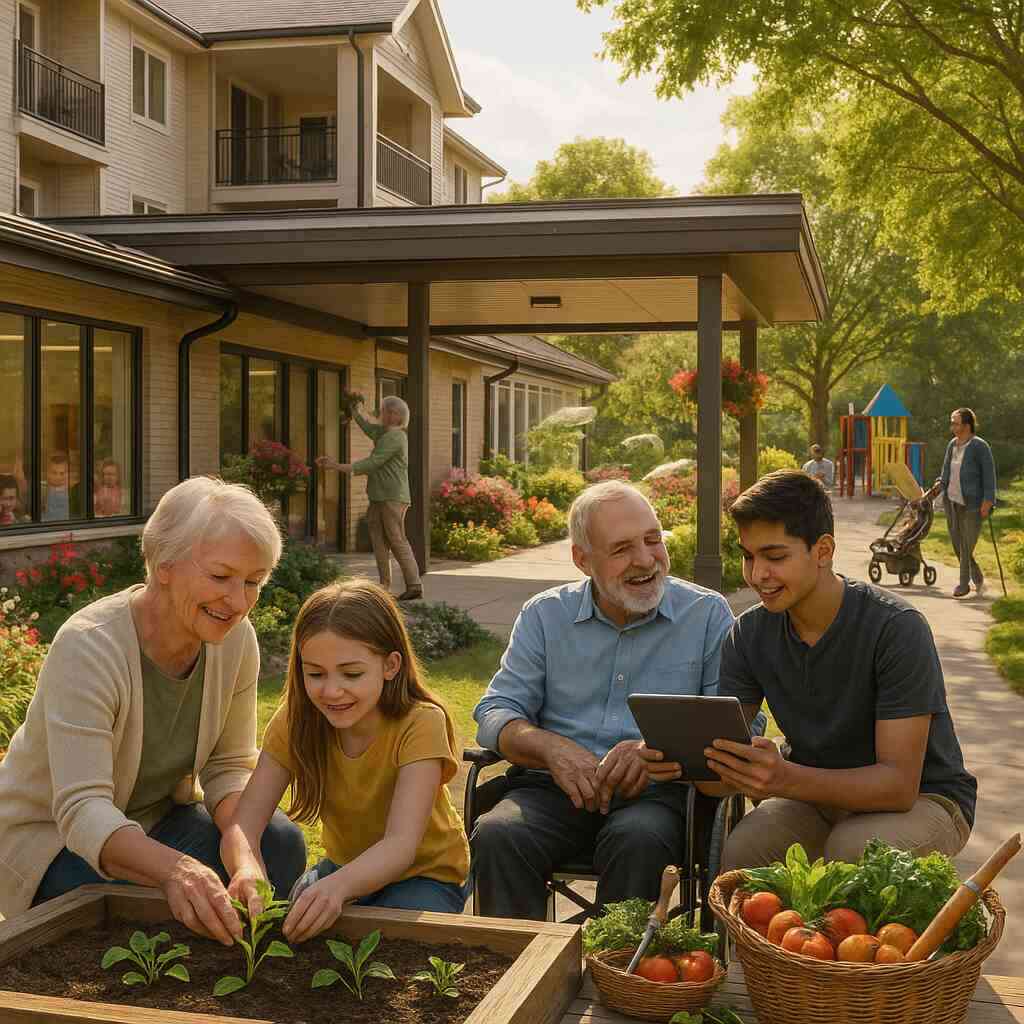
Teens armed with patience turn community libraries into buzzing innovation hubs. They sit beside residents, guiding fingers across touchscreens until video calls connect smoothly. Laughter replaces frustration as gentle coaching transforms hesitancy into victory. Technology tutoring by teens for older adults builds digital confidence that extends beyond the lesson, empowering elders to manage telehealth portals independently. These cross-generational connections in assisted living environments reduce staff burden because knowledgeable residents troubleshoot for friends.
Senior Living Facilities urges communities to track success through simple, meaningful metrics. Surveys measure how many elders can now order groceries online without assistance. Classroom photographs displayed on hallway digital boards celebrate progress visually. Program leaders review data with boards every quarter, comparing outcomes against national metrics to gauge social connection quality. Continuous feedback loops keep the curriculum current as technologies evolve and teenagers cycle through graduation.
Age inclusive fitness classes and music therapy spanning generations
Age-inclusive fitness classes in senior living ignite energy from toddlers to octogenarians. Morning yoga incorporates chair modifications, letting grandparents stretch beside grandchildren holding playful poses. Cardiologists praise the model because shared movement sustains adherence; no one wants to skip when a five-year-old partner awaits. Parallel music therapy sessions layer drumming, humming, and seated dancing, blending developmental benefits across age ranges. The multisensory environment boosts dopamine levels for everyone present.
Program designers embed subtle safety measures without dampening spontaneity. Color-coded mats designate balance zones, while volume levels stay within recommended decibel ranges for sensitive ears. Instructors trained in geriatrics and child development cue modifications instantly, preventing injury. Participants leave class with new workout buddies two generations apart, reinforcing social connection across communities for seniors 55+. Feedback cards show that mutual accountability increases weekly attendance more than traditional reminders ever did.
Grandfriend volunteer initiatives and intergen mentorship programs
Grandfriend volunteer initiatives pair residents with local students needing extra encouragement. Matches read comic books, bake heritage recipes, or repair bicycles, turning ordinary tasks into intergen mentorship programs for seniors and youth. The reciprocity feels authentic because both givers and receivers learn simultaneously. Elders regain purpose, students gain trustworthy listeners, and parents observe character growth in a real-world laboratory. These programs also help retirement community staff identify resident talents previously hidden.
When volunteer sessions span seasons, relationships deepen into family-like bonds. Graduation ceremonies include honorary “grandparents” on stage, reinforcing belonging. Assisted living plans fostering frequent family visits integrate these volunteers seamlessly by syncing schedules with visiting hours. Administrators document reduced behavioral incidents among memory-care residents who participate as mentors, proving purpose can calm agitation. External funders often sponsor supplies once they witness return-on-connection metrics.
Lifelong learning partnerships with local colleges fueling curiosity
Lifelong learning partnerships with local colleges transform senior apartment rentals into campus extensions. Professors offer mini-courses in poetry, coding, or environmental science within the community auditorium. Seniors attend alongside gap-year students, challenging stereotypes about who deserves advanced study. The arrangement enriches academic discourse because lived experience meets new research, creating multidirectional mentoring. College advisers note improved retention among younger students who collaborate with reflective peers.
Housing options for seniors gain a competitive edge when education features prominently. Shuttle buses run between residence halls and lecture halls, encouraging spontaneous coffee chats after class. Residents access libraries remotely through community Wi-Fi, continuing discussions late into the evening. These partnerships also attract faculty seeking housing nearby, seeding continuous intellectual exchange. Ultimately, the campus-to-community bridge showcases how senior housing promoting age diversity fuels lifelong curiosity without leaving home.
Measuring Impact Resident Outcomes and Community Value
Cognitive and emotional benefits in memory care with family engagement
Memory-care neighborhoods that invite grandchildren into daily routines record surprising health gains. Residents who read picture books aloud regain word recall faster than peers practicing alone. Emotional regulation improves because familiar faces anchor disoriented moments. Staff log fewer exit-seeking behaviors during weeks filled with multigenerational visits. Family presence adds layered sensory cues that spark dormant memories, reinforcing neural pathways. Research teams now track smiles per hour alongside medication levels, positioning joy as a clinical outcome. A recent review on life quality enhancements in senior communities highlights these findings for care planners nationwide.
Families also gain confidence when they witness loved ones flourishing inside an attentive senior living facility. Transparent data dashboards display mood scores, activity attendance, and conversational frequency. These metrics prove that social connection across generations can equal or surpass pharmaceutical interventions. Intergenerational living communities therefore turn anecdotal success into verifiable science. The result is a feedback loop where families visit more often because the impact is visible, and residents thrive because families visit.
Assisted living plans fostering frequent family visits and cross generational connections
Forward-thinking assisted living plans schedule meals, transportation, and events around relatives’ availability. Weekend brunch buffets replace weekday banquets, making it easier for working parents to join their elders. Children’s reading corners sit beside adult lounges, encouraging cross-generational connections in assisted living without additional staffing. Facility leaders notice a clear pattern: the more predictable the family-friendly design, the higher the resident satisfaction scores. Every smile logged at the entrance scanner validates the investment.
Regional examples illustrate the model’s power. A campus celebrated for family-engaged assisted living in New York reports thirty percent more outside visitors than comparable properties. Staff attribute the surge to flexible visiting hours and joint art workshops that welcome every age. Seniors mentor grandkids through watercolor projects while parents network with other caregivers. These multigenerational sessions transform routine visits into anticipated adventures, raising occupancy and lengthening resident tenure.
Economic sustainability of multigenerational senior housing in rental markets
Developers once feared that playgrounds beside senior apartment rentals would scare away mature tenants. Market data now tells a different story. Demand for multigenerational senior housing in California outpaces supply, enabling owners to maintain competitive rents with minimal concessions. Families are willing to pay slightly more for communities that blend privacy, security, and organic social life. Investors appreciate reduced turnover because multigenerational bonds discourage relocation.
Operating expenses also fall when shared amenities serve multiple age groups all day. A greenhouse becomes a preschool classroom in the morning and a horticulture club venue in the afternoon. This constant utilization spreads maintenance costs across programs rather than isolating them. Mixed revenue streams-tuition, event fees, and produce sales-stabilize budgets during economic swings. Successful pilots of multigenerational senior housing in California now influence lending criteria nationwide.
Long term care facility hosting youth internships as a workforce pipeline
A long-term care facility can double as a training ground for future geriatric professionals. High-school interns shadow nurses, assist with mobility exercises, and catalog resident oral histories. These structured programs provide students with service hours while expanding the facility’s talent pool. Residents benefit from youthful energy, and staff gain relief from routine tasks. Surveys reveal higher morale when multiple generations collaborate toward health goals.
State boards increasingly recognize internship partnerships as best practice. Facilities praised for senior living campuses fostering youth visits in North Carolina report stronger applicant pipelines for nursing assistant roles. Graduates who once volunteered return as certified employees, reducing recruitment costs. The continuity preserves institutional knowledge and deepens community culture. What began as a creative volunteer idea now operates as a strategic workforce initiative.
Data driven insights from senior living near me pilots across states
Facilities measure success through occupancy rates, health outcomes, and digital sentiment analysis. Dashboards aggregate data from motion sensors, wearable devices, and event RSVPs. Analysts compare intergenerational campuses with traditional models in matching zip codes. Early findings show twenty percent fewer emergency transports and markedly higher happiness indices when age diversity is present.
Access to standardized metrics empowers consumers. Families browsing a nationwide senior living facilities directory can filter by social-connection scores, not just square footage. Transparent reporting advances E-E-A-T principles by demonstrating measurable expertise and trustworthiness. As more states adopt open benchmarking, poorly performing properties either evolve or exit the market. Ultimately, data-driven accountability ensures that every senior living near me search leads to a community where all generations thrive together.
Stepping Into Shared Tomorrows: How to Find or Build Your Intergen Community
 Stepping Into Shared Tomorrows: How to Find or Build Your Intergen Community
Using Senior Living Facilities to search compare and connect
Finding a community that blends toddlers’ giggles with elders’ wisdom starts with a focused search. The Senior Living Facilities platform lets families enter a zip code and instantly view senior living near me results filtered for intergenerational offerings. Clear icons identify on-site childcare, shared classrooms, and garden collaborations so users can compare at a glance. Because each listing shows care levels, rental terms, and activity calendars, shoppers see whether an independent living community or an assisted living plan suits their evolving needs. The side-by-side view prevents decision fatigue and keeps attention on real quality-of-life factors, not marketing fluff.
After narrowing choices, a built-in messaging tool connects prospects with community directors or a seasoned assisted living locator from the Senior Living Facilities team. This concierge support clarifies pricing, wait-list policies, and program authenticity before anyone schedules a tour. Families appreciate the guidance because multigenerational senior housing requires extra coordination around school districts, volunteer background checks, and meal-time flexibility. By centralizing questions, the platform turns a potentially stressful process into an empowering journey. Ultimately, the search-compare-connect flow offers a roadmap that respects both urgency and discernment.
Questions to ask when touring senior living near you with intergenerational programs
Savvy visitors walk into a tour armed with open-ended questions that reveal culture beneath décor. Start by asking residents how often they interact with younger neighbors outside scheduled events, because spontaneous contact drives social connection across generations. Next, inquire how staff adapt activities for multiple ability levels during age-inclusive fitness classes in senior living spaces. You should also request data on friendship density or volunteer participation, since numbers validate marketing claims. Finally, confirm transportation logistics for school pick-ups or college lectures to ensure daily rhythms remain practical.
Equally important is evaluating physical design. Observe whether hallways encourage chance meetings or funnel age groups into isolated wings. Check if community gardening for all ages sits near memory-care patios, allowing safe yet visible engagement. Ask maintenance staff how playground noise is moderated during rest hours, signaling respect for every resident’s comfort. These tangible details expose the depth of planning behind any intergenerational living community. Leave the tour only after speaking with at least one parent, one grandfriend volunteer, and one healthcare professional for 360-degree insight.
Collaborating with city planners and nonprofits to expand housing options for seniors
Sometimes the perfect intergen campus does not yet exist in your neighborhood, so community advocacy becomes essential. Begin by attending town-planning meetings where zoning ordinances for mixed-age independent living communities are reviewed. Bringing testimonials from successful properties helps officials visualize economic and social returns. Partnering with nonprofits focused on family services or aging in place can unlock grant funding for experimental pilot projects. These alliances often convert vacant schools into senior apartment rentals with on-site preschool wings.
Developers gain incentives when citizens articulate clear demand. Draft letters outlining how rental housing for seniors integrated with public parks bolsters local commerce and public safety. Suggest tax abatements tied to measurable outcomes like reduced emergency calls from isolated elders. When municipalities and advocacy groups collaborate early, design solutions emerge that respect both architectural heritage and modern accessibility guidelines. The result is a vibrant neighborhood where every generation thrives without displacement.
Future trends for senior living in every state toward age inclusive neighborhoods
Momentum already points toward statewide policies that reward projects uniting diverse age brackets. Some regions now fast-track permits for cohousing models for seniors 55+ that reserve units for teachers or first-time parents, creating organic mentorship webs. Technology will further blur age barriers as smart sensors monitor wellness while also supporting toddlers’ safety standards outlined in the smart tech criteria empowering older and younger residents. Expect grocery delivery drones, voice-activated elevators, and adaptive lighting to become default features.
Geographic flavor will remain, yet the underlying philosophy stays consistent: inclusive by design. Mountain states may emphasize active adult living with childcare in adventure-oriented settings, while coastal metros could prioritize arts-based intergen hubs. Already, pilot campuses such as the highly regarded intergenerational friendly senior living in Texas demonstrate that expansive recreational space can coexist with robust medical suites. As pilot data proves favorable ROI, lenders and legislators will increasingly favor age-integrated blueprints over segregated models.
Final reflection on the power of living learning and thriving together
Choosing an intergenerational senior living facility is more than a real-estate transaction; it is a declaration about the society we wish to nurture. When meals, music, and mentorship flow freely between decades, everyone gains resilience and purpose. Elders feel valued, children gain steady role models, and parents discover an extended village ready to help. Communities for seniors 55+ transform into laboratories of empathy where stories, skills, and dreams are exchanged daily.
Senior Living Facilities stands ready to guide families, developers, and civic leaders toward these shared tomorrows. By spotlighting proven campuses and supporting new ventures, the platform helps rewrite what aging-and living-can look like in America. Take the next step, explore the listings, ask bold questions, and imagine the laughter that could echo through your future hallway. Together, we can turn a vibrant vision into an everyday reality.
Frequently Asked Questions
Question: How do intergenerational living communities differ from traditional senior housing, and how can Senior Living Facilities help me find one near me?
Answer: Intergenerational living communities intentionally weave seniors, children, and working adults into one shared campus, replacing the age-siloed model found in many nursing homes for the elderly. You’ll see on-site childcare, storytelling circles bridging generations, and community gardening for all ages-all designed to boost social connection across generations. Senior Living Facilities maintains a nationwide directory that lets you search, compare, and connect with senior living near me listings that specifically advertise multigenerational senior housing. Simply enter your ZIP code, filter by intergenerational programs, and our assisted living locator will guide you through pricing, wait-lists, and culture fit so you can confidently choose the right community.
Question: What physical and programmatic features signal a strong mixed-age independent living community that fosters cross-generational connections in assisted living settings?
Answer: Look for wide verandas linking senior apartment rentals with playgrounds, shared art studios that double as after-school labs, and age-inclusive fitness classes in senior living spaces. These design choices promote daily overlap rather than once-a-month events. Programmatically, ask about technology tutoring by teens for older adults, grandfriend volunteer initiatives, and intergen mentorship programs for seniors and youth. Senior Living Facilities reviews each property for these exact indicators before it appears on our platform, ensuring you tour only communities built for genuine age diversity.
Question: How do Senior Living Facilities measure the quality of social connection across generations when recommending a senior living facility?
Answer: Our evaluation team tracks friendship density scores, event participation rates, and resident mood surveys-key metrics to gauge social connection quality. We also request data on spontaneous interactions, such as how often residents from communities for seniors 55+ greet preschoolers outside scheduled activities. Facilities that demonstrate consistent, data-backed engagement earn higher visibility on our site, giving families a transparent way to compare senior housing promoting age diversity.
Question: Can programs like age-inclusive fitness classes, technology tutoring by teens, and community gardening for all ages really improve resident well-being in multigenerational senior housing?
Answer: Absolutely. Research shows that shared movement and music therapy spanning generations elevate dopamine levels and reduce feelings of isolation. Technology tutoring boosts digital confidence, enabling elders to manage telehealth independently. Community gardens provide purposeful activity, fresh produce, and organic chances for mentorship. Properties listed on Senior Living Facilities that combine these programs report fewer emergency transports and higher resident satisfaction than traditional long-term care facility models.
Question: The blog Intergen Life at Senior Living Facilities What It Means highlights grandfriend volunteer initiatives-how can an assisted living locator connect my family with communities that offer these opportunities?
Answer: When you reach out through Senior Living Facilities, our assisted living locator will first identify senior living near you that features grandfriend volunteer initiatives, intergen dining experiences in nursing homes, or youth internship pipelines. We verify program depth by speaking with activity directors, reviewing participation logs, and even checking how these initiatives integrate with assisted living plans fostering family visits. You’ll receive a curated short-list, questions to ask on tour, and personal introductions to program coordinators so your loved one can begin mentoring-and thriving-on day one.
Admin
Expert contributor specializing in senior living care. Dedicated to providing families with clear, actionable advice.