Smart Tech Adoption Criteria at Senior Living Facilities
Setting the Stage for Smart Senior Living
The evolution from call buttons to cognitive buildings
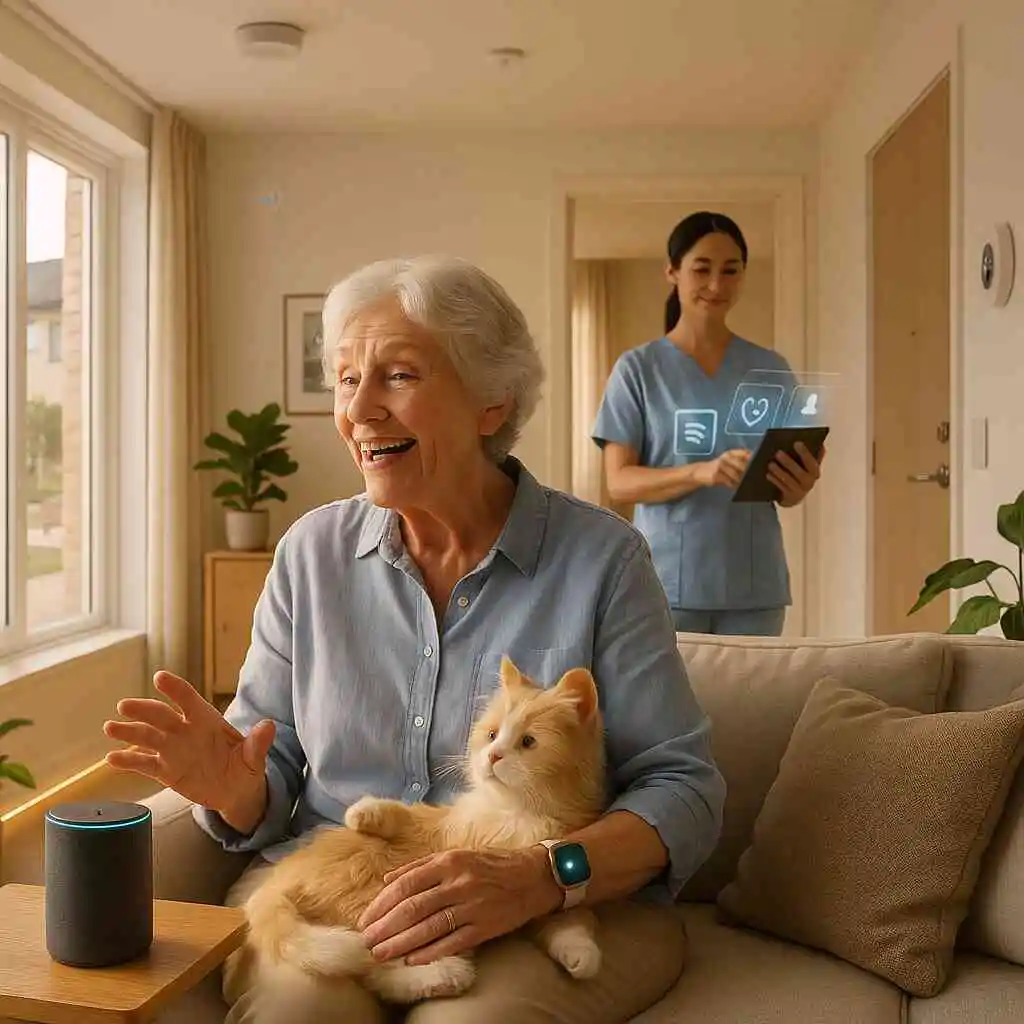
A generation ago, emergency call buttons hung near beds and represented the peak of safety tech in many senior homes. Today, smart sensor integration in senior living facilities transforms passive rooms into proactive guardians of resident well-being. Embedded radar, environmental microphones, and AI-driven fall detection systems learn normal movement patterns and flag anomalies within seconds. Lighting adjusts automatically, HVAC anticipates breathing rates, and voice-activated care coordination connects a nurse without pushing any plastic button. These innovations rest on smart technology frameworks for senior living facilities that standardize data flows and simplify upgrades across properties.
The building itself now behaves like a cognitive organism, continuously sensing, analyzing, and responding to subtle changes. Predictive analytics crunch resident mobility trends, feeding dynamic care plans that staff review during each morning huddle. Maintenance teams receive machine-learning alerts before a failing elevator traps a wheelchair user. Meanwhile, family portals stream real-time updates, increasing transparency and reinforcing trust between generations. What began as isolated gadgets has evolved into a unified nervous system supporting every activity of daily living.
Why is now the time to adopt the curve in senior living near you
Market studies reveal that adoption curves in every senior living facility cluster around pivotal cost and confidence thresholds. Once pricing aligns with operational budgets, executive directors green-light pilots that quickly spread through sister communities. Residents also accelerate uptake when they witness neighbors enjoying voice-first interfaces for visually impaired residents. Social proof, rather than spec sheets, propels momentum in seniors living community circles. Timing technology rollouts with annual capital planning cycles therefore maximizes funding opportunities and avoids midyear budget shocks.
Regional infrastructure further shapes readiness; urban smart senior housing in New York enjoys backbones, while rural campuses await 5G towers. Providers track these variables using adoption heat maps that highlight senior living near you queries surging online. Marketing teams then tailor messages around convenience, safety, and independence to match local search intent. By syncing market signals with technology maturity, operators protect themselves from premature bets on unproven tools. This disciplined cadence ensures sustainable innovation, not gadget churn.
Aligning smart tech goals with resident dignity and independence
Every conversation about gadgets must start with resident dignity, the cornerstone of quality eldercare practice. Sensors should disappear into the environment, offering support without undermining personal autonomy. Wearable health monitors for older adults must be optional, with clear consent pathways and easy opt-out procedures. When geo-fencing safety apps protect memory care residents, staff must explain boundaries in compassionate, plain language. Aligning technical goals with human values elevates adoption from mere compliance to genuine enthusiasm.
Successful leaders embed elder advocates in steering committees to review each feature against lived experience. They measure whether voice-activated commands allow arthritic hands to control blinds independently or merely entertain executives. Facility architects redesign shared spaces so that AI-powered meal planning kiosks feel inclusive rather than clinical. Through iterative resident feedback loops, teams refine deployment, demonstrating empathetic service culture. Dignity-driven design converts skeptical seniors into proud co-designers of their future homes.
Blueprints of Digital Dignity: Choosing Resident Centric Technologies
Assessing tech readiness in communities for seniors 55 plus
Modern communities for seniors 55+ begin by mapping every corridor, apartment, and courtyard against a clear digital baseline. Teams inventory existing Wi-Fi strength, 5G connectivity requirements for rural senior housing, and fiber backbones that support smart sensor integration in senior living facilities. Each floor then receives a readiness score that predicts whether energy-efficient smart apartments for seniors can handle additional IoT traffic without latency. Facility leaders share these findings in resident councils, inviting feedback before any device appears on a wall or wrist. This transparent approach transforms prospective skepticism into collaborative planning.
A second readiness pillar focuses on people rather than pipes. Digital inclusion training for older residents equips newcomers to manage voice-first interfaces for visually impaired residents and remote patient monitoring in long-term care. Staff follow structured workshops covering cybersecurity standards for assisted living tech and tablet troubleshooting basics. When an early adopter demonstrates a smart thermostat preference to neighbors, social proof spreads faster than marketing mailers. As excitement grows, many residents ask, “Which senior living near me already runs these upgrades?” The readiness audit thus catalyzes both technical and cultural momentum.
Defining must haves for AI driven fall detection systems and wearable panic buttons
AI-driven fall detection systems now combine radar, lidar, and acoustic signatures to flag risky gait changes before a resident tumbles. The most trusted platforms feed alerts to real-time vital sign tracking platforms that integrate with cloud-based EHR interoperability in senior communities. Leaders also insist that every system export anonymized data for digital twin technology for senior housing design, enabling architects to refine hallway layouts. When selecting vendors, an assisted living locator should confirm FDA clearances and documented false-positive rates under ten percent. Such scrutiny protects resident dignity and mitigates alarm fatigue among caregivers.
Complementing ambient sensors, wearable panic button devices for elderly safety remain essential for any senior living facility that values belt-and-suspenders protection. Modern wearables include fall-trigger gyroscopes, contactless access control in nursing homes, and IoT-enabled medication management reminders on the same wristband. Interoperability standards let these devices share insights with predictive analytics for preventative eldercare dashboards. Nursing homes for the elderly that ignore integration risk siloed data and duplicate monthly fees. Therefore, procurement teams weigh open APIs as heavily as unit price.
Voice activated care coordination and geo fencing safety apps for memory care units
Voice-activated care coordination empowers residents with arthritic hands to summon help or schedule transportation using natural language. Advanced platforms integrate AI-powered meal planning in retirement communities, so a simple request for “low-sodium dinner” triggers dietary workflows automatically. Staff receive contextual prompts, reducing paperwork and boosting on-time medication delivery. When the same voice engine syncs with smart home automation for age-in-place residents, blinds adjust and lights dim without physical strain. Senior housing that embeds such frictionless control often reports higher family satisfaction scores during quarterly surveys.
Memory care wings demand tighter perimeters without feeling like prisons. Geo-fencing safety apps for memory care units leverage ultra-wideband indoor positioning for wandering prevention, sending gentle redirect cues before an exit door opens. Caregivers track movement trends, pairing patterns with sensor-driven occupancy analytics in senior apartments to predict agitation cycles. Data privacy compliance in senior living tech stays paramount; residents or legal guardians sign granular consent forms that outline every data field collected. Facilities also audit algorithms regularly to detect cultural or gender bias in movement interpretations. By merging autonomy with protection, operators uphold genuine digital dignity.
Building an adoption scorecard that balances clinical outcomes and cost savings
A robust adoption scorecard starts with clinical metrics: reduced nighttime falls, fewer emergency transfers, and higher adherence to assisted living plans. Each indicator aligns with cost metrics such as avoided ambulance fees, lower liability insurance, and deferred HVAC wear thanks to machine learning maintenance alerts for facility managers. Finance and nursing leaders review the dashboard monthly, translating data into targeted coaching sessions or quick facility fixes. Because every metric ties back to resident quality of life, staff perceive numbers as stories, not spreadsheets. Continuous feedback maintains program momentum.
Cost-benefit analyses also consider regional variability. For example, facilities embracing assisted living tech adoption near you might negotiate group purchasing contracts that slash sensor prices by half. Depreciation schedules then match device lifecycles, preventing surprise capital spikes. Scorecards highlight soft returns, including higher occupancy from tech-savvy baby boomers scouting seniors living near you with virtual tours. Strategic leaders share these insights across corporate networks, ensuring every long-term care facility benefits from collective learning. The result is a scalable, evidence-based roadmap toward smarter, kinder homes for older adults.
 Infrastructure Intelligence Future Proofing Senior Living Facilities
 Infrastructure Intelligence Future Proofing Senior Living Facilities
5G and ultra wideband foundations for rural and urban senior housing
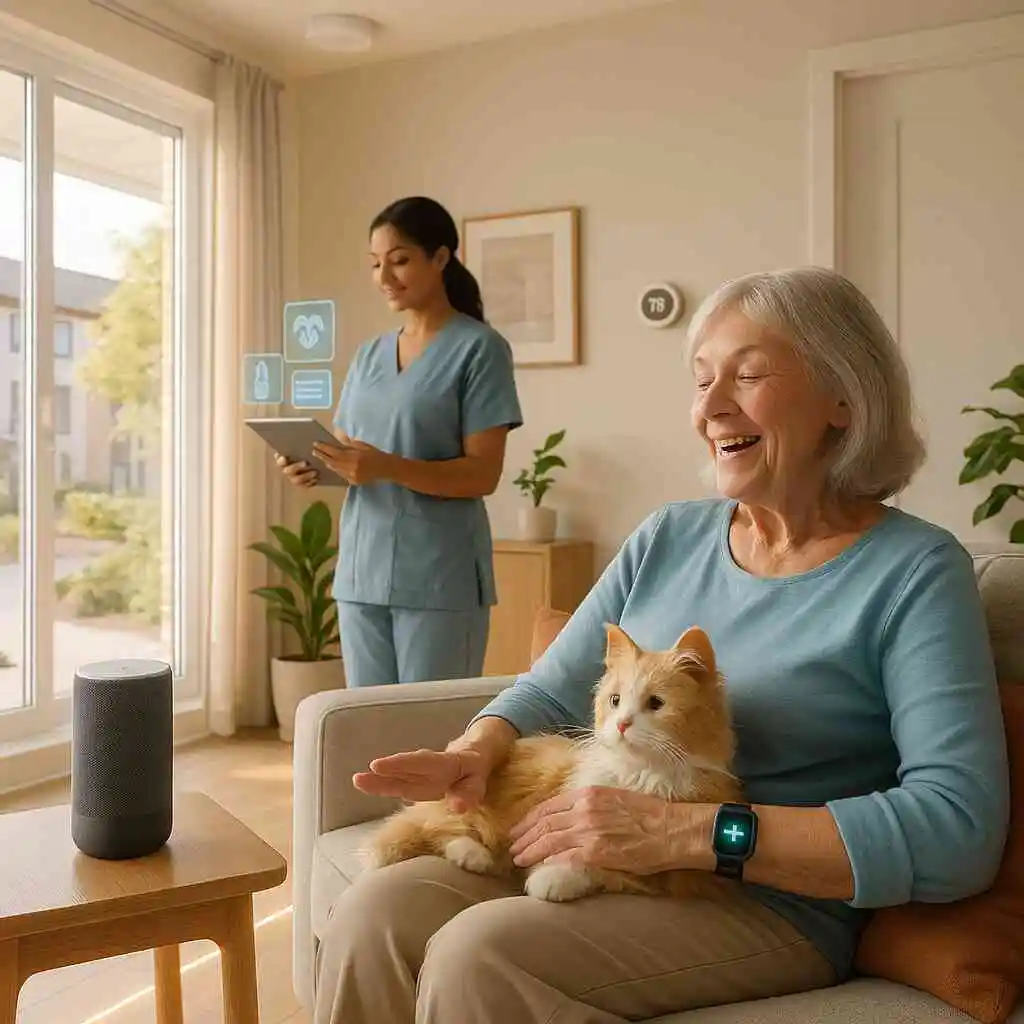
Next-generation bandwidth elevates every smart sensor integration in senior living facilities, yet coverage gaps still challenge remote campuses. 5G connectivity requirements for rural senior housing push providers to negotiate with regional carriers and municipal cooperatives. Ultra-wideband backbones inside towers guarantee centimeter-level indoor positioning for memory care wander-prevention programs. Urban smart senior housing in New York already reports latency below ten milliseconds, enabling real-time robot guidance. Rural partners now replicate that performance through private micro-cell installations funded by community grants.
Balanced infrastructure planning assesses both concrete density downtown and tree canopy interference in countryside villages. Facility engineers overlay heat maps of signal strength against floor plans of communities for seniors 55+. They then pre-wire extra conduit so future antennas slide in without drywall demolition. Finance teams prefer phased deployments that align with capital refresh cycles, reducing budget shocks. Residents benefit when voice-activated care coordination stays glitch-free during weather spikes.
Sensor driven occupancy analytics and energy efficient smart lighting to reduce nighttime falls
Occupancy sensors now learn resident movement rhythms, predicting hallway traffic and dimming lights only when zones sit empty. Machine vision and lidar detect shuffling gaits, then trigger smart lighting solutions to reduce nighttime falls without blinding glare. Energy-efficient smart apartments for seniors leverage that data to throttle HVAC vents room by room. The result is gentler temperatures, quieter compressors, and lower carbon footprints across every senior living facility. Maintenance dashboards translate kilowatt savings into actionable coaching for staff.
Data fidelity matters because false emptiness alerts can create dark trip hazards. Therefore, sensor-driven occupancy analytics in senior apartments fuse thermal readings with microwave radar for confirmation. Algorithms continue learning, discarding anomalies like therapy-dog visits or holiday parties. Care teams receive weekly insights ranking corridors by fall probability, prompting proactive floor mat replacements. Residents appreciate discreet safety instead of obtrusive nighttime check-ins.
Cloud based EHR interoperability and blockchain secured medical record exchange
Seamless medical data exchange remains the cornerstone of modern assisted living plans. Cloud-based EHR interoperability in senior communities lets nurses view cardiology updates moments after hospital discharge. Blockchain secured medical record exchange then time-stamps every revision, deterring tampering and satisfying state auditors. Facilities pursuing cloud-integrated assisted living in Colorado showcase how encrypted edge gateways synchronize charts even during connectivity dips. Physicians trust the immutable ledger, so telehealth consults happen without redundant paperwork.
Integration strategies prioritize standards like FHIR to avoid vendor lock-in. APIs also feed anonymized vitals into predictive analytics for preventative eldercare, flagging readmission risk early. Residents authorize sharing through transparent consent dashboards that display who accessed which field and why. Families gain peace of mind knowing grandparent data travels safely between pharmacies, labs, and emergency departments. Meanwhile, IT directors monitor real-time compliance metrics to preempt penalties.
Machine learning maintenance alerts smart thermostat preferences and energy stewardship
A leaking boiler or glitching elevator can derail daily routines faster than any clinical issue. Machine learning maintenance alerts for facility managers predict failures weeks in advance by comparing vibration signatures against historical baselines. Work orders auto-populate, ensuring parts ship before residents notice discomfort. Smart thermostat preferences for communities for seniors 55+ feed the same analytics, optimizing temperature curves for comfort and efficiency. Over time, continuous tuning trims utility bills without sacrificing coziness.
Energy stewardship now influences occupancy rates, as eco-conscious retirees vet carbon footprints alongside amenities. Dashboards convert voltage curves into plain-language scorecards shared during resident town halls. Each avoided kilowatt becomes a story about stewardship and intergenerational responsibility. Investors reward properties that blend technology ROI with environmental, social, and governance metrics. Caregivers feel pride knowing their workplace operates responsibly.
Contactless access control and IoT enabled medication management for infection prevention
Post-pandemic protocols accelerated the adoption of touch-free security across every long-term care facility. Contactless access control in nursing homes replaces shared keypads with encrypted wristbands, drastically cutting pathogen transfer points. Doors unlock automatically for authorized staff while logging precise movement for compliance reporting. The same wearable health monitors for older adults vibrate when medication windows open, nudging adherence without disruptive alarms. Pharmacists track refill needs through IoT-enabled medication management dashboards, preventing lapses or dangerous duplications.
Infection prevention teams also integrate door sensor data with air quality monitors near isolation rooms. When CO₂ rises, HVAC fans boost circulation automatically, guided by cloud analytics. Residents therefore breathe cleaner air without noticing background automation. Clinicians gain extra minutes daily because robots handle routine pill counts. Ultimately, technology weaves an invisible safety net that supports dignity, independence, and community confidence.
Clinical Convergence: Predictive and Preventative Care Models
Real time vital sign tracking platforms and remote patient monitoring in long term care
Modern senior living facilities now treat every apartment as a miniature care hub. Wearable health monitors for older adults stream heartbeat, oxygen, and sleep patterns to cloud dashboards. Nurses receive push alerts whenever trends breach personalized thresholds, empowering swift, evidence-based interventions. Coupled with bedside radar, these real-time vital sign tracking platforms eliminate many middle-of-the-night room checks. Residents rest easier while caregivers focus on meaningful conversation rather than routine charting.
Remote patient monitoring in long-term care reaches beyond campus walls. Cardiologists can review yesterday’s arrhythmia episode alongside current medication adherence within one secure portal. Families also gain read-only access, strengthening transparency and social connection. Because data flows through encrypted APIs, cybersecurity standards for assisted living tech remain intact. By merging clinical vigilance with resident dignity, communities for seniors 55+ advance both safety and trust.
Predictive analytics and digital twin simulations for proactive eldercare planning
Predictive analytics for preventative eldercare now converts raw IoT sensor data into actionable foresight. Algorithms compare mobility patterns against millions of anonymized journeys, spotting gait changes days before a potential fall. Maintenance teams receive similar forecasts that flag elevators requiring service next week, preventing disruptive downtime. When leadership reviews these insights during weekly huddles, strategic decisions feel obvious rather than risky guesses.
Architects have adopted digital twin technology for senior housing design to visualize future resident flow. A virtual clone of each hallway tests how furniture placement affects wheelchair turning radiuses and emergency evacuations. Clinical teams plug in possible disease progressions, then watch care workloads shift before any resident declines. Operators studying predictive analytics nursing communities in Alabama report double-digit reductions in hospitalization rates after adopting this dual-model approach. Data-driven foresight transforms proactive planning from aspiration into daily practice.
Augmented reality rehab and robotic companion pets are advancing cognitive and physical wellness
Rehabilitation no longer ends at the therapy gym door. Augmented reality rehab for seniors projects step-by-step movement cues onto living room floors, motivating safe practice between appointments. Sensors grade balance and strength in real time, delivering instant encouragement that sustains momentum. By keeping sessions playful, older adults often exceed traditional compliance benchmarks without added clinical hours. Improved mobility directly enriches activities of daily living.
Cognitive stimulation also receives a high-tech boost. Robotic companion pets for dementia care respond to touch, voice, and facial expression, reducing agitation during sundown periods. Unlike real animals, these devices never tire or trigger allergies, making them ideal for nursing homes for the elderly. Staff document mood improvements directly inside cloud-based EHR interoperability in senior communities, closing the feedback loop. Technology gently turns loneliness into interactive engagement.
AI powered meal planning and voice first interfaces supporting personalized nutrition
Nutrition shapes every health outcome, yet preferences vary widely across any senior living community. AI-powered meal planning in retirement communities scans lab work, medication side effects, and cultural tastes to craft menus automatically. Kitchen managers receive color-coded shopping lists that minimize waste while maximizing flavor diversity. Residents enjoy dishes aligned with doctor recommendations without feeling restricted by blanket diets.
Voice-first interfaces for visually impaired residents remove the last barrier to culinary autonomy. A simple spoken request reveals today’s sodium count or swaps a side dish for a diabetic-friendly option. Smart home automation for age-in-place residents then adjusts kitchen lighting and appliance settings to reduce burn risk. By integrating IoT-enabled medication management reminders with dinner prompts, facilities harmonize care routines. Personalized nutrition becomes as easy as conversation, reinforcing independence at every bite.
Ethical Firewalls Safeguarding Data and People
Cybersecurity standards and data privacy compliance in assisted living tech
Cybersecurity standards for assisted living tech now guide every purchasing committee inside a modern senior living facility. Federal frameworks reference NIST, yet operators add extra encryption layers to protect wearable health monitors for older adults. Multi-factor authentication guards real-time vital sign tracking platforms and isolates permissions by clinical role. Quarterly penetration tests expose vulnerabilities before malicious actors threaten confidential medication records. Incident-response playbooks instruct staff to isolate affected nodes while maintaining uninterrupted resident care.
Data privacy compliance in senior living tech demands granular audit trails that show who accessed each resident file and why. The recent white paper on strategic criteria for choosing tech-forward senior homes recommends explicit data-minimization policies tied to retention schedules. Facilities employ tokenization so lost devices never reveal full social security numbers. Resident councils review summary reports, reinforcing transparency and trust. By pairing legal mandates with human oversight, communities transform security checklists into lived ethics.
Creating transparent consent frameworks for sensor integration in senior apartments
Respectful consent begins long before a sensor activates inside energy-efficient smart apartments for seniors. Project teams host listening circles where residents voice hopes and worries about continuous monitoring. Plain-language brochures explain how smart sensor integration in senior living facilities supports safety while honoring autonomy. Each participant chooses preferred data-sharing levels, ranging from anonymous trend contributions to personalized health alerts. Choices remain editable, reinforcing the resident’s enduring control.
Digital dashboards display active permissions in real time, reducing surprises when caregivers open geo-fencing safety apps for memory care units. Legal guardians receive identical controls, ensuring families remain partners rather than spectators. Automatic reminders prompt consent renewals after any firmware upgrade or policy revision. These predictable touchpoints foster informed decisions instead of hurried signatures. Transparent frameworks thus turn regulatory compliance into genuine relationship building.
Digital inclusion training for older residents and staff to bridge the tech literacy gap
Technology only enhances life when every user feels confident navigating new interfaces. Communities for seniors 55+ therefore schedule layered workshops that match varied skill levels. Beginner sessions demystify voice-activated care coordination, while advanced classes explore customizing smart thermostat preferences. Peer mentors, often resident early adopters, model success and dispel fear more effectively than outside consultants. Regular practice hours let attendees experiment without judgment, solidifying new competencies.
Staff members join the same curriculum so coaching happens organically during daily interactions. Trainers highlight accessibility features such as voice-first interfaces for visually impaired residents, ensuring no one is left behind. Role-playing exercises build empathy by having caregivers troubleshoot devices blindfolded or with gloves that simulate arthritis. Post-training surveys measure confidence gains, informing future lesson plans. Continuous learning cultures sustain momentum as fresh innovations arrive.
Governance models to audit algorithmic bias in predictive eldercare platforms
Predictive analytics for preventative eldercare promises game-changing insights, yet unchecked algorithms can magnify social inequities. Robust governance models therefore combine multidisciplinary review boards with automated fairness testing. Data scientists submit new code to panels that include clinicians, ethicists, and resident representatives. Independent auditors probe models for disparate impact across gender, ethnicity, or cognitive status. Findings trigger mandatory recalibration before deployment.
Long-term care facility networks maintain bias dashboards that track false-positive rates by demographic segment. When anomalies arise, engineers must document corrective actions within defined service-level windows. Residents receive digestible summaries comparing system accuracy to traditional assessments, reinforcing transparency. By institutionalizing watchdog mechanisms, senior housing operators ensure smart tools support dignity instead of reinforcing stereotypes. Ethical governance ultimately safeguards both data and people, preserving trust in tomorrow’s connected care.
Measuring Impact and Scaling Success Across Senior Living Facilities
 Measuring Impact and Scaling Success Across Senior Living Facilities
Key performance indicators connecting quality of life to technology ROI
Return on investment begins with resident-centered metrics, not just capital depreciation tables. Facilities track nighttime fall reductions linked to AI-driven fall detection systems and smart lighting solutions. They compare medication adherence before and after introducing IoT-enabled medication management devices. Real-time vital sign tracking platforms also feed into hospitalization-avoidance dashboards, translating fewer ambulance rides into clear savings. When these clinical wins align with happier survey scores, decision makers gain unshakable evidence.
Financial indicators still matter because sustainability funds future care enhancements. Energy-efficient smart apartments for seniors lower utility bills, releasing dollars for recreation programs. Predictive analytics for preventative eldercare reduces overtime hours spent on crisis response. Maintenance teams, guided by machine learning maintenance alerts, minimize emergency repairs and insurance claims. Combined, these lines create a holistic scorecard that ties every circuit board to resident dignity.
Change management strategies for multi site rollouts in senior living facility networks
Scaling from a single pilot to dozens of campuses requires disciplined playbooks. Executive sponsors set unified goals, yet local champions tailor workflows to individual cultures. Cross-functional task forces share documentation, avoiding reinvention with each installation of voice-activated care coordination hubs. Standardized cybersecurity standards for assisted living tech keep data flows consistent, which reassures IT auditors during expansion. Most importantly, leadership celebrates small wins early to maintain momentum.
Peer benchmarking accelerates adoption when teams see real success in comparable regions. For example, facilities studying IoT-enabled eldercare communities in Texas borrow onboarding scripts that demystify wearables for older adults. Rotating “tech roadshows” let residents test new devices in safe, festive settings. Continuous feedback loops refine processes before the next community launches. This structured rhythm transforms change from disruption into shared adventure.
Community storytelling to foster resident trust and continuous improvement
Numbers persuade boards, but stories move hearts. Facilities therefore showcase testimonials where geo-fencing safety apps reunite a wandering resident with cherished photo albums. Staff create short videos highlighting how smart thermostat preferences reduce arthritis flare-ups during cool nights. Family newsletters feature grandchildren marveling at robotic companion pets for dementia care, reinforcing multi-generational engagement. These narratives turn abstract innovation into a lived experience that neighbors can touch.
Storytelling also uncovers blind spots. A resident might reveal that voice-first interfaces for visually impaired users still mispronounce regional dialects. Such candid input drives rapid software patches, demonstrating responsive governance. When communities feel heard, adoption curves steepen naturally. Trust grows, and the next pilot invites enthusiasm rather than hesitation.
Looking ahead to autonomous care ecosystems and lifelong smart home automation
The horizon now points toward fully autonomous care ecosystems, where predictive analytics anticipate needs before alarms sound. Digital twin technology for senior housing design will simulate decades of daily living, ensuring layouts support evolving mobility patterns. As 5G connectivity requirements for rural senior housing mature, remote patient monitoring in long-term care will feel seamless coast to coast. Smart home automation for age-in-place residents will travel with individuals, syncing personalized settings wherever they move.
Yet human touch remains the irreplaceable constant. Care teams will use liberated time for conversation, art therapy, or simply holding a hand. Senior Living Facilities stands ready to guide families through these burgeoning options, matching each older American with communities that honor both tradition and innovation. Together, technology and humanity will craft the next chapter of dignified aging.
Frequently Asked Questions
Question: How do Senior Living Facilities evaluate smart sensor integration and AI-driven fall detection systems when helping families choose a senior living near me?
Answer: Our database screens every senior living facility for the presence of smart sensor integration in senior living facilities, including AI-driven fall detection systems and wearable panic button devices for elderly safety. We review vendor FDA clearances, false-positive rates, and how alerts feed into real-time vital sign tracking platforms. When you search seniors living near you on our site, communities are ranked by both quality-of-life metrics and technology readiness, so you immediately see which properties already use radar-based fall prevention, smart lighting solutions to reduce nighttime falls, and sensor-driven occupancy analytics in senior apartments.
Question: In the blog Smart Tech Adoption Criteria at Senior Living Facilities, 5G connectivity and cloud-based EHR interoperability are highlighted. How do Senior Living Facilities verify that a community for seniors 55+ meets these infrastructure requirements?
Answer: We combine on-site audits with provider questionnaires to confirm 5G connectivity requirements for rural senior housing and ultra-wideband indoor positioning for wandering prevention. Our team checks that cloud-based EHR interoperability in senior communities follows FHIR standards and, when possible, blockchain for secure medical record exchange. These details appear in the Compare tab so families know whether remote patient monitoring in long-term care and telehealth adoption criteria for assisted living are fully supported before scheduling tours.
Question: What role do cybersecurity standards for assisted living tech and data privacy compliance play in your assisted living locator recommendations?
Answer: Security and dignity are non-negotiable. We only list housing options for seniors that meet or exceed NIST-aligned cybersecurity standards for assisted living tech, including multi-factor authentication on voice-activated care coordination dashboards and tokenized storage for wearable health monitors for older adults. Facilities must also provide transparent consent frameworks that satisfy data privacy compliance in senior living tech. Our assisted living locator flags any community lacking up-to-date penetration testing or clear opt-out paths for residents.
Question: Can Senior Living Facilities connect us with communities offering voice-activated care coordination, IoT-enabled medication management, and smart home automation for age-in-place residents?
Answer: Absolutely. Use our Search tool to filter by amenities such as voice-first interfaces for visually impaired residents, IoT-enabled medication management, contactless access control in nursing homes, smart thermostat preferences for communities for seniors 55+, and AI-powered meal planning in retirement communities. Because we cover all 50 states, you can quickly locate senior housing that merges energy-efficient smart apartments for seniors with predictive analytics for preventative eldercare, ensuring a seamless path to aging in place.
Admin
Expert contributor specializing in senior living care. Dedicated to providing families with clear, actionable advice.