
The Difference Between Aging in Place and 55 Plus Apartments

When aging in place starts feeling less safe than familiar
The phone call usually starts softly: “Mom is still at home, but I’m worried.” That worry is real, and it deserves a clear answer. Aging in place can feel comforting, yet comfort is not the same as safety. If you are weighing the difference between aging in place and senior living options, you are already asking the right question.
The quiet warning signs that a senior living facility may fit better than staying home
The quiet signs are often the most important ones. Missed medications, unopened mail, spoiled food, and a growing fear of stairs all tell a story. So do repeated falls, skipped showers, and confusion about bills. If your parent starts shrinking their world, that matters.
Here is the part most families miss. A house can still look fine while daily life is slipping. One daughter told us her father kept every room spotless, yet he had stopped driving after dark and avoided cooking. That is not failure. It is information.
Watch for changes in activities of daily living such as bathing, dressing, cooking, and mobility. Those tasks are often the line between independence and risk. A senior living facility may fit better when they become hard to manage safely. You do not need a crisis to pay attention.
Which home modifications for seniors can buy time and which ones only mask a deeper need
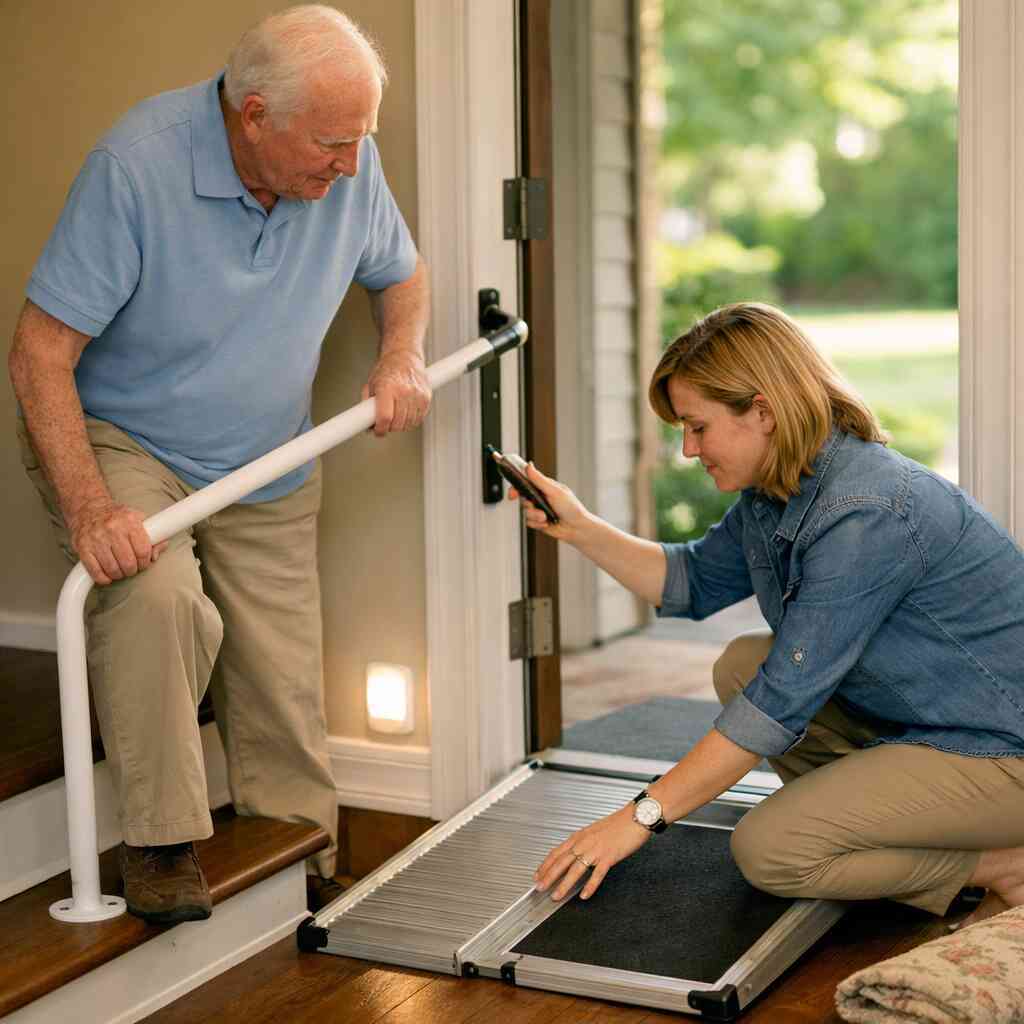
Some changes help a lot. Others only delay a harder decision. Grab bars, brighter lighting, lever handles, and removing loose rugs can reduce falls. A stair lift or ramp may also help, especially in a home with one main level of living.
Still, home modifications for seniors cannot solve every problem. They do not fix memory loss, medication mistakes, or loneliness. A widened doorway helps less when your parent forgets to turn off the stove. That is why aging in place safety and home modifications for seniors should be reviewed honestly, not emotionally.
We often hear from families after they spend money on accessible hardware and still feel uneasy. That feeling usually means the real need is deeper. The home may be safer, but the person may still need more support. In the projects we’ve watched families handle this year, the best decisions came from matching the home to the person, not the other way around.
How family caregiving support changes the decision when one person is carrying everything
Caregiving stress changes judgment fast. If one sibling is doing nearly everything, the system is already strained. You may be managing groceries, rides, medications, and nightly check-ins all at once. That is not a sustainable plan.
Family caregiving support matters because burnout clouds decision-making. When one person carries the load, even small issues feel impossible. A support-filled seniors living community can bring structure back into the picture. It can also protect family relationships that are getting thin.
We hear this from families almost every week. One son in Tampa was driving across town three times a day for his mother, then missing work calls and sleep. Once he saw the whole pattern, the choice became less about guilt and more about long-term care planning. That is usually where the real conversation begins.
Why 55 plus apartments are not just smaller homes with fewer stairs
A lot of people search 55 plus apartments as if they are simply easier versions of home. Sometimes they are. Often, they are not enough. These housing options for seniors can solve isolation and maintenance stress, but they do not automatically solve care needs. That difference matters.
What communities for seniors 55+ usually solve that aging in place cannot
Communities for seniors 55+ often reduce home maintenance, yard work, and social isolation. That alone can be a huge relief. Many residents like the lighter routine and the chance to be around neighbors their own age. Some also prefer the freedom of senior citizen housing without the burden of a large house.
Still, these communities are usually about lifestyle, not care. They may offer age-restricted living, but not hands-on help. That means they are best for people who are mostly independent. If you need meals, bathing help, or medication support, 55+ apartments may not be enough.
The best way to think about them is this: they can simplify life, but they do not replace care. They are part of the larger world of elderly housing and retirement homes, yet each type serves a different need. That is why families should compare the person’s daily support needs before focusing on the apartment itself.
How independent living communities differ from rental housing for seniors and senior apartment rentals
Independent living communities usually provide more structure than ordinary rentals. They may include meals, social activities, housekeeping, or transportation. By contrast, rental housing for seniors and senior apartment rentals often look and function more like standard housing with age restrictions. The difference is practical, not just semantic.
If you are comparing independent senior living and rental housing, ask what is included and what is not. That one question can change the whole picture. A building with elevators and no stairs may still leave you doing everything yourself. Meanwhile, a true community may reduce daily friction in small but meaningful ways.
For many families, this is where a senior living directory becomes useful. It helps you sort out independent living communities from simple age-restricted rentals. That saves time and prevents wasted tours. It also keeps the search focused on the right level of support.
When pet friendly assisted living or senior living with no waitlist becomes the deciding factor
Sometimes the deciding factor is not clinical at all. It is the dog. Or the timing. A beloved pet can make a move possible, and a long wait can make it impossible. That is why pet-friendly assisted living and senior living with no waitlist often become real search filters.
One couple in Orange County waited on a long list for months, then lost momentum because the husband’s mobility dropped. They finally found a place that could move faster, and that timing mattered more than extra square footage. In moments like that, the “best” choice is the one that actually works.
If a pet is part of the family, ask early about pet rules. If timing is urgent, ask directly about availability. A community can look perfect on paper and still fail the real-world test if it cannot meet your schedule. That is why speed, fit, and policy all belong in the same conversation.
Why Florida senior living California assisted living and Texas nursing homes are not interchangeable search terms
State terms matter. Florida senior living, California assisted living, and Texas nursing homes are not the same thing, and the regulations are different. State licensing, staffing rules, and housing models vary widely. So do local climates, transportation patterns, and family expectations.
In Florida, for example, families often compare communities with hurricane planning in mind. In California, wildfire smoke and regional cost pressures change the conversation. In Texas, large distances can make visits and care coordination harder. That is why you should search by state, not only by category.
If you want location-specific help, use a trusted Senior Living Facilities in Florida search when Florida is your focus. The same approach works for California and Texas. The point is simple: the right housing choice depends on place as much as care.
The paper trail behind a smart senior housing choice
The paperwork can feel tiring. It is tiring. But the right documents and comparison tools protect you from costly mistakes. If you are trying to compare assisted living plans, assisted living locations, and an assisted living locator, structure helps. A good process keeps the decision calm instead of chaotic.
How to compare assisted living plans assisted living locations and an assisted living locator without getting overwhelmed
Start with needs, not names. Then compare care levels, staff support, meals, transportation, and medication help. An assisted living locator should help you narrow options by actual fit, not by glossy marketing. That saves energy. A simple comparison list can help: – Daily support offered
- Memory support, if needed
- Meal structure
- Medication management
- Accessibility features
- Distance from family
- Availability now

When you compare assisted living plans, keep your parent’s current needs in mind. It is easy to shop for the future and ignore today. That is how families end up with a place that looks lovely but does not solve the real problem. Better to choose the right fit than the fanciest brochure.
What to look for in a senior living directory from CMS star ratings to senior housing regulations
A reliable senior living directory should give you more than addresses. It should help you understand care type, licensing, and inspection history where available. CMS star ratings are useful for comparing certain skilled nursing settings because they reflect health inspections, staffing, and quality measures. Always check the latest available report.
You should also understand senior housing regulations at the state level. Assisted living rules vary by state, and that affects staffing, medication help, and care boundaries. If a community promises more than its license allows, that is a red flag. That is true in a long-term care facility, a board and care home, or a larger campus.
In our experience, families trust the first pretty website they see. That is a mistake. A better directory helps you ask sharper questions and filter out vague claims. The goal is not to get more information. The goal is to get the right information.
The real questions to ask about cost of assisted living senior living costs by state and the Genworth Cost of Care Survey
Cost questions feel awkward, but they are essential. Ask what is included, what costs more, and what triggers a change in price. The cost of assisted living varies by region, care level, and apartment type. That is why senior living costs by state are so useful.
The Genworth Cost of Care Survey remains a strong reference point for families comparing care expenses. It helps frame the national picture, even though actual community pricing can differ. Use it as a benchmark, not a promise. Then compare it with local quotes from assisted living locations near you.
Ask these questions:
- What services are bundled?
- What care levels cost extra?
- What happens if needs increase?
- Are there community fees?
- Is there a deposit or move-in fee?
That last question matters more than people think. Hidden add-ons can change affordability quickly. Families in Sarasota, San Diego, and Austin often find that local supply and demand shift the numbers. So the state average is only the starting point.
How Medicaid senior housing Medicare skilled nursing VA benefits for senior care and long term care insurance change the math
Funding changes everything. Medicaid senior housing can help in some settings, but eligibility and coverage vary by state. Medicare skilled nursing covers only specific short-term skilled care situations, not ongoing custodial support. That is a common misunderstanding.
VA benefits for senior care may help eligible veterans and surviving spouses, especially through Aid and Attendance rules. Long-term care insurance can also change the picture if it is active and usable. But each funding source has different rules, and none should be assumed without verification.
This is where a careful senior living advisor or free senior living referral can save time. They can help you sort out what may fit your budget and care needs. That kind of guidance matters when the stakes are this personal.
When memory care near me or Alzheimer’s care facilities make more sense than 55 plus apartments
If memory issues are showing up, timing matters. Memory care near me is not just another housing search. It is a safety search. Alzheimer’s care facilities and dementia care homes are built for wandering risk, cueing, and structured support.
A 55-plus apartment cannot safely answer repeated confusion, exit-seeking, or medication errors. That is where what is memory care becomes more than a search phrase. It becomes a practical question about safety, supervision, and daily rhythm. In many cases, memory support is a better fit than standard age-restricted housing.
If you are comparing care types, use What Is Memory Care Near Me and How Do I Compare It as a starting point. Then compare it with the person’s current behavior, not just their diagnosis. Families in Naples, Sacramento, and Fort Worth often discover the diagnosis is less important than the daily risks. That truth is hard, but it is useful.
The decision that keeps mom or dad stable instead of stuck
The best choice is not always the most independent one. It is the one that keeps life steady. That may mean aging in place, a move to assisted living, or a broader care path. It may even mean a continuing care retirement community (CCRC) if future needs are likely to change.
How to choose between aging in place assisted living vs nursing home and a continuing care retirement community CCRC
Start with function. If your parent needs light help and still manages most daily tasks, aging at home may still work with support. If they need regular personal care, assisted living versus nursing home care becomes the key comparison. A nursing home and skilled care housing setting is usually better for higher medical needs.
A CCRC can make sense when someone wants a continuum. It may begin with independent living and later add more care. That can reduce future moves. But it only helps if the campus, contract, and health needs all align.
Think of it this way:
- Aging in place works best with strong support and stable needs.
- Assisted living fits people who need daily help but not round-the-clock skilled care.
- Nursing homes fit people who need ongoing clinical oversight.
- CCRCs help when future care changes are likely.
What a senior living advisor or free senior living referral should help you sort out before you sign anything
A good senior living advisor should slow you down in the right ways. They should help you compare care levels, availability, and budget fit. They should also explain the difference between marketing language and actual services. That is especially important if you are comparing residential care facilities or board and care homes.
A free senior living referral should not pressure you. It should clarify your choices. If someone pushes one community without asking about mobility, cognition, or finances, pause. That is not guidance. That is a shortcut.
Ask for clear answers on:
- Care level now
- Care level later
- Staffing approach
- Admission criteria
- Move-in timing
- Cost structure
That list keeps the conversation grounded. It also helps you avoid signing before the facts are clear. Families in Florida, California, and Texas often need this most when decisions move fast.
The next move if you need affordable senior living senior living for low income seniors or luxury senior retirement communities
Budgets vary, and so do goals. Some families need affordable senior living or senior living for low-income seniors. Others want luxury senior retirement communities with stronger amenities and a more resort-like setting. Both can be valid. What matters is fit.
If money is tight, ask about shared apartments, sliding support, and public programs that may apply. If comfort and services matter more, compare amenity value carefully. A beautiful lobby does not replace good care. A quiet hall does not equal better support.
This is where a well-built senior living directory helps. So do local searches for the best senior living near me. Use those tools to compare options honestly, not emotionally. That keeps the choice practical.
How to turn a short list into action with questions to ask assisted living and a clear path to connect with Senior Living Facilities
Once you have a short list, visit with purpose. Bring your notes. Ask the same questions each time. That is how you compare fairly.
Use these questions to ask assisted living:
- What daily help is included?
- How do you handle medication support?
- What happens if care needs increase?
- How quickly can someone move in?
- How do you handle pets, meals, and transportation?
- What are the state licensing and inspection details?
- Who should I contact with follow-up questions?
If you want a cleaner path, use how to compare senior living facilities in 10 steps to keep your notes organized. Then connect with Senior Living Facilities for help finding options that match your situation. You do not have to sort every detail tonight. Start with one call, one comparison, and one honest conversation.
Frequently Asked Questions
Question: What is the difference between aging in place and 55 plus apartments in The Difference Between Aging in Place and 55 Plus Apartments?
Answer: Aging in place means staying in your current home and adding support as needs change, while 55 plus apartments are age-restricted housing options for seniors that may reduce stairs, maintenance, and isolation. The best choice depends on daily function, safety, and support needs rather than comfort alone. If a person is still mostly independent, communities for seniors 55+ may be a good fit. If there are missed medications, repeated falls, or trouble with bathing, dressing, or cooking, a senior living facility or assisted living location may be more appropriate. Senior Living Facilities helps families compare these senior living options side by side so you can choose the setting that matches real life, not just a floor plan.
Question: How can I tell whether home modifications for seniors are enough or whether I should start looking at senior living facilities?
Answer: Home modifications for seniors can buy time, especially when the main concerns are fall prevention and access. Grab bars, better lighting, stair lifts, ramps, and removing loose rugs can improve aging in place safety. But these changes do not solve memory issues, medication mistakes, loneliness, or the growing need for care coordination for seniors. If your parent needs regular help with daily tasks or if family caregiving support is becoming overwhelming, it may be time to compare independent living communities, assisted living plans, or even board and care homes. Senior Living Facilities can help you review housing options for seniors honestly so you can see whether accessible housing for older adults is still enough or whether a move makes more sense.
Question: Can Senior Living Facilities help me compare assisted living plans, assisted living locations, and the cost of assisted living by state?
Answer: Yes. Senior Living Facilities is designed to help families compare assisted living plans, assisted living locations, and the cost of assisted living without getting overwhelmed. We encourage families to look at what is included, what costs extra, and how needs may change over time. That is especially important because senior living costs by state can vary widely and local availability can affect options too. Our senior living directory helps you narrow choices by care level, location, and support needs, and our team can help you use a free senior living referral to save time. We also suggest comparing available information with trusted benchmarks like the Genworth Cost of Care Survey and checking senior housing regulations in your state.
Question: What should I know if my loved one may need memory care near me instead of 55+ apartments?
Answer: If memory loss, confusion, wandering, or medication errors are becoming part of daily life, 55+ apartments may not provide enough support. In that case, it is wise to ask what is memory care and compare memory care near me options, along with Alzheimer’s care facilities and dementia care homes. These settings are designed for supervision, cueing, and safer routines that standard senior citizen housing usually cannot provide. Senior Living Facilities helps families compare these care types with honesty and clarity, so you can decide whether aging in place, independent living communities, assisted living vs nursing home care, or a more structured memory support setting is the better fit.
Question: How do I use a senior living directory or senior living advisor to find the best senior living near me quickly?
Answer: Start by listing the person’s current needs, then use a senior living directory or speak with a senior living advisor to narrow the search. A good search should compare independent living communities, retirement homes, rental housing for seniors, senior apartment rentals, and senior living facility options based on care level, timing, and budget. If you need a move soon, ask about senior living with no waitlist, pet-friendly assisted living, or affordable senior living options that may be available now. Senior Living Facilities can also help families weigh funding options like Medicaid senior housing, Medicare skilled nursing, VA benefits for senior care, and long-term care insurance when applicable. The goal is to make the process calmer, more informed, and centered on the right fit for your family.
Admin
Expert contributor specializing in senior living care. Dedicated to providing families with clear, actionable advice.