
Ultimate Guide to Pet Friendly Senior Living Facilities
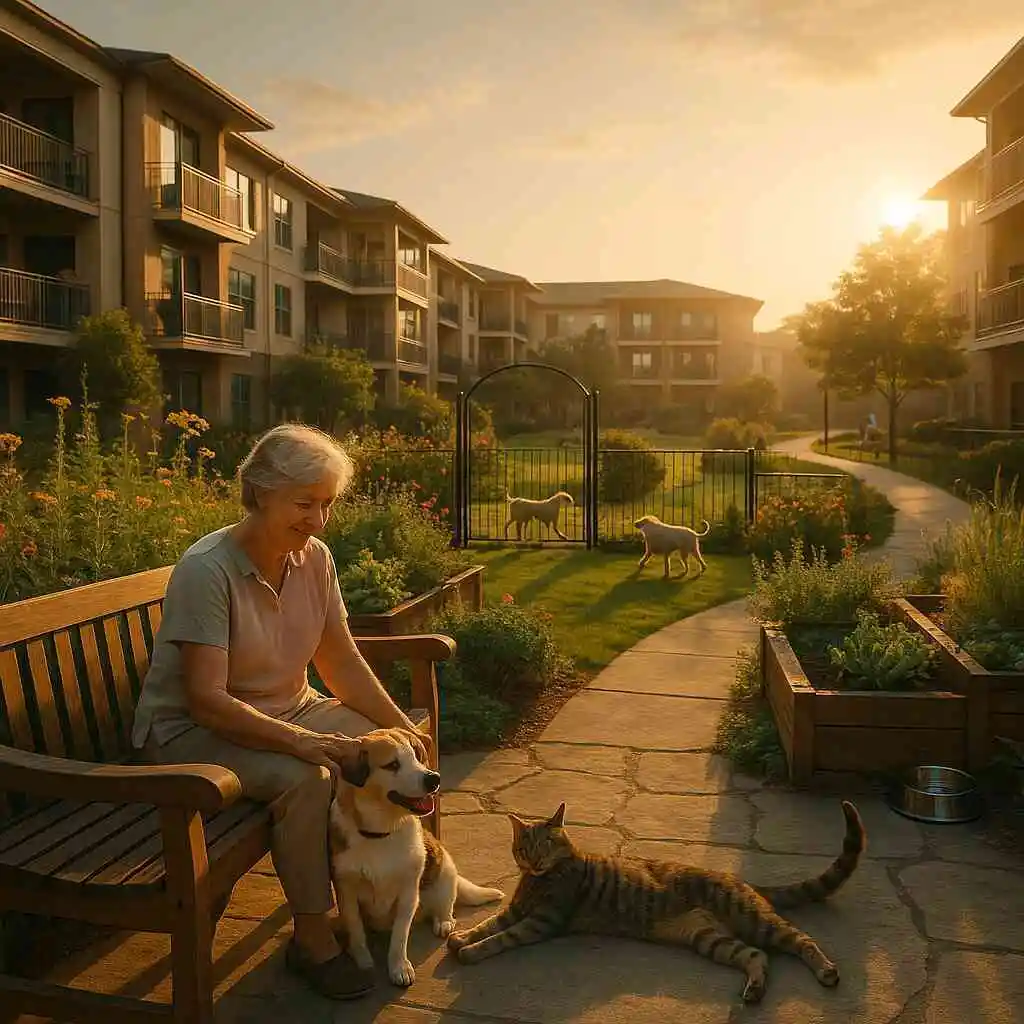
Unleashing Companionship: Welcoming Pets into Senior Living Journeys
Why pet friendly senior housing matters for health and happiness
The bond between seniors and their pets delivers measurable gains in mood, heart health, and cognitive sharpness. Pet friendly senior living nurtures that bond by eliminating rules that force separation. Daily walks become gentle exercise, supporting mobility and joint strength. Grooming routines add purposeful structure to activities of daily living. Even a cat’s quiet purr lowers stress hormones and encourages deeper sleep.
Companionship also fights loneliness, which the Surgeon General calls a serious public health challenge. Residents who can cuddle a familiar dog report stronger feelings of purpose and identity. Because pets need schedules, seniors maintain consistent wake times, medication checks, and meal routines. That predictable rhythm supports emotional stability, especially for individuals living with mild memory loss. In short, pet inclusive independent living transforms a building into a true home.
Current trends reshaping senior living facilities across the nation
Across the country, communities for seniors 55+ are rewriting resident handbooks to embrace multiple species. Dog friendly senior apartments now feature fenced relief areas on every floor, reducing elevator waits. Cat lounges with climbing walls give feline companions safe enrichment away from common dining rooms. Nursing homes for the elderly are piloting pocket pet programs, allowing guinea pigs to visit memory care wings. These upgrades recognize that seniors with pet housing options create higher occupancy and stronger resident satisfaction scores.
Hidden trends such as intergenerational dog parks and reptile-friendly HVAC filters are emerging quickly. Operators track demand analytics, and the data confirm that pet amenities boost both referrals and length of stay. To explore the movement in real time, you can search pet inclusive senior living options near you with one click. Interactive maps reveal where on-site dog parks, bird aviaries, and aquatic therapy tanks already exist. This transparency empowers families to advocate for features that resonate with their own companion animal lifestyles.
How Senior Living Facilities empower families to find the right fit
While trends are exciting, every senior living facility still carries unique pet rules, deposit structures, and breed restrictions. Senior Living Facilities simplifies the discovery process by aggregating those policies into an intuitive comparison dashboard. Families can filter for dog friendly senior apartments, cat friendly assisted living communities, or even bird friendly senior apartment rentals. Detailed community pages outline weight limits, vaccination requirements, and on-site veterinary partnerships. As a result, decision makers move from uncertainty to clear action in fewer steps.
Beyond the database, a team of certified senior advisors offers complimentary phone consultations to decode complex assisted living plans. They listen to medical needs, budget constraints, and the crucial bond between resident and animal. Using that insight, experts curate a short list of seniors living near you who truly accept your specific pet. Support continues through move-in day, ensuring vaccination records, travel carriers, and orientation supplies are complete. This high-touch guidance reflects our commitment to honoring the human-animal bond at every stage of aging.
Mapping the Landscape of Pet Friendly Senior Living Facilities
From pet inclusive independent living to cat friendly assisted living communities
Pet inclusive independent living communities typically grant residents full autonomy over daily routines while supporting responsible ownership through leash rules and vaccination checks. These settings suit active retirees who prefer morning walks, group training classes, and flexible mealtimes with their canine companions. By contrast, cat friendly assisted living communities provide additional clinical oversight, including medication reminders and help with mobility transfers, yet still allow felines to perch in sun-dappled windows. Families searching the national directory of pet friendly senior facilities discover filters that highlight on-site dog parks, grooming suites, or sound-proofed cat lounges. Because those filters cover communities for seniors 55+ as well as long-term care facilities, loved ones can transition smoothly if medical needs increase.
Dog friendly senior apartments also appear in mixed-use developments where shops and cafés share courtyards with fenced relief stations. That integration keeps seniors socially engaged and offers built-in neighbors who enjoy chatting about chew toys or kitten antics. Seniors with pets housing options expand even further through rental housing for seniors that partners with local shelters for foster opportunities. Such initiatives encourage purposeful activity, reduce municipal shelter crowding, and allow residents to test pet ownership without a lifetime commitment. Clear pet deposit guidelines, transparent weight limits, and readily available pet walking services reinforce a culture of mutual respect between animal lovers and allergy-sensitive neighbors.
Distinguishing service animal accommodations from emotional support animal policies
Federal law classifies a service animal as a dog or miniature horse trained to perform specific tasks related to a person’s disability. Emotional support animals, while therapeutic, do not require specialized training, placing them under a separate regulatory framework. Senior living facilities must therefore craft layered policies that honor both the Americans with Disabilities Act and Fair Housing guidelines. Staff receive education on verifying documentation, maintaining privacy, and creating reasonable modifications without imposing undue financial burden on residents. Clear signage, designated relief areas, and advance notice procedures keep common spaces welcoming for all.
Assisted living locations that excel in compliance often publish detailed flowcharts explaining request processes and permissible questions. A prime example can be found when researching service-animal ready assisted living in Texas, where communities outline emergency evacuation drills tailored to guide dogs and mobility-assist companions. Those same facilities may adopt separate rules for emotional support for rabbits or birds, such as enrollment in quiet-hours training or provision of cage liners that minimize dander. By differentiating requirements, administrators protect legitimate medical rights while preventing policy loopholes that could overwhelm shared amenities. Families should request written guidelines during tours to avoid surprises at move-in.
How senior living near you is evolving toward multi species inclusion
Ten years ago, pet policies focused almost exclusively on dogs and cats. Today, seniors living near you may feature aquariums for therapeutic fish, aviaries for songbirds, or even reptile-compatible climate zones. Architects now consult animal behaviorists to design corridors wide enough for wheelchairs and leashes to coexist without congestion. Low allergen pet policies incorporate medical-grade air filtration, allowing residents with compromised immunity to enjoy communal lounges safely. These shifts reflect mounting evidence that diverse species stimulate memory recall, fine motor skills, and long-term emotional resilience.
Operators also leverage data science to predict which amenities-such as communal pet gardens or mobile veterinary clinics-drive satisfaction scores upward. Insights from the report on hidden trends shaping pet friendly senior housing 2026 show a rising demand for multi-pet households in urban high-rise settings. Consequently, policy writers are increasing weight limits or replacing them with behavior-based assessments. Senior apartment rentals now offer trial periods, where residents can foster a second animal before final approval. These innovations underscore a future where seniors and an ever-wider range of beloved species age in community, not isolation.
 Evaluating Amenities and Services Beyond the Water Bowl
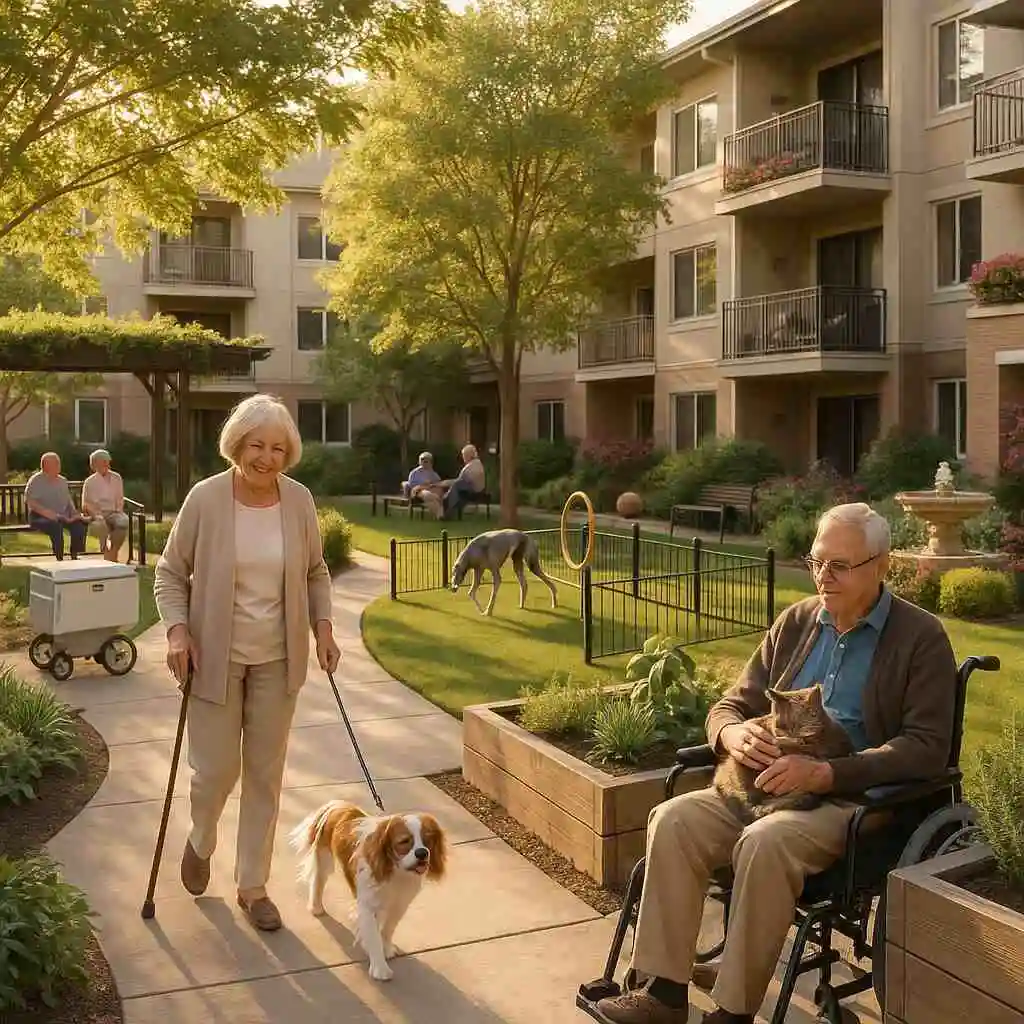 Evaluating Amenities and Services Beyond the Water Bowl
On site dog parks and communal pet gardens in communities for seniors 55+
Thoughtfully planned seniors living community campuses now weave exercise trails with secure, on-site dog parks in 55+ communities. These fenced areas feature double gates, shaded benches, and turf designed for easy wheelchair access. Residents socialize while pets explore agility structures that maintain joint flexibility and confidence. Nearby communal pet gardens let green-thumbed retirees grow catnip or puppy-safe herbs, encouraging daily outdoor movement. Guides on the top life-enhancing amenities for seniors with pets rate such gardens among the most requested wellness upgrades.
Landscape architects follow retirement community design best practices by placing water stations every twenty feet. This measured spacing reduces dehydration risk for both humans and animals during hotter months. Raised planters prevent bending strain, allowing residents with limited mobility to prune mint or parsley with ease. Clear signage explains which plants are toxic, promoting safe exploration for curious puppies. Because these shared spaces double as social hubs, loneliness scores often decline after gardens open.
Veterinary partnerships grooming studios and pet walking services in senior living facilities
Modern senior living facilities negotiate preferred-provider agreements with mobile veterinarians who visit weekly. Routine checkups, vaccinations, and dental cleanings occur in familiar surroundings, eliminating stressful car rides. On-site grooming studios provide hydraulic tables, warm air dryers, and species-specific shampoos that protect delicate senior skin. Trained attendants handle nail trims or ear cleaning, tasks that may feel daunting for residents with arthritis. The convenience preserves dignity, ensuring pets remain well-kept without burdening loved ones.
Beyond clinical care, concierge desks coordinate professional pet walking services tailored to variable stamina levels. Walkers log distance and hydration data, then text updates to families for peace of mind. Some communities bundle packages with aromatherapy baths, deshedding treatments, or seasonal flea prevention. Bundling lowers out-of-pocket costs while standardizing quality across the resident population. Coordinated scheduling keeps hallways clear during peak therapy sessions, balancing safety with abundant outdoor enrichment.
Low allergen pet policies and bird friendly apartment features
Administrators recognize that respiratory health and allergen control remain critical in shared housing options for seniors. HEPA filtration systems run continuously, capturing dander and airborne fur. Communities distribute hypoallergenic bedding kits at move-in, encouraging proactive maintenance. Regular duct cleaning appears in maintenance calendars alongside elevator inspections, signaling institutional commitment to wellness. These steps allow residents with asthma to enjoy communal lounges without discomfort.
Bird friendly senior apartment rentals incorporate double-paned windows, offering sound insulation while letting parrots enjoy sunlit perches. Ceiling fans include silent modes that avoid startling sensitive feathers. Low VOC paints reduce airborne irritants, protecting both avian air sacs and human lungs. Clear balcony mesh safeguards escaped wings yet remains discreet from street view. Combined, these upgrades prove that low allergen pet policies can coexist with vibrant, multi-species households.
Balancing pet weight limits and multi pet households in long term care facilities
Long-term care facility managers historically enforced strict weight caps, yet data show temperament matters more than size. Today, behavior-based assessments replace blanket limits, granting access to gentle giant breeds that support mobility. Facilities develop tiered fee structures where larger dogs offset higher cleaning costs without unfair penalties for small pets. Transparent charts outline criteria, preventing confusion during admission interviews.
Families evaluating multi pet households often juggle complex guidelines across providers. Interactive tools that let users compare pet policies across senior living choices simplify decision making. Filters reveal communities permitting two cats plus one bird, or those offering discounted second-pet deposits. Staff then craft individualized care plans, clarifying who feeds which animal during hospital stays. This proactive collaboration keeps beloved companions together while safeguarding resident health, staff workload, and property integrity.
Financial and Legal Considerations: Tail Wagging the Budget
Understanding pet deposit guidelines and recurring fees in senior apartment rentals
Pet friendly senior housing often requires a one-time deposit that covers deep cleaning after move-out. The amount usually scales by species, size, and local sanitation codes. Transparent communities post fee schedules next to lease clauses, reducing last-minute surprises for families. Senior Living Facilities updates those numbers quarterly, so decision makers compare apples to apples before touring. Knowing the total cost curve prevents sticker shock when signing the final residency agreement.
Beyond deposits, many senior apartment rentals charge small monthly pet rents that fund turf replacement, odor control, or shared grooming stations. Some operators waive that fee when residents enroll in obedience classes, rewarding responsible ownership. To see real-world figures, explore multiple-pet senior housing in New York, where buildings publish tiered charts for two-pet households. Such transparency empowers seniors who budget meticulously on fixed incomes. Always request any unpublished addenda before committing to a lease.
Insurance liability and risk management in dog friendly senior apartments
Liability policies protect both residents and management when pets share hallways, elevators, and courtyards. Communities require proof of renters’ insurance that covers animal incidents, ensuring medical bills never derail retirement savings. Many carriers offer discounted premiums for vaccinated, microchipped pets, aligning safety with affordability. Administrators verify coverage annually and keep copies on encrypted servers for quick retrieval. That diligence preserves the carefree atmosphere seniors cherish.
Risk management also extends to behavior screenings that replace outdated breed bans. Certified evaluators observe leash manners, reaction to wheelchairs, and compatibility with therapy pets in nursing homes for the elderly nearby. If concerns arise, operators mandate refresher training rather than automatic eviction, fostering a culture of redemption. Clear protocols reassure neighbors who worry about bites or noise. Ultimately, structured accountability allows dog friendly senior apartments to thrive without sacrificing peace of mind.
Funding assistance and rescue partnerships for aging in place with pets
Non-profit grants and municipal aid programs offset veterinary bills for low-income elders, making aging in place with pets realistic. Social workers within communities for seniors 55+ help residents complete applications, often securing microchips or spay surgeries at no cost. These subsidies keep animals healthy, thereby reducing resident stress and potential hospitalizations. Financial stability for the pet often translates to emotional stability for the owner. Everyone benefits when companionship remains uninterrupted.
Rescue partnerships add another layer of support. Many long-term care facility networks collaborate with shelters that supply emergency foster homes during hospital stays. Seniors return knowing Fluffy received love, not loneliness. Adoption counselors also visit weekly, matching senior friendly dog breeds with retirees who crave gentle energy. By weaving philanthropy into daily operations, Senior Living Facilities demonstrates that responsible stewardship and compassionate living go paw in hand.
Crafting Your Personalized Pet Companion Plan
Senior friendly dog breeds and adoption events at senior living near me
Selecting the right canine begins with matching energy levels to the resident’s daily routine. Senior friendly dog breeds often include Cavalier King Charles Spaniels, Shih Tzus, and Greyhounds. These dogs require moderate exercise, minimal grooming complexity, and display intuitive empathy toward slower movements. Prospective residents should balance size, shedding, and temperament against community rules on pet weight limits. During tours, inquire whether pet inclusive independent living schedules on-site breed showcases for hands-on interaction.
Regional climate also influences comfort for both the pet and the person. Residents considering humid environments can explore dog friendly senior apartments in Florida. These listings highlight air-conditioned walking corridors and shaded relief stations for gentle summer strolls. Many locations host monthly adoption events, allowing seniors to meet approved rescues without long travel. Using Senior Living Facilities search filters, families can compare adoption incentives and veterinary partnerships within minutes.
Orientation programs pet retention support and transition tips during relocation
Even well-behaved pets feel stress when moving into a new seniors living community. Successful orientation programs schedule gradual introductions to elevators, courtyard smells, and neighboring animals. Staff provide scent-based comfort kits that include blankets from the prior home. This continuity lowers cortisol and stabilizes feeding patterns during the first week. Orientation manuals also list quiet zones for pets sensitive to sudden activity.
Retention support does not end after move-in paperwork. Behavior consultants offer office hours to address barking, scratching, or litter box confusion. Communities for seniors 55+ often subsidize refresher obedience courses when medical recoveries disrupt routines. Transition tips include pre-packing familiar toys and scheduling arrival before communal dining periods. Following these steps preserves neighbor harmony and keeps beloved companions safely within lease guidelines.
Integrating certified pet therapy programs for enhanced mental well-being
Certified therapy animals complement personal pets by providing structured social engagement. Programs partner with local hospitals to ensure rigorous health screening and insurance coverage. Weekly visits to memory care wings stimulate reminiscence, verbalization, and fine motor skills. Residents without pets still gain emotional uplift through supervised cuddling sessions. Administrators track outcomes, often reporting reduced anxiety medication usage after six program cycles.
Nursing homes for the elderly leverage therapy pets during rehabilitative exercises. Holding a leash encourages balanced ambulation, reinforcing occupational therapy goals. Staff document progress, aligning sessions with individualized assisted living plans filed in health records. Families appreciate that therapeutic interaction requires no personal caregiving responsibilities. The blended model ensures equitable access to animal comfort while respecting allergy precautions.
Case study checklist for choosing the right pet friendly long term care facility
Consider Marta, a retired teacher relocating with two indoor cats and arthritis needs. Her checklist began by confirming cat friendly assisted living communities allowed multi-pet households. She next reviewed low allergen pet policies to protect neighbors with asthma. Weight and breed limits were irrelevant yet deposit schedules required budget clarification. Finally, she verified on-site emergency foster arrangements for hospital stays.
Build your own checklist using similar pillars. Start with medical forecasts, including mobility changes and medication interactions with grooming demands. Inspect elevators, relief areas, and overnight staff training in animal first aid. Cross-reference budgets against pet deposit guidelines and monthly service fees before signing documents. When uncertain, contact experts on pet inclusive senior living for a personalized walk-through of prioritized options.
Harmonious Living Where Seniors and Pets Thrive Together
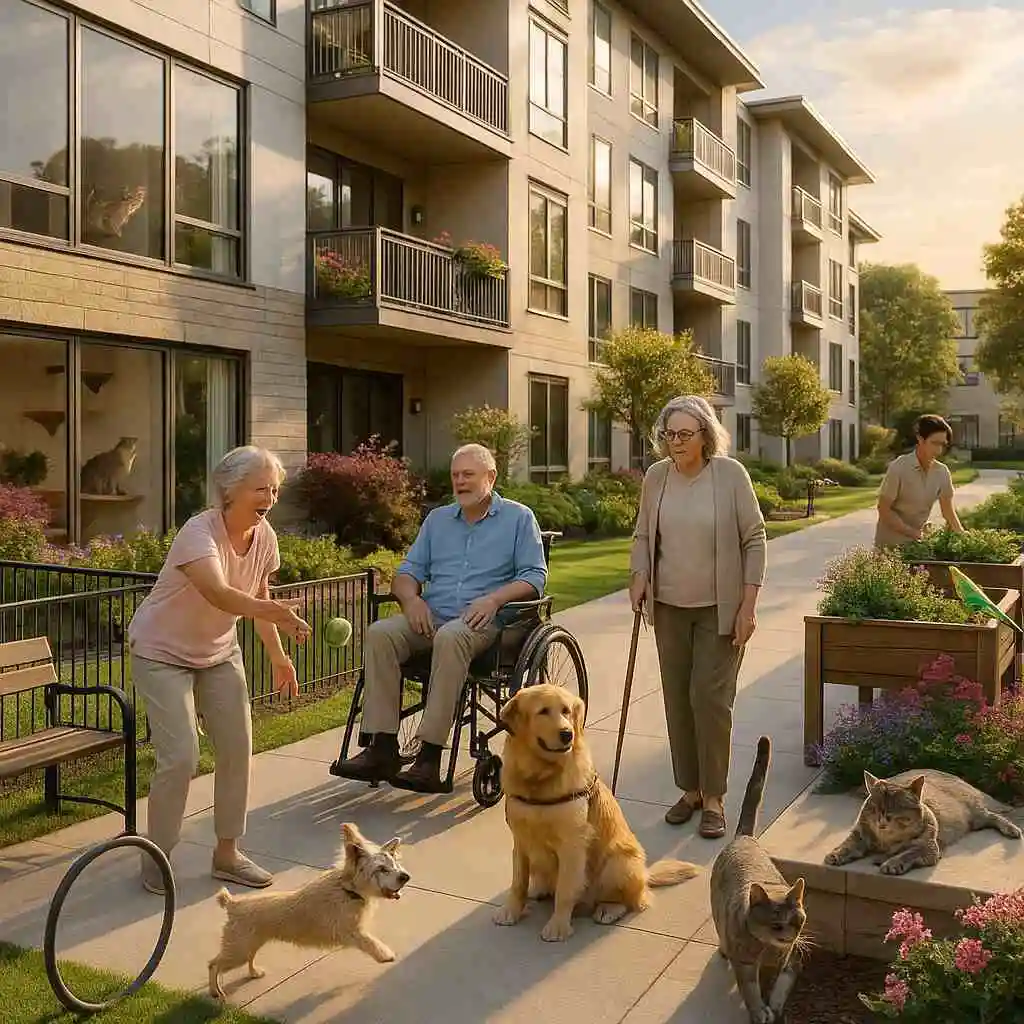 Harmonious Living Where Seniors and Pets Thrive Together
Key takeaways for families comparing senior living options
Families comparing senior living facilities quickly discover that pet policies vary as widely as floor plans. Start every tour by confirming whether the community allows multiple species or restricts companionship to cats and dogs. Reputable pet friendly senior living coordinators outline deposit schedules, vaccination requirements, and quiet-hours expectations in writing. They also showcase dog friendly senior apartments within walkable distance to veterinary clinics and grocery stores. For cat friendly assisted living communities, verify that windows lock securely and litter disposal areas remain odor controlled. These checks protect resident health while preserving neighbor harmony across vibrant communities for seniors 55+.
Compare social programming designed for seniors with pet housing options alongside traditional exercise calendars. Look for therapy pet visits, obedience classes, and collaborative grooming days that strengthen community bonds. Evaluate emergency plans, ensuring service animal accommodations remain prioritized during evacuations or power outages. Transparent assisted living plans should list who feeds or walks each animal when the owner feels unwell. Finally, balance monthly pet rents against included perks like flea prevention or unlimited park access. By scoring each factor, families build a data-driven shortlist before calling an assisted living locator.
Next steps to connect with a pet friendly senior living facility near you
Once priorities feel clear, shift from research to action by speaking with a seasoned advisor. Our team understands regional zoning, insurance rules, and emotional support guidelines better than any search engine. They translate your checklist into a curated roster of senior housing that welcomes every wag and purr. Reach out through the convenient portal labelled contact experts on pet inclusive senior living for personalized guidance. Expect compassionate conversation, transparent pricing insights, and scheduling assistance for tours near your preferred neighborhood.
Communities confident in their amenities can showcase them directly on our nationwide map. Simply select the option to list your pet friendly senior residence and complete the intuitive form. Verified listings highlight on-site dog parks, bird aviaries, and low allergen air systems to discerning families. This visibility boosts occupancy while advancing a culture where pets and older adults flourish together. Whether searching or advertising, the platform aligns every stakeholder around the shared goal of harmonious living.
Frequently Asked Questions
Question: How does Senior Living Facilities simplify comparing pet deposit guidelines and recurring pet fees across different pet friendly senior living options?
Answer: Our platform aggregates transparent cost data from thousands of senior living facilities nationwide. When you filter for pet friendly senior living, dog friendly senior apartments, or cat friendly assisted living communities, side-by-side charts instantly display one-time pet deposits, monthly pet rents, and any refundable cleaning fees. You can even sort by the lowest total cost of ownership, making it easy to budget for on-site dog parks in 55+ communities, grooming studios, and low allergen pet policies in senior apartments before you ever schedule a tour.
Question: In the Ultimate Guide to Pet Friendly Senior Living Facilities, you highlighted on-site dog parks and communal pet gardens. How can Senior Living Facilities help me locate senior living near me that offers these specific amenities?
Answer: Simply enter your city or ZIP code in our search bar and select amenities like on-site dog parks, communal pet gardens, or veterinary partnerships in senior facilities. Our interactive map then pins every senior living community that meets your criteria-complete with photos, virtual tours, and verified resident reviews. Certified senior advisors can further refine the list to communities for seniors 55+ that match your mobility level, budget, and desired proximity to local walking trails.
Question: I own two cats and a small dog. What relocation and orientation support does Senior Living Facilities provide to ensure a smooth transition into a multi-pet household in assisted living plans?
Answer: After you choose a pet inclusive independent living or long-term care facility from our database, our team sets up a personalized transition timeline. We coordinate pet orientation programs with the community-covering elevator introductions, scent-familiarization blankets, and quiet-zone scheduling. We also liaise with on-site groomers and pet walking services in the senior living facility to lock in post-move routines, reducing stress for both residents and pets.
Question: Do Senior Living Facilities listings differentiate between service animal accommodations and emotional support animal friendly housing options for seniors?
Answer: Yes. Each community page has dedicated sections outlining service animal accommodations in senior housing, complete with ADA compliance details, evacuation protocols, and relief-area maps. A separate tab explains emotional support animal guidelines, including documentation requirements and any behavior-based assessments that replace outdated breed or weight limits. This clear separation lets you quickly see which senior living near you aligns with your specific needs while protecting resident privacy and safety.
Admin
Expert contributor specializing in senior living care. Dedicated to providing families with clear, actionable advice.