What Does Green Design Mean at Senior Living Facilities
Opening the Doors to Sustainable Senior Spaces
Why green senior living design resonates with today’s older adults
The modern wave of green senior living design speaks to deeper desires than simple style. Today’s older adults want surroundings that respect both personal wellness and planetary health. Energy-efficient senior housing reduces monthly utility costs, stretches fixed incomes, and promotes thermal comfort for aging bodies. Meanwhile, healthier materials lower respiratory irritation and strengthen immune resilience. Families exploring an overview of eco-minded senior living facilities discover that environmental responsibility and fiscal prudence often walk hand in hand.
Beyond cost savings, eco-friendly assisted living fuels purpose and pride. Residents feel empowered knowing their daily choices support grandchildren’s futures. Community gardens, recycling hubs, and solar rooftops spark intergenerational conversations about stewardship. This shared mission strengthens social connection-an essential ingredient in successful communities for seniors 55+. Because nature-friendly design engages body, mind, and spirit, it nurtures holistic wellness in ways conventional buildings rarely match.
Aligning eco-friendly assisted living with resident health and dignity
Health professionals recognize that indoor conditions heavily influence chronic disease progression. Low-VOC materials in nursing homes reduce chemical burdens that aggravate asthma and cardiovascular stress. Proper ventilation paired with high-performance insulation maintains steady temperatures, preventing dangerous swings that can trigger falls or heart strain. Sustainable retirement communities often add circadian-tuned lighting, soothing joints and regulating sleep cycles without pharmaceuticals. Every green choice therefore reinforces resident dignity by championing independence rather than merely treating symptoms.
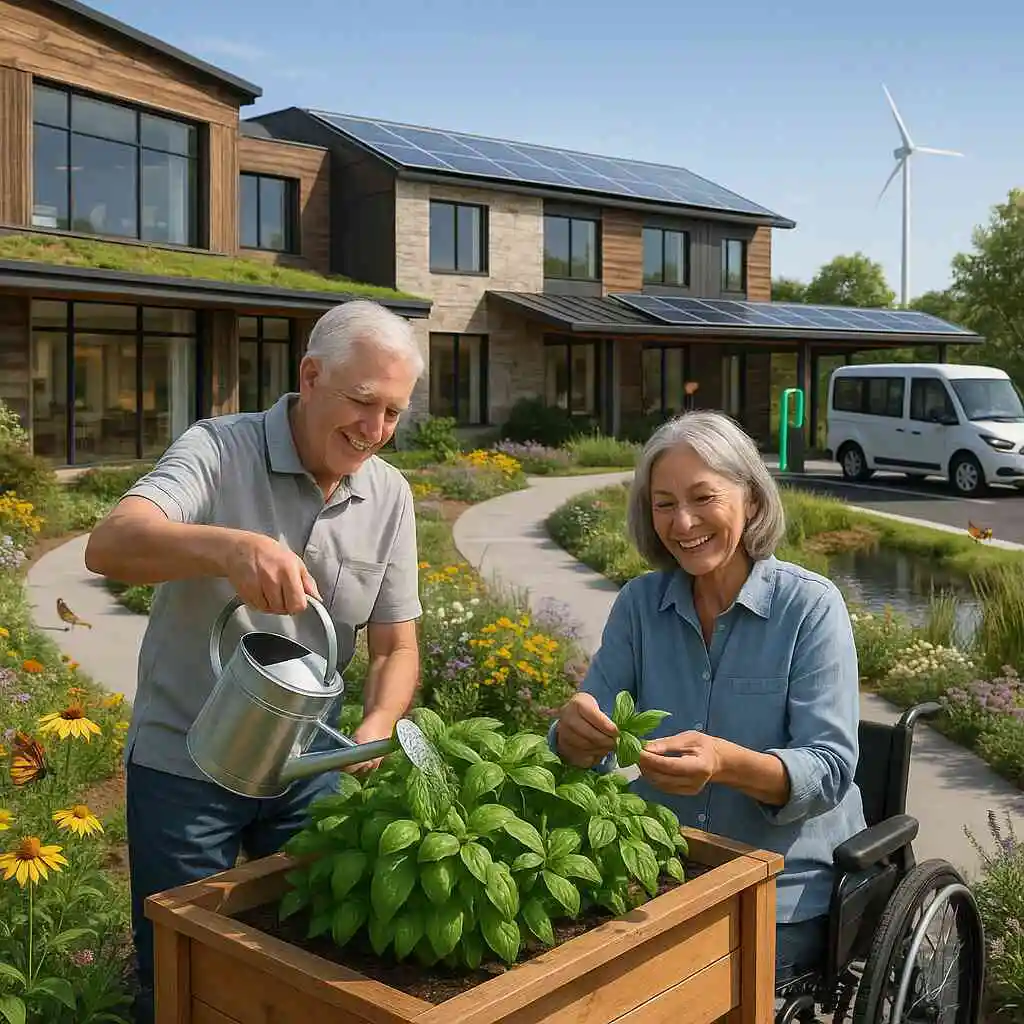
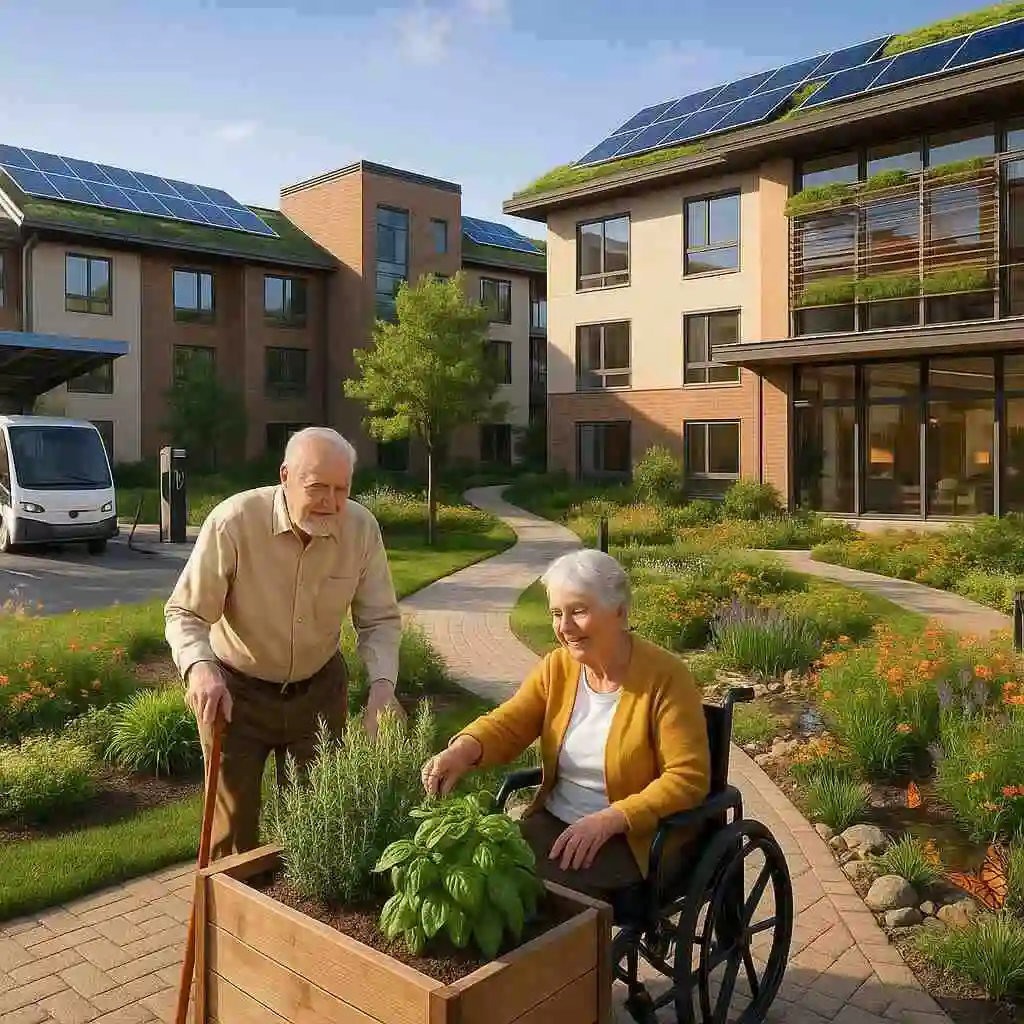
Designers also foreground accessibility while incorporating eco innovations. Wider doorways welcome walkers; ergonomic faucet handles save water yet remain gentle on arthritic hands. Raised planter beds encourage gardening from wheelchairs, blending biophilic design for seniors with practical therapy. When an assisted living facility champions both environmental and mobility needs, residents sense respect woven into walls, floors, and landscapes. The result is an atmosphere where aging in place feels empowering, not limiting.
How families search for senior living near me is redefining expectations
The phrase “senior living near me” once meant proximity alone. Now families demand spaces that deliver environmental accountability alongside medical care. Digital tours spotlight solar arrays, walkability scores, and community composting, shifting decision-making criteria. Prospective residents compare indoor air quality metrics as closely as dining menus. This evolution pressures operators to adopt renewable energy senior living solutions and transparent reporting dashboards.
Review sites and social forums amplify these expectations in real time. A glowing comment about storm-resilient construction can elevate a property’s reputation overnight, while criticism of outdated boilers travels even faster. Savvy providers respond by publishing carbon-neutral assisted living plans and showcasing third-party green building certifications. As consumer awareness rises, sustainable features transition from premium perks to baseline requirements, reshaping the competitive landscape for senior housing across the nation.
Building Blocks of Eco-Friendly Assisted Living Environments
High performance insulation and thermal comfort for older adults
Energy-efficient senior housing begins with an airtight envelope that shields residents from drafts and extreme swings. High-performance insulation, paired with thermal breaks at balconies and slab edges, creates a steady interior climate that supports circulation, joint flexibility, and restful sleep. Because older adults often experience reduced metabolic heat, designers target slightly warmer set points while still conserving energy. Continuous monitoring of wall moisture keeps mold at bay, protecting respiratory health. The result is a quiet, comfortable backdrop where wellness activities can flourish year-round.
Strategic insulation choices also aid emergency resilience. During a regional power outage, well-sealed apartments can maintain safe temperatures for hours, granting staff critical time to implement contingency plans. Operators may start with blown-in cellulose crafted from recycled paper, then layer phase-change drywall that absorbs daytime heat and releases it overnight. Together, these materials limit HVAC run times, slash utility costs, and stretch fixed incomes. Families searching for energy-smart senior housing near me can confirm R-values and blower-door scores before committing.
Low VOC and recycled materials in long term care construction
Low-VOC paints, adhesives, and floor finishes dramatically reduce chemical off-gassing that can irritate sensitive lungs. Sustainable retirement communities now vet every product through third-party databases that flag hazardous compounds. Contractors stage material deliveries to minimize on-site storage, lowering emissions even further. Residents notice the difference the moment they enter; instead of heavy odors, they breathe clean, neutral air that supports cardiovascular stability.
Recycled materials in elder care facilities add another layer of stewardship. Steel with high post-consumer content shrinks embodied carbon without compromising structural integrity. Reclaimed wood from regional barns introduces natural warmth while avoiding fresh deforestation. Even porcelain tiles can contain crushed sanitary ware diverted from landfills. By showcasing these stories during tours, staff underline the community’s commitment to conservation and transparency.
Water conserving strategies for senior housing bathrooms and landscapes
Water-conserving long-term care facilities balance dignity with resource protection. Pressure-compensating aerators maintain gentle flow rates, allowing residents with arthritis to wash their hands without a forceful spray. Dual-flush toilets and vacancy-sensing faucets further trim consumption, yet remain intuitive. Maintenance teams track usage through smart meters, spotting leaks before they become slip hazards or budget surprises.
Outside, xeriscape plantings replace thirsty turf with native grasses and flowering perennials that invite pollinators. Drip irrigation lines deliver moisture directly to roots, eliminating overspray that could create slick walkways. Rain gardens capture stormwater, slowly infiltrating it back into the soil instead of channeling it toward overwhelmed municipal drains. These layered tactics knit together environmental and fall-prevention goals, showing how thoughtful design upholds resident independence.
Smart energy efficient systems and renewable energy senior living solutions
Modern HVAC systems integrate variable-refrigerant flow technology, modulating output room by room to match occupancy and personal preference. When paired with occupancy sensors, lights dim automatically, and blinds adjust to harvest daylight while limiting glare. A single digital platform tracks kilowatt-hours in real time, empowering residents to compete playfully for the lowest suite consumption. This gamified transparency strengthens community spirit and financial literacy simultaneously.
Solar arrays atop parking canopies provide shade for vehicles while generating clean electricity. Excess midday power charges battery banks that keep critical medical devices running during grid interruptions. Some operators explore micro wind turbines or ground-source heat pumps, diversifying energy streams for added resilience. By coupling these technologies with utility incentives, administrators redirect savings into enrichment programs, proving that renewable energy seniors living near me can advance both planetary and personal prosperity.
Navigating LEED certified senior living facility and other green building certifications
Green building certifications for senior housing offer objective proof that sustainability goals are more than marketing slogans. LEED evaluates energy use, water efficiency, materials, and indoor environmental quality, awarding points that translate into Certified, Silver, Gold, or Platinum ratings. WELL focuses on occupant health, measuring factors such as nourishment, mind, and movement. Fitwel, Green Globes, and Passive House supply additional pathways, each emphasizing different performance metrics.
Because paperwork can feel daunting, successful operators form early alliances with architects, engineers, and commissioning agents who understand both aging-in-place guidelines and rigorous audits. Residents, meanwhile, gain peace of mind knowing third-party reviewers validate claims. A plaque in the lobby becomes a daily reminder that their home reflects global best practices, not fleeting trends. Forward-looking communities often stack certifications, signaling leadership within a competitive market where environmental excellence increasingly drives occupancy decisions.
 Designing with Nature to Elevate Wellness in Senior Communities
 Designing with Nature to Elevate Wellness in Senior Communities
Biophilic design elements that nurture connection and cognition
Biophilic design for seniors brings nature indoors, weaving organic textures, colors, and rhythms into everyday routines. Textured wood wall panels, living moss art, and gentle water features stimulate multiple senses, encouraging cognitive engagement without overwhelming older adults. Research shows that views of plants can stabilize heart rates and reduce anxiety, supporting graceful aging. Communities for seniors 55+ therefore position reading nooks beside window planters where hummingbirds visit daily. Residents enjoy effortless access to calming scenes that reinforce their identity as stewards of the planet.
Designers also integrate sensory wayfinding inspired by regional landscapes. Carpet patterns echo river currents, guiding memory-care residents toward activity zones without confusing signage. Aromatherapy diffusers release cedar or lavender near meditation rooms, anchoring spatial memory through scent. A subtle bird-song soundtrack in corridors fosters orientation, preventing agitation. Operators who adopt these biophilic strategies report fewer behavioral outbursts and richer social interaction, proving that sustainability can double as therapy.
Healthy daylighting and circadian smart lighting for memory care
Balanced daylight supports circadian rhythms, which often weaken with age and dementia. Large north-facing windows diffuse glare-free light deep into common areas, reducing dependence on electricity while boosting vitamin D synthesis. Automated shades track the sun’s path, preventing harsh midday heat yet preserving exterior views. Staff notice sharper appetites and smoother sleep cycles when daylight replaces fluorescent glare.
After sunset, tunable LEDs mimic dusk, signaling melatonin production and preparing bodies for restorative rest. Warm amber tones in dining rooms encourage relaxation, while cooler hues in activity centers stimulate morning alertness. This color-temperature choreography, combined with motion sensors, slashes energy bills and supports memory care goals. By aligning light cues with internal clocks, energy-efficient senior housing demonstrates how technology and nature can collaborate for health.
Wellness gardens and nature based therapies in retirement communities
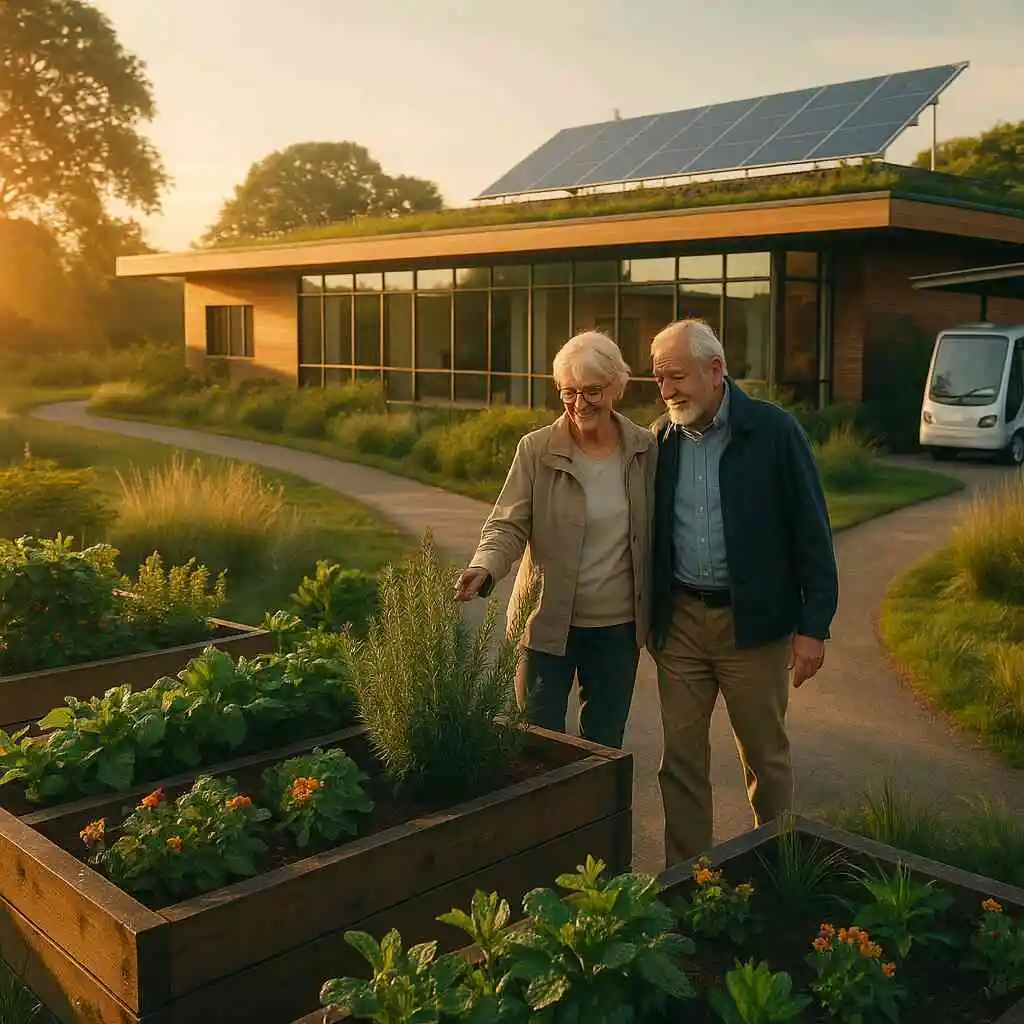
Outdoor wellness gardens in senior communities provide more than decoration; they function as open-air clinics. Raised beds at wheelchair height invite residents to plant herbs, strengthening grip and joint flexibility. Fragrant rosemary and basil trigger nostalgic memories, enriching conversation during intergenerational visits. Walking paths loop around pollinator meadows, supplying safe exercise zones free from vehicle noise. Rain chains and birdbaths turn seasonal storms into playful spectacles, fostering resilience rather than fear.
Therapeutic horticulture programs pair clinical goals with ecological stewardship. Occupational therapists might assign watering schedules that mirror medication routines, reinforcing executive function. Meanwhile, compost bins reveal the life cycle, offering purpose for residents who enjoy gardening at home. One community even partners with local chefs to harvest produce for low-sodium meals, linking farm-to-table freshness with chronic-disease management. Families exploring biophilic senior living options in Oregon appreciate how these gardens knit wellness, education, and sustainability together.
Indoor air quality monitoring and green housekeeping in nursing homes
Indoor air quality in senior apartments directly influences respiratory strength and infection control. Continuous monitors track particulate matter, carbon dioxide, and humidity, alerting staff before thresholds threaten comfort. High-efficiency filters paired with energy-recovery ventilators supply fresh air without thermal loss, maintaining stable temperatures crucial for arthritis and circulation. Dashboards in lobbies display metrics, empowering residents to see real-time stewardship in action.
Green housekeeping in nursing homes completes the cycle by replacing harsh chemicals with plant-based cleaners tested for hospital standards. Microfiber cloths capture allergens using minimal water, while color-coded mops prevent cross-contamination between bathrooms and kitchens. Staff receive ongoing training on dilution control, protecting both lungs and local waterways. Families touring a long-term care facility often cite the gentle, neutral scent as instant reassurance. Together, smart monitoring and eco-certified cleaning forge environments where older adults breathe easier and thrive.
Future Proof Operations and Resident Engagement
Solar power microgrids and storm resilient senior living infrastructures
Solar-powered microgrids allow senior living facilities to operate independently when public utilities fail. These modular systems combine rooftop photovoltaic panels with on-site batteries, keeping medical devices and elevators running without interruption. Because energy generation happens steps away from residents, transmission losses disappear and monthly bills shrink. Operators also integrate predictive weather software that pre-charges batteries before forecasted storms, further strengthening emergency readiness. Residents gain confidence knowing their home remains comfortable even during regional blackouts.
Storm-resilient senior housing depends on more than stored electrons; it also relies on hardened building envelopes and elevated mechanical rooms. Impact-rated windows shield interiors from flying debris while maintaining clear outdoor views that ease anxiety. Flood-proof vaults keep electrical gear dry so power can flow immediately after severe rainfall. When combined with renewable energy senior living near me initiatives, these measures turn potential crises into teachable moments of community strength. Programming staff often transform post-storm downtime into sustainability workshops that deepen resident engagement.
Electric vehicle charging and sustainable transportation for residents and staff
As electric vehicles replace gas-powered shuttles, charging infrastructure becomes another pillar of accessible green architecture. Level-two chargers in covered carports serve resident drivers while fleet-grade fast chargers keep medical transport vans ready. Software schedules charging during midday solar peaks, maximizing the utility of on-site generation and lowering demand fees. Clear signage, contrasting pavement colors, and non-slip surfaces support older adults with limited vision or mobility as they connect cables. Staff appreciate the convenience, and visitors see visible proof of the community’s environmental commitment.
Sustainable transportation options extend beyond personal cars. Bike-share programs with step-through frames encourage low-impact exercise on nearby trails. Electric carts shuttle residents between dining halls and garden plots, reducing internal combustion noise that can heighten stress. Partnerships with regional transit agencies provide discounted passes, linking seniors to cultural events without parking hassles. Together, these strategies cut emissions while nurturing social connection, proving that mobility and stewardship can advance hand in hand.
Community composting and sustainable dining programs for seniors
Food waste reduction begins in the kitchen but flourishes when residents participate directly. Centralized compost hubs accept plate scraps, coffee grounds, and garden trimmings, transforming them into nutrient-rich soil for courtyard planters. Clear pictograms above bins simplify sorting, even for those with mild cognitive impairment. Monthly weight reports celebrate collective progress, turning sustainability into a friendly competition. When residents see seedlings thrive in compost-amended beds, abstract climate goals feel personal and achievable.
Sustainable dining programs for seniors layer additional virtues onto each meal. Chefs source regional produce, minimizing transportation emissions while amplifying seasonal flavors that evoke cherished memories. Plant-forward menus decrease reliance on resource-intensive meats yet still satisfy protein needs through legumes and dairy. Transparent labeling highlights low-sodium, heart-healthy options, aligning ecological and medical priorities. Culinary demonstrations teach residents and visiting families how to replicate earth-friendly recipes at home, extending lessons beyond campus boundaries.
Aging in place strategies within accessible green architecture
Aging-in-place sustainable design respects changing bodies without sacrificing aesthetic warmth. Non-toxic cork floors cushion joints and reduce fall risk while also sequestering carbon during manufacturing. Motion-activated skylights provide daylight without requiring residents to stretch for blinds, supporting both autonomy and energy savings. Low-threshold showers direct graywater toward landscape irrigation, linking personal hygiene with broader conservation goals. Every detail, from lever-style door handles to thermostats featuring large fonts, upholds independence as the central design value.
Accessible green architecture also prepares buildings for future technological upgrades. Conduit pathways behind walls allow easy retrofits, avoiding demolition waste when new sensors or insulation standards emerge. Modular wall panels, crafted from recycled content, can be swapped quickly if medical equipment needs change. By embedding flexibility, communities sidestep costly renovations that disrupt resident routines. Families evaluating housing options for seniors appreciate environments that adapt gracefully rather than forcing disruptive relocations.
Digital dashboards that empower residents to track carbon neutral assisted living goals
Information transparency transforms passive inhabitants into active sustainability partners. Interactive lobby dashboards display real-time data on electricity, water, and waste metrics, breaking community targets into digestible daily numbers. Color-coded graphs reveal progress toward carbon-neutral assisted living plans and celebrate milestones with virtual confetti. Residents can tap their apartment number to view personalized usage trends, encouraging friendly contests that reinforce conservation habits. Staff use the same platform to schedule maintenance, ensuring operational efficiency meets environmental aspirations.
Digital engagement tools also integrate educational content, such as articles on future trends in carbon-neutral senior living. Regular push notifications remind residents to join workshops on green housekeeping or native gardening, fostering continuous learning. Voice-activated assistants provide accessibility, reading metrics aloud for visually impaired users. By merging data and dialogue, facilities nurture a culture where every individual feels instrumental in shaping a healthier planet and a vibrant, supportive home.
From Vision to Reality: Creating Carbon Neutral Communities for Seniors
 From Vision to Reality: Creating Carbon Neutral Communities for Seniors
Key takeaways for families comparing senior living facilities
Families often feel overwhelmed when comparing senior living facilities that advertise eco features. Focus on measurable outcomes, not marketing promises. Confirm the community’s carbon-neutral assisted living plans with public data dashboards or third-party certification plaques. Ask how green senior living design reduces monthly costs while safeguarding health through low-VOC materials and fresh air systems. Verify emergency strategies, including solar microgrids, to maintain comfort during outages. Finally, request resident testimonials showing daily comfort under the new sustainable features.
Compile a shortlist using clear criteria. Prioritize energy-efficient senior housing that delivers stable indoor temperatures and reduced utility bills. Look for storm-resilient senior housing with reinforced envelopes and raised mechanical rooms. Inspect wellness gardens, biophilic lounges, and smart lighting that support cognition and mood. If possible, tour during different times to judge daylight quality and thermal comfort personally. Remember to compare communities for seniors 55+ located conveniently near family support networks. Online comparison tools make it easy to filter results under the phrase “senior living near me” for quick logistics.
Collaborative pathways for operators designers and residents to champion sustainability
Achieving carbon neutrality demands collaboration among operators, architects, residents, and regional partners. Operators can publicly list your green senior community to attract likeminded residents and transparent investors. Designers should integrate accessible green architecture, from non-toxic cork floors to motion-guided skylights. Residents contribute by adjusting thermostats mindfully and participating in composting workshops. Local utilities often provide rebates, multiplying the impact of every retrofit dollar.
Continuous education keeps momentum alive after ribbon-cutting ceremonies. Monthly forums let maintenance teams explain digital dashboards tracking water, waste, and kilowatt-hours. Residents share insights, ensuring policies reflect lived experience, not top-down assumptions. Annual audits benchmark progress against emerging eco-standards for elder care, reinforcing accountability culture. By aligning voices, senior housing becomes a living laboratory that inspires wider community adoption of sustainable practices.
Frequently Asked Questions
Question: How do Senior Living Facilities help my family locate energy-efficient senior housing and eco-friendly assisted living communities that truly lower utility costs?
Answer: Our nationwide database filters properties by sustainability criteria such as high-performance insulation for senior residences, smart lighting for memory care, low-VOC materials in nursing homes, and water-conserving long-term care facilities. When you enter your ZIP code, the search results highlight estimated energy savings, average monthly utility bills, and any renewable energy senior living near me features like solar power microgrids. Because we compare verified data, not marketing claims-you can see exactly how an eco-friendly assisted living location will stretch a fixed income while supporting thermal comfort for older adults.
Question: Which green building certifications should I look for when comparing senior living near me, and how does Senior Living Facilities make those easy to spot?
Answer: The most trusted seals include LEED certified senior living facility levels (Certified, Silver, Gold, or Platinum), WELL for occupant health, and Green Globes. Each listing on Senior Living Facilities shows a “Green Badge” beside the community name; click it to view documentation of energy-use intensity, recycled materials in elder care facilities, and indoor air quality in senior apartments. We also list carbon-neutral assisted living plans so you can quickly compare sustainability performance across multiple long-term care facilities without opening dozens of browser tabs.
Question: In the blog post What Does Green Design Mean at Senior Living Facilities, you mentioned wellness gardens and biophilic design for seniors. How can I confirm a property really offers those nature-based therapies before I schedule a tour?
Answer: Every community for seniors 55+ on our site includes a photo gallery, virtual walk-through, and amenity checklist that specifically calls out wellness gardens in senior communities, nature-based therapies, and accessible green architecture like raised planter beds. Resident testimonials describe daily gardening programs and healthy daylighting for seniors, giving you first-hand insight. If you still have questions, use our Connect feature to speak directly with the on-site horticulture therapist or activities director before committing to an in-person visit.
Question: My parents want to age in place safely. Can Senior Living Facilities help me evaluate sustainable retirement communities that combine storm-resilient senior housing with aging-in-place sustainable design?
Answer: Absolutely. Our assisted living locator tool lets you filter by accessibility features-such as non-toxic cork floors, low-threshold showers, and lever-style door handles-alongside storm-resilient elements like reinforced envelopes and solar power backup. Each profile details how aging-in-place sustainable design pairs with emergency preparedness, so your parents can enjoy independence today and protection tomorrow. We even flag communities that offer digital dashboards, letting residents track their own resource use and participate in carbon-neutral assisted living goals.
Question: Do properties listed on Senior Living Facilities include renewable energy perks like senior living solar power or electric vehicle charging, and will these upgrades really reduce monthly expenses?
Answer: Many of our featured senior apartment rentals now operate on solar power microgrids and provide EV charging for residents and staff. Solar arrays cut electricity bills by 20-40 percent, savings that communities often pass on through lower rents or enhanced wellness programs. Real-time utility dashboards show how much clean energy is generated, reinforcing trust in the numbers. EV charging stations also attract eco-minded visitors and future-proof transportation needs, making these properties both fiscally and environmentally savvy choices.
Admin
Expert contributor specializing in senior living care. Dedicated to providing families with clear, actionable advice.