Senior Living Facilities Approach to LGBTQ Inclusive Care

Opening Doors of Dignity and Pride
Why LGBTQ affirming senior living matters
Every older adult deserves to age with dignity, yet LGBTQ elders too often endure silent discrimination. Consequently, LGBTQ affirming senior living becomes more than a preference; it becomes a lifeline. Inclusive assisted living facilities that honor pronouns, chosen families, and same-sex partner residency rights foster psychological safety. When residents freely hold hands or display cherished photos without fear, stress hormones drop and overall health improves. Therefore, culturally competent senior caregivers trained in intersectional practice are not optional; they are fundamental to ethical care.
Furthermore, data show that gay friendly nursing homes reduce social isolation, a leading predictor of hospital readmission. Older transgender residents who receive gender affirming medical care for seniors report higher medication adherence and fewer depressive episodes. Meanwhile, resident-led elder LGBTQ support groups amplify belonging and mutual aid. In turn, communities for seniors 55+ observe stronger volunteerism and richer intergenerational mentorship. Altogether, LGBTQ affirming senior living sharpens quality indicators across the continuum of care.
The current landscape of senior living facilities near you
Across the nation, demand for queer friendly independent living communities is surging. Families now type “senior living near me” expecting visible non-discrimination statements and rainbow senior housing options. States differ widely, though; some cultivate robust regulations protecting partner visitation rights in senior housing, while others lag. Because of this patchwork, selecting the best senior living for LGBTQ retirees requires careful comparison. Our database tracks which long-term care facility regularly updates inclusive policies so consumers can decide confidently.
Encouragingly, flagship models are emerging from coast to coast. For example, dedicated wings in California offer supportive housing for HIV positive elders, while New England showcases inclusive chaplaincy that celebrates diverse spiritual paths. Simultaneously, Midwestern assisted living plans now embed pronoun respectful caregiving training in orientation modules. Yet gaps remain in rural regions where transgender elder care services are scarce. By spotlighting success stories, we accelerate nationwide replication and raise the standard for every senior housing option.
Our pledge to non-discrimination and equitable admission
Senior Living Facilities stands firm: bias has no home in our inclusive senior living facility online hub. We screen listings for explicit protections covering sexual orientation, gender identity, and expression before publication. Because equal access starts at the front door, we verify that intake forms avoid heteronormative language and provide space for chosen names. Moreover, we advocate for equitable admission fees, ensuring same-sex couples are never charged double for shared suites. Transparency here guards against subtle financial prejudice.
In addition, we collaborate with DEI scholars to craft assessment tools measuring fairness from the inquiry call to move-in day. Facilities must show staff completion of sensitivity training and documented procedures for resolving harassment complaints. When a community earns our rainbow icon, families know standards surpass minimum state requirements. Through continuous audits and resident feedback, we refine criteria so policies evolve with emerging best practices. Aging with pride requires vigilance, and we are unwavering in that commitment.
Cartography of Inclusive Senior Housing Choices
Queer friendly independent living communities across the states
Independent senior living concept experts note that queer friendly independent living communities flourish in both bustling cities and quieter towns. Residents select housing options for seniors that balance autonomy with safety, while benefitting from culturally competent senior caregivers on-site. Amenities often feature art studios, rooftop gardens, and libraries celebrating LGBTQ literature, which deepens social connection. Because these environments openly respect pronouns, chosen names, and visible pride symbols, stress levels decrease and overall wellness rises. Furthermore, communities for seniors 55+ that integrate intersectional programming consistently report higher volunteer rates and peer mentorship satisfaction.
Prospective residents begin their search online, comparing inclusive locations coast to coast. They can quickly search LGBTQ welcoming senior communities near me to discover verified listings in all fifty states. This portal highlights queer-affirming independent living communities, clarifies service fees, and details supportive policies. As a result, families spend less time worrying about hidden discrimination and more time visiting potential homes. Ultimately, transparent information empowers the best senior living for LGBTQ retirees to thrive with pride.
Assisted living plans that respect same sex partner residency rights
Inclusive assisted living facilities increasingly design floor plans that welcome couples without regard to gender. Same-sex partner residency rights become explicit in admission contracts, preventing double occupancy surcharges that once penalized LGBTQ elders. Additionally, gay friendly nursing homes offer private suites where partners share cherished possessions without judgment. Staff receive pronoun respectful caregiving training, ensuring daily routines-from medication assistance to dining-honor each resident’s identity. Consequently, relationship security translates into improved mental health and medication adherence.
Policies alone are not enough; implementation matters. Therefore, administrators schedule regular audits that track partner visitation rights in senior housing and non-discrimination policies in long-term care. Feedback loops invite residents to report micro-aggressions promptly, and mediation teams resolve conflicts swiftly. Assisted living plans that embed such accountability produce lower turnover among caregivers and residents alike. In turn, stable staffing nurtures familiarity, which enhances safety metrics that protect LGBTQ seniors from isolation.
Senior apartment rentals and senior housing options
Demand for senior apartment rentals that showcase rainbow senior housing options continues to surge. Developers collaborate with advocacy groups to incorporate vibrant community rooms, gender-neutral restrooms, and signage pledging inclusivity. Rent structures remain income-sensitive, broadening access for older Americans on fixed budgets. Because these apartments connect to public transit and queer-friendly medical clinics, residents maintain independence while accessing essential services. Moreover, onsite elder LGBTQ support groups strengthen neighborly bonds.
Beyond aesthetics, property managers curate inclusive recreation such as dance nights featuring nostalgic queer anthems and film clubs screening LGBTQ cinema classics. Monthly town halls invite residents to co-create policies, embedding genuine ownership in community culture. Marketing materials avoid heteronormative imagery, using diverse couples in brochures to reflect authentic occupancy. As visibility grows, rainbow senior housing options inspire adjacent developments to adopt similar standards. Thus, market competition accelerates widespread adoption of equitable senior housing.
Navigating state regulations on LGBTQ elder care
State regulations on LGBTQ elder care remain a patchwork, making navigation essential for relocating retirees. Some jurisdictions mandate cultural competency training for licensed long-term care facility staff, while others still rely on voluntary guidelines. Consequently, transgender elder care services in progressive states often exceed those in regions lacking explicit protections. Legal experts advise reviewing fair housing statutes, human rights commissions, and healthcare nondiscrimination clauses before choosing a senior living facility. Doing so mitigates relocation risk and financial loss.
Nevertheless, informed advocacy drives progress. Community coalitions lobby legislators to extend healthcare proxies, ensuring surrogate decision-makers from chosen families gain legal recognition. Moreover, public hearings spotlight stories of seniors denied equitable admission practices in assisted living, pressuring regulators to act. When new rules pass, outreach campaigns educate facility directors on compliance, closing knowledge gaps. Over time, harmonized standards promise safer, more consistent senior living near you for every LGBTQ elder.
 Clinical Affinity and Gender Affirming Wellness Pathways
 Clinical Affinity and Gender Affirming Wellness Pathways
Gender affirming medical care for seniors
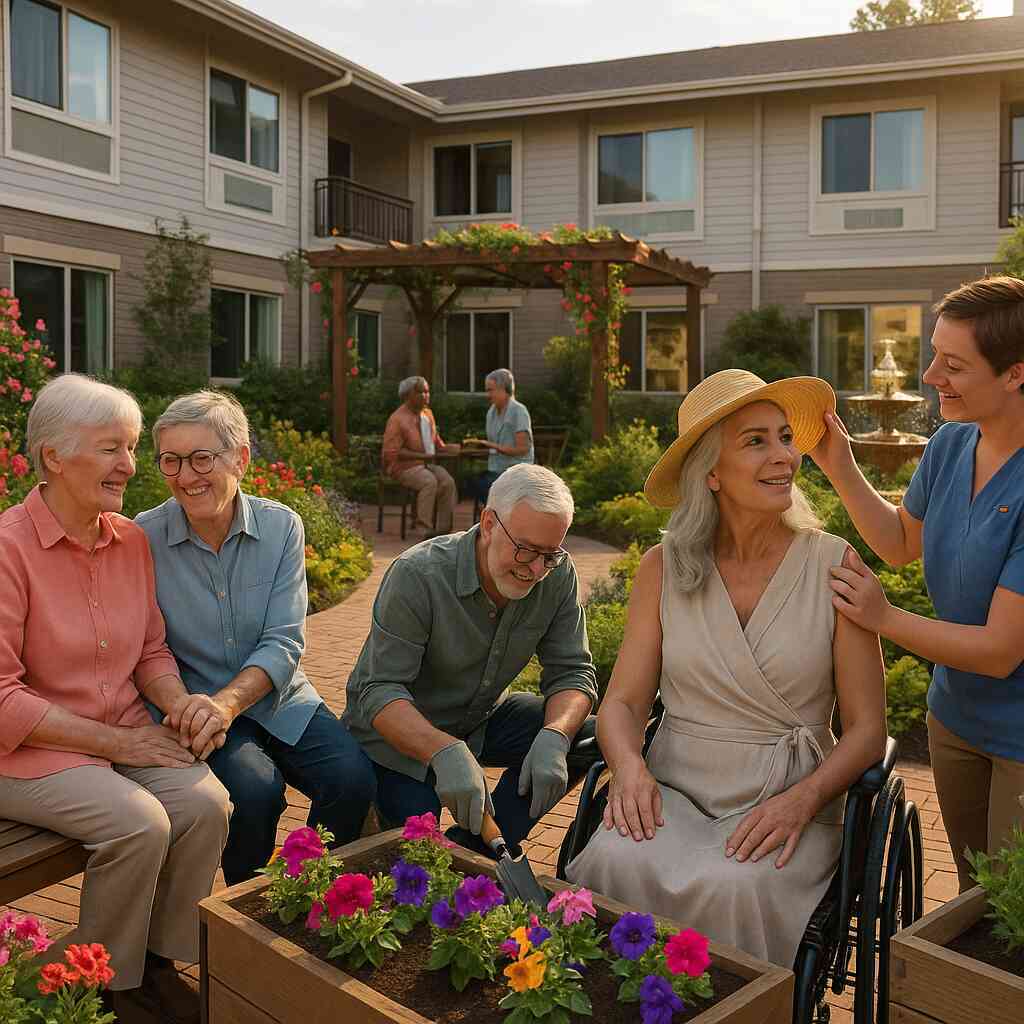
Aging LGBTQ adults often postpone critical treatments because earlier providers ignored or invalidated their identities. Progressive senior living facilities correct that history by embedding gender affirming medical care for seniors directly into onsite clinics. Endocrinologists coordinate with geriatricians, ensuring hormone therapy protocols respect bone density changes and cardiovascular realities. Moreover, inclusive assisted living facilities schedule regular consent reviews, so residents always feel empowered to adjust care. Consequently, blood pressure control, sleep quality, and overall satisfaction scores trend upward when affirming practice guides every appointment.
Coordination does not stop at the physician’s door. Pharmacists flag potential drug-hormone interactions and alert the interdisciplinary team before issues escalate. Meanwhile, physical therapists develop exercise plans that safeguard joint health while supporting gender expression goals, such as voice endurance or chest flexibility. Gay friendly nursing homes also equip wellness rooms with mirrors that avoid dysphoria-triggering harsh lighting. Altogether, the long-term care facility evolves into a holistic refuge where clinical rigor and personal authenticity coexist.
Culturally responsive dementia care and HIV supportive housing
Memory loss presents unique hurdles for LGBTQ elders whose life stories include hidden marriages, chosen families, and past trauma. Staff in our seniors living community receive dedicated modules on culturally responsive dementia care, learning to validate pronouns even when residents misgender themselves. Reminiscence therapy incorporates queer history timelines, sparking recognition that inspires trust. As confusion diminishes, behavioral disturbances drop, which decreases antipsychotic usage and enhances quality benchmarks for nursing homes for the elderly.
Simultaneously, HIV prevalence remains higher among older gay men and transgender women. Therefore, senior housing integrates confidential medication storage, peer adherence coaches, and infectious disease tele-consults. Specialized wings offer HIV supportive housing that features enhanced ventilation and private dining to safeguard immunity. Residents participate in art groups that combat stigma while reinforcing cognitive reserve. Through this synergy, the care environment strengthens resilience rather than amplifying vulnerability.
Pronoun respectful caregiving training for senior caregivers
Pronouns may appear small, yet they carry enormous emotional weight, especially in assisted living plans where daily interactions number in the dozens. Senior care teams thus complete pronoun respectful caregiving training before their first shift. Role-play exercises teach quick corrections without embarrassment, while policy manuals outline escalation steps for repeated lapses. Surveys then measure compliance across every senior living facility wing, allowing managers to celebrate high-performing units and mentor others.
Because consistent language shapes culture, respectful pronoun usage ripples outward to documentation, visitor logs, and emergency hand-offs with external hospitals. Ambulance crews receive clear identity notes that travel with residents, averting misgendering under stress. Families notice the difference immediately, reporting heightened trust in staff competence. In turn, staff retention improves, since employees feel proud to serve within an environment that honors dignity. Metrics confirm that clarity breeds confidence for both caregivers and those they support.
Inclusive chaplaincy and intersectional elder wellness programs
Spiritual care becomes fully inclusive when chaplains understand the intersection of sexuality, gender, race, and aging. Our communities engage clergy who celebrate diverse faiths alongside secular reflection practices. Weekly circles might juxtapose Buddhist loving-kindness with Christian communion or nature-based rituals, ensuring safe spaces for older LGBTQ adults seeking meaning. Chaplains also coordinate grief groups after legislative setbacks, validating communal sorrow and prompting collective action toward hope.
Beyond spiritual services, intersectional elder wellness programs fuse yoga, nutrition workshops, and advocacy training. Residents explore plant-based menus that respect cultural heritage while lowering cholesterol. Volunteer lawyers teach sessions on partner visitation rights in long-term care, empowering informed consent. Furthermore, technology lounges host webinars on innovative wellness for older queer adults, linking participants to external research and new therapies. As knowledge flourishes, residents thrive, proving that wholeness blossoms when body, mind, and spirit receive equal respect.
Culture Building in Rainbow Communities for Seniors
Resident led diversity councils and elder LGBTQ support groups
Resident led diversity councils give seniors authentic authority over community culture. Members from all identities meet monthly, propose events, and review non-discrimination policies in long-term care. Their charters guarantee representation for transgender elders, bisexual residents, and same-sex couples. This balanced voice reduces micro-aggressions because policies emerge from lived experience, not distant theory. As decisions become transparent, trust grows between residents and administration.
Elder LGBTQ support groups complement governance by nurturing personal resilience. Facilitated circles share stories of surviving past prejudice, offering coping strategies for current challenges in the senior living facility. Peer educators teach legal planning, ensuring partner visitation rights remain secure during medical crises. Attendance data show lower loneliness scores after six meetings. Communities replicate successful formats through webinars, steadily expanding affirmation networks.
Intergenerational LGBTQ mentorship and aging with pride resources
Intergenerational mentorship programs pair seasoned activists with younger volunteers from nearby universities. Conversations span identity exploration, technology tutoring, and storytelling about historic equality milestones. Seniors feel valued as wisdom keepers, while students gain perspective on progress achieved and battles ahead. These relationships also strengthen social determinants of health because connection buffers against depression. Regular meetups occur in libraries named for pioneering queer elders.
Senior Living Facilities curates aging with pride resources that mentors reference during sessions. Toolkits cover gender affirming medical care for seniors, estate planning, and inclusive chaplaincy options. Digital platforms translate guides into large-print formats, ensuring accessibility for low-vision users. Mentors often assist peers in downloading telehealth apps, reducing technical barriers to wellness. This continuum of support magnifies community resilience.
Inclusive recreation and safe spaces for older LGBTQ adults
Recreation schedules intentionally spotlight queer culture alongside classic pastimes. Drag bingo, lesbian poetry salons, and gender-neutral dance classes sit beside chess tournaments and gardening clubs. Program diversity signals that all identities deserve celebration, not mere tolerance. Amenities include meditation rooms free of gendered décor and art studios displaying resident queer artists. Such environments decrease cortisol levels, supporting cardiovascular health.
One mid-week coffeehouse conversation features discussions on building community and social life with pride. Participants trade ideas for welcoming newcomers, preventing clique formation, and amplifying positive gossip across wings. Staff gather feedback from these conversations and adjust activity rosters within days. This rapid responsiveness reinforces psychological safety because residents witness direct outcomes of their voices. Consequently, event attendance climbs each season steadily.
Sensitivity training and DEI outcomes for senior care staff
Culturally competent senior caregivers remain central to sustaining the rainbow community culture. Orientation includes pronoun respectful caregiving training, unconscious bias workshops, and scenario drills addressing queer elder micro-aggressions. Trainers assess comprehension through role-play, then follow with quarterly refreshers to maintain skill proficiency. Performance reviews integrate DEI metrics, signaling institutional commitment beyond one-time classes. Consistent reinforcement engrains empathy into everyday routines.
Outcome dashboards track improvements after training cycles. Metrics include reduced complaint filings, higher satisfaction surveys, and longer caregiver retention in inclusive assisted living facilities. Leadership shares successes during town halls, allowing residents to validate numbers with lived reality. When gaps appear, committees brainstorm corrective strategies instead of assigning blame. Continuous quality improvement anchors equitable admission practices in assisted living, ensuring every resident ages with unapologetic pride.
Charting Tomorrow Together in Vibrant Color
 Charting Tomorrow Together in Vibrant Color
Measuring impact with equitable quality indicators
Progress becomes tangible only when numbers illuminate success. Our seniors living community therefore tracks equitable quality indicators each quarter. Dashboards display infection rates, falls, and satisfaction broken down by orientation and gender identity. We compare results with national medians and adjust protocols quickly. Readers can explore our full scoring rubric by reviewing the measuring quality for diverse elders.
Metrics alone cannot guarantee justice, yet they reveal patterns demanding action. When data show gaps, leadership convenes residents, culturally competent senior caregivers, and family advocates. Together they refine non-discrimination policies in long-term care and strengthen safety metrics that protect LGBTQ seniors. Follow-up audits confirm whether equitable admission practices in assisted living have improved. This loop embeds accountability into everyday routines and sustains momentum.
Community outreach to LGBTQ elders searching for senior living near me
Information deserts still isolate many elders, especially in rural zip codes. Our outreach vans visit pride centers, libraries, and veterans halls to share bilingual guides on inclusive assisted living facilities. Ambassadors explain how gay friendly nursing homes honor partner visitation rights and welcome chosen families. Attendees receive tablet tutorials that simplify typing “senior living near me” into our locator. First-time users often exclaim at the variety of housing options for seniors within driving distance.
Digital engagement complements road tours by harnessing social media groups for communities of seniors 55+. Weekly livestreams feature residents discussing life inside queer friendly independent living communities. Viewers pose questions about transgender elder care services and receive plain-spoken answers from medical directors. Sharing circles reduce fear because real faces replace abstract brochures. As trust grows, inquiries rise and waitlists diversify.
Invitation to connect compare and thrive with Senior Living Facilities
Every path to aging with pride begins with a single, curious click. Our platform lets families search, compare, and connect without hidden fees or judgment. Filters spotlight rainbow senior housing options, assisted living plans, and senior apartment rentals that match unique budgets. Interactive maps reveal senior living near you alongside transit lines and clinic networks. Within minutes, visitors curate a shortlist that respects both heart and wallet.
Guidance never ends after the shortlist forms. Experienced advisors stand ready to answer nuanced care questions, from pronoun respectful caregiving training to hospice approach for terminal LGBTQ elders. They coach users on crafting visitation clauses and reviewing meal plans attuned to cholesterol goals. Each conversation empowers older adults to claim agency over their future. When you feel ready, explore listings, schedule tours, and envision yourself thriving in full, vibrant color.
Frequently Asked Questions
Question: How do Senior Living Facilities verify that assisted living plans listed on your platform truly uphold non-discrimination policies in long-term care?
Answer: Before any community appears in our assisted living locator, our audit team reviews intake forms, employee manuals, and resident handbooks to confirm explicit protections for sexual orientation, gender identity, and expression. We interview administrators about equitable admission practices in assisted living and require proof of completed sensitivity training for senior care staff. Facilities that meet our criteria earn a rainbow icon on their profile, signaling families that the long-term care facility exceeds state regulations on LGBTQ elder care. Quarterly, we re-audit each listing and follow up on resident feedback to keep standards current and transparent.
Question: What do culturally competent senior caregivers within your network do to ensure pronoun respectful caregiving and inclusive recreation for older LGBTQ adults?
Answer: Care teams in our seniors living community complete mandatory pronoun respectful caregiving training that includes role-play, medical chart simulations, and real-time feedback. This training extends to dining staff, drivers, and maintenance crews so every interaction is affirming. Activity directors then weave safe spaces for older LGBTQ adults into daily calendars-think drag bingo, lesbian book clubs, and gender-neutral dance classes-creating inclusive recreation that reduces isolation. By pairing respectful language with vibrant programs, culturally competent senior caregivers help residents age with pride while improving safety metrics that protect LGBTQ seniors.
Question: In the Senior Living Facilities Approach to LGBTQ Inclusive Care blog, you highlight same-sex partner residency rights-how do partnered residents benefit from these policies in gay friendly nursing homes?
Answer: Gay friendly nursing homes on our platform embed same-sex partner residency rights directly into contracts, ensuring couples pay one standard double-occupancy fee instead of two individual rates. Partners share private suites, decorate with personal photos, and receive joint scheduling for therapies or physician visits. Visitation is unrestricted, even during after-hours hospice care for queer seniors, so chosen families remain close. These protections boost mental health, increase medication adherence, and foster the sense of home every couple deserves.
Question: Can Senior Living Facilities help me compare rainbow senior housing options and transgender elder care services when I search for seniors living near me?
Answer: Absolutely. Enter your zip code on our homepage and filters will highlight rainbow senior housing options, queer friendly independent living communities, and facilities offering gender affirming medical care for seniors. Side-by-side comparison tables show costs, hormone therapy support, culturally responsive dementia care, and availability of elder LGBTQ support groups in senior communities. With one click you can connect to advisors who explain state regulations, partner visitation rights in senior housing, and best senior living for LGBTQ retirees-all at no charge.
Question: How do your community outreach programs reach isolated LGBTQ elders in rural areas who may not know about inclusive assisted living facilities?
Answer: Our outreach vans visit pride centers, libraries, and veterans halls across all 50 states, distributing aging with pride resources in print and large-print formats. Ambassadors host tablet clinics that teach elders to type senior living near you into our database, unlocking housing options for seniors 55+ within realistic driving distance. We also run weekly livestreams featuring residents from queer friendly assisted living locations who discuss intersectional elder wellness programs and supportive housing for HIV positive elders. These efforts bridge the information gap and guide isolated seniors toward welcoming homes where they can thrive.
Admin
Expert contributor specializing in senior living care. Dedicated to providing families with clear, actionable advice.