Top 10 Design Factors Shaping Senior Living Facilities 2026
Opening the Doors to Tomorrow’s Senior Living Experiences
Why design thinking matters for every senior living facility search
Design thinking humanizes each senior living facility by starting with empathy rather than blueprints. Architects now interview residents, caregivers, and families before they ever sketch, ensuring the finished environment supports social engagement and daily living activities support principles. This mindset shift empowers teams to evaluate lighting, acoustics, and circulation as emotional experiences instead of mere technical requirements. Consequently, a daughter searching online can quickly align her mother’s preferences with real communities using our national directory for age-forward communities. By merging user insight with data, design thinking turns a complex search into a confident choice.
Families also benefit from the structured way design thinking balances wellness, safety, and style. Iterative prototypes help refine everything from barrier-free bathrooms for older adults to intuitive color palettes that aid memory. Because feedback loops include clinicians, even subtle details-like grab bar placement-anticipate future mobility changes. The result is a holistic approach that treats built space as part of the caregiving team, strengthening trust between residents and providers. Forward-looking operators who embrace this process often see stronger occupancy rates and higher satisfaction scores.
From assisted living plans to independent senior apartment rentals the landscape is shifting
The senior housing spectrum once offered only two extremes: independent condos or nursing homes for the elderly. Today, that binary is replaced with micro-graduated options such as senior apartment rentals, pocket neighborhoods, and co-living suites. Developers now weave assisted living plans into flexible care neighborhoods where support can scale up or down without relocation. This model respects aging in place, minimizing stress while preserving cherished friendships.
Simultaneously, rental housing for seniors is being integrated within vibrant mixed-use districts. Residents can stroll to cafés, libraries, and parks, staying immersed in civic life rather than feeling isolated on remote campuses. Leasing frameworks resemble high-end multifamily contracts, yet they contain healthcare riders crafted by an assisted living locator to guarantee seamless medical transitions. This convergence of hospitality and healthcare redefines what many think of as a long-term care facility, proving that supportive environments can still feel aspirational.
How wellness and technology intersect for communities for seniors 55 plus
Wellness is no longer a weekly activity but a campus operating system. Smart sensors track air quality, optimizing HVAC for respiratory comfort in communities for seniors 55+ while lowering energy costs. Wearables sync with on-site clinics, triggering personalized fitness regimens that foster autonomy and reduce hospital visits. These digital layers empower caregivers to intervene early, transforming prevention into a daily routine instead of an occasional checkup.
Technology also elevates social connection, a critical determinant of healthy longevity. Community apps schedule events, reserve shared gardens, and coordinate ride-shares-promoting engagement even among introverted residents who once felt reluctant to join. Voice-activated suites simplify everything from lights to medication reminders, granting independence within senior living near me communities that previously required staff assistance for minor tasks. As wellness and technology converge, the future of senior living facilities becomes a seamless blend of human warmth and unobtrusive digital guardianship.
1) Age Inclusive Architecture Blueprinting Homes for Every Chapter
Flexible floor plates that adapt from active adult to memory care
Designers now approach senior housing like a living organism that can grow with residents. A single floor plate can support independent living today and transition to memory care tomorrow. Movable partitions, plug-and-play bathrooms, and modular kitchens allow fast reconfiguration without costly demolition. This flexibility protects residents from disruptive relocations, keeping friendships and routines intact within the same seniors living community. Families appreciate knowing their loved ones will never need to leave familiar hallways simply because care levels change.
Equally important, adaptive floor plates improve operational resilience for every senior living facility. Operators can balance occupancy by shifting unit mixes in weeks, not years. Revenue stays steady even when demographics fluctuate, ensuring long-term financial health. Staff workflows also benefit, because standardized service cores reduce travel time between units. Ultimately, these thoughtful layouts turn static buildings into dynamic care ecosystems that honor aging in place.
Integrating rental housing for seniors with family friendly amenities
Forward-looking developments pair rental housing for seniors with playgrounds, dog parks, and coworking lounges. The arrangement brings grandchildren, neighbors, and volunteers onto campus daily, dissolving stereotypes about isolation. Shared amenities foster organic intergenerational moments, from gardening clubs to evening concerts on the lawn. Residents feel part of a vibrant neighborhood rather than a segregated enclave, strengthening mental health and social connection.
Moreover, integrated campuses expand housing options for seniors across income levels. Market-rate apartments can offset operational costs for subsidized units inside the same community. Retail partners also thrive because steady foot traffic comes from multiple age brackets. Municipal planners increasingly back these mixed-age zones, streamlining approvals and infrastructure grants. As zoning barriers fade, more seniors discover truly inclusive communities for seniors 55+ right in their hometowns.
Micro unit senior apartment rentals that feel generous not cramped
Space efficiency matters, yet dignity matters more. Architects now design micro-unit senior apartment rentals with nine-foot ceilings, expansive windows, and built-in storage walls. Clever furniture, such as fold-down dining tables and queen-size murphy beds, keeps circulation clear for mobility devices. Bathrooms remain full size, featuring barrier-free showers and seated vanities that respect usability.
Crucially, communal extensions make small private units feel large. Shared hobby rooms, rooftop decks, and wellness studios become an extension of each residence. Residents trade seldom-used square footage for daily access to curated experiences, lowering rents without sacrificing quality. This model already thrives in innovative senior communities in California and is spreading nationwide.
Structural grids are ready for future medical care upgrades
Futureproof framing is a silent hero within every age-inclusive blueprint. Engineers specify higher load capacities, wider shafts, and redundant utility chases from day one. These hidden features allow later installation of overhead lifts, additional oxygen lines, or even dialysis suites without disrupting occupied floors. Structural foresight thus transforms simple apartments into potential long-term care facility wings when needed.
The same grid logic supports emerging technologies like robotic delivery carts and 5G telemedicine kiosks. Conduit pathways sit capped but accessible, ready to energize tomorrow’s innovations. Investors value this foresight because it extends asset life and safeguards against regulatory shifts. Residents win too; they gain confidence knowing their home can evolve as healthcare advances. Thoughtful structural planning completes the promise of truly age-inclusive architecture within modern senior living facilities.
2) Wellness Centered Spatial Programming: Designing Communities as Preventive Medicine
Healthy aging fitness studios are placed as social engagement hubs
Fitness no longer hides in a basement corner of senior living facilities. Designers now locate healthy-aging studios beside cafés and libraries, creating energetic crossroads that encourage spontaneous conversation. Bright glazing allows residents to see peers exercising, turning simple observation into a friendly invitation. Consequently, participation rates climb while loneliness drops, demonstrating that preventive medicine begins with social chemistry. Operators notice reduced transportation needs because residents no longer travel off-site for classes.
Moreover, these studios respect diverse abilities within every senior living community. Flexible zones accommodate chair yoga, balance circuits, and virtual cycling without major reconfiguration. Acoustic panels limit echo, supporting clear instruction for those with hearing aids. Staff leverage wearable data to personalize routines, reinforcing a culture of measurable progress. Family members appreciate transparent dashboards that showcase daily achievements, strengthening trust in the senior living facility’s commitment to wellness.
Inclusive dining environments promoting nutrition and autonomy
Dining rooms now function as teaching kitchens, nutrition clinics, and cultural stages all at once. Designers arrange micro-stations where residents can add herbs or adjust spice levels, preserving autonomy even within assisted living plans. Clear sightlines between chef and table invite questions, transforming meals into interactive learning moments. Because food aromas travel freely, appetite stimulation improves for residents managing chronic conditions. Consequently, communities for seniors 55+ experience fewer supplemental nutrition orders and lower waste.
The spatial layout also supports varied social preferences. Small nooks host quiet couples, while long harvest tables welcome new friendships among recent arrivals searching for senior living near me options. Lighting remains warm yet bright, aiding low-vision diners without glare. Furthermore, localized HVAC maintains comfortable temperatures near seating, which encourages lingering over dessert. For deeper insights, industry pros explore wellness innovation strategies for senior facilities that showcase cutting-edge culinary models.
On site telehealth integration that complements nursing homes for the elderly
Telehealth suites now sit adjacent to mailrooms and lounges, normalizing medical visits like casual errands. By reserving familiar public zones, designers reduce anxiety that sometimes shadows clinical appointments in a long-term care facility. High-resolution cameras link residents with physicians, while acoustic baffles secure privacy. Consequently, minor concerns receive immediate attention, preventing deterioration that once led to rehospitalization.
Additionally, integrated care corridors streamline staff workflows across assisted living locations. Remote specialists share records with on-site nurses through secure portals, accelerating treatment adjustments. Families living far away gain peace of mind because they can virtually join consultations without disrupting routines. This hybrid model supports the continuum between independent living and nursing homes for the elderly, allowing residents to age in place confidently within senior housing ecosystems.
Outdoor therapy gardens in retirement communities for daily movement
Therapeutic landscapes convert everyday strolls into targeted rehabilitation sessions. Designers embed textured walking paths, raised planter beds, and hand-strengthening water pumps inside lush courtyards. Residents practicing gait improvement can rest on shaded benches, then stretch using integrated railings. Seasonal plantings provide sensory variety, encouraging frequent visits rather than occasional excursions.
Furthermore, garden routes connect directly to rental housing for seniors, eliminating thresholds that once discouraged participation. Motion-activated lighting supports evening ambulation while protecting circadian rhythms. Occupational therapists schedule group circuits, turning exercise into shared rituals that fortify community bonds. Because residents engage outdoors daily, physicians report improved vitamin D levels and reduced joint stiffness. Ultimately, these outdoor rooms prove that preventive medicine flourishes when design merges nature, movement, and social connection.
3) Adaptive Reuse Pathways Transforming Familiar Landmarks into Senior Havens
Converting downtown hotels into vibrant senior living near you
Downtown hotels already feature generous corridors, multiple elevators, and fire-rated cores, which perfectly support senior housing strategies. When operators repurpose these assets, they quickly deliver move-in ready studios that rival boutique senior apartment rentals. Moreover, existing banquet halls morph into wellness centers, giving every senior living community a social heartbeat from day one. Because construction waste is minimized, communities launch faster and at a lower carbon cost, satisfying residents who value environmental stewardship. Parents touring with an assisted living locator often feel immediate relief, recognizing that the amenities that once welcomed travelers now welcome loved ones.
Developers also leverage former hospitality zoning to maintain restaurant licenses, allowing chef-driven dining without complicated approvals. These kitchens then host cooking classes that teach heart-healthy menus, reinforcing daily living activities and support principles in a hands-on way. Importantly, many municipalities offer tax incentives for adaptive reuse, further lowering rents for diverse housing options for seniors. One inspiring example is the adaptive reuse senior housing in Illinois project that transformed a century-old hotel into sparkling communities for seniors 55+. Such success stories prove that yesterday’s hospitality icons can become tomorrow’s thriving seniors living near you hubs.
Preserving historic textures while adding barrier free bathrooms for older adults
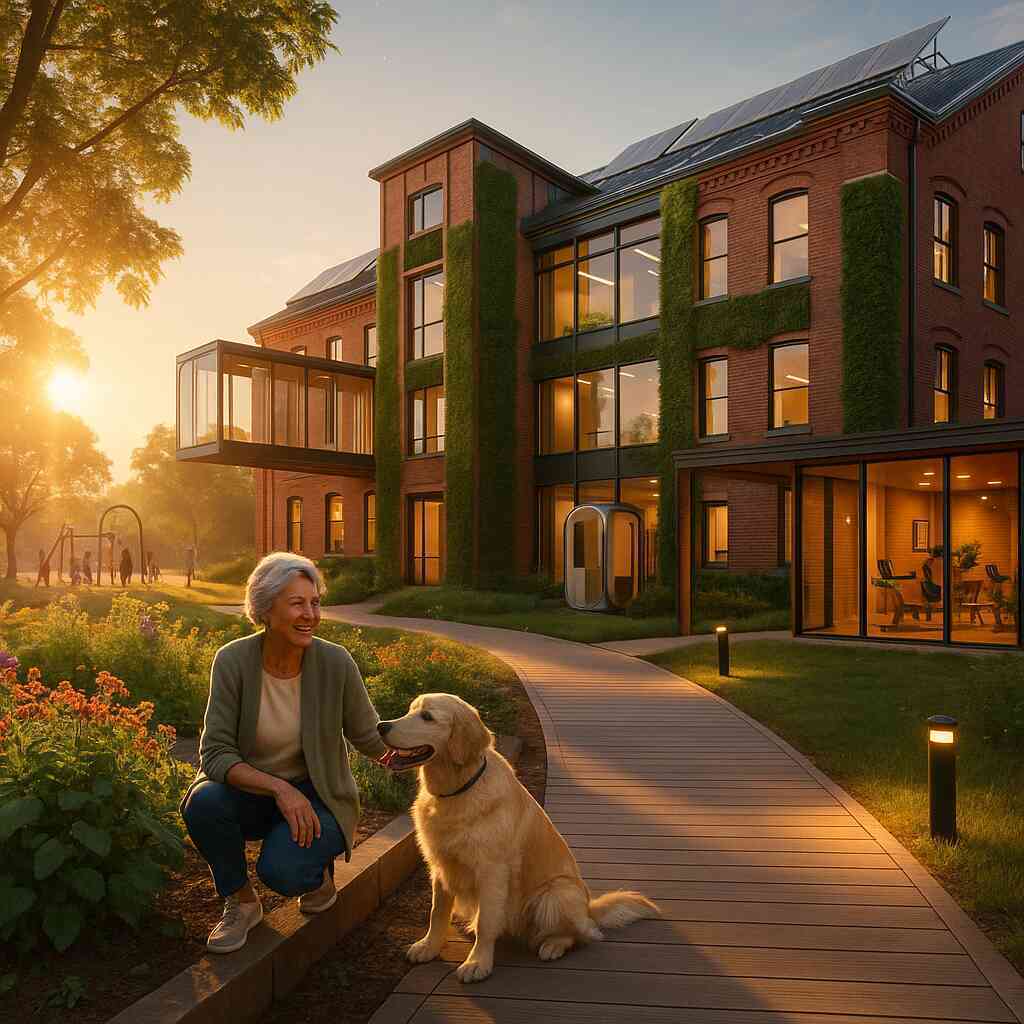
Aged brick walls and carved wood ceilings evoke memory, grounding residents within familiar cultural narratives. Designers therefore retain these textures while discreetly inserting modern systems, including sprinkler upgrades and acoustic insulation. Crucially, they integrate barrier-free bathrooms for older adults that blend slip-resistant porcelain with vintage-style faucets, ensuring safety without aesthetic compromise. Subtle contrast striping highlights thresholds for low-vision residents, yet the palette still honors original craftsmanship. Consequently, residents enjoy authentic character alongside contemporary comfort.
Preservation extends beyond surfaces; it nurtures emotional continuity. Residents who spent their youth downtown now relive cherished streetscapes through loft-like windows, strengthening community identity. Friends visiting from suburban seniors living near me facilities marvel at the seamless union of history and accessibility. Families notice that elders reminisce more vividly, stimulated by recognizable architectural cues. By safeguarding history, adaptive reuse cultivates both cognitive engagement and civic pride.
Embedding assisted living locations within mixed use walkable districts
Placing assisted living locations inside walkable districts eliminates the need for shuttle schedules and complicated logistics. Residents simply exit the lobby to reach cafés, pharmacies, and theaters, sustaining independence even without driving. Urban planners applaud because these projects activate storefronts during daytime hours, balancing evening traffic from nearby apartments. Consequently, entire neighborhoods thrive, not just the senior living facility itself. Safety improves as constant foot traffic increases natural surveillance.
Furthermore, mixed-use zoning allows operators to lease upper floors for rental housing for seniors who require fewer services, creating blended revenue streams. As care needs change, residents move vertically rather than relocating across town, maintaining friendships and favorite baristas. Retail partners benefit from steady patronage, while residents relish spontaneous socialization that wards off loneliness. This symbiotic framework redefines the traditional long-term care facility model as an integrated urban ecosystem.
Boosting community identity through meaningful architectural memory
Adaptive reuse amplifies neighborhood storytelling, which fosters belonging for new older residents. Designers curate lobby exhibits showcasing archival photos, allowing incoming tenants to explore local history alongside new neighbors. Regular heritage talks invite school groups, forging intergenerational bridges that enrich senior living facilities and surrounding schools alike. Each shared narrative strengthens civic fabric, countering stereotypes of isolated elder enclaves.
Architects also resurrect iconic marquee signs or rooftop neon, signaling continuity to passersby and sparking curiosity. When residents gather beneath restored lights for evening tea, they participate in living history rather than passive nostalgia. This pride translates into higher volunteerism, as elders mentor youth about past industries and cultural shifts. In turn, local media spotlight the project, elevating regional perception of progressive senior housing solutions. Ultimately, architectural memory becomes a social catalyst, transforming restored landmarks into beloved community anchors.
 4) Universal Design Mastery Crafting Barrier Free Senior Housing
 4) Universal Design Mastery Crafting Barrier Free Senior Housing
Zero step entries meet the needs of all abilities
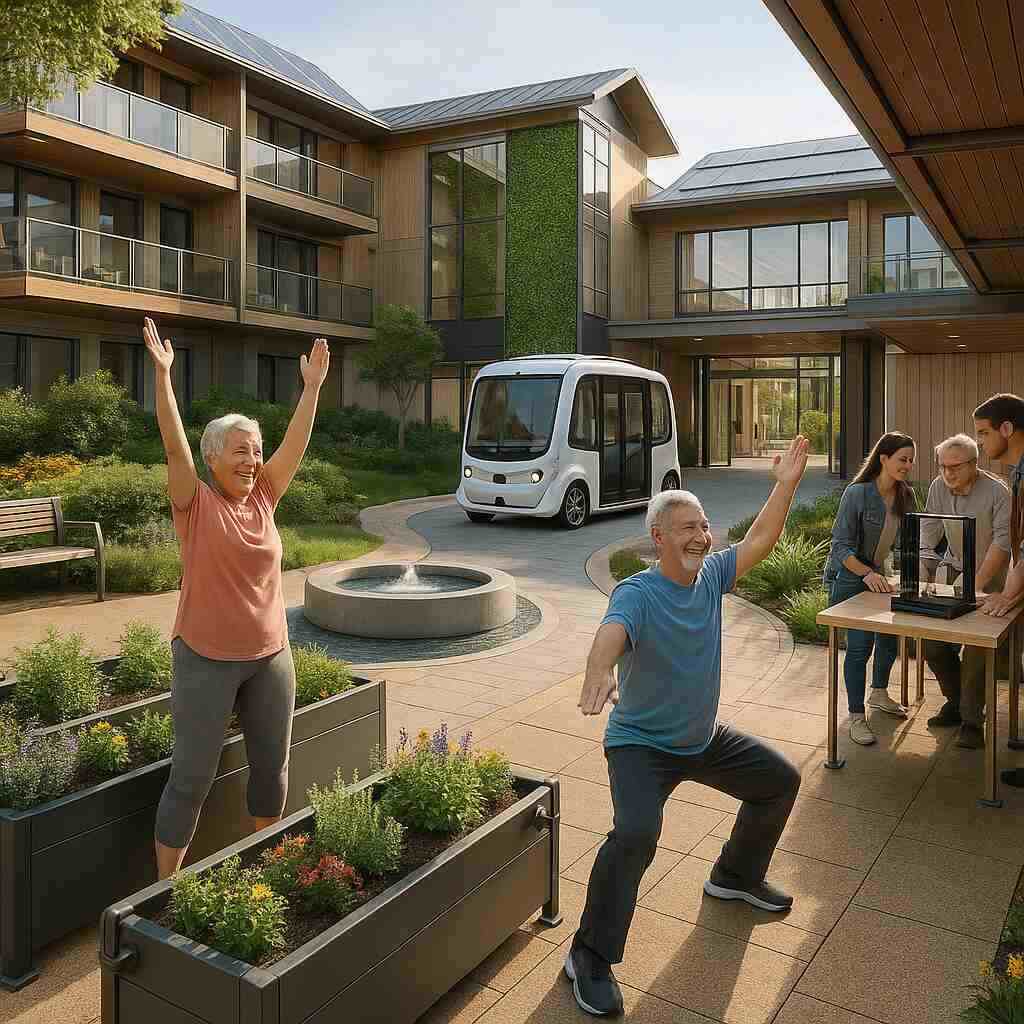
Zero step entries are the gold standard of universal design in senior housing. They eliminate dangerous thresholds that snag walkers and challenge aging knees. Architects slope walkways gently from the driveway to the foyer, blending accessibility with curb appeal. Integrated trench drains manage rainwater, removing the need for raised door saddles. Residents roll luggage, scooters, or wheelchairs effortlessly, preserving independence from day one. Families touring senior living facilities immediately notice reduced fall risks at entry thresholds. That first impression builds confidence in the community’s commitment to safety and dignity. Maintenance teams appreciate fewer repairs because scooters no longer nick the raised aluminum edging. Operational efficiency therefore rises alongside resident satisfaction, a win for every senior living facility. Zero step entrances prove small elevations can carry huge emotional weight for older adults.
Successful entry design also respects local climate, materiality, and cultural norms. Covered porches shield visitors from rain, while wide overhangs reduce glare on threshold edges. Warm contrasting pavers indicate direction changes, supporting low-vision residents without garish caution paint. To explore how such details uplift daily living, review our guide on enhancing life quality through universal design. The article highlights nationwide examples proving that architectural empathy translates directly into resident wellness. When zero step entries coordinate with lighting and signage, orientation feels intuitive instead of clinical. Such harmony transforms ordinary thresholds into welcoming invitations that celebrate autonomy across abilities.
Personalized wayfinding systems reduce anxiety in long term care facility corridors
Getting lost erodes confidence faster than any physical barrier. Personalized wayfinding solves this challenge for residents navigating long corridors in a long-term care facility. Designers now assign color-coded neighborhoods, unique artwork, and tactile icons that resonate with personal memories. A sunflower motif may guide gardeners, while music notes escort former band directors to activities. These layered cues reduce cognitive load, empowering residents to explore without constant staff assistance. Families notice fewer frantic calls, reinforcing trust in the seniors living community. Staff satisfaction also rises because redirection time declines dramatically.
Effective systems integrate lighting, acoustics, and scent as secondary navigational languages. Gentle lavender might mark wellness suites, while upbeat jazz denotes social engagement hubs near cafés. Digital kiosks supplement analog signals, offering large-font maps that adjust contrast for low vision. Importantly, personal data never leaves the network, supporting HIPAA standards that govern senior housing. Continuous feedback loops allow designers to refine icons until misdirection events virtually disappear. The outcome is a calm atmosphere where residents feel ownership over their daily journeys.
Lever style hardware and zero touch access controls
Fine motor decline can turn twisting knobs into exhausting trials. Lever style hardware remedies this obstacle using a simple downward motion requiring minimal grip strength. Stainless mechanisms resist bacterial colonization, an essential factor in senior living facilities focused on infection control. Manufacturers now offer decorative finishes that complement coastal, modern, or rustic design language without sacrificing durability. Residents perceive elegance rather than hospital austerity, reinforcing the hospitality model sweeping senior living. Contractors appreciate that lever sets retrofit quickly, upgrading safety during routine turnover between senior apartment rentals.
Zero touch access controls push accessibility even further by eliminating contact altogether. RFID bracelets unlock suites, while motion sensors open communal doors, preventing bottlenecks during peak dining hours. These systems integrate with emergency alerts, granting caregivers real-time location data without intrusive cameras. Technology pilots in tech-enabled senior homes in Texas demonstrate that falls decrease when residents access doors hands-free. Operators also report energy savings because doors close automatically, preserving conditioned air. Combined with lever sets, zero touch solutions shape a continuum of accessibility that anticipates future mobility shifts.
Compliant yet beautiful barrier free bathrooms for older adults
Bathrooms present the highest risk of injury in any residence. Universal design transforms these spaces into sanctuaries rather than danger zones. Roll-in showers replace tubs, featuring trench drains that keep floors dry without raised curbs. Fold-down teak benches support balance during grooming rituals, preserving dignity and routine. Vertical and horizontal grab bars blend into tile patterns through contrasting metallic finishes. Thermostatic valves cap water temperature, preventing scalding while encouraging independent use.
Lighting and acoustics further elevate safety. Fixtures deliver even illumination, eliminating shadows that distort depth perception for low-vision users. Quiet ventilation fans support conversation between residents and caregivers, avoiding disorienting mechanical noise. Materials must withstand moisture while echoing spa aesthetics expected in contemporary senior living near you offerings. Designers therefore specify slip-resistant porcelain that resembles natural stone, merging safety with beauty. These strategies illustrate how barrier-free bathrooms for older adults can rival boutique hotels while meeting regulation. The result is a private retreat that encourages wellness, autonomy, and peace of mind.
5) Biophilic Immersion: Bringing Nature into Assisted Living Everyday
Green walls filtering indoor air for healthier senior living facilities
Vertical gardens now climb atrium walls inside many senior living facilities, acting as living lungs that purify recirculated air. Research shows certain ferns and philodendrons absorb volatile organic compounds that irritate aging respiratory systems. By integrating irrigation lines within wall panels, maintenance teams can replace plants without scaffolding disruptions. Residents appreciate the lush backdrop during morning walks, while operators note lower HVAC loads as humidity stabilizes. Biophilic color palettes drawn from foliage also reduce stress hormone levels, supporting holistic wellness strategies.
Green walls serve more than air quality; they become intuitive wayfinding landmarks inside a seniors living community. Designers assign different plant species to each residential wing, allowing residents to navigate by scent and texture rather than signage. The approach complements assisted living plans because it gently exercises cognitive mapping skills. Family visitors find their loved one’s suite faster, boosting confidence in the senior living facility layout. When combined with artful LED uplighting, the vertical gardens transform everyday corridors into restorative galleries that celebrate nature.
Seasonal sensory gardens encouraging social connection
Seasonal sensory gardens invite residents outdoors by choreographing color, fragrance, and texture that shift throughout the year. Raised planters brim with citrus blossoms, evoking memories that delight retirees considering wellness-centered retirement living in Florida. Designers position seating circles amid lavender borders, promoting conversation while naturally repelling insects. Wide looped paths accommodate wheelchairs and strollers, turning every walk into an intergenerational parade. Moments of shared discovery strengthen social connection, a key determinant of longevity in communities for seniors 55+.
Programming capitalizes on the gardens by scheduling herb harvesting workshops led by residents who once managed backyard plots. Aromatic basil and rosemary trigger memories, sparking storytelling that enlivens the seniors living community calendar. Staff integrate harvests into afternoon cooking classes, reinforcing nutrition lessons that support housing options for seniors seeking vibrant lifestyles. Because pollinator-friendly blooms attract butterflies, spontaneous photo sessions blossom, boosting web profiles for the senior living near you campus. Even rainy days encourage participation, thanks to covered verandas that shelter social circles without severing the sensory experience.
Daylight harvesting strategies paired with sensory friendly lighting in senior apartments
Daylight harvesting uses sensors to measure incoming light and adjust shades, keeping consistent brightness inside senior apartment rentals. This approach supports circadian rhythms, helping residents fall asleep naturally and wake energized without harsh alarms. South-facing lounges receive automated glare control, reducing visual fatigue for individuals managing cataracts. Because natural illumination highlights interior finishes, units appear larger, an advantage in micro layouts popular among rental housing for seniors. Operators appreciate utility savings, freeing the budget for additional wellness programming.
In long-term care facility corridors, designers pair tunable LEDs with skylight wells to ease transitions between day and evening. Lights gradually shift from cool to warm temperatures, signaling meal times and quiet hours through subtle chromatic cues. The strategy lessens sundowning incidents among residents living with dementia, reinforcing calm within nursing homes for the elderly. Maintenance teams manage settings through centralized dashboards, aligning intensity with forecasted cloud cover. Families touring seniors living near me locations notice balanced lighting quickly, often citing it as a deciding factor.
Water features that double as acoustic comfort enhancers
Water features bring multisensory calm to interior courtyards, masking mechanical hum and hallway chatter inside senior housing campuses. Gentle cascades produce white noise frequencies that match human speech, enhancing privacy during family conversations. By specifying low-splash designs, engineers prevent slippery surfaces and protect barrier-free bathrooms for older adults nearby. Integrated seating platforms invite meditation sessions, reinforcing wellness-centered senior design principles. Even residents with hearing aids appreciate the consistent acoustic backdrop, which reduces sudden volume spikes that might startle them.
Sustainability goals guide every fountain, using recirculating pumps powered by onsite photovoltaics to conserve water and energy. Smart sensors monitor evaporation rates and chemical balance, alerting staff before maintenance issues escalate. The same dashboard often controls landscape irrigation, uniting blue and green systems under one intuitive interface. Designers situate fountains where cross-breezes carry evaporative cooling toward adjacent patios, improving thermal comfort for outdoor dining. Such thoughtful placement demonstrates how a senior living facility can marry sensory delight with operational efficiency.
6) Smart Home Ecosystems Elevating Independence with Seamless Tech
Voice controlled thermostats and lighting for a seniors living community ease
Residents increasingly expect homes to listen and respond rather than demand button presses. Voice interfaces now adjust thermostats, tune lights, and open blinds inside many senior living facilities. Because spoken commands require no fine motor strength, residents with arthritis maintain control without caregiver assistance. The system responds in under a second, reinforcing confidence while reducing frustration that can accompany aging. Families touring a seniors living community immediately sense the empowerment these tools deliver.
Beyond convenience, voice technology supports wellness by aligning environmental settings with circadian rhythms. Warm evening light cues relaxation, while cooler dawn hues stimulate alertness for communities for seniors 55+. Data logs also reveal usage trends, allowing operators to calibrate energy loads and lower utility costs. For a deeper exploration of emerging interfaces, review our comprehensive design trend insights blog for elder housing, which dissects the newest resident-centric innovations.
On demand mobility services linked to community apps
Transportation often defines freedom for older adults who no longer drive. Therefore, modern senior housing campuses embed ride-hailing widgets directly into resident apps. With two taps, a shuttle, golf cart, or autonomous pod appears at the lobby without confusing phone trees. Real-time GPS lets residents watch vehicle progress, reducing anxiety and missed appointments. Consequently, social outings feel spontaneous rather than bureaucratic.
Operators integrate these platforms with city transit schedules, expanding options beyond private fleets. When residents book theater tickets, the system automatically suggests departure times and accessible seating. Staff enjoy streamlined workflows because recurring medical trips become scheduled routines instead of last-minute scrambles. Even visiting grandchildren can summon rides, creating a frictionless experience that positions the senior living facility as a true mobility hub.
Technology enabled memory care units with passive monitoring
Memory care design now hides sophisticated sensors behind familiar décor. Pressure mats beneath carpeting detect unusual nighttime wandering, silently alerting nurses before risks escalate. Similarly, cabinet sensors flag medication skips, allowing staff to intervene early without intrusive cameras. These passive layers preserve dignity while protecting health, a delicate balance every long-term care facility seeks.
Importantly, data integrates with electronic records, advancing the broader integration of health care services in senior housing. Physicians receive trend reports that shape personalized care plans, boosting clinical accuracy across assisted living locations. Families track well-being through secure dashboards, strengthening transparency and trust. By converting raw signals into actionable insights, technology transforms reactive care into proactive guardianship for residents living with cognitive change.
Energy efficient HVAC for elder facilities driven by AI analytics
Heating and cooling account for major operational costs in nursing homes for the elderly. Artificial intelligence now sifts through weather forecasts, occupancy patterns, and utility rates to fine-tune HVAC schedules minute by minute. Predictive models pre-warm dining halls before breakfast, then dial back energy when spaces are empty, ensuring comfort without waste.
Sensors inside senior apartment rentals send humidity and CO₂ data to cloud algorithms. The system then balances fresh air with thermal stability, supporting respiratory health vital to housing options for seniors. Maintenance teams receive early alerts about filter degradation, preventing downtime during extreme seasons. Ultimately, AI-driven HVAC strengthens sustainability goals while showcasing leadership in age-inclusive architecture that keeps every senior living near me location both comfortable and resilient.
7) Dementia Friendly Wayfinding Mapping: Calm and Confidence
Color coded neighborhoods within CCRCs for instant recognition
Color psychology offers a powerful compass for residents living with cognitive change inside expansive continuing care retirement communities. Designers now assign bold yet soothing palettes to each household wing, creating instantly recognizable destinations without written signs. A lavender corridor signals wellness appointments, while earthy greens guide residents back toward dining terraces and coffee nooks. These intuitive cues align with the difference between CCRCs and modern senior campuses conversation, proving hospitality principles outperform institutional labeling. Staff also benefit because fewer redirection calls free them to focus on meaningful engagement rather than constant escort duties. Families touring a senior living facility see color zones and immediately picture loved ones navigating hallways with renewed confidence.
Such chromatic mapping supports personalized care plans throughout the seniors’ living community. Residents recognize favorite hues faster than printed room numbers, reducing anxiety that can trigger exit-seeking. Because paint is affordable, operators can refresh schemes periodically, adjusting to evolving resident demographics without structural disturbance. Maintenance teams coordinate touch-ups with routine inspections, so color fidelity stays sharp over time. Moreover, consistent palette strategies extend into outdoor courtyards, unifying interior and exterior experiences for communities for seniors 55+. This visual harmony builds subconscious trust, which is critical when memory sometimes falters.
Acoustic comfort strategies that minimize overstimulation
Sound often undermines spatial clarity for residents coping with dementia. Designers counteract this hazard by installing acoustic panels disguised as art, absorbing disruptive echoes in high-traffic corridors. Soft flooring compounds the effect, muting rolling carts and lowering ambient decibels beyond clinical care standards. Gentle background music, calibrated below conversational levels, masks unpredictable noises that could startle residents in nursing homes for the elderly. When auditory stimuli remain predictable, cognition stabilizes and social participation improves across housing options for seniors.
Operational protocols reinforce the architecture. Staff use rubberized casters on equipment and schedule deliveries outside peak resident activity. HVAC grilles feature baffles that reduce whoosh sounds without hindering airflow, supporting indoor air quality within senior living facilities. Family councils receive decibel reports, fostering transparency and trust. As overstimulation drops, caregivers observe fewer sundowning episodes and shorter recovery times after group events, underscoring the link between quiet design and emotional regulation.
Personalized entry alcoves acting as memory cues
A resident’s front door becomes a storytelling canvas in modern senior housing. Small recessed alcoves display cherished artifacts-perhaps a naval cap or quilt square-transforming anonymous hallways into familiar neighborhoods. These touchpoints trigger episodic memory, guiding residents home without technological assistance. They also spark conversation among neighbors, strengthening social bonds within senior living near you communities. Because display cases lock securely, valuable items remain protected while still visible for daily reassurance.
Families choose mementos during move-in, integrating cultural heritage into the built environment. This participatory process deepens connection and eases transition from previous residences or rental housing for seniors. Facilities catalog each display in electronic logs, ensuring items return if maintenance requires temporary removal. Wayfinding then becomes profoundly personal, unlike generic signboards that can confuse. When loved ones search for a new campus using our quick search tool for senior residences near you, they often cite these alcoves as decisive factors because they signal dignity and individuality.
Circular walking loops reduce exit seeking behavior
Straight hallways can feel endless, encouraging agitation and flight impulses. Circular walking loops resolve this by delivering continuous pathways that always return residents to central hubs. Corners broaden gently, allowing wheelchairs to glide without abrupt pivots that are disorienting. Strategic seating nodes invite pauses, turning exercise into leisurely exploration rather than frenetic pacing. Staff stations placed at loop intersections observe residents unobtrusively, balancing safety with autonomy.
Loops integrate multisensory landmarks-fragrant herb walls, tactile art, and skylight pools-that refresh orientation every few steps. The design reduces repetitive door rattling often seen in long-term care facility settings, lowering alarm fatigue for caregivers. Research shows step counts increase when residents feel free from dead ends, supporting cardiovascular health alongside cognitive calm. One pilot mirrored principles pioneered in intergenerational senior living in Georgia, where shared paths encourage grandchildren to stroll with grandparents. Such inclusive circulation proves thoughtful geometry can transform potential wander risk into purposeful movement.
8) Intergenerational Tapestry Weaving 55 Plus and Family Housing Together
Universal playgrounds adjacent to senior housing courtyards
Modern universal playgrounds anchor every senior’s living community to its surrounding neighborhood. Rubberized surfaces cushion toddler tumbles and protect older knees during gentle stretching. Equipment heights vary, letting grandchildren climb while grandparents use low parallel bars for balance drills. Bright contrasting colors double as wayfinding, guiding memory-care residents back toward shaded benches. Because everyone shares one joyful hub, social connection grows naturally instead of through scheduled visits.
Operators note measurable wellness gains when playground laughter drifts into nearby senior apartment rentals. Residents walk farther to watch children play, adding daily steps without feeling forced. Families linger longer after visits, strengthening multigenerational bonds that reduce loneliness inside senior living facilities. Local parents appreciate the safe space, forging goodwill that supports future volunteer programs. The courtyard becomes a living bridge between age groups, not a fence separating them.
Shared maker spaces are boosting social engagement across all ages
Maker spaces transform spare basements into buzzing studios where retirees teach woodworking while teens demo 3D printers. Worktables adjust height, welcoming wheelchair users and energetic preteens alike. Tool storage uses clear labeling, mirroring universal design principles for elders who prefer visual cues. Project walls celebrate joint achievements, from birdhouses to virtual reality art tours. Collaborative creation replaces passive entertainment, nourishing purpose inside communities for seniors 55+.
Participation soars when design blends hospitality with inspiration. A central café window lets residents trade stories over lattes while printers hum nearby. Monthly showcases invite neighbors to admire creations, attracting future residents researching housing options for seniors. Insights from emerging design trends for 2026 elder communities confirm that such spaces boost occupancy and satisfaction scores. Ultimately, shared making proves creativity knows no age limits.
Educational partnerships enriching seniors and students alike
Strategic alliances with local schools convert classrooms into intergenerational think tanks. Retired engineers mentor STEM clubs, while students record oral histories for humanities credit. Wide corridors accommodate rolling whiteboards that travel between lecture nooks and memory-care lounges. These mobile lessons keep learning spontaneous, replacing one-direction lectures with lively dialogue. Seniors gain cognitive stimulation; students gain wisdom impossible to Google.
Senior living near you campuses also stream classes to bedroom televisions, ensuring homebound residents still join discussions. Reciprocal field trips bring choirs into dining halls and gardeners into outdoor therapy plots. Academic partners appreciate consistent volunteer hours that strengthen grant applications, making collaboration sustainable. The program underscores that a senior living facility can serve as both a home and a campus.
Programming calendars uniting residents through arts and wellness
Robust calendars weave yoga, pottery, and jazz nights into one cohesive narrative that welcomes every generation. Color-coded icons mark family-friendly events, while quieter meditations slot into afternoon lulls. Digital signage in lobbies syncs with phone alerts, keeping tech-savvy grandchildren informed. Staff evaluate attendance weekly, adapting offerings using data rather than guesswork. Flexibility ensures no resident feels marginalized by mobility or interest.
Community partners enrich the schedule further. Museums loan traveling exhibits; pet shelters host adoption days beside rental housing for seniors. Nutritionists pair cooking demos with garden harvests, linking flavor to healthy aging. By aligning art with movement and education, calendars become engines of holistic wellness. Residents describe life inside these programs as vibrant, proving that thoughtful design extends far beyond bricks and mortar.
9) Sustainable Material Palette Building Green Senior Living Facilities
 9) Sustainable Material Palette Building Green Senior Living Facilities
Low VOC finishes safeguarding respiratory health
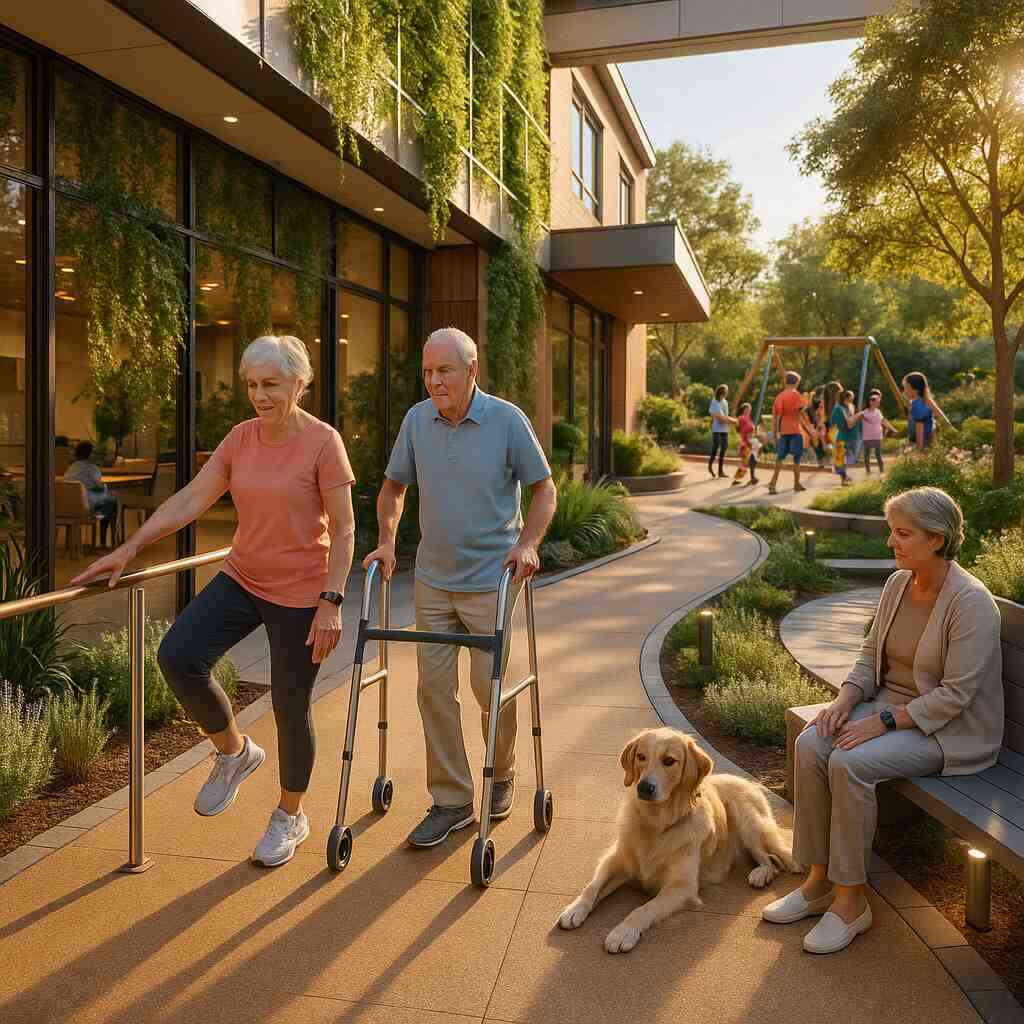
Older adults breathe more shallowly, making chemical exposure particularly risky inside senior living facilities. Low-VOC paints, sealants, and adhesives release minimal off-gassing, keeping particulate counts below clinical care standards. Designers now specify third-party certified coatings, ensuring compliance without sacrificing color depth or durability. Maintenance teams appreciate faster room turnover because reduced fumes allow immediate re-occupancy. Residents simply notice fresher air and fewer irritants during daily routines.
Procurement teams weigh long-term value, not just upfront costs, when choosing healthier products. Low-VOC formulas often boast higher coverage rates, trimming labor hours across expansive seniors living community campuses. Because colors stay vibrant longer, repaint cycles stretch further apart, cutting waste. These savings funnel into wellness programming, proving sustainability fuels operational resilience. Family tours increasingly start with an air-quality monitor, and low readings quickly build trust.
Rapidly renewable flooring solutions meeting fall prevention needs
Flooring must balance sustainability, comfort, and safety in every senior living facility. Bamboo and cork regrow quickly, offering an eco-friendly alternative to slow-harvest hardwoods. Their natural elasticity cushions footfalls, reducing joint stress and moderating impact during accidental slips. Manufacturers emboss subtle textures that improve traction without compromising aesthetics. Architects pair softer cores with high-contrast inlays, guiding low-vision residents toward thresholds.
Rubber composites take protection further by integrating shock-absorbent layers beneath antimicrobial surfaces. These planks click together, limiting adhesives that might off-gas into sensitive residences. Several eco-friendly senior residences in Colorado report fewer fall-related injuries after switching to cork-rubber hybrids. Custodial crews laud simplified cleaning protocols because finishes resist stains from wheelchairs and food carts. Sustainability and safety merge seamlessly underfoot, demonstrating responsible design.
Photovoltaic arrays are lowering operational costs in senior living facility campuses
Energy bills swallow large portions of monthly budgets at nursing homes for the elderly. Roof-mounted photovoltaic panels convert free sunlight into reliable power, trimming those expenses dramatically. Battery storage now safeguards critical systems, maintaining oxygen concentrators during grid outages. Added resilience comforts families comparing senior living near me options. Leasing models let operators install arrays with minimal capital, accelerating adoption.
Data dashboards reveal savings in real time, turning sustainability into a resident education opportunity. Fitness classes pause briefly to celebrate kilowatt milestones, boosting community pride. Lessons learned from the Texas case study on fitness-focused senior living show energy cost reductions fund expanded wellness staff. Lower overhead also stabilizes rents, protecting affordability for diverse income brackets. Renewable power thus supports both fiscal and human health.
Disaster resilient assemblies protecting vulnerable populations
Climate volatility demands construction that safeguards elders against extreme events. Impact-rated windows resist wind-borne debris while maintaining clear sightlines to beloved gardens. Exterior wall systems employ rainscreen gaps, preventing mold that could compromise respiratory wellness within housing options for seniors. Designers elevate mechanical rooms above flood levels, ensuring continuous HVAC even during storms. These measures transform buildings into protective shells when outside conditions worsen.
Material choices also influence post-event recovery speed. Fiber-cement cladding withstands fire, hail, and insects, requiring little maintenance across decades. Structural sheathing integrates moisture-resistant resins, eliminating drywall tear-outs after minor leaks. Insurance premiums often drop once underwriters verify these assemblies, offsetting construction costs for forward-thinking assisted living locations. Residents rest easier knowing their home stands ready for whatever nature delivers.
10) Safety Focused Interiors Flooring to Lighting for Fall Prevention
High contrast thresholds guiding residents with low vision
Color contrast remains a simple yet powerful defense against disorientation in senior living facilities. Designers specify dark nosings against pale floors, creating instantly readable edges for walkers and wheelchairs. Matte finishes prevent glare, so contours stay visible under varied daylight. Threshold strips align flush with the flooring, removing tripping hazards while still broadcasting direction changes. Staff report fewer missteps, validating how thoughtful palettes outperform costly retrofits.
Beyond color, material texture deepens sensory guidance. Subtle ribbing at suite entries signals residents they have reached private space, reinforcing independence. In a bustling seniors living community, tactile cues help residents pause before busy intersections and regain orientation. Integrating contrast and texture also benefits visitors unfamiliar with the layout, promoting universal accessibility. When every doorway feels predictable, anxiety falls alongside accident rates.
Slip resistant yet home like flooring in assisted living plans
Safety never justifies sterile design; flooring can feel residential while still fighting slips. Luxury vinyl planks with cushioned backings mimic hardwood yet provide a high coefficient of friction even when damp. Seamless transitions between living rooms and barrier-free bathrooms for older adults eliminate abrupt surface changes. The underlayment absorbs impact, reducing joint stress during long corridor walks common in a senior living facility. Maintenance crews appreciate easy cleaning that preserves indoor air quality.
Vertical communities magnify these priorities. Residents touring high-rise senior apartments in New York immediately notice wood-look floors that grip shoes during elevator exits. Because winter brings wet boots, embedded drainage channels move moisture away from traffic lanes. Operators link reduced fall claims to these discreet details, demonstrating that aesthetics and risk management can coexist gracefully. Such flooring solutions now influence assisted living plans nationwide.
Sensor embedded floors alerting staff to resident movement
Technology further strengthens prevention by turning floors into quiet guardians. Pressure sensors hidden beneath planks detect unusual weight shifts, instantly notifying caregivers of potential instability. Data dashboards display resident movement trends, allowing proactive wellness checks before incidents escalate. In memory wings of a long-term care facility, alerts reach pocket pagers, enabling swift, discreet assistance that preserves dignity. Importantly, the system operates passively, so residents never feel monitored.
Installation requires minimal disruption. Modules connect wirelessly to existing nurse-call networks, avoiding invasive rewiring in occupied suites. Durable overlays protect electronics from cleaning solutions, ensuring longevity. Analytics also inform staffing schedules, matching peak hallway activity with caregiver presence for efficient coverage. Families appreciate transparent safety reports, which bolster trust in the seniors living community and its commitment to continuous improvement.
Evenly distributed glare free illumination throughout corridors
Lighting completes the fall-prevention toolkit by erasing shadows that confuse depth perception. Indirect LED coves wash walls uniformly, while low-level toe kicks provide night guidance without startling brightness. Designers target 30 foot-candles along walking paths, exceeding clinical care recommendations without creating harsh contrasts. Fixtures feature matte lenses, diffusing output so glossy floors never reflect blinding hotspots. Residents navigate confidently at any hour.
Smart controls adjust intensity according to circadian rhythms, supporting restful sleep and alert daytime focus. Motion sensors raise levels gently, eliminating sudden flare that could freeze tentative walkers. By synchronizing illumination with sensor-embedded floors, staff receive positional data and adequate visibility simultaneously. The result is a harmonized environment where architecture, technology, and human comfort work together to minimize falls across every corridor.
Closing the Loop: Designing with Heart for Senior Living Near Me
Key takeaways for architects developers and families alike
Every design choice leaves a lasting imprint on resident wellness. Age-inclusive architecture keeps friendship networks intact through changing care needs. Wellness-centered senior design positions everyday spaces as preventive medicine. Adaptive reuse senior housing honors community memory while cutting carbon cost. Together, these strategies future-proof senior living facilities against demographic and economic shifts.
Professionals and families succeed faster when they share a common vocabulary. Reviewing an overview of contemporary senior living models sharpens that dialogue. The resource clarifies the differences between independent apartments and nursing homes for the elderly. A clear understanding supports better budgeting, realistic timelines, and happier move-in experiences. Education remains the strongest tool for confident decisions.
How Senior Living Facilities connect you to age forward communities in all 50 states
Our platform simplifies complex searches into three intuitive steps: search, compare, and connect. Sophisticated filters reveal housing options for seniors that exactly match lifestyle goals. Side-by-side comparisons highlight onsite wellness programs, assisted living plans, and rental terms. Verified photos and transparent reviews build trust before any tour begins. Families save time, money, and emotional energy.
Personal guidance elevates the journey further. Dedicated advisors translate medical terminology and local regulations into plain English. They recommend assisted living locations that respect cultural preferences, pet policies, and budget ceilings. After move-in, follow-up calls ensure that daily living activities support principles continue meeting expectations. This full-circle approach distinguishes Senior Living Facilities from generic listing sites.
Envisioning the next frontier of senior living near
Future communities will integrate predictive analytics that anticipate changing mobility five years ahead. Energy harvesting floors might soon power bedside monitors without cables. Modular micro-clinics could rotate specialists through smaller campuses, bringing hospital-grade care home. Intergenerational districts will expand, blending playground laughter with elder wisdom daily. Sustainability, technology, and human connection will intertwine like never before.
Senior Living Facilities already maps trends into actionable insights for each senior’s living community. Our database updates as innovations move from pilot to proven standard. Subscribers receive alerts when new age-forward properties open nearby, keeping choices fresh. As the industry evolves, one principle stays constant: design with heart, and seniors thrive.
Frequently Asked Questions
Question: How do Senior Living Facilities make sure the age-inclusive architecture you describe actually exists in the communities for seniors 55+ listed on the site?
Answer: Every senior living facility in our national directory completes a detailed design audit before it goes live. We verify features such as flexible floor plates, zero-step entries, and adaptive care neighborhoods against building plans and on-site photos. When you search housing options for seniors on our platform, you can filter by Age-Inclusive Architecture to see only properties that meet universal design principles for elders. Because we serve all 50 states, you can quickly spot communities in your region-whether that’s senior living in Florida or senior living in Colorado-that already support aging in place without future relocations.
Question: The blog Top 10 Design Factors Shaping Senior Living Facilities 2026 mentions smart home technologies. How can your service help me find senior living near me that offers voice-controlled lighting, zero-touch access, and other tech upgrades?
Answer: When you enter your ZIP code, our search engine highlights senior living near you with a Smart Home Ecosystem badge. That means the property includes voice-controlled thermostats, RFID door systems, on-demand mobility apps, and AI-driven HVAC-all vetted by our team. You can compare these tech-enabled seniors living community options side by side, see real resident reviews, and even schedule live virtual tours to test the features in real time.
Question: Can Senior Living Facilities connect us with rental housing for seniors that already has barrier-free bathrooms and fall-prevention flooring solutions built in?
Answer: Absolutely. Our database tags every senior apartment rental and assisted living location that meets current ADA and universal design standards. Look for the Barrier-Free Bathroom icon or the Fall-Safe Flooring indicator on each listing page. Whether you need a micro-unit in a vibrant downtown or a cottage inside a long-term care facility campus, you can narrow the results to properties that prioritize safety without sacrificing style.
Question: We love adaptive reuse of senior housing-old hotels turned into vibrant residences. Does your assisted living locator include those kinds of historic conversions?
Answer: Yes. Adaptive Reuse is one of our most popular search filters. From repurposed waterfront warehouses in Maryland to landmark hotels now serving as assisted living plans in Illinois, our assisted living locator showcases dozens of revitalized buildings. Each listing details how developers preserved architectural character while adding features like barrier-free bathrooms for older adults and on-site telehealth suites.
Question: Wellness-centered senior design and on-site telehealth sound expensive. How do you help families compare costs across different assisted living plans, nursing homes for the elderly, and independent communities?
Answer: Transparency is built into our three-step process-Search, Compare, Connect. After you shortlist properties, our comparison tool displays monthly rent or care fees alongside included services: healthy-aging fitness studios, inclusive dining environments, memory-care upgrades, and more. We also flag any extra charges for telehealth or smart-home packages. Because we list everything from budget-friendly senior housing to premium long-term care facility options, you can see the true value of each community before scheduling a tour.
Admin
Expert contributor specializing in senior living care. Dedicated to providing families with clear, actionable advice.