Choosing Senior Living Facilities With CMS Star Ratings

Finding the right home for a loved one is a profound responsibility that often leaves families feeling overwhelmed by the volume of available choices. You might notice that a parent’s safety at home is slipping, or that they are struggling with isolation and basic daily tasks. It is natural to feel a mix of guilt and urgency as you weigh the various housing options for seniors. This decision impacts daily quality of life, medical safety, and social connection for the years ahead. By focusing on objective data, you can move forward with confidence and clarity.
Beyond the Surface When Choosing a Senior Living Facility
Selecting a senior living facility requires more than checking brochures or visiting a sparkling lobby. You must ensure that the environment provides dignity, health, and a true sense of belonging. The process often feels daunting because it involves significant life changes and long-term commitments for the family. By shifting your perspective from surface-level aesthetics to evidence-based metrics, you turn a stressful search into a manageable process. This guide provides tools to help you identify communities that prioritize resident well-being.
Recognizing the emotional weight of your search
You may feel a heavy burden when considering the transition of a loved one into a new environment. The realization that a senior citizen housing arrangement is necessary often follows a period of decline or a health crisis. It is common to worry about whether your loved one will receive the same level of care and warmth they enjoyed at home. Seeking help is a sign of love, not a failure to provide care personally. Validating these feelings helps you approach the process with a level head and an open heart.
Why clinical data matters for your peace of mind
While a facility might look beautiful on a website, clinical data offers the ground truth regarding the actual quality of care. Families often find comfort in knowing that a community meets rigorous national standards and maintains transparent records of its performance. When you focus on evaluating clinical data for senior living facilities, you eliminate the guesswork associated with marketing claims. High-quality facilities embrace this transparency because they are confident in their service delivery and safety protocols. Relying on objective metrics ensures that your choice is built on solid, verifiable evidence rather than just a nice first impression.
Moving past brochures to find the right fit
Glossy pamphlets and polished sales presentations are designed to showcase the best parts of a senior living facility. However, these documents do not always capture the daily reality of the resident experience or the consistency of medical oversight. To find the right fit, you must look beyond the photos and start asking about policies, staffing, and emergency response capabilities. Each community for seniors 55+ has a unique culture and operational philosophy that dictates how they serve residents. By researching specific local options, you can filter through the noise to find places that align with your family’s specific values and needs.
Cracking the Code of CMS Star Ratings
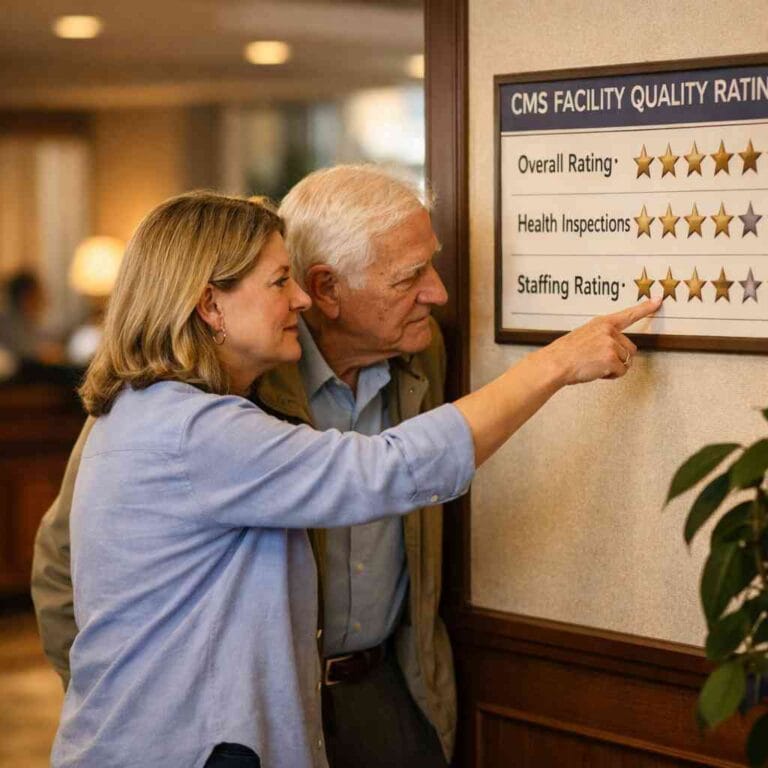
The Centers for Medicare & Medicaid Services (CMS) provides a critical resource for families through their star rating system. This system evaluates facilities based on health inspections, staffing numbers, and quality performance measures to assign a score from one to five stars. Understanding these ratings empowers you to compare various nursing homes objectively across the country. It serves as an essential baseline for anyone looking to narrow down their list of potential homes. You do not need to be a medical expert to learn how to read these reports effectively.
How health inspections shape a facility score
Health inspections are conducted regularly by state agencies to ensure that facilities adhere to federal and state health and safety standards. These inspectors look for issues such as infection control failures, improper medication administration, or hazardous living environments. If a facility has a low rating, it often stems from recurring violations found during these unannounced visits. When you check a community’s profile, look closely at the history of these inspections to see if there is a pattern of improvement or neglect. A facility with a strong, consistent history of positive health inspections is generally a much safer bet for long-term residency.
The importance of staffing ratios in daily care
Staffing is perhaps the most significant predictor of care quality in any long-term care facility. A community may offer excellent amenities, but without sufficient staff, residents may experience delays in assistance with activities of daily living or medical needs. CMS star ratings account for the number of hours of care provided by registered nurses, licensed practical nurses, and certified nursing assistants. You should prioritize facilities that maintain high staffing ratios, as this ensures your loved one receives timely, personalized attention throughout the day. Consistent interaction with the same caregivers also builds trust and familiarity, which is crucial for those requiring memory care or complex medical support.
Quality measures as indicators of resident well being
Quality measures offer a deep dive into the clinical outcomes of the residents living within a facility. These metrics track important health markers, such as the prevalence of pressure ulcers, the rate of falls, or the use of certain medications. By examining these indicators, you can gain insight into the preventative care and clinical diligence practiced at the facility. A high score in these categories suggests that the community is proactive in addressing potential health issues before they become emergencies. Using this data allows you to distinguish between facilities that simply house residents and those that actively manage their health and longevity.
Comparing Skilled Nursing Facilities and Assisted Living Options
Choosing between different types of care can be confusing, especially when terms like skilled nursing and assisted living are used interchangeably. Skilled nursing facilities are typically designed for those requiring constant medical supervision and clinical interventions, often following a hospital stay. In contrast, assisted living locations focus on providing a blend of independence and support for daily living tasks. You must understand these functional differences to match your loved one’s current and future health status with the appropriate level of care. Always remember that your goal is to find the environment that offers the best balance of safety and quality of life.
Understanding the difference in medical oversight
Medical oversight is the primary differentiator between various housing options for seniors. Skilled nursing facilities employ a large team of licensed medical professionals who handle wound care, IV therapy, and complex health monitoring. Assisted living communities, while capable of managing medication and basic health support, generally offer less intensive medical care than a nursing home. If your loved one has significant mobility issues or advanced cognitive decline, the level of clinical oversight in a nursing home might be more appropriate. Conversely, those who only need minor help with chores or dressing will thrive in an independent or assisted living community.
How to evaluate long term care facility performance
Evaluating the performance of a facility involves looking at more than just the building exterior or the menu options. You should look for transparent communication, a clean environment, and evidence of a stable, happy workforce. Pay attention to how staff interact with residents during your tour; are they attentive and respectful? Are the residents actively engaged in social programs or hobbies? A high-performing facility will be eager to share its policies and provide answers about how they handle emergencies or resident grievances. By asking direct questions about their operational standards, you establish a baseline for what to expect from their care team.

Matching care levels to your loved ones specific needs
Selecting the right care level depends on an honest assessment of your loved one’s physical, emotional, and mental capabilities. Some seniors benefit from a continuing care retirement community (CCRC), which allows them to transition between different levels of care on the same campus as their needs evolve. Others may require specialized memory care units if they are dealing with Alzheimer’s or other forms of dementia. Take your time to review the available assisted living plans and ensure they cover specific services, such as help with bathing, transportation, or dietary management. It is better to choose a setting that can accommodate future changes in health rather than having to move again later.
Integrating Financial Planning with Quality Metrics
Cost is a reality that every family must confront when planning for senior care, but it should not be the only factor in your decision. It is essential to understand how Medicare, Medicaid senior housing, and private long-term care insurance play a role in your budget. Balancing these financial resources with the quality ratings we have discussed will help you make a sustainable choice. Many families find that investing in a higher-rated, more expensive facility saves money in the long run by preventing complications and reducing the need for emergency transitions. Planning ahead allows you to consider a variety of payment methods, including VA benefits for senior care, to maximize your options.
Balancing Medicare skilled nursing coverage with out of pocket costs
Medicare covers certain short-term stays in skilled nursing facilities, typically following a qualifying hospital visit. It does not cover the long-term, non-medical care associated with permanent assisted living or retirement living. You must be prepared to look at other ways to cover these costs, such as personal savings or long-term care insurance. When assessing facilities, ask for a clear breakdown of monthly costs versus optional service fees. Knowing exactly what is included in the base rate helps you compare apples to apples when looking at luxury senior retirement communities versus standard options.
Assessing the value of luxury senior retirement communities
Luxury communities often provide elevated services, such as gourmet dining, concierge programs, and extensive social calendars. While these amenities can greatly enhance the quality of life, you should still prioritize the clinical star ratings alongside the luxury features. A facility that offers spa treatments but fails to maintain basic safety standards is not a prudent investment. Ensure that the price premium is actually buying better care, higher staff-to-resident ratios, and superior health outcomes. If the facility is expensive but has poor health inspection scores, you are paying for the aesthetic rather than the essential care.
Utilizing long term care insurance and VA benefits effectively
Long-term care insurance can be beneficial, but it often has specific requirements regarding the type of facility you choose. Be sure to contact your insurance provider to understand the triggers for coverage and whether they have a list of approved providers. Similarly, veterans may be eligible for significant support through VA benefits for senior care, which can offset the cost of both assisted living and nursing home stays. Many senior placement services are experts in helping families navigate these complex financial pathways to secure funding. By coordinating these benefits early, you remove a significant barrier to accessing high-quality care.
Securing a Future for Your Loved One
The final phases of your search are just as important as the initial research. You should finalize your decision by verifying all compliance records and ensuring the facility meets your family’s personal comfort level. A data-driven approach is not just for the initial filtering phase; it is for ensuring the facility remains consistent in its quality over time. You are building a foundation for peace of mind, knowing that your loved one is in a safe, reputable, and caring environment. When you look at the big picture, your focus on quality, finance, and care compatibility creates a sustainable path forward.
Final steps in verifying safety ratings and compliance
Before you sign any contracts, take one last look at the most recent inspection reports to ensure there are no glaring, unresolved safety issues. You should also confirm that the facility is properly licensed within your state and check for any outstanding complaints with the state department of aging. Reach out to the facility director to ask for a tour during a normal, non-staged time of day to see how the staff operates when they are busy. Verification is your final shield against making a choice based on outdated or misleading information. Trust your gut instincts, but support them with the cold, hard facts found in official public reports.
Why data driven decisions lead to better aging in place
Aging in place is often the ultimate goal for seniors, but it is not always possible to remain in the family home. When you move to a senior community, you are still seeking an environment that supports independence and personal dignity. Making a choice based on verifiable quality indicators leads to fewer moves and more stable long-term results. When a facility is held to a high standard, the residents living there report higher satisfaction and better overall health outcomes. You are essentially choosing a professional partner in your loved one’s ongoing wellness and longevity.
Connecting with expert guidance for your next move
If you feel overwhelmed by the process, remember that professional help is available. You can utilize a free senior living referral service to get personalized recommendations based on your specific needs and geographic preferences. These experts can help you compare costs, identify communities with strong clinical ratings, and prepare for your first site visits. You do not have to conduct this entire search in isolation; the goal is to create a support system for yourself and your loved one. Connecting with the right team allows you to navigate the complexities of senior housing with confidence and ease.
Frequently Asked Questions
What are CMS star ratings?CMS star ratings are a federal system that ranks nursing homes from one to five stars. This ranking is based on three main sources of data: state-conducted health inspections, nurse staffing levels, and performance on specific quality measures. The system is designed to help families make informed decisions by providing an objective, standardized way to compare facilities nationwide. Always check the official website for the most recent updates on your local facilities.
How often are CMS ratings updated?CMS typically updates the star ratings for health inspections and staffing information on a monthly or quarterly basis. This ensures that the data reflects the current operational state of the facility. It is important to look at the date of the most recent report to ensure you are seeing the latest information. If a facility has recently changed ownership or management, it might take a few cycles for the ratings to reflect the new performance levels.
Does a 5-star rating guarantee a perfect experience?While a 5-star rating indicates that a facility performed well on objective metrics, it does not guarantee a perfect experience for every resident. The rating system focuses on clinical, safety, and operational standards rather than the atmosphere of a home. Families should use the star rating as a starting point and supplement it with personal visits, interviews with current residents, and review of local licensing documents. A 5-star home is a great indicator, but your personal comfort with the culture of the community remains essential.
What is the difference between skilled nursing and assisted living?Skilled nursing facilities provide high-level, round-the-clock medical care, often for those recovering from surgery or managing chronic, complex health conditions. They are regulated as medical institutions. Assisted living communities, by contrast, focus on helping with daily life activities like dressing, bathing, and medication management in a residential setting. Assisted living is usually designed for people who need some help but do not require intensive medical interventions.
Can I use Medicare to pay for assisted living?Medicare generally does not pay for long-term stays in assisted living communities. It covers specific medical services and short-term rehabilitation in skilled nursing facilities after a hospital stay. Long-term care costs are typically covered by private pay, long-term care insurance, or, in some cases, state Medicaid programs for those who meet low-income and asset requirements. It is vital to consult with a financial planner or an elder law attorney to understand how to structure your assets for long-term care.
What is the best way to start my search?The most effective way to start is by assessing your loved one’s specific medical and social needs. Once you have a clear list of what is required, you can use our directory to filter for facilities that provide those services in your desired location. Don’t hesitate to reach out for personalized guidance to help you navigate the nuances of local options. Creating a shortlist of three to five facilities will allow you to compare their ratings and visit them in person with a prepared list of questions.
Admin
Expert contributor specializing in senior living care. Dedicated to providing families with clear, actionable advice.