Guiding Memory Care at Senior Living Facilities
Awakening Remembrance: The New Dawn of Memory Care
The evolution from nursing homes for the elderly to holistic memory support
Traditional nursing homes for the elderly once focused mostly on basic custodial duties, leaving cognitive needs underserved. Today’s senior housing world pursues comprehensive memory care programs in senior living that nurture mind, body, and purpose. Communities for seniors 55+ now weave dementia-friendly activities calendars into every day, replacing outdated routines with life-enriching moments. Spaces resemble vibrant neighborhoods rather than clinical wards, allowing older Americans to feel secure while still engaged. This shift honors residents’ stories, fostering dignity through thoughtful design and evidence-based care.
Families researching housing options for seniors increasingly expect more than physical assistance. They want guidance that clarifies services, costs, and future progression toward long-term care facilities. Many discover that comprehensive memory care guidance at senior living facilities is helpful when comparing Alzheimer’s safe living environments. Such resources explain how interdisciplinary dementia care teams collaborate with primary physicians, occupational therapists, and social workers. As a result, decisions become proactive instead of crisis-driven, empowering loved ones to thrive through every stage of cognitive change.
Aligning seniors’ living community values with personalized reminiscence therapy sessions
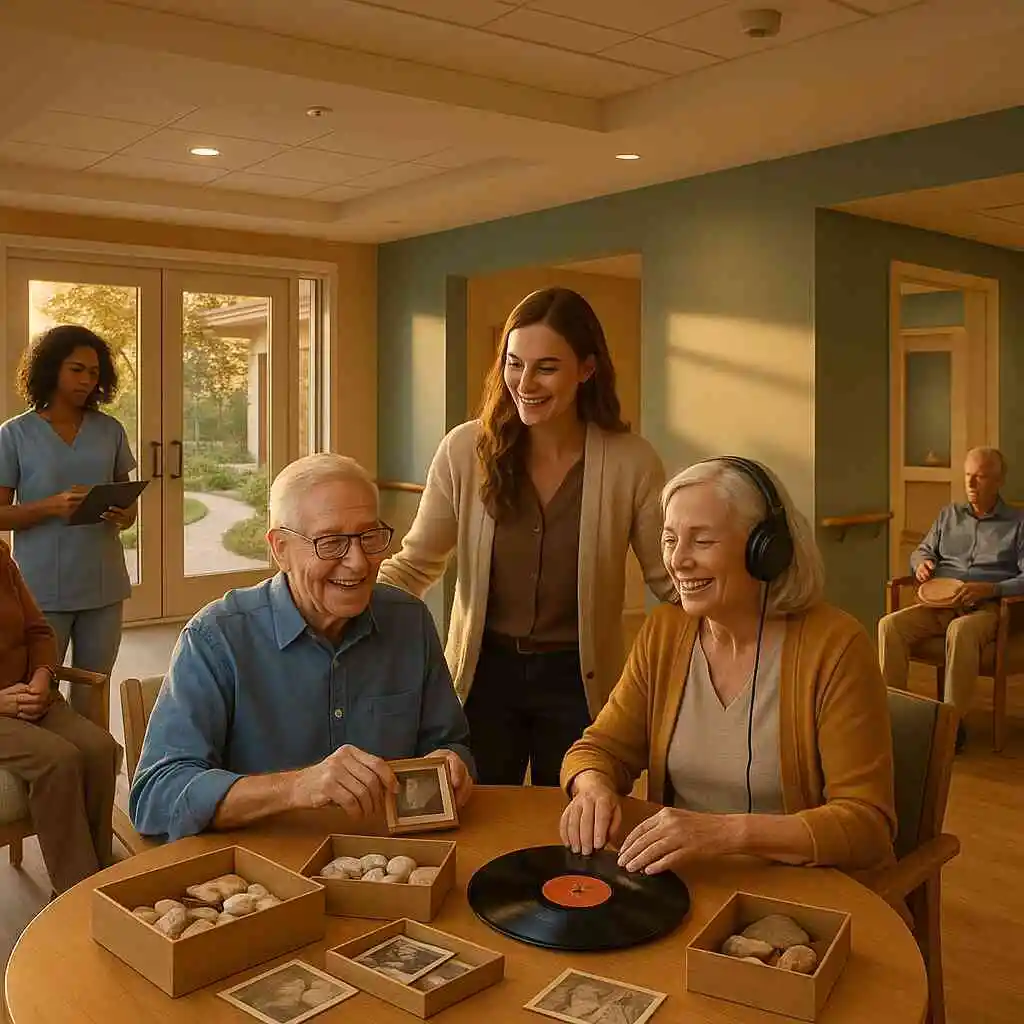
A successful seniors living community places personal history at the core of daily programming. Caregivers gather treasured photographs, favorite songs, and cultural traditions to craft personalized reminiscence therapy sessions. These sessions transform dining rooms into storytelling cafés where residents reconnect with memories while sipping familiar flavors. Music therapy for dementia residents often accompanies conversations, unlocking neural pathways that language loss once concealed. Such intentional practices encourage meaningful engagement rather than passive entertainment.
Equally important, staff training underscores respect for each resident’s life narrative. Assisted living plans integrate life story mapping activities to inform cue-rich décor and conversation starters. When a resident once loved gardening, staff might schedule sensory stimulation in a greenhouse corner, promoting holistic brain health routines. By combining individualized touchpoints with round-the-clock nurse supervision, communities nurture emotional safety alongside medical stability. The outcome is a vibrant environment where memory support feels personal, not prescribed.
Early memory impairment screening and resident centered care plans
Early memory impairment screening sets the stage for timely interventions that slow progression and sustain independence. Upon admission, clinicians employ standardized cognitive assessments paired with behavioral health monitoring for elders. Data gathered guides resident-centered care plans that outline daily living assistance for memory loss, nutritional plans for cognitive health, and fall risk reduction strategies. Transparent reporting keeps families informed and confident in their loved one’s evolving needs.
Continuous reevaluation ensures care plans remain responsive. If screening reveals a decline, transitional memory support units offer bridges between assisted living and skilled nursing. Smart home monitoring in memory care alerts staff to wandering patterns, while secure memory care neighborhoods uphold safety without isolation. Speech and language therapy for cognitive decline, combined with virtual reality cognitive exercises, rounds out a robust therapeutic toolbox. Through this proactive model, seniors receive the right support at the right time, preserving both function and dignity.
Charting the Memory Care Landscape Across Senior Living Facilities
Continuum of memory care services within independent assisted and long term care settings
Independent living communities now weave memory care programs in senior living into everyday offerings, beginning with early memory impairment screening for new residents. Certified specialists translate results into resident-centered care plans that evolve alongside each person’s needs. Because mild cognitive change often progresses slowly, proactive communities introduce dementia-friendly activities calendar options that stimulate recall without overwhelming newcomers. Gardening clubs, book circles, and guided walking groups give older adults purpose while strengthening neural networks through social engagement. When challenges intensify, residents already possess supportive routines that safeguard dignity.
Assisted living locations extend the continuum of memory care services with daily living assistance for memory loss tailored to moderate decline. Here, Alzheimer’s safe living environments blend discreet door alarms with homelike décor, easing orientation while preventing elopement events. Round-the-clock nurse supervision collaborates with interdisciplinary dementia care teams to deliver evidence-based Alzheimer’s interventions such as cognitive support therapies for seniors, holistic brain health routines, and life story mapping activities. Family members remain active partners, reviewing progress reports that demystify changes and celebrate retained strengths. This collaborative mindset prepares everyone for potential transitions to long-term care.
Long-term care facility wings accommodate advanced decline through secured neighborhoods staffed by geriatric specialists. Private suites reflect personal histories, reducing agitation that sterile rooms may trigger. Structured schedules emphasize sensory stimulation rooms and music therapy for dementia residents, preserving emotional connection when language fades. Meanwhile, adaptive equipment supports safe grooming, mobility, and dining, ensuring residents experience comfort instead of frustration. Consequently, quality of life persists even when memories blur.
Comparing secure memory care neighborhoods in senior living near me searches
Families often start online, typing phrases like find dementia-supportive senior living options near you to evaluate community safeguards. Search results highlight secure memory care neighborhoods featuring access-controlled gardens, color-coded hallways, and wandering prevention technology. These environmental cues promote autonomy because residents explore freely without jeopardizing safety. Furthermore, smart home monitoring in memory care detects nighttime movement, alerting staff before a fall occurs. Such quick intervention reduces hospitalization risk and eases family anxiety.
Beyond physical design, top-tier neighborhoods curate immersive programs that maintain cognitive momentum. Multi-sensory art classes pair aromatherapy with textured mediums, deepening engagement for those who struggle with verbal instruction. Virtual reality cognitive exercises transport participants to familiar beaches or childhood farms, igniting storytelling that staff capture in digital scrapbooks. Regular group sessions integrate music therapy for dementia residents, leveraging rhythm to synchronize motor patterns and elevate mood. Altogether, these layers create secure memory care neighborhoods where safety and enrichment coexist.
Transitional memory support units as bridges between assisted living and skilled nursing
When functional abilities shift, transitional memory support units offer a pivotal bridge. These specialized wings reside within broader campuses, allowing beloved friends and familiar caregivers to remain close. Teams emphasize occupational therapy in memory units that rehearse cooking, dressing, and money management using simplified steps. Meanwhile, speech and language therapy for cognitive decline coaches residents on word-finding strategies crucial for self-advocacy. This blended approach postpones the need for full nursing oversight while fostering measurable independence.
Technology extends the therapeutic reach further. Interactive walls project games that reward problem-solving, reinforcing executive skills without the stigma of worksheets. Wearable sensors feed real-time data to clinicians, guiding nutritional plans for cognitive health that stabilize blood sugar and support neurotransmitter production. Staff also schedule caregiver respite support services, recognizing that loved ones thrive when stress remains manageable. Through these innovations, transitional memory support units across campuses strengthen resilience for both residents and families.
Behavioral health monitoring for elders in communities for seniors 55+
Communities for seniors 55+ now embed behavioral health monitoring for elders into routine life the way fire alarms guard buildings. Discreet sensors track sleep duration, hydration patterns, and mobility variance, flagging subtle changes that precede medical crises. Data dashboards empower clinicians to adjust fall risk reduction strategies or modify medication before emergencies emerge. Families appreciate transparent notifications that foster trust without overwhelming them with clinical jargon. Consequently, residents experience swift interventions that feel supportive rather than punitive.
Still, algorithms alone cannot replace human intuition. Trained psychologists lead weekly rounds, translating data trends into compassionate care conversations. They coordinate with senior living facilities’ memory neighborhoods to refine holistic brain health routines, ensuring each program honors cultural preferences and personal hobbies. Family engagement in memory care planning remains paramount; virtual meetings invite relatives to share observations, reinforcing a circle of insight that guides future decisions. Because everyone contributes, resident outcomes improve, and satisfaction scores soar.
 Engineering Secure Memory Neighborhoods for Daily Living Success
 Engineering Secure Memory Neighborhoods for Daily Living Success
Designing Alzheimer’s safe living environments with wandering prevention technology
Thoughtful design turns hallways into helpful guides rather than confusing mazes. Color-coded doors, purposeful lighting, and courtyard loops create secure memory care neighborhoods where orientation feels natural. Cutting-edge sensors track thresholds, instantly locking exterior gates if a resident nears danger. Families researching secure memory care neighborhoods in Arizona senior living appreciate these subtle safeguards because freedom remains while risk shrinks. Consequently, residents retain confidence and staff redirect energy toward meaningful engagement instead of constant pursuit.
Technology works best when paired with human insight. Caregivers review real-time alerts that highlight emerging exit patterns, refining resident-centered care plans before stress escalates. Interior gardens encourage purposeful wandering that satisfies curiosity without triggering alarms. Comfortable seating nooks support daily living assistance for memory loss, enabling quiet rest between activities. Therefore, every square foot silently reinforces autonomy, dignity, and safety.
Smart home monitoring in memory care for fall risk reduction strategies
Invisible networks watch over residents without intruding on privacy. Bed sensors detect unusual movement, prompting round-the-clock nurse supervision to intervene promptly. Smart lighting brightens hallways as motion increases, reducing tripping hazards during nighttime bathroom visits. Data feeds behavioral health monitoring for elders’ dashboards, revealing patterns that inform fall risk reduction strategies. As a result, clinicians adjust exercise regimens and medication schedules with pinpoint precision.
Analytics extends preventive power further. When gait speed slows, occupational therapy in memory units introduces balance drills within familiar routines. Wearable devices vibrate gently, reminding users to rise slowly and stabilize. Staff communicate findings during family engagement in memory care planning sessions, building collective confidence. This loop of observation, action, and review transforms potential crises into manageable moments.
Sensory stimulation rooms and life story mapping activities
Multisensory spaces ignite dormant memories through color, texture, and gentle sound. Fiber-optic waterfalls mesmerize while calming aromatherapy diffuses childhood scents. Here, music therapy for dementia residents syncs heartbeat and mood, easing agitation without medication. Adjacent walls display digital scrapbooks created during life story mapping activities, prompting conversation and promoting resident agency. Consequently, engagement becomes proactive rather than reactive.
Programming always centers on personal relevance. Staff gather clues from family interviews, early memory impairment screening notes, and dementia-friendly activities calendars. Virtual reality cognitive exercises whisk gardeners back to blooming orchards or veterans onto peaceful marches. These personalized reminiscence therapy sessions spark laughter, tears, and renewed purpose. Inside such rooms, cognitive support therapies for seniors feel like adventures, not appointments.
Nutritional plans for cognitive health are served in senior apartment rentals
Cuisine influences cognition as surely as puzzles shape memory. Kitchens inside senior apartment rentals showcase Mediterranean-style menus rich in antioxidants, omega-3s, and vibrant produce. Dietitians craft nutritional plans for cognitive health that accommodate allergies while nurturing neurotransmitter production. Residents select herbs from indoor planters, converting mealtime into a sensory stimulation extension. Consequently, nourishment aligns with holistic brain health routines practiced community-wide.
Mealtime also reinforces social bonds. Small dining clusters reduce noise, supporting speech and language therapy for cognitive decline by encouraging clearer conversation. Adaptive utensils promote independence, preserving dignity at every bite. Staff monitor hydration through smart cups that sync with behavioral dashboards, preventing confusion linked to dehydration. Altogether, food, friendship, and technology unite to safeguard mind and spirit.
Therapeutic Synergy Integrating Evidence Based Cognitive Support
Music therapy for dementia residents and virtual reality cognitive exercises
Sound and rhythm awaken neural pathways that spoken conversation sometimes cannot reach. Therefore, music therapy for dementia residents remains a cornerstone of progressive memory care programs in senior living. Trained therapists select songs from each resident’s adolescence, instantly sparking recall and emotional grounding. Sessions align with the community’s dementia-friendly activities calendar, ensuring a predictable structure that soothes anxiety. Earbuds, shared drum circles, and gentle sing-alongs all reinforce retained procedural memory while fostering social connection.
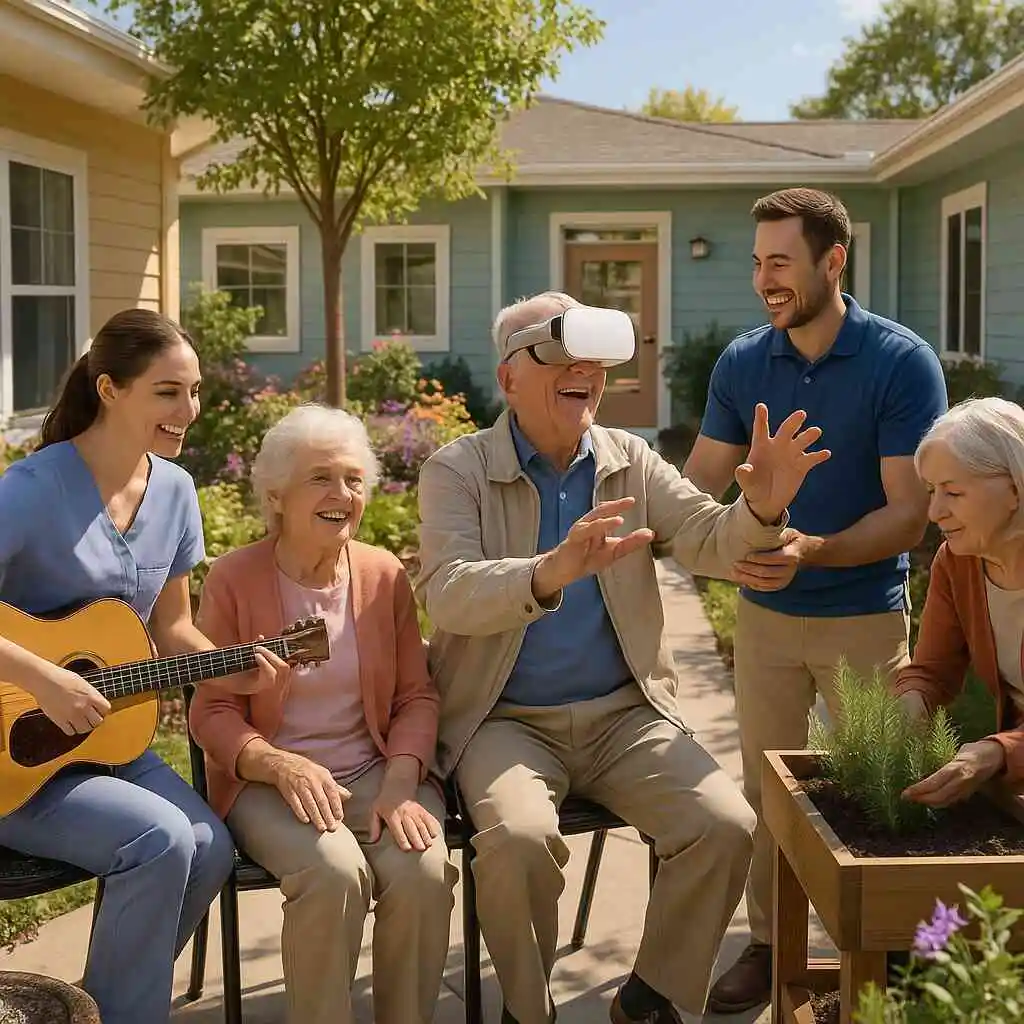
Virtual reality cognitive exercises extend the auditory benefits by adding immersive visual storytelling. Residents travel to childhood hometowns or former workplaces, engaging multiple senses in a safe digital setting. Research shows that simultaneous sensory engagement deepens synaptic plasticity and prolongs engagement time. Staff monitor heart rate and verbal responses, integrating outcomes into resident-centered care plans. Together, melody and virtual exploration form complementary cognitive support therapies for seniors, amplifying retained identity.
Speech and language therapy for cognitive decline alongside occupational therapy in memory units
As word-finding difficulty emerges, structured speech and language therapy for cognitive decline becomes essential. Certified pathologists use picture cards, rhythmic cues, and breathing techniques to rebuild expressive capacity. Progress measurements feed into smart home monitoring in memory care dashboards for real-time adjustment. Family engagement in memory care planning sessions reviews these metrics, keeping everyone aligned. Consequently, communication remains meaningful even as disease stages shift.
Occupational therapy in memory units complements speech work by translating verbal success into functional action. Residents practice dressing, cooking, and money management through graded task segmentation. Therapists embed visual labels and color coding, mirroring wandering prevention technology cues used campus-wide. These congruent strategies support daily living assistance for memory loss without overwhelming participants. The combined approach sustains confidence and slows decline across the continuum of memory care services.
Holistic brain health routines blending evidence based Alzheimer’s interventions
Modern communities replace isolated treatments with holistic brain health routines that integrate body, mind, and spirit. Morning tai chi improves balance, directly supporting fall risk reduction strategies. Midday Mediterranean meals align with nutritional plans for cognitive health, fueling neurotransmitter production. Evening meditation regulates cortisol, which research links to slower hippocampal shrinkage. Every element reflects evidence-based Alzheimer’s interventions rather than trendy experimentation.
Families researching wellness innovations improving cognitive support in senior housing appreciate seeing these routines in action. Clinicians track sleep patterns through behavioral health monitoring for elders, ensuring interventions remain personalized. Secure memory care neighborhoods then adjust lighting and activity levels based on aggregated data. This closed feedback loop demonstrates science-driven agility that older Americans and regulators trust. Ultimately, whole-person programming elevates both cognitive resilience and overall wellness.
Round the clock nurse supervision and interdisciplinary dementia care teams
Quality programming falters without vigilant medical oversight. Round-the-clock nurse supervision safeguards residents through rapid response to behavioral or physiological changes. Licensed professionals monitor vitals, medication adherence, and subtle mood shifts flagged by predictive algorithms. Their findings funnel into interdisciplinary dementia care teams that include neurologists, dietitians, and recreation therapists. Weekly huddles translate complex data into compassionate frontline actions.
For example, if gait speed slows, the team orders targeted strength sessions and reviews medication side effects. When agitation rises, nurses consult music therapists to adjust playlist tempo before requesting pharmacological support. This proactive choreography exemplifies interdisciplinary excellence prized by senior living facilities’ memory neighborhoods. Residents feel listened to because interventions arrive before crises erupt. Families therefore trust the system, reducing relocation risk and stress.
Caregiver respite support services fostering balance and resilience
Even the most advanced campus cannot replace familial love. However, continuous caregiving without breaks endangers both relatives and residents. Caregiver respite support services offer scheduled relief through short-stay suites and day programs. During visits, loved ones join personalized reminiscence therapy sessions or simply enjoy garden walks together. These shared moments strengthen emotional bonds while professionals handle complex tasks.
Respite calendars synchronize with therapy schedules, ensuring progress never stalls during family absences. Staff provide detailed summaries, so returning caregivers can reenter routines confidently. This transparency aligns with early memory impairment screening principles of proactive, informed partnership. Balanced support preserves mental health, allowing relatives to advocate effectively in care meetings. Ultimately, resilience flourishes when everyone involved experiences renewal, not burnout.
From Insight to Legacy: Continuing the Memory Care Conversation
 From Insight to Legacy: Continuing the Memory Care Conversation
Family engagement in memory care planning sustaining connection
Families remain the strongest memory anchors any resident possesses. Active family engagement in memory care planning therefore sustains identity. Care teams invite relatives to share stories, recipes, and cherished routines. These details inform resident-centered care plans and dementia-friendly activities calendars. Joint decision meetings also review behavioral health monitoring for elders, ensuring transparency and trust.
Digital portals now let grandchildren upload photographs in seconds. Staff weave those images into personalized reminiscence therapy sessions during the week. Virtual reality cognitive exercises sometimes feature family vacations, amplifying connection. When loved ones cannot visit physically, secure video chats maintain social connections without fatigue. Through constant collaboration, emotional safety and cognitive support therapies for seniors merge seamlessly.
Leveraging assisted living locator tools for future ready decisions
Choosing the right community feels simpler when technology guides the journey. An assisted living locator embedded in Senior Living Facilities compares services, costs, and culture. Users filter by housing options for seniors, daily living assistance for memory loss, or secure memory care neighborhoods. Interactive maps highlight senior living near you with transit, hospital, and park details. Because information arrives organized, stress decreases immediately.
After shortlisting, families schedule tours inside the seniors living community campuses. During visits, clinicians explain early memory impairment screening procedures and transitional memory support units. Prospective residents sample Mediterranean lunches prepared under nutritional plans for cognitive health. Observing round-the-clock nurse supervision in action reassures everyone about future safety. Clear data today equals confident, future-ready decisions tomorrow.
Guiding hope and dignity within senior living facilities’ memory neighborhoods
Hope thrives where dignity guides every interaction. Senior living facilities’ memory neighborhoods weave holistic brain health routines with warm hospitality. Interdisciplinary dementia care teams greet residents by name and cherished hobbies. Sensory stimulation rooms, music therapy for dementia residents, and life story mapping activities operate like purposeful symphonies. Together they transform ordinary minutes into meaningful legacy moments.
Continuous improvement always remains essential. Communities review outcome dashboards and adopt new strategies to enhance life quality for residents with memory loss as research evolves. Feedback loops include residents, families, and volunteers, fostering collective ownership. This culture keeps Alzheimer’s safe living environments adaptive and kind. Ultimately, guiding hope means never settling, always listening, and forever honoring each resident’s story.
Frequently Asked Questions
Question: How do Senior Living Facilities help my family compare the full continuum of memory care services before we select a senior living facility?
Answer: Our assisted living locator starts with a simple search by ZIP code, instantly displaying senior living near you that span independent living, assisted living locations, transitional memory support units, and long-term care facility wings. Each listing details early memory impairment screening practices, resident-centered care plans, daily living assistance for memory loss, and round-the-clock nurse supervision. You can line up communities side-by-side to see which offer dementia-friendly activities calendars, sensory stimulation rooms, and interdisciplinary dementia care teams. Because we cover senior housing in all 50 states, families can confidently chart the continuum of memory care services without missing a step.
Question: What should I look for in secure memory care neighborhoods, and how do Senior Living Facilities verify that Alzheimer’s safe living environments meet top standards?
Answer: We audit every secure memory care neighborhood on our platform for wandering prevention technology, color-coded way-finding, and access-controlled gardens. Listings highlight smart home monitoring in memory care, fall risk reduction strategies, and behavioral health monitoring for elders-so you know safety measures are proactive, not reactive. Our on-staff clinicians also review life story mapping activities, music therapy for dementia residents, and nutritional plans for cognitive health to confirm each community balances security with enrichment. This vetting process means the Alzheimer’s safe living environments you see in Senior Living Facilities are truly ready to protect and engage your loved one.
Question: The blog post Guiding Memory Care at Senior Living Facilities 2026 emphasizes holistic brain health routines. How can I be sure a community offers evidence-based Alzheimer’s interventions like these?
Answer: Every community profile lists the cognitive support therapies for seniors it delivers-tai chi for balance, virtual reality cognitive exercises, occupational therapy in memory units, and speech and language therapy for cognitive decline. We require documentation of evidence-based Alzheimer’s interventions and publish third-party quality scores when available. Families can download activity calendars, review sample menus aligned with Mediterranean nutritional plans for cognitive health, and even watch recorded music therapy sessions. This transparency lets you verify that holistic brain health routines are more than marketing buzz-they are a daily practice.
Question: Can Senior Living Facilities connect me with communities that provide caregiver respite support services and encourage active family engagement in memory care planning?
Answer: Absolutely. Use our filter for caregiver respite support services to locate campuses offering short-stay suites, adult day programs, and flexible visitation hours. Listings explain how families join care conferences, contribute to personalized reminiscence therapy sessions, and access real-time dashboards tracking behavioral health monitoring for elders. By spotlighting family engagement in memory care planning, we help you find a senior living community where your voice remains central to your loved one’s journey.
Question: Do you provide details about communities that utilize smart home monitoring in memory care and advanced fall risk reduction strategies?
Answer: Yes. Our database flags properties employing bed-exit sensors, motion-activated lighting, and wearable gait trackers-all integrated into secure data platforms that guide fall risk reduction strategies. Each listing notes whether alerts route directly to on-site nurses or remote interdisciplinary dementia care teams. You’ll also learn how analytics feed into proactive adjustments for exercise, medication, and environmental design. With Senior Living Facilities, families gain a clear picture of how technology and clinical insight unite to keep residents safe and independent.
Admin
Expert contributor specializing in senior living care. Dedicated to providing families with clear, actionable advice.