
The Senior Living Facilities You Should Know About for Veterans
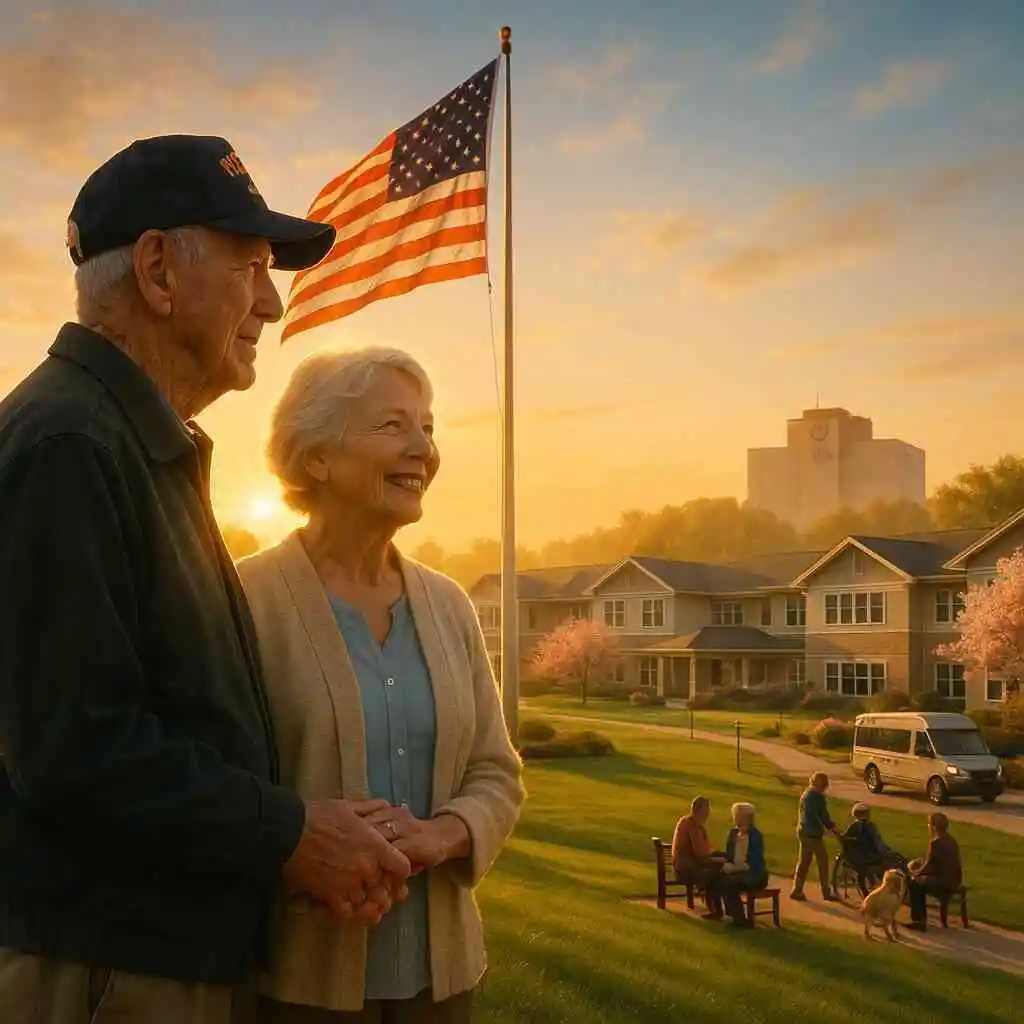
Opening the Barracks Door to Senior Living Options
The shifting landscape of senior care for veterans
American veterans are aging into a vastly different world of senior care than their predecessors encountered. Traditional nursing homes once represented the default, but modern veteran senior living facilities now offer broader missions and services. From independent apartments to specialized memory wings, choices have multiplied across every state. Families can explore a single nationwide veteran senior living portal instead of phoning scattered buildings. That online efficiency saves time, reduces stress, and ensures impartial comparisons before boots hit any campus ground.
The Department of Veterans Affairs simultaneously broadens its community partnerships, pushing care beyond hospitals. Policy makers now emphasize home-like surroundings that preserve autonomy while still guarding health. Shifts in medical technology allow complex treatments to travel wherever the veteran lives. These evolutions demand updated navigation tools, transparent pricing, and credible reviews. Senior Living Facilities answers that call, presenting data on Gulf War housing and Purple Heart nursing units.
Why veteran centric independent living matters
Independence remains a core military value long after discharge papers are signed. Veteran-centric independent living communities 55 plus respect that ethos by combining choice, camaraderie, and clinical readiness. Residents cook in private kitchens, schedule their own days, and still have access to onsite nurses when needed. Through the Senior Living Facilities engine, families can quickly locate veteran-friendly senior facilities near me. The platform filters for military flags, onsite ceremony spaces, and service-branch clubs that keep unit spirit alive.
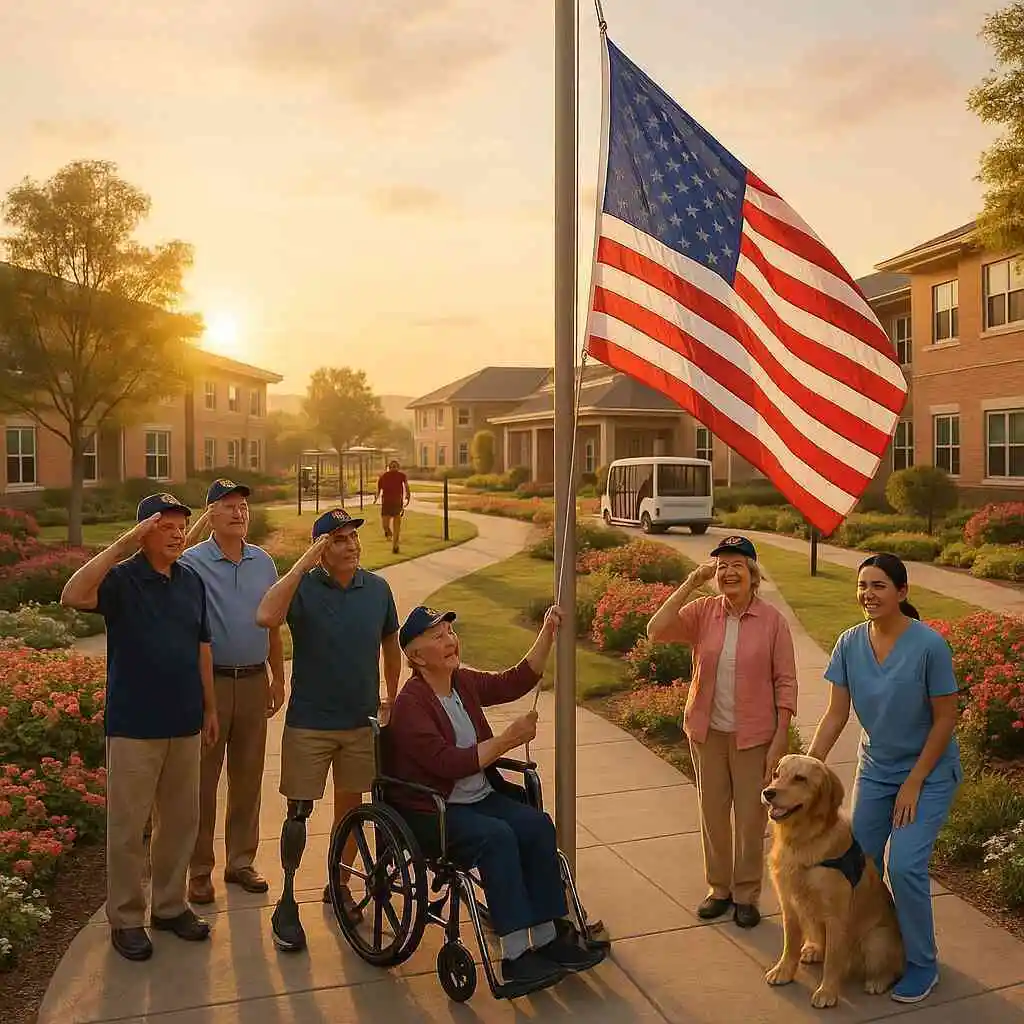
Social isolation can worsen PTSD symptoms, yet standard apartments seldom address that risk. Patriotic senior communities 55+ intentionally design lounges where vets swap stories without feeling misunderstood. Onsite chaplains familiar with battlefield loss provide moral resilience that generic housing options for seniors overlook. Programming includes flag-raising at dawn, volunteer platoons, and adaptive sports tailored for prosthetic users. Such targeted amenities transform independent living lifestyles for aging soldiers into an uplifting second chapter.
Navigating VA assisted living programs with Senior Living Facilities
Understanding VA assisted living programs can feel like decoding field manuals without a translator. Eligibility hinges on service era, disability rating, and local VHA long-term care facilities capacity. Fortunately, authoritative resources such as VA geriatric and extended care programs online clarify policy specifics. Senior Living Facilities mirrors those guidelines, letting families search veteran senior living facilities that already partner with the VA. Icons reveal which campuses accept Aid and Attendance funds or shuttle residents to VA medical centers.
Many military retirees carry TRICARE, yet their families often miss how the plan overlaps with civilian licenses. The site’s comparison page includes a primer linking directly to TRICARE-covered long-term care guidance. Users match that coverage with specific assisted living locations, preventing costly surprises at admission. Clear budgeting tools display room rates beside expected government reimbursements. This transparency turns a complex benefits maze into a straightforward checklist, easing transition for wounded warriors and spouses.
Honorable discharge senior housing benefits decoded
Earning an honorable discharge unlocks financial advantages that can significantly lower senior housing costs. Yet many veterans underestimate how their pensions, disability allowances, and state tax breaks interact. Senior Living Facilities supplies calculators that import pay tables from military pension payment info for senior budgets. Within minutes, families see monthly disposable income after medical premiums and rental housing for seniors. Knowing exact figures empowers informed negotiations with senior apartment rentals or long-term care facility administrators.
Additional perks often hide in plain sight, especially inside state veterans homes’ directory listings or local ordinances. For example, certain counties waive recreation fees for residents of combat veteran nursing homes. Our editorial team uncovers incentives and publishes the hidden perks of senior living for former service members guide annually. Readers learn about energy-bill rebates, adaptive-equipment grants, and holiday stipends like Veterans Day dining vouchers. Applying early ensures budgets stay mission-ready throughout the retirement campaign.
Strategic Deployment of Care Tiers for Every Service Era
Veteran centric independent living communities 55 plus
Seasoned service members often refuse to surrender autonomy, so veteran-centric independent living answers that call decisively. These communities for seniors 55+ feature private apartments, full kitchens, and flexible meal plans. Residents enjoy housing options for seniors without losing the tight-knit camaraderie fostered during active duty. Daily flag ceremonies, fitness classes built around military drills, and peer discussion groups strengthen social connections. Consequently, older warriors thrive while maintaining mission-ready independence.
Beyond patriotic décor, each senior living facility embeds subtle clinical safeguards. On-site nurses monitor chronic conditions, while telehealth rooms link directly to VA physicians. Adaptive gyms accommodate prosthetics, and therapy dogs reduce anxiety related to combat memories. Because every building sits inside the Senior Living Facilities network, families can compare security protocols, rental rates, and recreation calendars instantly. This transparency empowers consumers to find veteran senior living facilities aligned with cherished values.
TRICARE covered assisted living plans and long term care facility choices
Transitioning from independence to assisted living requires precise budget intelligence. TRICARE covered assisted living plans often intersect with VA assisted living programs, yet coverage nuances differ by state. Senior Living Facilities clarifies those variables, showing which long-term care facility accepts TRICARE supplements alongside federal stipends. Clear charts reveal medication management fees, therapy copays, and memory-care surcharges before contracts are signed. Financial clarity prevents sticker shock for military retirees housing options.
Clinical alignment matters as much as cost. Communities listed on the assisted living locator display staff certifications in wound care, diabetes education, and PTSD de-escalation. Veterans can schedule transportation to nearby Veterans Affairs Medical Center long-term care clinics for specialty appointments. Meanwhile, occupational therapists teach adaptive tactics for dressing, bathing, and mobility drills. Such integrated planning guarantees seamless escalation of care when health status shifts.
Wartime veteran memory care units and combat veteran nursing homes
Memory loss manifests differently in veterans who survived battlefield trauma. Wartime veteran memory care units incorporate sensory rooms that mute sudden noises, preventing flashback triggers. Personalized shadow boxes outside suites display service ribbons and photos, orienting residents by honoring their past. Staff receive advanced training in traumatic brain injury, ensuring safe redirection rather than confrontation. Families report fewer nighttime incidents and higher resident satisfaction.
Location flexibility also expands. Some families seek desert climates to ease joint pain and respiratory issues. For them, combat veteran senior housing in Arizona offers climate relief plus embedded VA clinic shuttles. These campuses add secure courtyards for supervised walks and adaptive archery ranges that rekindle unit pride. Altogether, they redefine skilled nursing homes for combat veterans without stripping personal dignity.
Service connected disability senior care pathways
Service-connected disability often accelerates aging, demanding early intervention. Senior Living Facilities profiles pathways that layer home modifications, outpatient therapies, and respite stays. Veterans Affairs funds cover mobility ramps, smart-home sensors, and ergonomic kitchens that extend independent years. When greater help becomes essential, caregivers coordinate support with activities of daily living for disabled vets through licensed aides. Such staged planning minimizes disruptive relocations.
Complex cases sometimes involve overlapping diagnoses like PTSD, neuropathy, and amputation. VHA long-term care facilities collaborate with civilian specialists to craft holistic treatment schedules. Adaptive sports, virtual-reality pain distraction, and peer mentoring reinforce physical and emotional resilience. Documented progress funnels back to case managers, ensuring benefits remain synchronized. This disciplined pipeline echoes military logistics, transforming senior care for veterans into an organized campaign.
Gold Star families’ support within patriotic senior communities
Gold Star parents and spouses carry invisible scars that linger well beyond the funeral detail. Patriotic senior communities 55+ acknowledge this sacrifice by hosting memorial gardens, remembrance dinners, and grief circles led by chaplains versed in service loss. Residents find comfort among peers who speak the same language of duty and honor. Social workers help navigate survivor pensions, burial allowances, and mental-health subsidies.
Intergenerational programs further heal emotional wounds. Local JROTC cadets visit monthly, recording oral histories and assisting with technology. Widowed spouses mentor young recruits on resilience, gaining renewed purpose in return. These interactions boost serotonin and reduce loneliness scores across the community. Ultimately, Gold Star families senior support stands as a living salute to those who gave everything.
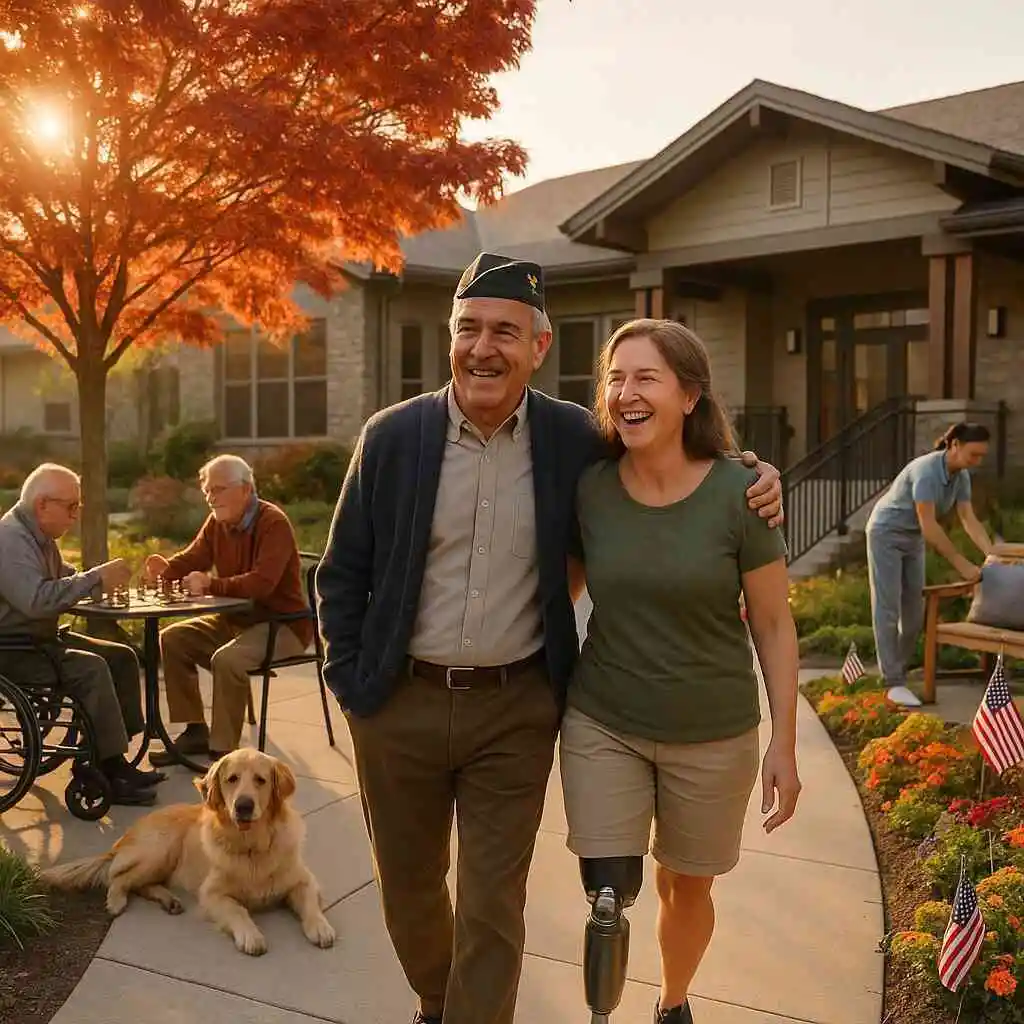
Mapping the Mission Senior Living Near VA Hospitals Across 50 States
State veterans homes directory and VHA long term care facilities
Veterans researching senior living near VA hospitals often begin with the state veterans homes directory that lists every certified campus. The Senior Living Facilities platform layers each listing with VHA long-term care facilities data, highlighting proximity to Veterans Affairs Medical Center long-term care wings. A handy link to the state veterans homes directory resource appears beside each location, ensuring families verify licensure before touring. That cross-checking protects Purple Heart recipients nursing care eligibility and aligns them with veteran senior living facilities holding federal inspection records. Transparent mapping shortens decision timelines for service-connected disability senior care while honoring regional preference.
Families also discover how veterans home and community based services complement institutional support. Social workers can schedule respite hours, telehealth, and medication deliveries that keep residents comfortable between clinic visits. These wraparound programs reduce readmissions and elevate overall senior care for veterans across diverse geographies. By integrating both charts, the platform reveals where combat veteran nursing homes coexist with outpatient therapy suites. Resulting clarity helps planners match clinical intensity to evolving health needs.
Veteran advocates appreciate that every state profile notes transport routes to nearby VA shuttle hubs. Quick rides mean spouses attend appointments without logistical strain. Residents participate in adaptive sports hosted by hospital recreation therapists, maintaining morale and muscle strength. Such coordination underscores how a state veterans home’s directory entry becomes an operational command post rather than a static building. Nationwide consistency finally meets individualized dignity.
Using the Senior Living Facilities assisted living locator for senior living near me
The assisted living locator inside Senior Living Facilities works like a military GPS for housing searches. Entering a ZIP code instantly shows senior living near you, filtered for VA assisted living programs acceptance. Interactive pins display pricing, staffing ratios, and veteran-centric amenities so families can compare options side by side. Built-in calculators highlight TRICARE covered assisted living plans overlaps, preventing budget ambushes. Users can even activate the veterans affairs retirement homes locator toggle to reveal federal facilities in the same radius.
Powerful keyword tags, such as “senior living near VA hospitals,” refine searches further. That precision matters to aging soldiers juggling dialysis schedules or prosthetic clinics. Once a shortlist forms, the system emails dossiers summarizing each long-term care facility, including occupancy forecasts. Decision-makers then coordinate virtual tours, saving travel funds for later relocation costs. The process transforms navigating senior living decisions for veterans into a structured, low-stress mission.
Community liaisons remain on standby for personalized intel. They explain lease clauses, pet policies, and how VA respite credits apply to temporary stays. Transparent communication nurtures trust with military families accustomed to chain-of-command clarity. Ultimately, the locator empowers veterans to select housing options for seniors that respect both their service record and evolving wellness goals.
Gulf War veteran elderly housing and PTSD supportive senior housing
Gulf War veteran elderly housing solutions must respect exposure-related respiratory issues and sensory sensitivities. Facilities in desert climates often feature humidity-controlled suites and hypoallergenic landscaping to reduce flare-ups. PTSD supportive senior housing layers environmental therapy rooms with muted lighting and sound-dampening panels that prevent startle responses. Certified staff lead mindfulness drills, mirroring wartime veteran memory care units used in specialized hospitals. Continuous monitoring allows swift intervention before anxiety escalates.
Many campuses also operate secure courtyards for guided night walks, addressing insomnia common among combat alumni. Therapists employ service dogs and art therapy to process intrusive memories constructively. These multifaceted strategies differentiate modern senior living models from past institutional corridors. The result is a measurable reduction in nighttime incidents and medication reliance across resident cohorts.
Facilities that advertise PTSD programming must still deliver standard geriatric excellence. Routine health screenings, balanced meals, and social clubs keep daily life engaging. Integration of VHA telepsychiatry ensures continuity with long-standing clinicians. By combining specialized trauma care with traditional wellness supports, these communities redefine best-in-class senior care for veterans.
Military pension friendly senior apartments and veterans’ senior rental subsidies
Rising rents can ambush even disciplined budgets, so military pension friendly senior apartments anchor predictable expenses. Leasing teams work directly with Defense Finance Accounting Service portals to time automatic deductions. Veterans senior rental subsidies then cover remaining balances, ensuring no lapse in housing security. When residents possess honorable discharge senior housing benefits, deposits and application fees may be waived, reducing move-in friction.
Financial counselors on site explain how senior living grants for veterans offset adaptive equipment costs. They also clarify intersections between Aid and Attendance allowances and local property-tax abatements. This education empowers retirees to choose military retirees housing options that fit projected income for decades. Transparent spreadsheets reveal total out-of-pocket figures before any signature occurs.
Importantly, facilities disclose ancillary charges such as laundry, parking, and cable. That openness encourages prudent spending and prevents future disputes. Families feel confident that veterans senior rental subsidies, VA stipends, and private savings collectively sustain each resident’s lifestyle. Fiscal peace of mind allows elders to focus on friendships, hobbies, and community service gigs instead of spreadsheets.
Transitional senior housing for ex military 55 plus communities
Health trajectories change, so veterans transitional senior housing bridges independent and assisted phases without uprooting friendships. Residents may start in spacious condos within communities for ex-military 55+ and later shift to supportive wings on the same campus. This continuum honors veteran-centric independent living values while planning for eventual mobility limitations. On-site clinics monitor vitals and adjust care plans proactively.
Patriotic senior communities 55+ host daily flag ceremonies, fitness drills, and volunteer platoons that sustain purpose. Peer camaraderie reduces depression scores, particularly among recently widowed individuals seeking Gold Star families senior support. Activity directors also coordinate excursions to local memorials, reinforcing collective identity. Such programming transforms post-service life care communities into vibrant neighborhoods rather than passive residences.
These campuses also partner with regional employment offices to offer part-time coaching or mentoring roles. Continued engagement sharpens cognitive function and fuels self-worth. Veterans transitional senior housing therefore serves as both sanctuary and launchpad, empowering aging soldiers to adapt gracefully while staying mission-driven.
Standing at Ease Charting a Secure Post Service Life in Patriotic Communities
Leveraging senior living grants for veterans and rental housing for seniors
Maximizing budgets begins with understanding every dollar available through senior living grants for veterans. These grants often pair with veterans senior rental subsidies, lowering monthly costs while expanding housing options for seniors across the nation. Military pension friendly senior apartments frequently waive deposits once an honorable discharge senior housing benefits letter is verified. Families should also review local property-tax abatements, utility discounts, and adaptive-equipment stipends to ensure no benefit remains unused. Crafting a combined funding strategy safeguards savings and supports long-term security.
Successful planning also requires comparing multiple rental housing for seniors before signing any lease. The Senior Living Facilities calculators map projected income against fee schedules, exposing hidden charges early. When veterans add Aid and Attendance allowances or TRICARE covered assisted living plans, total out-of-pocket figures often drop further. Transparent numbers empower informed negotiations with veteran senior living facilities that respect fixed incomes. Ultimately, a disciplined financial approach keeps every mission-critical resource available for healthcare, hobbies, and family visits.
Integrating veterans’ home and community based services for holistic care
Medical needs seldom remain static, so integrating veterans home and community based services into daily life ensures seamless adaptation. Occupational therapists can install grab bars, smart sensors, and ergonomic kitchens that extend veteran-centric independent living years. Meanwhile, home health aides provide support with activities of daily living for disabled vets, preventing avoidable hospitalizations. These services dovetail with VHA long-term care facilities, creating a continuum that scales as conditions evolve.
Coordinated care teams also streamline specialty appointments at nearby Veterans Affairs Medical Center long-term care clinics. Digital health records travel instantly between domiciliary programs and community nurses, reducing paperwork fatigue. Social workers schedule respite hours for family caregivers, strengthening support networks that guard against burnout. When needed, veterans’ transitional senior housing on the same campus offers an effortless step-up without abandoning friends. This holistic web mirrors military logistics, delivering reliability, speed, and precision.
Ensuring social connection inside post service life care communities
Emotional resilience thrives on camaraderie, making social connections a mission priority within post-service life care communities. Daily flag ceremonies, peer mentoring, and adaptive sports cultivate belonging for residents of patriotic senior communities 55+. PTSD supportive senior housing layers mindfulness classes and service-dog programs, easing anxiety while forging trust among neighbors. Such engagement reduces depression scores and boosts overall senior care for veterans.
Intergenerational partnerships add further purpose. Local ROTC cadets visit to record oral histories, while Gold Star families senior support circles offer empathetic ears. Residents join volunteer platoons that assemble care packages for deployed troops, transforming spare hours into service once again. Even Veterans Day parades are practiced year-round, ensuring every elder feels honored and valued. Consistent social programming fortifies mental health as reliably as any medication regimen.
Saluting the future of senior living facilities for America’s heroes
The next decade promises innovative military retirees housing options that blend technology, flexibility, and dignity. Architects already design modular suites that convert from independent layouts to accessibility-ready spaces overnight. Data-driven wellness dashboards will alert nurses to subtle changes, enabling early interventions that keep elders out of combat veteran nursing homes longer. Communities located near VA hospitals will deploy autonomous shuttles, shrinking travel stress for routine checkups.
Policy advances should also widen eligibility for VA assisted living programs, especially for Purple Heart recipients nursing care and Gulf War veteran elderly housing. Platforms like Senior Living Facilities will integrate a veterans affairs retirement homes locator with predictive analytics, forecasting wait-list times and regional cost trends. Families researching veteran senior living communities in Virginia or beyond will receive customized action plans within minutes. By uniting smart design, robust benefits, and community spirit, tomorrow’s senior living near VA hospitals will honor every oath sworn in uniform.
Frequently Asked Questions
Question: How can Senior Living Facilities help my family navigate VA assisted living programs and identify the best veteran senior living facilities?
Answer: Our platform consolidates up-to-date information on VA assisted living programs, Aid & Attendance benefits, and VHA long-term care facilities into one easy dashboard. After you enter a ZIP code, the assisted living locator highlights veteran senior living facilities that already partner with the Department of Veterans Affairs, accept TRICARE covered assisted living plans, and offer on-site shuttle service to the nearest Veterans Affairs Medical Center long-term care clinic. Side-by-side comparisons of pricing, staffing ratios, and veteran-centric amenities save your family countless hours and ensure you only tour communities that truly honor your loved one’s service.
Question: What military retirees housing options and veterans senior rental subsidies are listed on Senior Living Facilities, and how do they lower monthly costs?
Answer: We feature military pension friendly senior apartments, transitional senior housing for ex-military 55 plus communities, and patriotic senior communities 55+ that waive application fees for honorable discharge holders. Each listing details available veterans’ senior rental subsidies, local property-tax abatements, and senior living grants for veterans. Built-in calculators show exactly how military retirement pay, VA disability stipends, and state incentives combine to reduce out-of-pocket rent so budgets stay mission ready for decades.
Question: The article The Senior Living Facilities You Should Know About for Veterans highlights patriotic communities for seniors 55+. How do I locate these communities for ex-military 55+ near me?
Answer: Simply type your city or ZIP code into the Senior Living Facilities search bar and activate the veteran-centric independent living filter. Interactive maps will display senior living near you that offer daily flag ceremonies, adaptive fitness drills, and peer support groups for Gulf War veteran elderly housing, Gold Star families senior support, and PTSD supportive senior housing. You can request virtual tours, review activity calendars, and connect with on-site liaisons-all without leaving our platform.
Question: Do Senior Living Facilities compare TRICARE-covered assisted living plans and other long-term care facility costs for service-connected disability senior care?
Answer: Yes. Every assisted living location in our database lists whether it accepts TRICARE supplements, VA Aid & Attendance, or private pay. Cost breakdowns include medication management, wartime veteran memory care units, and combat veteran nursing homes surcharges. Our comparison tool then overlays these figures with your loved one’s TRICARE eligibility, giving you a transparent view of total monthly expenses before any commitment is made.
Question: How does the assisted living locator on the Senior Living Facilities map provide senior living near VA hospitals for Purple Heart recipients’ nursing care?
Answer: Our locator syncs with the state veterans homes directory and geolocates every VHA long-term care facility nationwide. When you enable the senior living near VA hospitals filter, you’ll see pins for nursing homes for the elderly, post-service life care communities, and Purple Heart recipients’ nursing care units within your chosen radius. Travel times to hospital campuses appear instantly, ensuring seamless access to specialized rehabilitation, prosthetics labs, and mental-health clinics.
Admin
Expert contributor specializing in senior living care. Dedicated to providing families with clear, actionable advice.